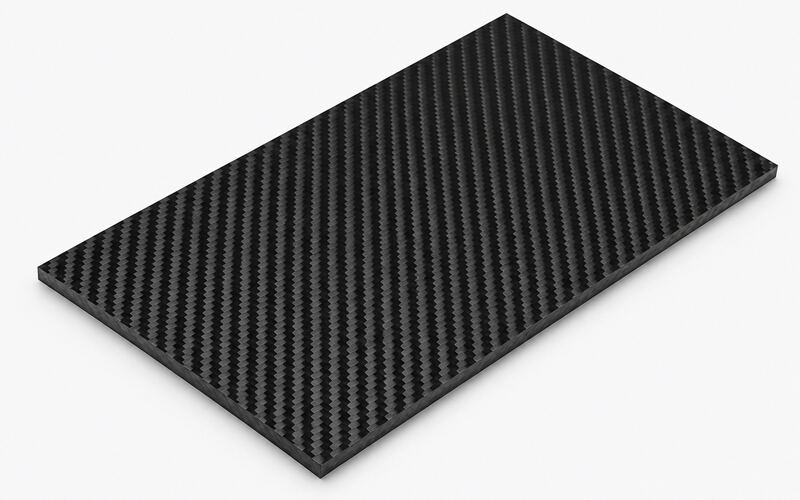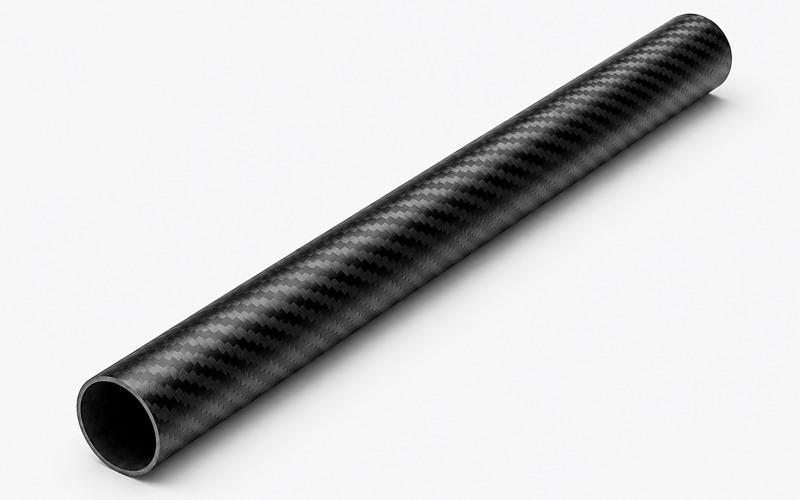
Explore grades of carbon fiber by modulus, precursor, tow form, laminate behavior, process control, defects, testing, and applications.
Carbon Fiber Grades by Modulus
Modulus classification describes fiber stiffness and helps engineers match fiber grade with load path, laminate form, and processing limits.
| Grade Type | Main Feature | Best For | Main Limitation |
|---|---|---|---|
| Standard modulus | Balanced strength, strain capacity, and processing tolerance | Sporting goods, panels, tubes, and automotive CFRP parts | Lower stiffness than higher modulus grades |
| Intermediate modulus | Higher stiffness with useful tensile strength | Weight-sensitive structural CFRP components | Needs better layup and compaction control |
| High modulus | High bending stiffness and dimensional stability | Aerospace structures, precision arms, and CFRP tooling | More sensitive to sharp radii and handling damage |
| Ultra high modulus | Very high stiffness with reduced strain capability | Deflection-controlled specialty parts | Higher brittle failure risk |
Standard Modulus Carbon Fiber
Standard modulus carbon fiber is selected when balanced strength, strain capacity, and processing tolerance are required. It is common in sporting goods, industrial panels, tubes, and automotive CFRP components.
This grade handles layup, cutting, and forming with lower sensitivity to fiber breakage. Designers control performance through fiber orientation, resin content, consolidation, and cure stability.
Intermediate Modulus Carbon Fiber
Intermediate modulus carbon fiber raises stiffness while keeping useful tensile strength and manageable elongation. It is used where weight reduction and structural response both matter.
Layup accuracy becomes more important because off-axis plies can reduce the expected stiffness gain. Poor compaction may create porosity, resin-rich zones, and inconsistent load transfer.
High Modulus Carbon Fiber
High modulus carbon fiber is chosen when bending stiffness and dimensional stability drive the design. It often appears in aerospace structures, precision arms, satellite parts, and stiff CFRP tooling.
The fiber is less tolerant of sharp radii and aggressive handling than lower modulus grades. Process control must limit fiber waviness, ply distortion, and local stress concentration.
Ultra High Modulus Carbon Fiber
Ultra high modulus carbon fiber provides very high stiffness with reduced strain capability. It is used in specialty parts where deflection control is more important than impact tolerance.
Manufacturing requires careful ply placement, gentle draping, and stable curing pressure. Small alignment errors can reduce laminate stiffness and increase brittle failure risk.
Common Carbon Fiber Grade Examples
Commercial fiber designations help buyers compare stiffness, strength, precursor route, and expected laminate behavior.
| Grade Example | Grade Family | Main Feature | Typical Use |
|---|---|---|---|
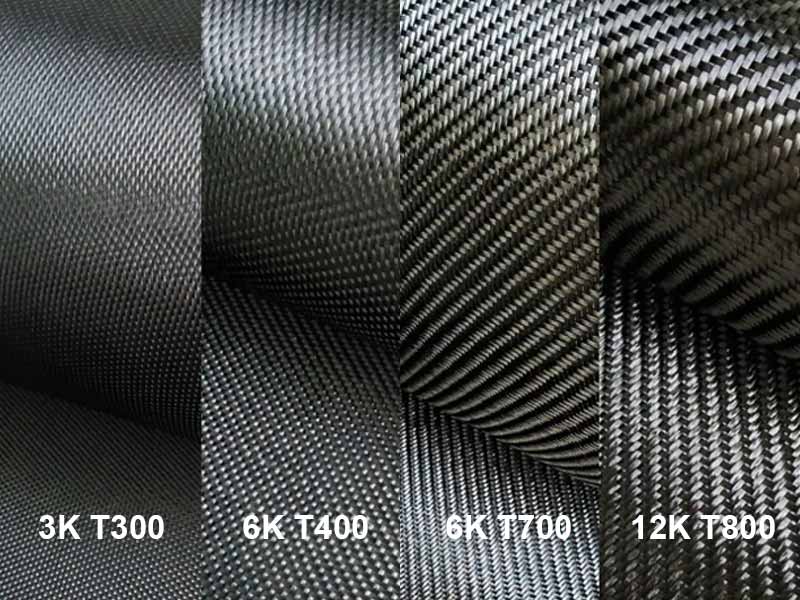
| T300 and T400 | Standard modulus PAN based | Stable handling and broad resin compatibility | General panels, tubes, and woven reinforcement |
| T700 and T800 | Higher performance PAN based | Higher tensile strength and fatigue response | Structural CFRP parts |
| T1000 | High strength PAN based | High load capacity | Demanding CFRP components |
| M40J M46J and M55J | High modulus PAN based | Low deflection and high stiffness | Precision structures and lightweight beams |
| K13D | Pitch based | Very high stiffness and thermal control | Specialty thermal and dimensional parts |
T300 and T400 Carbon Fiber
These legacy PAN based fibers are associated with standard modulus applications and predictable processing behavior. They are often used for general composite panels, tubes, and woven reinforcements.
Their value lies in stable handling and broad resin compatibility. Engineers still verify supplier data because sizing chemistry affects wet-out, bonding, and laminate surface quality.
T700 and T800 Carbon Fiber
T700 and T800 carbon fiber support higher structural performance than basic standard modulus fibers. They are used when tensile strength, fatigue response, and weight control influence part design.
Prepreg selection must match the chosen fiber grade with a compatible resin system. If cure, compaction, or storage control is poor, the laminate may show voids or weak interlaminar bonding.
T1000 Carbon Fiber
Compared with T800, T1000 carbon fiber is selected for demanding CFRP components requiring high load capacity. It is often specified where fiber tensile performance dominates design limits.
The laminate still depends on layup quality, resin toughness, and controlled cure. A strong fiber cannot compensate for poor ply alignment, dry spots, or damaged cut edges.
M40J M46J and M55J Carbon Fiber
These high modulus PAN based grades are used where stiffness is the main design target. They support precision structures, lightweight beams, and parts requiring low deflection.
Designers must balance stiffness against reduced strain margin and impact sensitivity. Manufacturing control focuses on smooth drape paths, careful cutting, and low fiber waviness.
K13D Pitch Based Carbon Fiber
This pitch based grade is known for very high stiffness and strong thermal management potential. It is used in specialty structures that require low deformation and directional heat control.
Pitch fibers can be more brittle during handling than many PAN based fibers. Laminate design must protect edges, avoid tight forming paths, and control ply alignment carefully.
PAN and Pitch Based Grades
Precursor chemistry strongly affects fiber structure, modulus range, thermal behavior, and processing sensitivity.
PAN Based Carbon Fiber
PAN based carbon fiber is the most common route for structural composite grades. It offers a broad balance of tensile strength, modulus, elongation, and manufacturing flexibility.
The stabilization, carbonization, surface treatment, and sizing stages control final grade behavior. Inconsistent processing can reduce bonding, increase fuzz, or create variable tow spreading.
Pitch Based Carbon Fiber
Pitch based carbon fiber is selected when stiffness, thermal conductivity, or dimensional stability is critical. It can deliver highly aligned graphitic structure compared with many PAN based grades.
This structure improves directional stiffness but can reduce handling tolerance. Fabrication must control bend radius, ply nesting, and edge protection to limit fiber damage.
Process Effects on Grade
Carbon fiber grade is not defined only by raw precursor. Several process variables can change final fiber behavior:
- Precursor chemistry and raw fiber consistency
- Heat treatment severity
- Draw tension during fiber processing
- Surface oxidation and fiber treatment
- Sizing chemistry and resin compatibility
- Process uniformity across the tow
Higher treatment severity can increase stiffness but may lower strain capacity. Poor process uniformity causes tow variation, weak resin bonding, and inconsistent laminate test results.
Fiber Structure and Alignment
Fiber structure controls how load moves through the carbon fiber composite. Better molecular alignment usually increases stiffness along the fiber direction.
Alignment must be protected during weaving, spreading, prepregging, cutting, and layup. Fiber waviness lowers effective modulus and can trigger early compression failure.
Carbon Fiber Grade Comparison
Grade comparison should consider fiber data, laminate design, process route, cost, and inspection requirements together.
Modulus Strength and Elongation
Modulus measures stiffness, strength measures load capacity, and elongation describes strain before failure. These properties do not rise together in every carbon fiber grade.
A higher stiffness fiber may have lower strain tolerance than a lower modulus option. Designers compare laminate coupons, not only fiber datasheets, because resin and layup alter results.
Standard Versus High Modulus Grades
Standard modulus grades are usually more forgiving during cutting, forming, and composite molding. They suit parts where toughness, cost control, and production stability matter.
High modulus grades reduce deflection but demand tighter handling and layup discipline. If the design sees impact, vibration, or local bearing loads, extra validation is required.
Cost and Availability
Carbon fiber grade affects cost and availability through several factors:
- Precursor route and raw material cost
- Production yield and process stability
- Heat treatment level
- Fiber qualification requirements
- Tow form and fabric format
- Resin system and certification needs
Higher stiffness or specialty behavior usually narrows supply options. Engineers reduce sourcing risk by qualifying equivalent laminate performance, not only matching fiber names.
Tow Size Fabric and Prepreg Formats
Tow size and reinforcement format affect surface appearance, drape, resin flow, consolidation, and final laminate efficiency.
| Format | What It Means | Best For | Main Limitation |
|---|---|---|---|
| 1K 3K 6K and 12K tow | Fine and medium tow sizes | Visible fabrics, thin laminates, and curved CFRP parts | Higher handling time and cutting sensitivity |
| 24K 50K and large tow | Larger fiber bundles | Thick laminates, industrial sheets, and simple geometry | Lower drape and higher print-through risk |
| Unidirectional tape | Fibers placed mainly in one direction | Efficient directional stiffness | Needs cross reinforcement for multidirectional loads |
| Prepreg | Fiber with controlled resin content | Repeatable laminate quality | Requires storage and cure control |
| Dry fabric | Fiber reinforcement without resin | Infusion, wet layup, and RTM flexibility | Needs resin flow control |
| Plain twill and satin fabric | Woven reinforcement forms | Handling, drape, and surface appearance control | Crimp and distortion can reduce grade benefit |
1K 3K 6K and 12K Tow
Smaller tow formats such as 1K and 3K carbon fiber are used when surface detail, drape, and ply control are important. They suit visible fabrics, thin laminates, and complex curved CFRP components.
Use the chosen small tow when the part needs tight fabric definition and stable laminate appearance. Smaller bundles can increase handling time, material cost, and cutting sensitivity.
24K 50K and Large Tow
Large tow formats are selected when deposition speed and material cost are important. They support thick laminates, industrial sheets, and parts with simpler geometry.
The chosen large tow can reduce layup time but may limit drape and surface uniformity. Poor wet-out can create dry zones, bundle print-through, and local stiffness variation.
Unidirectional Tape and Prepreg
Unidirectional tape places fibers mainly along one load direction. It is used when designers need efficient tensile or bending stiffness in a defined axis.
Prepreg controls resin distribution before layup, which improves repeatability under stable storage and cure conditions. Contamination, expired material, or poor debulking can cause voids and weak bonding.
Plain Twill and Satin Fabric
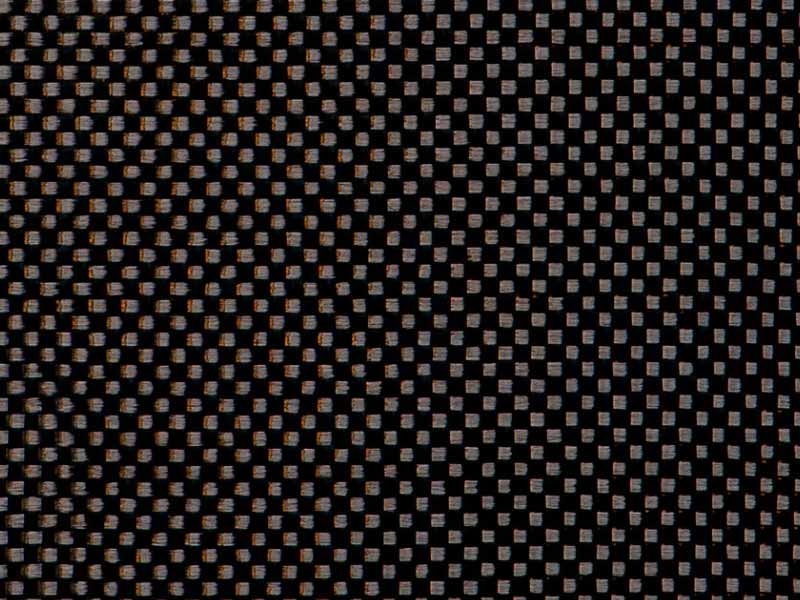
Plain, twill, and satin fabrics provide different levels of stability, drape, crimp, and surface appearance.
Weave choice changes crimp, which affects in-plane stiffness and fatigue behavior. Excessive crimp or distorted yarns can reduce the benefit of a higher carbon fiber grade.
Dry Fabric Versus Prepreg
Dry fabric is used with infusion, wet layup, or resin transfer processes. It gives flexibility in resin selection and can suit larger carbon fiber parts.
Prepreg provides controlled resin content and cleaner ply handling when storage and cure are controlled. Dry fabric needs careful infusion control to avoid race tracking, porosity, and dry spots.
Laminate Performance by Grade
Final laminate performance depends on fiber grade, resin system, stacking sequence, consolidation, curing, and inspection quality.
Tensile Properties
Tensile performance follows fiber direction, so grade selection must match the main load path. Unidirectional plies carry load efficiently when alignment is maintained.
Off-axis fibers, cuts, holes, and waviness reduce the expected tensile response. Testing should evaluate the actual laminate schedule because fabric crimp and resin toughness change performance.
Compression and Fatigue
Compression performance is sensitive to fiber waviness, matrix stiffness, and ply stability. High modulus grades can lose value if local buckling starts early.
Fatigue resistance depends on bonding, void control, and stress concentration management. Smooth ply transitions, proper debulking, and clean machining help protect long-term CFRP behavior.
Impact Resistance
Impact resistance should be checked carefully when selecting higher modulus or specialty grades:
- Higher modulus fibers may have lower strain capacity.
- Tougher resin systems may be needed for impact-loaded parts.
- Protective outer plies can improve damage tolerance.
- Hidden impact damage can reduce compression strength.
- Inspection methods should be defined before grade selection.
- Acceptance criteria should match the structural risk of the part.
Impact damage can remain hidden while reducing compression strength. Inspection methods and acceptance criteria should be defined before selecting a brittle specialty grade.
Thermal Stability
Thermal stability depends on fiber type, resin glass transition behavior, and laminate layup symmetry. High stiffness fibers can help control dimensional drift along their orientation.
Unbalanced layups may warp during cure or service temperature changes. Tooling, cure cycle, and cool-down control reduce residual stress and shape distortion.
Electrical Conductivity
Carbon fiber grade influences electrical conductivity through graphitic structure and fiber continuity. Pitch based grades often support stronger directional conductivity than many structural PAN grades.
Conductive paths depend on ply contact, resin insulation, fasteners, and surface treatment. Designers must manage grounding, galvanic contact, and inspection access in assembled CFRP components.
FAQ
What are the Main Grades of Carbon Fiber?
The main grades are commonly grouped by modulus and precursor type. Selection depends on stiffness, strength, strain capacity, processability, and laminate requirements.
Is Higher Modulus Carbon Fiber Stronger?
Higher modulus carbon fiber is stiffer, but it is not always stronger. It may have lower strain tolerance and higher handling sensitivity.
Is 3K Carbon Fiber a Grade?
It describes tow size, not a carbon fiber grade. Grade refers to fiber properties such as modulus, strength, precursor, and treatment route.
How Do Grades Affect Carbon Fiber Cost?
Grade affects cost through precursor, heat treatment, qualification, yield, and supply availability. Specialty high stiffness fibers usually require stricter handling and validation.