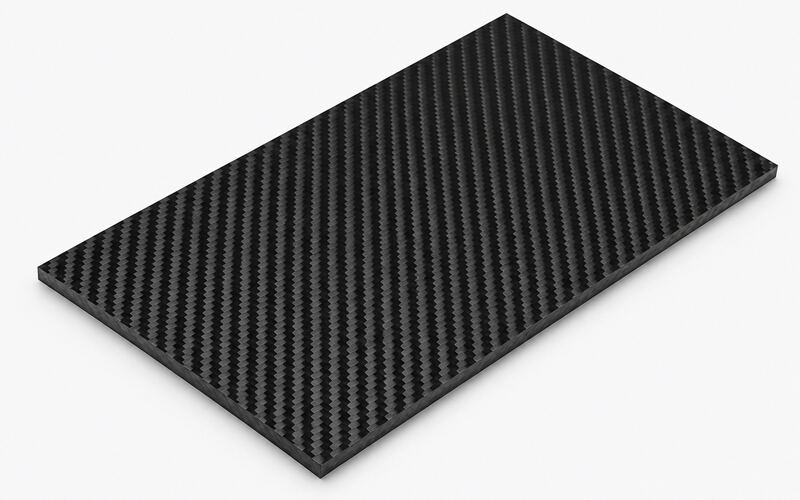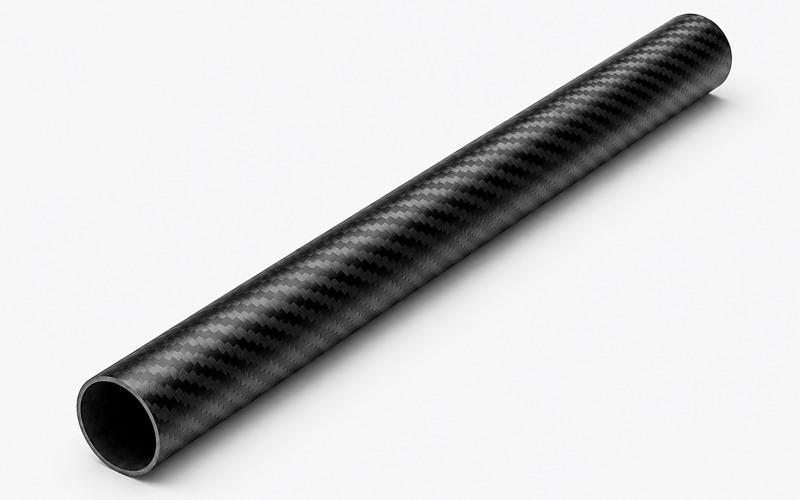
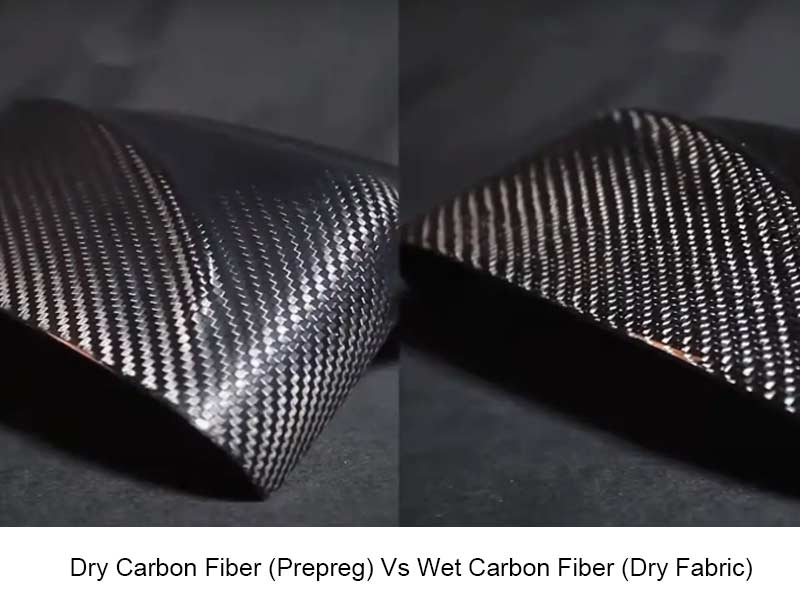
Dry and wet carbon fiber describe how resin enters the reinforcement fiber before curing shapes the laminate.
Prepreg fabric already contains a pre-measured resin film bonded to the fiber before shipping. The surface feels dry to touch because the resin remains chemically inactive until heat triggers curing.
Wet layup involves brushing or rolling liquid resin onto dry fabric placed inside a mold. An operator controls saturation manually, which increases variation between panels and technicians.
Dry vs Wet Carbon Fiber Differences
Core differences involve resin placement, fiber ratio, cure conditions, and the level of process control achieved.
| Factor | Dry Carbon Fiber | Wet Carbon Fiber |
|---|---|---|
| Resin Application | Prepreg fiber carries resin already fixed at a controlled ratio during manufacturing. | Wet layup applies resin during layup, so saturation depends on operator technique and fabric permeability. |
| Fiber and Resin Content | Prepreg typically holds a fiber volume fraction near 60%, supporting predictable laminate weight. | Wet layup often carries higher resin content, since manual application rarely removes all excess resin. |
| Curing Process | Prepreg cures under heat, often inside an autoclave or oven, using a defined cure temperature. | Wet layup frequently cures at room temperature, which can leave residual solvent and lower cross-link density. |
| Process Control | Machine-metered resin films produce tighter tolerances across a production batch. | Human judgment controls resin distribution and thickness, so variation between parts is higher. |
Manufacturing Process
Manufacturing steps determine how resin bonds to fiber and how consistently a laminate cures.
Prepreg Layup and Vacuum Bagging
Technicians cut and stack prepreg plies according to a defined orientation sequence. Vacuum bagging then compacts the layup, removing trapped air before the part enters a curing cycle.
The sealed bag maintains uniform pressure across complex shapes. This pressure reduces void formation and helps fiber layers stay aligned during heating.
Manual Resin Wet-Out
Wet-out involves saturating dry fabric with resin using a brush, roller, or squeegee. Uneven pressure during this step can leave dry spots or trap air pockets within the laminate.
Autoclave Oven and Mold Curing
Autoclave curing applies both elevated temperature and pressure, producing dense laminates with minimal porosity. Oven curing without pressure still relies on vacuum bagging, but achieves a slightly lower fiber packing density.
Room-Temperature and Heated Curing
Room-temperature curing suits wet layup parts that do not require high thermal performance. Heated post-curing can raise cross-link density and improve heat resistance for demanding structural applications.
Resin Distribution and Laminate Quality
Resin distribution directly governs laminate density, surface uniformity, and internal defect levels.
| Quality Factor | Dry Carbon Fiber | Wet Carbon Fiber |
|---|---|---|
| Resin Content Uniformity | Prepreg fiber holds a fixed resin ratio across every ply, limiting weight variation. | Wet layup often produces uneven resin pockets because manual spreading rarely matches machine-controlled coating. |
| Fiber Wet-Out Consistency | Controlled impregnation gives each fiber strand more predictable resin contact. | Poor wet-out can leave dry fiber bundles that weaken load transfer. |
| Void and Air Entrapment | Vacuum-bagged prepreg reduces trapped air through consistent pressure across the laminate. | Wet layup without vacuum assistance often retains microvoids that lower interlaminar strength. |
| Laminate Thickness Control | Prepreg plies maintain a known thickness per layer, simplifying stacking calculations. | Wet layup thickness varies with resin buildup, making precise thickness prediction more difficult. |
Mechanical Performance
Mechanical behavior reflects how fiber alignment, resin content, and void levels interact under load.
| Performance Factor | Dry Carbon Fiber | Wet Carbon Fiber |
|---|---|---|
| Tensile Strength and Stiffness | Prepreg laminates typically preserve fiber alignment, so tensile strength and stiffness stay closer to theoretical fiber values. | Wet layup can shift fiber orientation slightly during resin application, lowering achievable stiffness. |
| Strength-to-Weight Ratio | Lower resin content raises the strength-to-weight ratio. | Excess resin adds mass without contributing proportional structural strength. |
| Interlaminar Shear Strength | Autoclave-cured prepreg typically shows higher shear values due to reduced void content and tighter fiber packing. | Shear strength depends heavily on resin bonding quality and manual wet-out control. |
| Delamination Resistance | Controlled resin distribution and pressure reduce the risk of ply separation. | Trapped air or dry spots increase susceptibility to delamination under cyclic load. |
| Batch-to-Batch Consistency | Prepreg manufacturing controls resin ratio and cure cycle tightly, supporting repeatable mechanical results. | Wet layup consistency depends heavily on operator skill, causing greater property scatter between batches. |
Weight and Dimensional Control
Weight and dimensional accuracy depend on how tightly resin content and thickness stay controlled.
Finished Part Weight
Prepreg parts achieve predictable weight because resin content stays fixed during manufacturing.
Wet layup weight varies with resin thickness, often producing heavier finished components.
Resin-Rich Areas
Resin-rich zones form where excess liquid pools during manual application, particularly near corners. These zones add localized weight and can create stress concentration points within the laminate.
Thickness Consistency
Prepreg thickness follows a known per-ply value, supporting accurate mold clearance calculations. Wet layup thickness fluctuates with resin volume, complicating tight-tolerance mold fitting.
Dimensional Accuracy
Autoclave-cured prepreg parts hold tighter dimensional tolerances due to controlled pressure and temperature. Wet layup parts may shrink unevenly during room-temperature curing, affecting final fit.
Surface and Weave Quality
Surface appearance reflects how well fiber alignment and resin coverage remain undisturbed during processing.
Weave Alignment
Prepreg fabric retains factory-set weave geometry, since resin already stabilizes fiber position before layup. Wet layup handling can shift tow alignment, producing visible pattern irregularities.
Fiber Distortion
Excess brushing pressure during wet layup can distort individual tows, creating wavy fiber paths.
Distorted fibers reduce local stiffness and can create uneven surface texture after curing.
Surface Print-Through
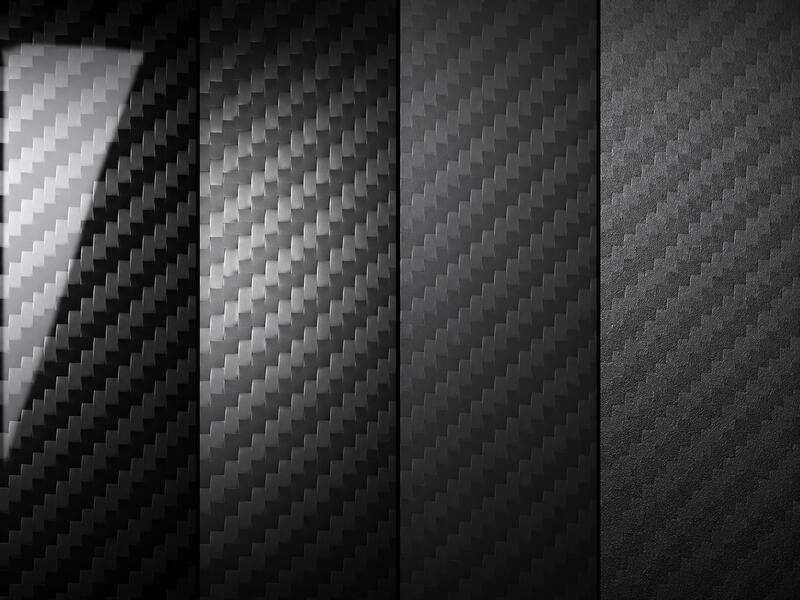
Print-through occurs when the weave pattern telegraphs through a thin resin surface layer. Wet layup parts with inconsistent resin thickness often show stronger print-through than autoclave-cured prepreg panels.
Resin Clarity and Finish
Prepreg resin systems often cure to a clear, glossy finish suited for visible carbon fiber parts. Wet layup resin can trap tiny bubbles, creating cloudy patches that reduce cosmetic quality.
Defects and Inspection
Defect type and severity depend on resin application method and the cure environment selected.
Voids and Dry Spots
Voids form when air becomes trapped between fiber layers during resin application. Dry spots appear when fabric receives insufficient resin, weakening local load transfer between fibers.
Fiber Waviness
Fiber waviness develops when tows shift during handling or resin saturation. Wavy fibers lower compressive strength, since load paths no longer align with the intended fiber direction.
Excess Resin
Excess resin adds unnecessary weight and can mask underlying fiber misalignment. Removing surplus resin requires careful squeegee work, which wet layup technicians must judge manually.
Visual and Structural Inspection
Visual inspection identifies surface defects such as resin pooling or exposed dry fiber. Structural inspection methods, including ultrasonic testing, detect internal voids that remain invisible from the surface.
Heat Resistance and Durability
Heat resistance and long-term durability depend on resin chemistry, cure quality, and environmental exposure.
Resin System and Cure Quality
A fully cross-linked resin system withstands higher operating temperatures without softening. Incomplete curing, common in room-temperature wet layup, can leave residual flexibility that limits heat resistance.
Glass Transition Temperature
Glass transition temperature marks the point where resin shifts from rigid to soft behavior. Prepreg systems cured near a controlled temperature of 120 °C often reach a higher transition point than uncured wet layup resin.
Moisture and UV Exposure
Moisture absorption can degrade resin bonding over time, reducing interlaminar strength. UV exposure without protective coating causes resin surface breakdown, affecting both prepreg and wet layup parts.
Long-Term Structural Stability
Autoclave-cured prepreg typically maintains dimensional and mechanical stability longer under repeated thermal cycling. Wet layup parts with residual voids may show gradual property loss under sustained structural load.
Production and Component Cost
Cost differences stem from tooling requirements, storage conditions, labor input, and achievable production volume.
Tooling and Equipment Cost
Prepreg production requires autoclave or oven equipment, raising initial capital investment. Wet layup needs only basic molds and hand tools, lowering entry cost for smaller manufacturers.
Prepreg Storage and Shelf Life
Prepreg fabric requires refrigerated storage to prevent premature resin curing before use. Wet layup materials store at room temperature, simplifying logistics for small-batch production.
Labor and Operator Skill
Wet layup demands skilled technicians to control resin ratio and avoid trapped air manually.
Prepreg layup still requires trained handling, but resin consistency reduces dependence on manual judgment.
Material Waste
Excess resin runoff during wet layup increases material waste compared with pre-measured prepreg sheets.
Prepreg offcuts remain usable for smaller components, improving material yield.
Production Scalability
Prepreg suits repeatable, higher-volume production due to consistent resin content and automated cutting.
Choosing Dry or Wet Carbon Fiber
Material choice depends on required strength, budget, surface expectations, and expected production volume.
High-Performance Parts
Aerospace brackets and motorsport chassis components typically use prepreg for maximum strength-to-weight ratio. Tight resin control supports predictable load behavior under demanding structural conditions.
Automotive Body Panels
Automotive panels often use prepreg for consistent thickness and improved surface finish. Wet layup remains common for lower-cost aftermarket panels with less stringent tolerance requirements.
Cosmetic Carbon Fiber Parts
Cosmetic trim pieces benefit from prepreg resin clarity, which highlights weave pattern without cloudy spots. Wet layup can still achieve acceptable cosmetic results with careful resin control.
Prototypes and Low-Volume Parts
Wet layup suits prototypes where tooling cost must stay low and design changes remain frequent. Lower equipment demands allow faster iteration between design revisions.
Large Composite Components
Use a structured selection process when choosing between dry carbon fiber, wet layup, and resin infusion:
- Choose prepreg when strength-to-weight ratio, surface clarity, and dimensional consistency are critical.
- Choose wet layup when tooling cost must stay low and the part is a prototype or low-volume component.
- Choose resin infusion for large composite structures where autoclave size or prepreg cost is impractical.
- Review tolerance, surface finish, fiber alignment, and inspection requirements before final material selection.
- Validate structural parts with testing when the application carries safety or fatigue risk.
FAQ
Is Dry Carbon Fiber Always Stronger?
Dry carbon fiber, or prepreg, generally achieves higher strength due to controlled resin content and reduced voids. Wet layup can approach similar strength when resin application and curing remain carefully managed.
Is Dry Carbon Fiber Lighter?
Prepreg parts typically weigh less because resin content stays fixed near an optimal ratio. Wet layup often carries excess resin, adding weight without improving structural performance.
Why Is Dry Carbon Fiber More Expensive?
Prepreg requires refrigerated storage, autoclave curing, and tighter process control, raising overall production cost. These requirements support higher consistency but increase equipment and handling expenses.
Can Wet Carbon Fiber Match Prepreg Quality?
Wet layup can approach prepreg quality when resin ratio and vacuum bagging remain tightly controlled. Achieving comparable void content still depends heavily on operator skill and process discipline.
Can Appearance Identify the Manufacturing Process?
Surface clarity and weave sharpness can hint at prepreg processing, but appearance alone cannot confirm the method. Internal inspection remains necessary to verify resin content and void levels.
Does Resin Infusion Match Prepreg Performance?
Resin infusion improves consistency over manual wet layup by using vacuum pressure to distribute resin evenly. Performance can approach prepreg levels, though fiber volume fraction often remains slightly lower.