Durability in a carbon fiber part depends on fiber quality, laminate design, environmental exposure, and how the part was cured and machined.
A single carbon filament resists degradation well on its own, but durability changes once fibers are bonded into a laminate. Resin quality, fiber alignment, and bonding strength all influence how long the finished part performs.
A carbon fiber composite is only as durable as its weakest bonding zone between fiber and resin. Engineers test laminate-level samples rather than raw fiber to capture this real-world behavior.
Mechanical Durability Under Load
Repeated and sustained mechanical loading is one of the main factors that determines how long a carbon fiber part lasts.
Tensile and Compressive Strength Retention
Carbon fiber laminates retain tensile strength well under repeated loading when fiber orientation matches the load path. Compressive strength retention is more sensitive to fiber waviness and resin-rich zones.
Strength retention drops faster in laminates with poor consolidation or uneven ply stacking. Monitoring both tensile and compressive behavior over time helps confirm long-term structural reliability.
Design margins account for this gradual retention loss rather than assuming constant strength.
Fatigue Resistance
Carbon fiber composite can sustain over one million load cycles in tension-dominated applications without significant strength loss. Fatigue resistance depends heavily on fiber orientation, laminate thickness, and resin toughness.
Stress concentrations from drilled holes or sharp edges shorten fatigue life significantly. Reducing these stress risers through better edge finishing improves long-term fatigue performance.
Fatigue testing under realistic load cycles remains the most reliable way to predict service durability.
Impact Resistance and Delamination
Impact events can cause internal delamination in a carbon fiber laminate without visible surface damage. This hidden damage reduces compressive strength and fatigue resistance even when the part looks intact.
Impact resistance improves with tougher resin systems and controlled ply stacking sequences.
Low-velocity impacts are especially dangerous because they often go undetected without inspection.
Routine inspection after suspected impact events helps catch delamination before failure occurs.
Durability Against Heat, Moisture, and UV
Environmental exposure to heat, moisture, and ultraviolet light gradually changes the mechanical behavior of carbon fiber composites.
Heat Aging and Glass Transition Temperature
Most epoxy resin systems used in carbon fiber parts have a glass transition temperature near 120 °C. Operating above this temperature softens the resin matrix and reduces load transfer between fibers.
Heat aging over time can gradually lower the effective glass transition point of the laminate.
Selecting a resin system with the correct glass transition margin protects long-term durability in warm environments.
Moisture Absorption and Matrix Plasticization
Carbon fiber laminates can absorb roughly 1% moisture by weight under humid or wet service conditions. Absorbed moisture plasticizes the resin matrix, lowering its stiffness and heat resistance.
This effect is more noticeable in compression and shear-dominated loading than in pure tension. Sealing exposed edges and surfaces reduces moisture ingress into the laminate over time.
UV Exposure and Coating Protection
Ultraviolet exposure degrades exposed resin at the surface, leading to fiber blooming and color fading. A protective topcoat or gelcoat layer blocks UV penetration into the laminate.
Unprotected carbon fiber sheet used outdoors will show surface degradation faster than coated parts.
Thermal Cycling and Galvanic Corrosion
Repeated thermal cycling creates internal stress from mismatched expansion between fiber and resin. Direct contact between carbon fiber and untreated aluminum can also cause galvanic corrosion at the interface.
Isolating dissimilar metals with a barrier layer prevents this corrosion risk in mixed-material assemblies.
What Determines Carbon Fiber Durability
Fiber grade, weave type, orientation, resin system, and fiber volume fraction together set the durability ceiling of a laminate.
Fiber Grade (PAN vs Pitch, Modulus Type)
PAN-based carbon fiber offers a strong balance of toughness and fatigue resistance for most structural applications. Pitch-based fiber reaches higher stiffness but can behave more brittle under repeated impact.
Standard modulus grades generally tolerate cyclic loading better than high modulus grades. Choosing the correct fiber grade depends on whether impact tolerance or stiffness retention matters more.
Mixed-grade laminates can balance stiffness needs with impact durability in critical zones.
Weave Type and Fiber Orientation
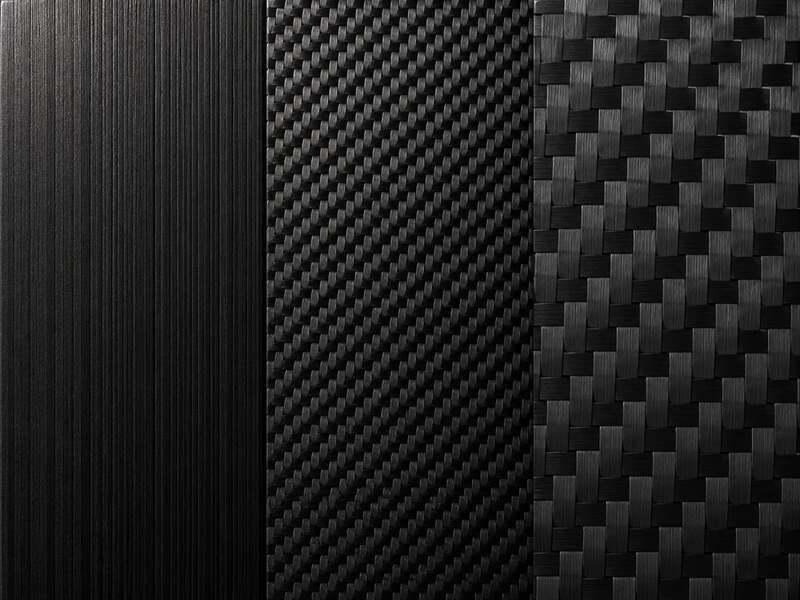
Woven fabrics such as a 3K twill spread load across two directions, improving impact tolerance over unidirectional layups. Fiber orientation that matches the dominant load direction improves fatigue life significantly.
Misaligned plies create weak zones that fail earlier under repeated loading. Selecting the correct weave and orientation combination is one of the most controllable durability factors in design.
Multi-axial layups often balance durability across several load directions at once.
Resin System and Fiber Volume Fraction
A fiber volume fraction near 60% is common for durable structural carbon fiber laminates. Higher fiber content improves load capacity, while excess resin adds weight without improving durability.
Tougher resin systems resist microcracking better under repeated thermal and mechanical stress. Balancing fiber volume fraction with resin toughness supports both strength and long-term durability.
Processing and Durability
Curing, consolidation, and machining steps directly influence whether a carbon fiber part reaches its full durability potential.
Cure Control (Prepreg, Autoclave, Infusion)
Autoclave curing under roughly 6 bar pressure produces dense, low-void laminates suited for demanding fatigue environments. Prepreg processing offers tighter resin control than open infusion methods.
Infusion is often used for larger parts where autoclave size is limited. Incomplete consolidation during any of these methods reduces long-term fatigue and moisture resistance.
Consistent cure cycles across production batches keep durability performance predictable.
Voids, Waviness, and Residual Stress
Void content should stay below 1% to protect fatigue life and reduce moisture entry points. Fiber waviness distorts load paths and accelerates compressive fatigue failure.
Residual stress from uneven cooling after cure can cause dimensional drift over time. Controlling cure temperature and cooling rate together reduces these three interrelated defect risks.
Process monitoring during cure helps catch these issues before the part is released.
Machining, Drilling, and Edge Finishing
Maintaining a machining tolerance near ±0.1 mm helps preserve fit while avoiding excess stress at cut edges. Dull tooling or high feed rates during drilling often cause delamination around holes.
Rough edges act as fatigue initiation points under cyclic loading. Sharp, carbide, or diamond-coated tools reduce fiber pullout and improve long-term edge durability.
Inspection and Defect Control
Inspection confirms whether internal and surface defects were controlled well enough to meet durability expectations.
Porosity, Dry Spots, and Delamination
Porosity and dry spots reduce resin coverage around fibers, weakening bonding under repeated stress. Delamination separates internal layers and often forms without visible outside signs.
Together these defects shorten fatigue life and increase failure risk under load. Identifying them early prevents durability problems from reaching finished assemblies.
Ultrasonic and Visual Inspection
Ultrasonic scanning detects internal voids and delamination that are not visible from the surface. Visual inspection identifies surface-level defects such as resin-rich areas or fiber misalignment.
Using both methods together captures defects that affect durability in different ways. Parts failing either check are typically reworked before final release.
Test Validation (Tensile, Flexural, Shear)
Tensile testing confirms strength retention along the primary load direction after processing. Flexural testing evaluates combined tension and compression behavior under bending loads.
Shear testing checks resin-fiber bonding quality, which strongly affects long-term durability. These three tests together validate whether a laminate meets its durability targets.
Carbon Fiber Durability in Real Applications
Different industries load carbon fiber parts differently, which changes which durability factors matter most.
Aerospace Fatigue and Impact Tolerance
Aerospace structures rely on the specified fatigue life established through extensive tension-dominated cyclic testing. Impact tolerance is equally critical since tool drops or debris strikes can cause hidden delamination.
Strict inspection schedules catch this damage before it affects flight safety. Aerospace laminates typically use tightly controlled cure cycles and fiber grades to meet these dual requirements.
Automotive and Motorsport Loading
Motorsport components experience rapid, high-magnitude loading rather than slow cyclic stress. Carbon fiber composite in these applications favors toughness and impact resistance over pure stiffness.
Vibration and thermal cycling near engine components add additional durability demands. Component design often prioritizes crash energy absorption alongside long-term fatigue performance.
Marine and Outdoor Exposure
Marine environments expose carbon fiber parts to constant moisture, salt, and UV combined together. Steel alternatives near 7.8 g/cm³ density resist UV well but corrode quickly in saltwater conditions.
Coated carbon fiber sheet resists this combined exposure better while keeping structural weight low. Regular inspection remains important since moisture and UV effects build up gradually.
FAQ
Does Carbon Fiber Crack Easily?
Carbon fiber composite is brittle and can crack under sharp impact or overload. It generally resists gradual bending damage better than sudden impact damage.
How Long Does Carbon Fiber Last Outdoors?
Service life outdoors depends on coating quality, UV exposure, and moisture control. Well-coated parts last significantly longer than unprotected carbon fiber surfaces.
Is Carbon Fiber More Durable Than Steel?
Carbon fiber resists corrosion and fatigue better than steel in many applications. Steel still offers better impact toughness and more predictable failure warning.
Does Heat Weaken Carbon Fiber?
Heat above the resin’s glass transition temperature weakens the matrix and load transfer. The fibers themselves tolerate higher temperatures than most resin systems.
Can Damaged Carbon Fiber Be Repaired?
Many carbon fiber laminates can be repaired using patch bonding or resin injection methods. Repair success depends on damage size, location, and detection timing.