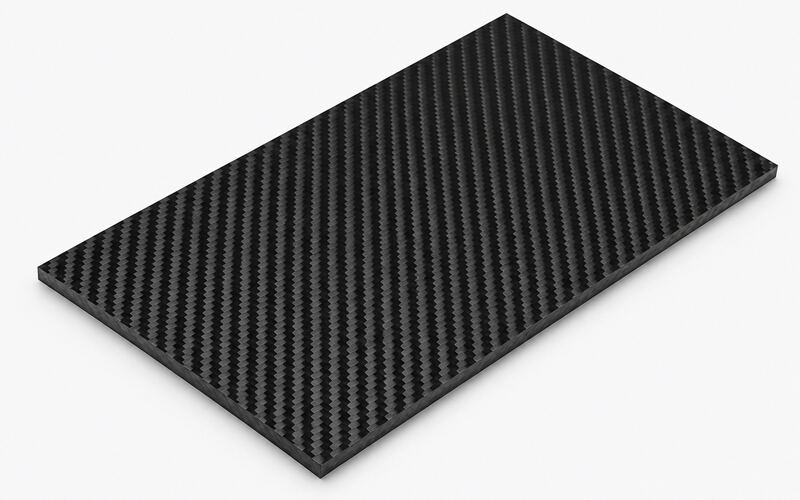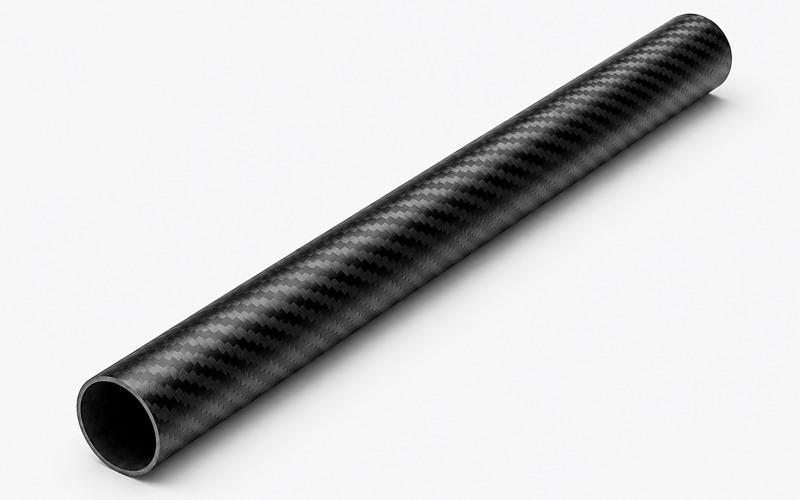
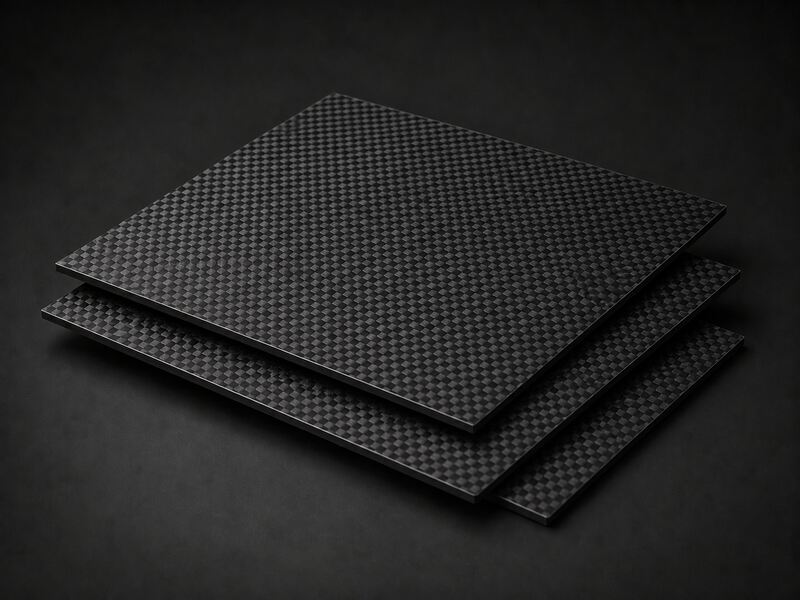
T800 and T1000 identify high-strength carbon fiber grade families used in demanding structural laminates. Both sit above T300 and T700 in tensile capability within common classification systems.
Property Comparison
Fiber-level mechanical values define the theoretical performance ceiling of each grade. Actual laminate results still depend on material configuration, manufacturing quality, and structural design.
| Property | T800 | T1000 |
|---|---|---|
| Tensile Strength | High tensile strength, generally below T1000 | Higher filament tensile strength, often above 6,000 MPa depending on the product |
| Tensile Modulus | Commonly near 294 GPa, depending on the variant | Often similar to T800 rather than significantly stiffer |
| Strain to Failure | High strain capability | Generally higher elongation before fracture |
| Density | Approximately 1.8 g/cm³ | Approximately 1.8 g/cm³ |
| Filament Size | Small filament diameter typical of high-strength PAN-based fiber | Comparable filament diameter with greater handling sensitivity |
| Product Forms | Available in multiple tow sizes and prepreg formats | Available in specialized tow sizes and prepreg formats |
The primary differences lie in tensile strength and strain capability rather than density or stiffness. Exact property values vary between T800H, T800S, T1000G, and their associated sizing and prepreg systems.
Tensile Strength
T1000 fiber typically exhibits higher filament tensile strength than T800 fiber.
Some T1000 products exceed 6,000 MPa under controlled filament testing, while T800 products generally occupy a slightly lower but still high tensile range.
This strength difference applies to individual filaments rather than finished components.
Laminate tensile strength depends on fiber volume fraction, alignment, void content, resin compatibility, and the direction of the applied load.
Modulus and Stiffness
T800 and T1000 grades often share a similar tensile modulus, commonly near 294 GPa depending on the specific variant.
The higher tensile strength of T1000 does not automatically produce a stiffer laminate.
Engineers working on stiffness-critical structures must evaluate modulus separately from tensile strength.
Strain to Failure
T1000 fiber generally provides higher elongation at break than T800 fiber.
The additional strain capability can benefit structures where tensile deformation, impact loading, or pressure cycling creates a significant failure risk.
Higher fiber strain does not eliminate brittle laminate behavior.
Resin toughness, ply interfaces, fiber orientation, and laminate thickness still govern crack development and damage tolerance.
Density and Filament Size
Both grades maintain density values typical of high-strength PAN-based carbon fiber, generally near 1.8 g/cm³.
Their filament diameters are also relatively similar.
Component weight savings therefore come from more efficient structural design rather than meaningful density differences. A higher-strength fiber may reduce mass only when tensile performance governs the laminate thickness.
Tow Size and Product Forms
T800 and T1000 fibers are supplied in various tow sizes and prepreg formats for aerospace structures, pressure vessels, and other high-performance components. Tow size affects ply thickness, fabric weight, spreading behavior, and layup productivity.
Fiber grade and tow size remain separate material variables. A larger tow does not automatically indicate a stronger grade, and a smaller tow does not guarantee better laminate performance.
Fiber and Laminate Performance
Higher filament strength improves component performance only when the laminate transfers and supports the applied loads effectively. The main controlling factors include:
- Fiber alignment: Plies must follow the primary load paths to use the available tensile strength efficiently.
- Fiber volume fraction: Excess resin adds weight, while insufficient wet-out creates dry areas and weak load transfer.
- Void content: Voids reduce tensile, compressive, fatigue, and interlaminar performance in both fiber systems.
- Layup sequence: Off-axis plies and inefficient stacking arrangements can limit the benefit of higher-strength fiber.
- Joint design: Bolted joints, bonded interfaces, and interlaminar stresses may fail before the fibers reach their tensile capacity.
A well-manufactured T800 laminate can therefore outperform a poorly processed T1000 laminate. Raw fiber grade represents only one element of overall structural performance.
Fiber Strength vs Part Strength
Higher filament tensile strength in T1000 does not guarantee a proportional increase in finished component strength. Resin behavior, fiber alignment, void content, and load transfer efficiency determine how much of the fiber capability becomes usable.
Local waviness, dry spots, wrinkles, and uneven consolidation can offset the advantage of a premium fiber. Manufacturing quality may influence part strength as much as the nominal fiber grade.
Resin and Fiber Volume
Resin selection and fiber volume fraction directly affect laminate efficiency. The resin must transfer loads between filaments, support fibers under compression, resist cracking, and maintain adhesion throughout the service environment.
Insufficient resin wet-out creates dry regions and weak interfaces. Excess resin increases weight and may reduce stiffness relative to a well-consolidated laminate with a controlled fiber volume fraction.
Layup and Load Direction
Ply orientation determines how effectively the laminate resists applied loads. Fibers provide their highest tensile performance along the filament direction, while off-axis loading places greater demand on the resin and ply interfaces.
Designers align high-strength plies with primary load paths and add transverse or angled plies for shear, torsion, stability, and damage containment. A fiber upgrade cannot compensate for an inefficient stacking sequence.
Joints and Interlaminar Stress
Bolted joints, bonded interfaces, cutouts, and thickness transitions often create stress concentrations that limit structural capacity before the fibers reach their maximum tensile strength.
Fastener bearing, delamination, adhesive failure, and interlaminar shear may govern the design. In such structures, changing from T800 to T1000 may provide little improvement unless the joint geometry is also redesigned.
Compression and Fatigue
Tensile data alone cannot describe structural durability under real service loads. Compression, impact, and cyclic loading frequently determine practical material selection.
Tensile Strength vs Compression
Compressive strength in carbon fiber laminates generally falls below tensile strength for both T800 and T1000 systems. Compression failure may therefore govern the design of load-bearing panels, shells, beams, and pressure vessel regions.
Higher T1000 tensile strength does not guarantee a proportional increase in compressive strength. Compression performance depends heavily on matrix stiffness, fiber alignment, laminate support, and resistance to local instability.
Fiber Misalignment and Microbuckling
Fiber waviness and misalignment increase the risk of compressive microbuckling. Even small deviations from the intended fiber direction can significantly reduce effective compressive capacity.
T1000 systems can require stricter placement and tension control to protect the expected performance gain. Wrinkles, tow gaps, bridging, and uneven compaction may prevent the laminate from realizing the fiber-level advantage.
Impact Damage and Fatigue Life
The higher strain capability of T1000 may support improved impact tolerance when the resin and ply architecture complement that behavior. However, impact performance cannot be predicted from fiber tensile properties alone.
Fatigue life depends on void content, stress concentration, cyclic load amplitude, environmental exposure, and damage accumulation between plies. Neither grade removes the need for proper structural detailing and fatigue testing.
Processing and Manufacturing
Both grades are compatible with established prepreg layup and filament winding methods. T1000 programs generally require tighter control in several areas:
- Tow tension and fiber placement
- Filament damage during handling
- Fiber waviness and alignment
- Resin wet-out and void content
- Cure temperature and autoclave pressure
- Ultrasonic inspection and process documentation
The required process level depends on the prepreg system, component geometry, production volume, and structural certification requirements.
Prepreg and Filament Winding
T800 and T1000 are commonly supplied as prepreg materials for aerospace structures and as continuous tow for pressure vessel winding. Prepreg layup suits complex panels, shells, spars, and structural shapes, while filament winding suits cylindrical or axisymmetric components.
The manufacturing method is selected primarily according to part geometry and load path rather than fiber grade. Both grades can be used with qualified aerospace and pressure vessel processes.
Fiber Handling and Alignment
T1000 fiber generally demands more careful handling because filament damage, tow spreading defects, and misalignment can reduce the expected performance advantage. Tension control becomes particularly important during automated placement and filament winding.
T800 often provides slightly more processing tolerance during layup. This difference can affect operator training, scrap rates, production repeatability, and qualification risk.
Void Control and Cure Quality
Void content reduces tensile, compressive, fatigue, and interlaminar performance regardless of fiber grade. Higher-strength systems may show a greater relative performance penalty when poor consolidation prevents effective load transfer.
Vacuum quality, autoclave pressure, temperature uniformity, resin flow, debulking, and cure-cycle control must remain within the qualified processing window. Premium fiber cannot compensate for poor cure quality.
Inspection and Process Control
Nondestructive inspection methods such as ultrasonic testing can identify voids, delamination, foreign material, and laminate inconsistencies after cure. Inspection requirements become stricter as structural criticality increases.
Process documentation, material traceability, equipment calibration, and batch records support repeatable production. T1000 programs may require more extensive verification when the design depends on narrow strength and weight margins.
Cost and Availability
Total component cost extends beyond raw fiber pricing. Material qualification, process control, inspection, scrap risk, tooling, testing, and supply continuity can produce a larger cost difference than the fiber price alone.
Material and Qualification Cost
T1000 fiber generally carries a higher material cost than T800 because of its higher tensile class and tighter production requirements. Associated prepreg systems may also have higher procurement and qualification costs.
Structural programs often require coupon testing, environmental conditioning, fatigue data, damage-tolerance evaluation, and statistical design allowables. The additional expense must be justified by measurable weight or performance gains.
Supply and Sourcing
T800 typically offers broader commercial availability across aerospace, pressure vessel, and premium sporting goods markets. T1000 remains more specialized and may have fewer qualified suppliers or product configurations.
Lead times, minimum order quantities, export restrictions, batch consistency, and prepreg shelf life should be evaluated during sourcing. Supply-chain risk can influence material selection independently of mechanical performance.
Applications
Application requirements guide practical fiber selection more effectively than tensile strength alone. Structural criticality, loading mode, manufacturing capability, qualification history, and budget all influence the final decision.
Aerospace Structures
T800 fiber is widely used in commercial aircraft primary and secondary structures because of its high strength, established processing behavior, and extensive qualification history.
T1000 appears in selected aerospace applications where maximum tensile capability or strain margin supports significant weight reduction. Certification requirements and approved material databases often determine which fiber system can be used.
Pressure Vessels and Hydrogen Tanks
T1000 fiber is suited to high-pressure hydrogen storage vessels where higher tensile strength and strain capability may reduce composite wall thickness and vessel mass.
T800 remains common in pressure vessels that balance structural performance, manufacturing risk, supply availability, and cost. Winding tension, liner interaction, boss design, and regulatory safety factors remain critical for both grades.
Sporting Goods and Industrial Parts
T800 appears in premium bicycles, rackets, fishing rods, sporting equipment, and lightweight structural products requiring high strength within a manageable cost range.
T1000 is less common in general industrial components because many applications do not require its additional tensile capability. Its use is usually limited to specialized products where minimum weight or maximum strain performance carries substantial value.
How to Choose
Grade selection should follow the governing failure mode, manufacturing capability, qualification requirements, supply conditions, and project budget.
| Selection Factor | Choose T800 | Choose T1000 |
|---|---|---|
| Performance Requirement | High strength with balanced cost and processability | Maximum tensile strength and strain capability |
| Governing Load | Mixed loading or structures not controlled solely by tensile strength | Tensile or hoop-stress-dominated structures |
| Manufacturing Control | Established aerospace-grade processing capability | Tighter alignment, cure, handling, and inspection control |
| Supply and Qualification | Broader availability and extensive qualification history | More specialized supply and application-specific qualification |
| Typical Applications | Aircraft structures, sporting goods, and cost-controlled pressure vessels | Hydrogen tanks and specialized weight-critical aerospace structures |
| Cost Justification | Suitable when T800 already meets structural targets | Suitable when added strength directly reduces laminate weight |
T1000 may provide limited benefit in compression-critical, buckling-limited, impact-limited, or joint-limited structures because tensile strength does not govern their final design capacity.
When T800 Is the Better Choice
T800 suits programs requiring high strength, established processing tolerance, broad supply availability, and manageable qualification costs. It remains a practical baseline for many aerospace, sporting goods, and pressure vessel structures.
Its qualification history can reduce material approval time and program risk. When T800 already meets strength, stiffness, fatigue, and weight targets, changing to T1000 may offer little commercial benefit.
When T1000 Adds Value
T1000 adds value when maximum tensile strength and strain capability directly reduce structural mass. High-pressure vessels and specialized aerospace components are the most relevant examples.
The design must also provide sufficient process control, inspection capability, and load-path efficiency to capture the fiber advantage. Programs without tensile or strain-critical requirements may not recover the additional cost.
When Higher Strength Does Not Reduce Weight
Compression-critical and buckling-limited structures may not benefit from a higher tensile fiber grade. The same applies to components governed by fastener bearing, adhesive strength, interlaminar shear, impact damage, or geometric stiffness.
Weight reduction depends on whether the governing failure mode aligns with the improved material property. A fiber upgrade without laminate and structural redesign rarely produces the expected mass savings.
FAQ
Is T1000 Stronger Than T800?
T1000 fiber generally has higher filament tensile strength than T800 fiber. Finished laminate strength still depends on resin compatibility, fiber alignment, void content, layup quality, and structural design.
Do T800 and T1000 Have the Same Modulus?
Many T800 and T1000 variants have a similar tensile modulus range. T1000 is generally stronger in tension, but it is not necessarily much stiffer than T800.
Does Higher Fiber Strength Improve Part Strength?
Higher fiber strength improves part performance only when the laminate transfers loads efficiently. Poor alignment, voids, weak joints, unsuitable resin, or inefficient ply orientation can offset the fiber-level advantage.
Is T1000 More Brittle Than T800?
T1000 typically provides higher strain to failure rather than greater inherent brittleness. Its manufacturing sensitivity is more closely related to filament handling, alignment, and the need to preserve the expected high-strength performance.
Can T800 and T1000 Be Used Together?
Hybrid laminates can combine both grades when specific load paths justify selective reinforcement. Engineers must evaluate strain compatibility, load transfer, ply termination, processing conditions, and qualification requirements.
Is T1000 Worth the Higher Cost?
T1000 becomes cost-effective when its additional tensile strength or strain capability produces measurable weight reduction or performance gains that T800 cannot achieve. Programs without those requirements may not justify the higher material and qualification cost.