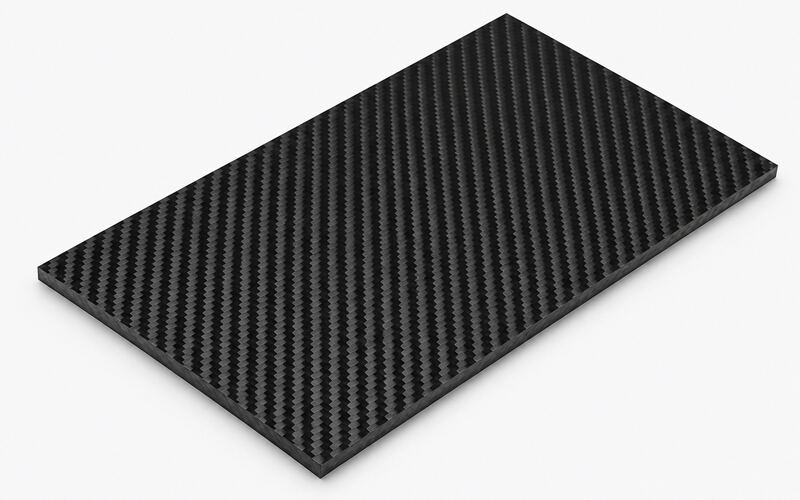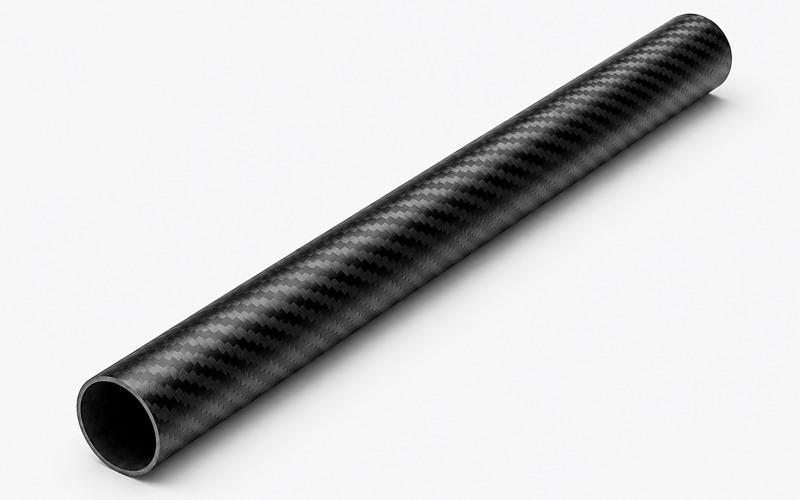
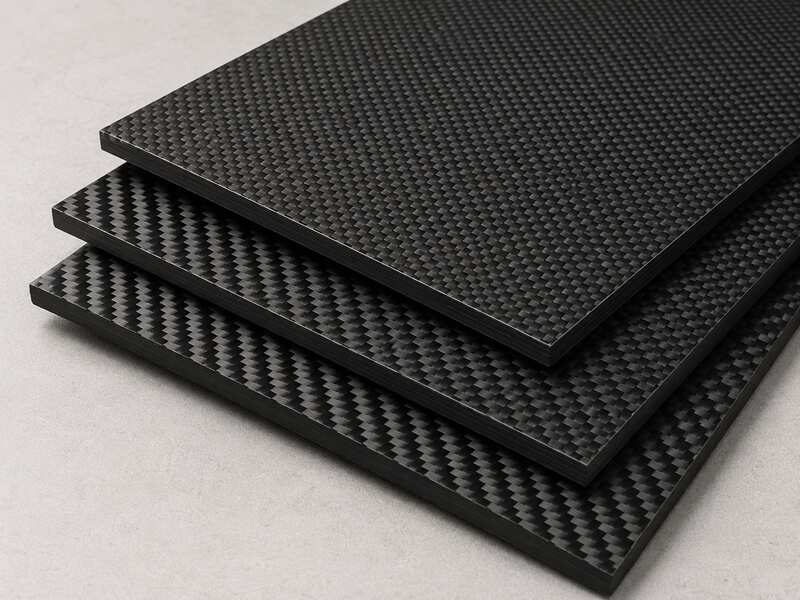
1K carbon fiber contains approximately one thousand filaments per tow, while 3K contains approximately three thousand. This difference determines tow diameter, weave pattern scale, and how densely fibers pack within a woven fabric.
A 1K tow is narrower and flatter, producing a fine, tightly interlaced weave with small repeat units. A 3K tow is wider and slightly thicker, yielding a more visible crosshatch pattern across the fabric surface.
Differences Between 1K and 3K Carbon Fiber
Tow size influences fabric geometry and processing behavior rather than the underlying fiber grade or strength classification.
| Property | 1K Carbon Fiber | 3K Carbon Fiber |
|---|---|---|
| Filament count | Approximately 1,000 filaments per tow | Approximately 3,000 filaments per tow |
| Tow geometry | Narrower and flatter | Wider and slightly thicker |
| Weave appearance | Fine and subtle | Larger and more pronounced |
| Typical fabric weight | About 90–130 g/m² | About 160–220 g/m² |
| Surface texture | Smoother with less print-through | More visible weave texture |
| Layup efficiency | Slower and more precise | Faster area coverage |
| Relative cost | Generally higher | Generally lower |
Tow Size versus Fiber Grade
Tow size and fiber grade describe separate characteristics of carbon fiber reinforcement.
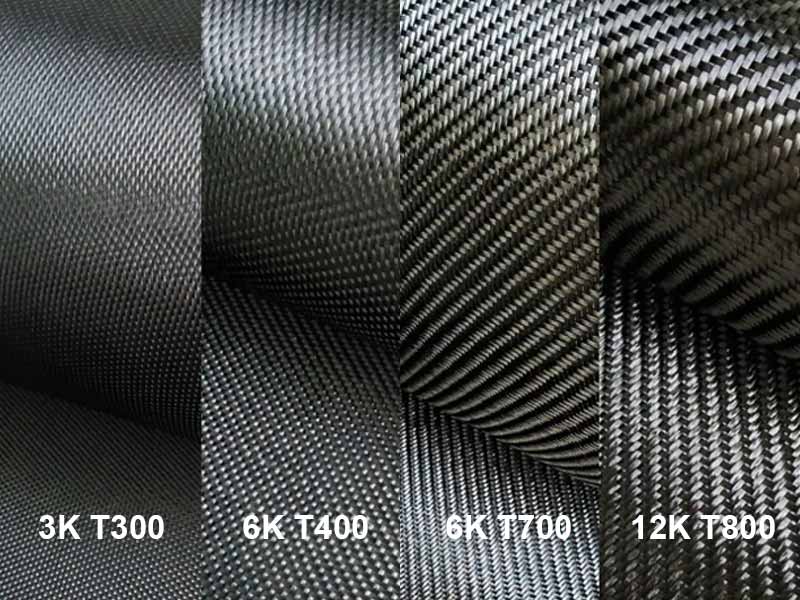
A fiber grade such as T300 or T700 defines filament tensile strength and modulus, independent of whether it is supplied as 1K or 3K tow.
Weave Pattern Scale
1K fabric produces a fine, dense weave pattern with small repeat units, often chosen for detailed surface appearance. 3K fabric shows a larger, more pronounced crosshatch common in general-purpose structural fabrics.
Typical Fabric Weight
1K fabrics generally fall within a lighter areal weight range, often near 90 to 130 grams per square metre. 3K fabrics commonly range from 160 to 220 grams per square metre, depending on weave style.
Cost per Square Metre
1K fabric typically costs more per square metre due to finer weaving requirements and slower production rates.
3K fabric benefits from more efficient weaving processes, which generally reduce material cost for an equivalent coverage area.
1K and 3K Fabric Construction
Weave construction determines how the tows interlace, how stable the fabric remains during handling, and how resin moves through the reinforcement.
Weave Density and Crossover Frequency
1K fabric has more frequent crossover points per unit area because narrower tows require tighter interlacing. This increases localized fiber crimp but produces a finer visual texture across the finished panel.
Fabric Stability during Handling
Fine 1K tows can fray more easily at cut edges, requiring careful handling during ply preparation.
3K fabric holds its shape somewhat better during cutting and positioning, reducing minor fiber displacement.
Edge stability affects ply alignment accuracy before resin application.
Cutting carbon fiber fabric requires sharp tools and additional care to limit fiber loosening at panel edges, particularly when working with fine 1K reinforcement.
Tow Spreading and Flattening
1K tows spread into thinner, flatter bands during weaving, contributing to a smoother laminate surface.
3K tows retain slightly more bulk, which can leave a subtle texture beneath thin resin coatings.
Ply Thickness and Laminate Weight
Fabric weight and tow geometry directly influence how many plies are needed to reach a target laminate thickness.
| Design Factor | 1K Fabric | 3K Fabric |
|---|---|---|
| Individual ply thickness | Typically thinner | Typically thicker |
| Thickness control | Allows finer thickness increments | Provides larger thickness increments |
| Ply count | More plies for the same laminate thickness | Fewer plies for the same laminate thickness |
| Layup labor | Usually higher | Usually lower |
| Best fit | Thin-wall and precision components | General structural laminates |
Areal Weight Comparison
Lower fabric weight in 1K reinforcement means thinner individual plies compared with standard 3K fabric options.
This permits finer control over laminate thickness increments during layup planning.
Thin Laminate Design with 1K and 3K
Designers selecting reinforcement for thin-wall components often favor 1K fabric to minimize thickness steps between plies. 3K fabric remains suitable where slightly thicker plies do not compromise dimensional tolerances.
Ply Count for Equivalent Thickness
Reaching a specific laminate thickness with 1K fabric typically requires more plies than the same thickness built from 3K fabric.
This increases layup labor but can improve thickness control on precision parts.
Resin Wet-Out in 1K and 3K Fabric
Resin penetration behavior differs between fine and coarse tow structures, affecting void formation and laminate consistency.
Resin Penetration through Fine Tows
Narrow 1K tows allow resin to penetrate more evenly because of shorter internal fiber-to-fiber distances. This supports consistent wet-out in thin laminates using low-viscosity resin systems.
Void Risk and Resin Distribution
3K tows contain more filaments per bundle, which can create localized dry spots if resin flow is insufficient during infusion.
Proper vacuum pressure and resin viscosity control help maintain even distribution across wider tows.
Void content increases when resin cannot fully saturate tightly packed filaments near the tow core. Manufacturers often adjust infusion pressure or resin degassing procedures to reduce this risk in either tow size.
Pattern and Surface Appearance
Visual texture remains one of the most noticeable differences between 1K and 3K reinforcement in finished components.
- Weave visibility: 1K fabric produces a fine, subtle pattern, while 3K fabric creates a larger and more recognizable crosshatch.
- Print-through: Thinner 1K tows generally reduce visible weave texture beneath a cured clear coat compared with bulkier 3K tows.
- Cosmetic consistency: Visible panels should use consistent fabric batches and the same tow size to maintain uniform pattern scale and alignment.
- Surface positioning: 1K is commonly selected for premium cosmetic layers, while 3K is widely used where a traditional carbon fiber appearance is preferred.
Weave Pattern Visibility
1K fabric produces a fine, subtle weave pattern often preferred for detailed cosmetic surfaces. 3K fabric shows a bolder, more recognizable crosshatch commonly associated with general carbon fiber components.
Print-Through on Finished Surfaces
Print-through occurs when weave texture becomes visible through a cured clear coat.
Thinner 1K tows generally reduce print-through severity compared with bulkier 3K tows under identical resin systems.
Cosmetic Consistency across Panels
Matching weave appearance across multiple panels requires consistent fabric batches and identical tow sizes. Manufacturers producing visible cosmetic parts often standardize on one tow size to maintain uniform pattern alignment.
Manufacturing and Layup Efficiency
Tow size affects labor time, handling complexity, and overall production efficiency during composite manufacturing.
Layup Speed and Labor Time
3K fabric generally covers area faster because of its wider tows and the lower number of plies needed for a standard laminate thickness. 1K fabric often requires more careful handling, which can extend layup time for detailed components.
Handling Difficulty in Complex Shapes
Fine 1K fabric conforms smoothly around tight curves, supporting detailed mold geometries without excessive bridging.
3K fabric drapes well over moderate curves but may show greater resistance around sharp compound contours.
Complex shapes with small radii benefit from finer tow structures that reduce localized wrinkling.
Production Cost at Scale
Large-volume manufacturing often favors 3K fabric due to lower material cost and faster layup rates. Smaller cosmetic production runs may justify the additional cost of 1K fabric for improved surface quality.
Fiber Properties Versus Laminate Performance
Tow size influences fabric construction but does not determine the underlying tensile or compressive performance of the fiber.
Why Tow Size Does Not Define Fiber Strength
Fiber tensile strength and modulus originate from the selected fiber grade, not from tow bundling. A 3K tow made from a given fiber grade shares the same filament-level properties as a 1K tow of that grade.
Effect of Fiber Orientation and Volume Fraction on Final Parts
Finished laminate strength depends heavily on fiber orientation, fiber volume fraction, and curing quality rather than tow size alone. Proper alignment and resin control often influence part performance more than the selected tow classification.
Choosing 1K or 3K Carbon Fiber Fabric
Material selection depends on part geometry, surface requirements, and production volume rather than fiber-level performance differences.
- Choose 1K fabric for fine cosmetic surfaces, thin laminates, small radii, tight dimensional control, and reduced weave print-through.
- Choose 3K fabric for larger structural parts, faster layup, lower production cost, and a more visible carbon fiber pattern.
- Use 1K as a surface ply when appearance matters but the underlying structural layers can use heavier 3K reinforcement.
- Evaluate the fiber grade separately because tow size does not indicate tensile strength, modulus, or overall laminate capability.
For larger tow options, see our 3K vs 12K carbon fiber comparison.
Cosmetic and Precision Components
Small parts requiring fine surface detail, tight tolerances, or premium visual texture often use 1K fabric. Examples include thin trim pieces, precision covers, and visible cosmetic carbon fiber panels.
Structural and General-Purpose Parts
Larger structural components benefit from 3K fabric due to efficient layup and suitable mechanical performance for general applications. Automotive panels, industrial housings, and general reinforcement layers commonly rely on 3K fabric.
FAQ
Is 1K Carbon Fiber Stronger than 3K?
1K carbon fiber is not inherently stronger than 3K carbon fiber. Strength depends on fiber grade, not tow size.
What Does K Mean in Carbon Fiber?
The K refers to approximately one thousand filaments bundled into a single tow. Higher K values indicate wider tows with more filaments per bundle.
Does Tow Size Affect Laminate Strength?
Tow size influences fabric weight, ply thickness, and resin distribution rather than filament-level strength. Laminate strength depends more on fiber grade, orientation, and volume fraction.
Which Tow Size Gives the Smoothest Finish?
1K fabric generally produces a smoother, finer surface texture due to its narrower tows. This makes it common for cosmetic panels requiring minimal print-through.
Can 1K and 3K Fabric Be Combined in One Layup?
1K and 3K fabric can be combined when design requirements call for cosmetic surface layers over structural layers. Compatibility depends on the resin system and intended laminate thickness.