Carbon fiber and fiberglass differ at the raw material level, which shapes their structural behavior in composite parts.
Carbon fiber is produced from an organic polymer precursor, most commonly polyacrylonitrile, known as PAN.
The precursor is oxidized and then carbonized at high temperature to convert it into aligned carbon crystal structures.
Fiberglass is made by melting silica sand along with other mineral oxides into a liquid glass state.
Carbon Fiber vs. Fiberglass Material
Carbon fiber and fiberglass differ across density, strength, stiffness, impact behavior, and cost, which drives material selection.
| Factor | Carbon Fiber | Fiberglass |
|---|---|---|
| Density and Component Weight | Carbon fiber has a lower density, which directly reduces part weight for a given volume. This weight advantage matters most in aerospace, motorsport, and portable equipment. | Fiberglass is heavier than carbon fiber but still useful where moderate weight and lower material cost matter more than maximum weight reduction. |
| Tensile Strength and Specific Strength | Carbon fiber typically delivers higher tensile strength per unit weight. This makes it suitable when load capacity must be achieved with minimal mass. | Fiberglass provides adequate strength for many structural applications at a lower cost. It remains practical when weight savings do not justify carbon fiber cost. |
| Elastic Modulus and Structural Stiffness | Carbon fiber has a significantly higher elastic modulus, so it resists deformation under load and reduces flex in beams, panels, and tubes. | Fiberglass flexes more under the same load, which can be useful in parts that need controlled bending rather than maximum rigidity. |
| Impact Resistance and Failure Behavior | Carbon fiber is stiffer but can fracture more abruptly once its strain limit is exceeded. It may show less visible warning before cracking. | Fiberglass generally tolerates impact better because it absorbs energy through elastic stretching before failure. |
| Material and Processing Cost | Carbon fiber costs more because of the energy-intensive carbonization process and precursor material. | Fiberglass uses lower-cost raw materials and simpler melting and drawing steps, which makes it more economical for high-volume parts. |
Fiber Structure and Composite Composition
Fiber diameter, resin compatibility, and reinforcement format influence how carbon fiber and fiberglass perform inside a laminate.
Fiber Diameter and Filament Structure
Carbon fiber filaments are typically thinner than fiberglass filaments, which affects packing density within a tow.
Thinner filaments allow tighter fiber volume fraction control during layup.
Fiberglass filaments are slightly thicker, which can simplify handling during manual lamination.
Filament structure also affects how resin wets out the fiber bundle.
Resin Matrix Compatibility
Both fibers bond with epoxy, polyester, and vinyl ester resin systems, though bonding quality varies by fiber surface treatment.
Carbon fiber often uses a sizing agent to improve adhesion with epoxy resin.
Fiberglass bonds well with polyester resin, which lowers material cost in commercial applications.
Resin selection affects final laminate strength, moisture resistance, and cure behavior.
Weave and Reinforcement Formats
Carbon fiber and fiberglass are both available as woven fabric, unidirectional tape, and chopped strand mat.
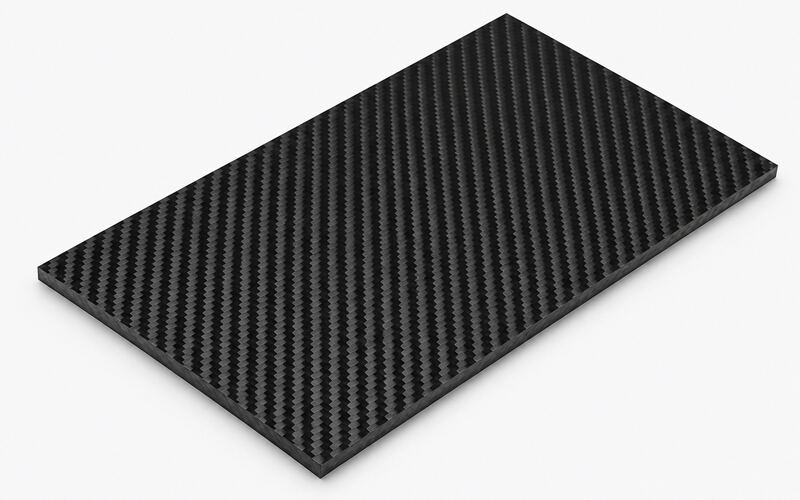
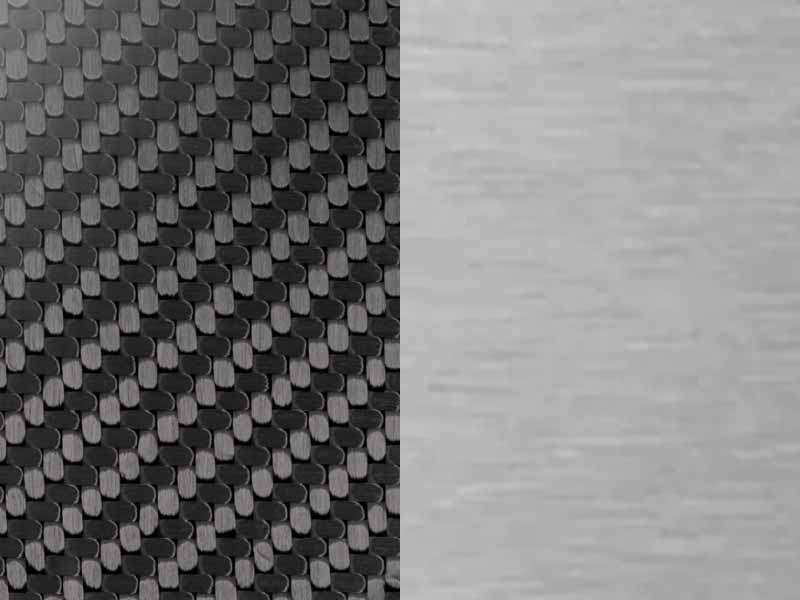
A 2×2 twill weave is common for carbon fiber surface panels needing a uniform visual pattern.
Fiberglass is often supplied as plain weave or mat for cost-sensitive structural layers.
Reinforcement format selection depends on load direction and surface finish requirements.
Mechanical Performance of Carbon Fiber and Fiberglass
Mechanical comparisons focus on strength-to-weight ratio, stiffness, toughness, and fatigue response under repeated loading.
Strength-to-Weight Ratio Comparison
Carbon fiber consistently outperforms fiberglass in strength-to-weight ratio, which is why it dominates weight-critical designs.
This ratio is calculated by dividing tensile strength by material density.
Fiberglass remains competitive when weight is not the primary design constraint. Engineers weigh this ratio against cost and impact requirements before finalizing material choice.
Rigidity and Flex Tolerance
Carbon fiber laminates resist bending more than fiberglass laminates of equal thickness because of their higher modulus.
Fiberglass allows more controlled flex, which benefits parts like leaf springs or flexible panels.
Rigidity needs depend on whether the application requires stiffness or elastic deformation.
Toughness and Breaking Point
Fiberglass generally shows higher elongation before failure, giving it greater toughness under sudden loading.
Carbon fiber reaches its breaking point at a lower strain percentage despite higher tensile strength.
This behavior means carbon fiber parts can fail with less visible deformation beforehand.
Toughness requirements often guide fiber selection in safety-critical components.
Fatigue Behavior Under Cyclic Loading
Carbon fiber composites typically show strong fatigue resistance because their high stiffness limits repeated microstrain.
Fiberglass can also perform well in fatigue but may show more gradual stiffness loss over cycles.
Fatigue behavior is controlled by fiber volume fraction, resin quality, and load amplitude.
Thermal and Electrical Behavior Differences
Carbon fiber and fiberglass respond differently to heat and electrical current, which affects application suitability.
Coefficient of Thermal Expansion Comparison
Carbon fiber has a very low coefficient of thermal expansion, which helps maintain dimensional stability under temperature change.
Fiberglass expands more with temperature shifts due to its glass composition.
This difference matters in precision components like optical mounts or aerospace structures.
Electrical Conductivity Differences
Carbon fiber is electrically conductive, while fiberglass is an electrical insulator.
This conductivity can interfere with nearby electronics or create galvanic corrosion risk near metal fasteners.
Fiberglass is often chosen for radomes, electrical housings, or RF-transparent parts.
Conductivity requirements strongly influence fiber selection in electronics-adjacent applications.
High-Temperature Service Limits
Carbon fiber composites generally maintain mechanical properties at higher service temperatures than standard fiberglass laminates.
Actual limits depend heavily on the resin system rather than the fiber alone.
Selecting a high-temperature resin extends service range for either fiber type.
Application heat exposure should guide both fiber and resin selection together.
Corrosion, Moisture, and Environmental Resistance
Environmental exposure affects long-term durability, particularly in marine, chemical, and outdoor applications for both fiber types.
Chemical and Corrosion Resistance
Fiberglass resists many chemical environments well, which is why it is common in tanks and marine hulls.
Carbon fiber also resists corrosion but its resin matrix, not the fiber, typically limits chemical exposure.
Galvanic corrosion can occur when carbon fiber contacts certain metals in moist environments.
Resin selection remains the primary control for chemical resistance in both fiber types.
Moisture Absorption Behavior
Fiberglass can absorb slightly more moisture over time compared with carbon fiber, depending on resin quality.
Moisture absorption can reduce interlaminar strength and promote fiber-matrix debonding.
Controlling resin content and curing quality limits this risk for both materials.
Manufacturing and Processing Comparison
Processing methods, tolerances, and finishing requirements differ between carbon fiber and fiberglass production.
| Processing Factor | Carbon Fiber | Fiberglass |
|---|---|---|
| Pultrusion Processing | Carbon fiber requires tighter tension control during pultrusion because of its brittleness. Consistent fiber tension reduces waviness and improves dimensional accuracy. | Fiberglass tolerates more handling variation during pultrusion without fiber breakage. Pultrusion speed and resin bath saturation still affect void content. |
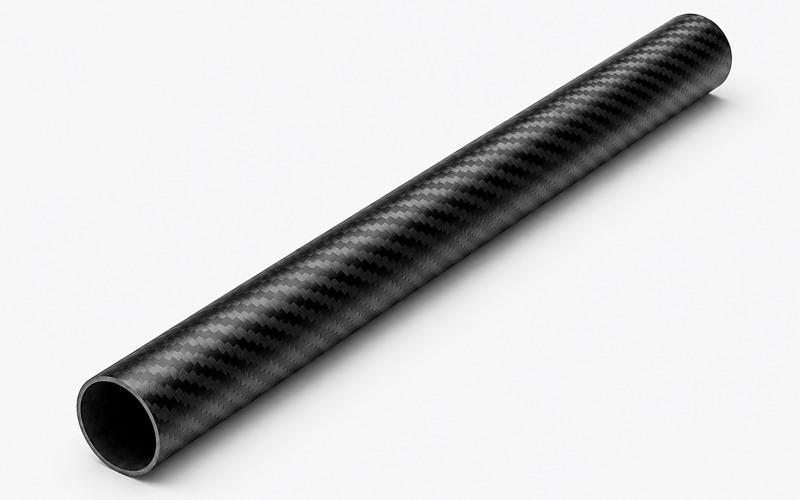
| Dimensional Tolerance and Consistency | Carbon fiber parts often achieve tighter dimensional tolerance because of high stiffness and low thermal expansion. A tolerance range such as plus or minus 0.1 mm is achievable for precision carbon fiber tubes. | Fiberglass parts may show slightly more dimensional drift under temperature or humidity change. Tolerance requirements should be matched to fiber type during early design stages. |
| Machining and Secondary Finishing | Carbon fiber requires diamond-coated tooling to avoid excessive wear and fiber pull-out when cutting carbon fiber. | Fiberglass is softer and easier to machine but can still cause delamination if feed rates are too aggressive. |
| Edge Sealing | Secondary finishing such as edge sealing helps prevent moisture ingress after machining. | Edge sealing also improves long-term durability after trimming, drilling, or sanding. |
Failure Modes and Inspection Considerations
Understanding crack behavior and inspection methods helps prevent unexpected failure in carbon fiber and fiberglass parts.
Crack Propagation and Fracture Patterns
Carbon fiber tends to fail suddenly with sharp fracture lines due to its brittle nature.
Fiberglass often shows more gradual cracking, giving visible warning before full failure.
Fiber orientation affects the direction crack propagation follows through the laminate. Resin-rich areas can accelerate crack growth in either material.
Inspection Methods for Defect Detection
Ultrasonic testing and visual inspection are common methods for detecting delamination or voids in both fiber types.
Carbon fiber’s conductivity allows some specialized electrical inspection techniques not applicable to fiberglass.
Fiberglass defects are sometimes easier to spot visually due to lower opacity in the laminate.
Choosing the right inspection method depends on part thickness and defect type expected.
Choosing Carbon Fiber or Fiberglass for an Application
Application requirements for stiffness, cost, flexibility, and weight determine whether carbon fiber, fiberglass, or a hybrid fits best.
When Carbon Fiber Stiffness Justifies Higher Cost
Carbon fiber is chosen when weight reduction and high stiffness directly improve performance, such as in aerospace or racing components.
The higher fiber modulus reduces deflection without adding wall thickness.
This benefit often outweighs the higher material and processing cost in performance-critical parts.
When Fiberglass Flexibility is More Practical
Fiberglass suits applications needing impact tolerance, lower cost, or controlled flex rather than maximum stiffness.
Its higher elongation before failure makes it safer in unpredictable loading conditions.
Fiberglass is common in boat hulls, storage tanks, and general structural panels.
Cost-sensitive projects often default to fiberglass unless a specific performance limit requires carbon fiber.
Hybrid Laminate Design Using Both Fibers
Hybrid laminates combine carbon fiber and fiberglass layers to balance stiffness, cost, and impact resistance.
- Define the main load path and stiffness requirement first.
- Place carbon fiber layers in high-load or low-deflection directions.
- Use fiberglass layers where toughness, cost control, or impact tolerance matters.
- Check resin compatibility between both fiber types before production.
- Validate the hybrid layup with testing when the part is structural or safety-related.
FAQ
Is Carbon Fiber Always Stronger Than Fiberglass?
Carbon fiber usually offers higher tensile strength per weight, but not in every property. Fiberglass can outperform carbon fiber in impact toughness and elongation before failure.
Which Material is More Impact Resistant?
Fiberglass generally resists impact better due to its higher elongation before fracture. Carbon fiber is stiffer but can fail more suddenly under sharp impact.
Why Does Carbon Fiber Cost More Than Fiberglass?
Carbon fiber requires an energy-intensive carbonization process from a polymer precursor. Fiberglass uses simpler and lower-cost melting and drawing methods.
Can Carbon Fiber and Fiberglass be Combined in One Laminate?
Yes, hybrid laminates combine both fibers to balance stiffness, cost, and toughness. Resin compatibility must be checked to ensure proper bonding between layers.
Which Material is Better for High-Flex Applications?
Fiberglass generally performs better in high-flex applications due to its elasticity. Carbon fiber’s high stiffness makes it less suited for repeated bending.