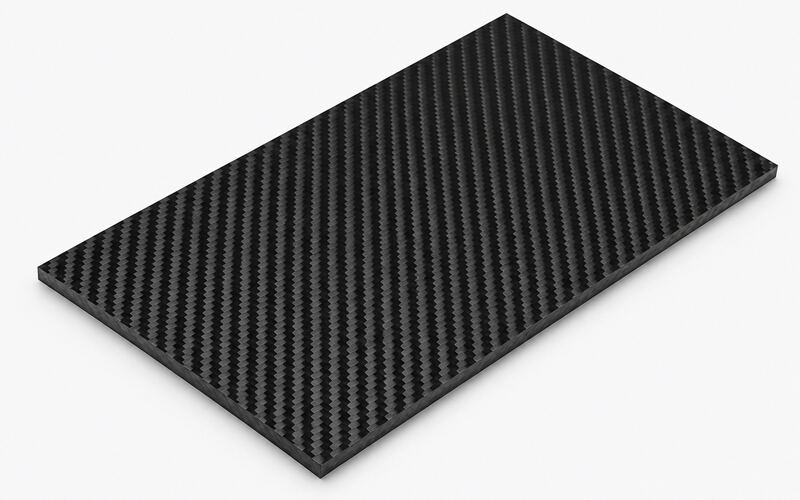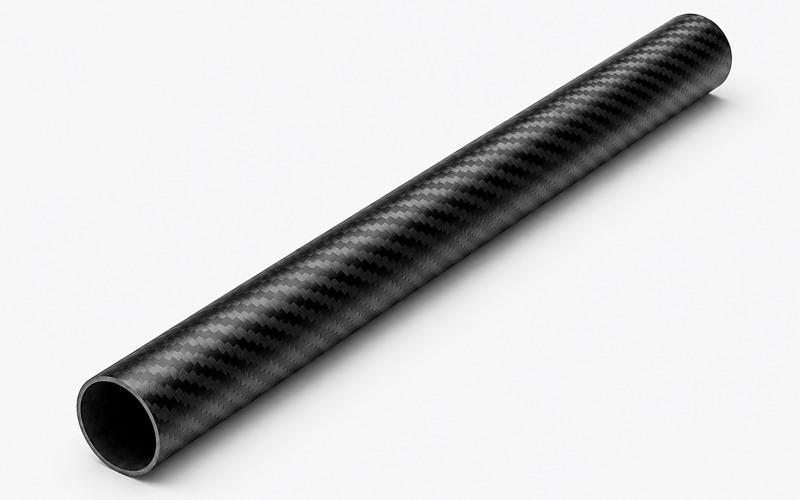
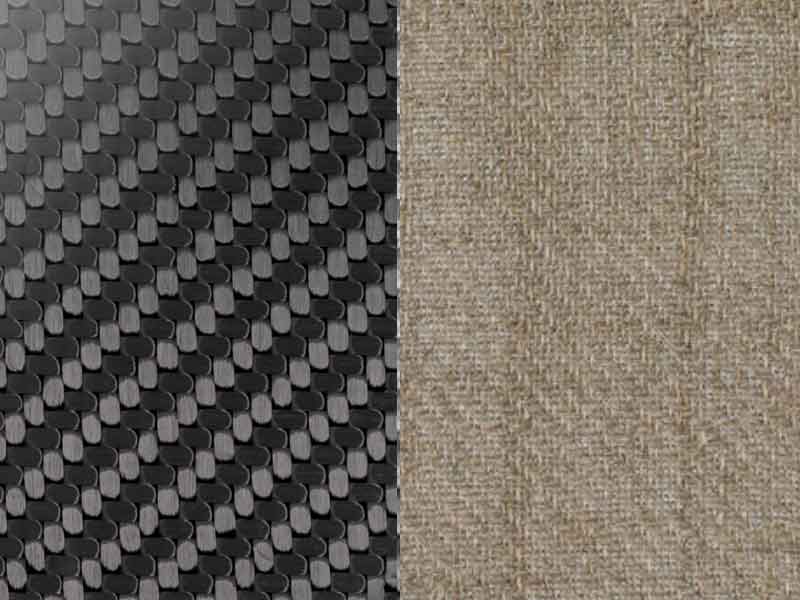
Flax fiber and carbon fiber are lightweight reinforcements used in polymer composite structures. Flax comes from renewable plant material and provides natural vibration damping, gradual impact behavior, and lower material cost. Carbon fiber uses an engineered carbon structure to deliver substantially higher strength, stiffness, fatigue resistance, and dimensional stability.
The correct reinforcement depends on structural loads, allowable deflection, moisture exposure, vibration requirements, manufacturing methods, sustainability targets, and total component cost.
What Are Flax Fiber and Carbon Fiber Composites
Flax fiber and carbon fiber reinforce polymer matrices to form composite laminates. The resin transfers loads between fibers, protects the reinforcement, and controls much of the chemical, thermal, and environmental performance.
Flax Fiber Reinforcement
Flax fiber comes from the stem of the flax plant. Its internal structure contains cellulose microfibrils bound by hemicellulose, lignin, and other natural constituents.
The fiber has relatively low density, moderate stiffness, and strong internal damping. These properties make flax suitable for semi-structural panels, vehicle interiors, sporting products, acoustic components, and parts exposed to vibration.
Carbon Fiber Reinforcement
Carbon fiber is commonly produced by stabilizing and carbonizing polyacrylonitrile precursor filaments. Controlled thermal processing removes non-carbon elements and creates an aligned carbon structure along the fiber axis.
This alignment gives carbon fiber high tensile strength and elastic modulus relative to its weight. Carbon fiber composites are therefore widely used in structural components that require high rigidity, low mass, and limited deformation.
Common Resin Systems
Both reinforcements can be combined with epoxy, polyester, vinyl ester, and selected thermoplastic matrices. Epoxy is often used where structural strength and fiber bonding are priorities.
Flax fiber is also paired with partially or fully biobased resin systems to increase renewable content. The environmental advantage depends on the complete laminate, manufacturing process, service life, and end-of-life route rather than the fiber alone.
Key Differences Between Flax Fiber and Carbon Fiber
Fiber origin, stiffness, moisture behavior, vibration damping, and production cost create substantial differences between flax and carbon fiber composites.
| Property | Flax Fiber | Carbon Fiber |
|---|---|---|
| Fiber origin | Natural cellulosic fiber extracted from flax plant stems | Synthetic carbon-rich fiber produced through controlled thermal processing |
| Density | Lower fiber density, although thicker laminates may be needed | Slightly higher fiber density but greater stiffness per unit thickness |
| Tensile strength | Moderate strength for lightly loaded and semi-structural components | High tensile strength for primary structural applications |
| Elastic modulus | Lower modulus and greater elastic deflection | High modulus and strong resistance to bending |
| Impact behavior | Absorbs energy through fiber deformation and progressive damage | Resists deformation but may fracture more abruptly |
| Vibration damping | High natural damping from internal fiber friction | Low inherent damping due to high structural rigidity |
| Moisture resistance | Absorbs moisture and may swell without suitable protection | Fiber remains dimensionally stable in humid conditions |
| Temperature resistance | Limited by thermal degradation of cellulose | Supports higher temperatures when paired with a suitable resin |
| Raw material cost | Generally lower | Higher due to precursor and thermal-processing costs |
| Sustainability | Renewable agricultural reinforcement with relatively low embodied energy | Energy-intensive reinforcement with higher mechanical performance |
Mechanical Performance
Mechanical properties depend on fiber quality, orientation, resin selection, fiber volume fraction, moisture content, cure conditions, and laminate defects. Fiber data alone cannot predict the final performance of a molded component.
Tensile Strength and Modulus
Carbon fiber provides substantially higher tensile strength and elastic modulus than flax fiber. Standard structural carbon fiber may have a tensile modulus near 230 GPa, while flax fiber values are much lower and vary with plant source, extraction, moisture, and testing method.
This difference makes carbon fiber suitable for beams, tubes, panels, and shells that must resist deformation under high loads. Flax fiber works better in parts where moderate rigidity is acceptable.
Specific Strength and Stiffness
Flax fiber has low density, which contributes to a useful stiffness-to-weight ratio in lightly loaded structures. However, carbon fiber provides much higher mechanical performance relative to component weight.
A flax laminate may require additional thickness to achieve the stiffness of a carbon fiber part. The larger section increases resin use and may offset part of the fiber’s density advantage.
Impact Resistance and Energy Absorption
Flax fiber composites tend to dissipate impact energy through fiber deformation, matrix cracking, interfacial separation, and fiber pull-out. Damage often develops progressively rather than through immediate brittle fracture.
Carbon fiber laminates resist initial deformation because of their high stiffness. A concentrated impact can still cause internal delamination, matrix cracking, or broken fibers even when surface damage appears limited.
Fatigue and Failure Behavior
Carbon fiber composites generally retain stiffness effectively under repeated loading when fiber orientation and resin content are properly controlled. Their fatigue resistance supports aerospace, automotive, sporting, and robotic structures exposed to cyclic stress.
Flax fiber laminates can develop progressive microcracking and fiber-matrix separation. Moisture, voids, inconsistent fiber quality, and weak interfacial bonding may accelerate fatigue damage.
Damping and Vibration Performance
Damping capacity controls how quickly a structure dissipates vibration energy. This characteristic is important in vehicle panels, sporting products, musical instruments, machine covers, and other dynamically loaded components.
Natural Damping of Flax Fiber
Flax fiber contains a complex microfibrillar structure that dissipates vibrational energy through internal friction. This behavior can reduce resonance amplitude and limit the transmission of vibration through a panel.
The resin, fiber orientation, laminate thickness, and interface quality also influence damping. Flax reinforcement does not eliminate vibration, but it generally dissipates energy more effectively than carbon fiber.
Structural Rigidity of Carbon Fiber
Carbon fiber limits deformation because of its high modulus. This structural rigidity can raise natural frequencies and reduce visible flexing, but it does not provide strong inherent energy dissipation.
Designers may add elastomeric layers, foam cores, flax plies, or other damping materials when a carbon structure must control resonance or noise.
Applications Affected by Vibration
Flax fiber is attractive for automotive interior panels, speaker components, sporting equipment, instrument bodies, and enclosures where vibration control affects comfort or acoustic behavior.
Carbon fiber remains preferred when dimensional rigidity and precise load response are more important than damping. Hybrid construction can balance these requirements.
Thermal and Environmental Performance
Temperature, moisture, ultraviolet exposure, and weather cycling influence long-term composite durability. The resin matrix often reaches its environmental limit before the reinforcement fiber.
Service Temperature and Thermal Stability
Flax fiber contains cellulose that begins to degrade at lower temperatures than carbon reinforcement. High molding or service temperatures may discolor the fiber, reduce strength, or damage the fiber-resin interface.
Carbon fiber remains stable across a wider temperature range. The practical limit of a carbon fiber composite still depends on resin glass-transition temperature, oxidation conditions, and exposure duration.
Moisture Absorption and Dimensional Change
Flax fiber absorbs water because of its hydrophilic chemical structure. Moisture can cause swelling, dimensional change, reduced interfacial adhesion, and gradual mechanical-property loss.
Carbon fiber itself absorbs little moisture. Water can still enter the resin, voids, cut edges, or damaged interfaces, but dimensional stability is generally better than in flax fiber laminates.
Weathering and Long-Term Durability
Outdoor flax composites require suitable resin coverage, sealed edges, coatings, or surface treatments. Ultraviolet exposure and repeated wet-dry cycles can degrade an unprotected laminate.
Carbon fiber composites usually provide stronger long-term dimensional stability. Their resin and clear coat still require ultraviolet protection because prolonged exposure may cause discoloration, surface cracking, or matrix degradation.
Composite Manufacturing Differences
Flax and carbon fiber can use similar molding methods, but their moisture sensitivity, handling behavior, product consistency, and machining response create different production requirements.
| Manufacturing Factor | Flax Fiber | Carbon Fiber |
|---|---|---|
| Compatible resins | Works with epoxy, polyester, vinyl ester, and selected biobased systems | Works with structural epoxy, polyester, vinyl ester, and thermoplastic matrices |
| Vacuum infusion | Flexible fabrics support resin flow but may absorb more resin | Tight fabric structures require controlled flow to prevent dry areas |
| Prepreg processing | Available in selected systems with careful temperature and moisture control | Widely available with accurate resin content and laminate thickness |
| Moisture control | Requires drying before molding to reduce vapor and void formation | Requires less moisture management before processing |
| Cure temperature | Excessive temperature can damage the natural fiber | Can tolerate higher cure temperatures with a compatible matrix |
| Material consistency | Natural variation affects fiber dimensions, strength, and resin uptake | Industrial production provides more consistent properties between batches |
| Cutting and machining | May fray or produce rough edges without suitable blades | Requires sharp or diamond-coated tools to limit delamination |
| Surface finish | Natural texture and color may remain visible | Produces a more uniform technical or cosmetic appearance |
Flax and Carbon Fiber Hybrid Composites
Hybrid laminates combine flax and carbon fiber layers to balance stiffness, damping, impact behavior, weight, and cost. Carbon plies carry higher structural loads, while flax plies add damping and more progressive damage behavior.
Reasons to Combine Both Fibers
A hybrid design can reduce the amount of carbon fiber without removing it entirely. This lowers material cost and embodied energy while retaining part of the stiffness advantage of carbon reinforcement.
Flax layers may also reduce vibration transmission and soften the failure response of an otherwise brittle carbon laminate.
Layer Arrangement and Interlaminar Bonding
Ply sequencing determines how loads move between flax and carbon layers. Carbon fiber positioned near the outer surfaces of a bending laminate increases flexural rigidity because those plies sit farther from the neutral axis.
Flax plies placed toward the middle can add thickness, damping, and impact absorption. The resin must bond reliably to both fiber types to prevent interlaminar separation.
Strength, Damping, and Cost Balance
Hybrid construction does not automatically provide the best properties of both fibers. Adding flax may reduce stiffness, while adding carbon may reduce damping and increase cost.
The layer ratio, orientation, resin content, and component geometry must match the required structural and vibration targets.
Delamination and Manufacturing Risks
Differences in moisture content, thermal expansion, surface treatment, and fiber architecture can create internal stress during curing and service. Poor bonding may initiate delamination under impact or repeated flexural loading.
Controlled drying, compatible sizing, stable cure temperature, and sample testing reduce these risks.
Cost and Sustainability Comparison
Material selection should consider raw fiber pricing, resin use, laminate thickness, labor, processing energy, service life, and end-of-life requirements.
Raw Material Cost
Flax fiber generally costs less per kilogram than carbon fiber. It requires less energy-intensive production and uses renewable agricultural feedstock.
Carbon fiber pricing reflects precursor cost, stabilization, carbonization, surface treatment, quality control, and fabric conversion. Higher-modulus and aerospace-qualified grades cost more than general industrial materials.
Processing and Finished Component Cost
Flax fiber can reduce raw material expense, but moisture control, drying, resin absorption, and edge finishing add processing requirements. A thicker laminate may also be needed to meet a stiffness target.
Cutting carbon fiber requires tighter process control, along with careful layup, curing, and inspection. Its high performance can reduce wall thickness, component weight, supporting structure size, or energy consumption during service.
Renewable Content and Environmental Impact
Flax is renewable and stores carbon while the crop grows. Its production generally uses less energy than carbon fiber manufacturing.
The overall environmental result also depends on farming, fiber extraction, transport, resin chemistry, manufacturing waste, durability, and disposal. A component with a longer service life may offset part of its higher initial production impact.
Biobased Resin Tradeoffs
Pairing flax with biobased resin increases renewable content. Some formulations provide lower heat resistance, toughness, or moisture stability than established petroleum-based epoxy systems.
Biobased content alone does not define composite performance. Resin formulation, curing, fiber treatment, and laminate quality remain essential.
Choosing Flax Fiber or Carbon Fiber
The correct choice depends on structural demand, vibration, environmental exposure, weight targets, appearance, budget, and sustainability objectives.
When to Choose Flax Fiber
Flax fiber is suitable when the component requires:
- Natural vibration and acoustic damping
- Moderate strength for semi-structural loads
- Lower raw material cost
- Renewable reinforcement and reduced embodied energy
- Progressive impact damage and energy absorption
- Lightweight interior panels or covers
- A visible natural fiber appearance
When to Choose Carbon Fiber
Carbon fiber is more suitable when the component requires:
- High tensile strength and elastic modulus
- Minimal deflection under structural loads
- Low weight with a thin laminate section
- Strong fatigue resistance
- Dimensional stability in humid conditions
- Higher processing or service temperatures
- Primary structural load capacity
When to Use a Hybrid Laminate
A flax-carbon hybrid suits components that need more stiffness than flax alone but greater damping or lower cost than a full carbon laminate. Possible applications include vehicle panels, sporting products, enclosures, instrument structures, and vibration-sensitive covers.
Hybrid designs require laminate analysis and physical testing because ply arrangement strongly affects bending stiffness, impact behavior, delamination, and fatigue life.
FAQ
Is Flax Fiber as Strong as Carbon Fiber?
No. Flax fiber generally has lower tensile strength and substantially lower elastic modulus than carbon fiber. It is better suited to semi-structural components than primary high-load structures.
Is Flax Fiber Lighter Than Carbon Fiber?
Flax fiber has lower fiber density, but this does not always produce a lighter finished component. Carbon fiber may achieve the required stiffness with a thinner laminate and lower total part weight.
Can Flax and Carbon Fiber Be Combined?
Yes. Flax and carbon fiber can be combined in hybrid laminates to balance stiffness, damping, impact behavior, and cost. Ply sequencing and interlaminar bonding require careful control.
Which Fiber Has Better Vibration Damping?
Flax fiber provides better natural vibration damping because its internal structure dissipates energy through friction and deformation. Carbon fiber provides higher rigidity but limited inherent damping.
Which Fiber Has Better Moisture Resistance?
Carbon fiber has better moisture resistance. Flax fiber absorbs water and may swell unless the laminate has suitable resin coverage, sealed edges, coatings, and controlled void content.
Does Biobased Resin Reduce Composite Strength?
Some biobased resin formulations provide lower strength, heat resistance, or moisture stability than conventional structural epoxy. Performance depends on resin chemistry, biobased content, curing, and fiber compatibility.