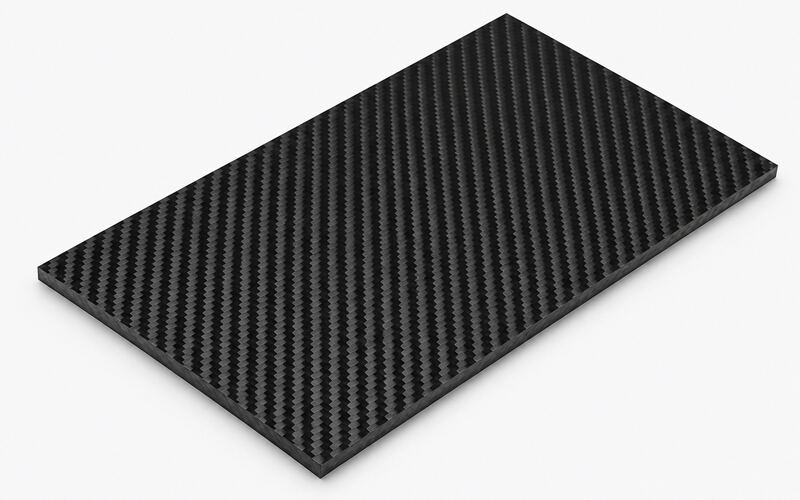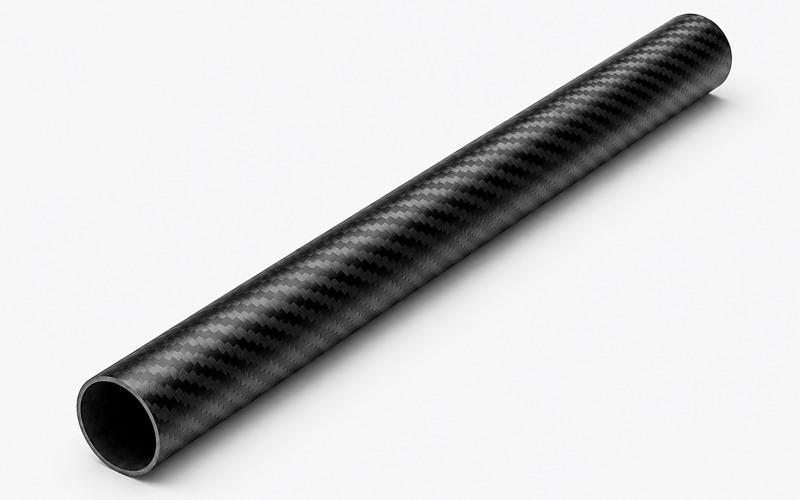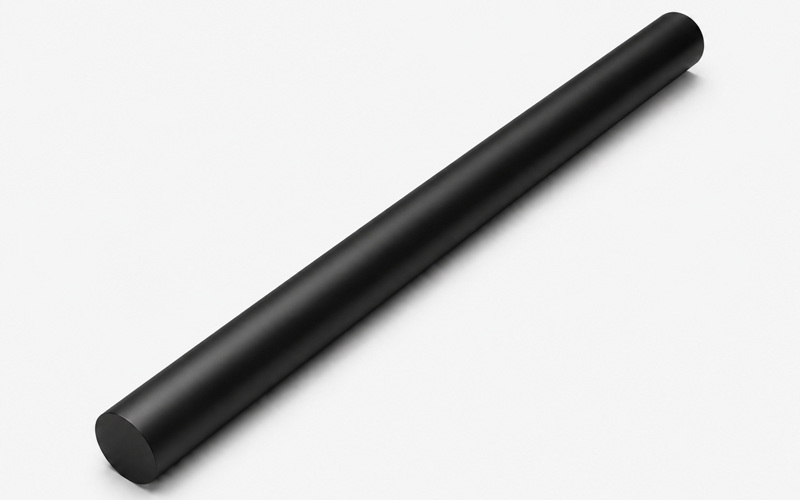
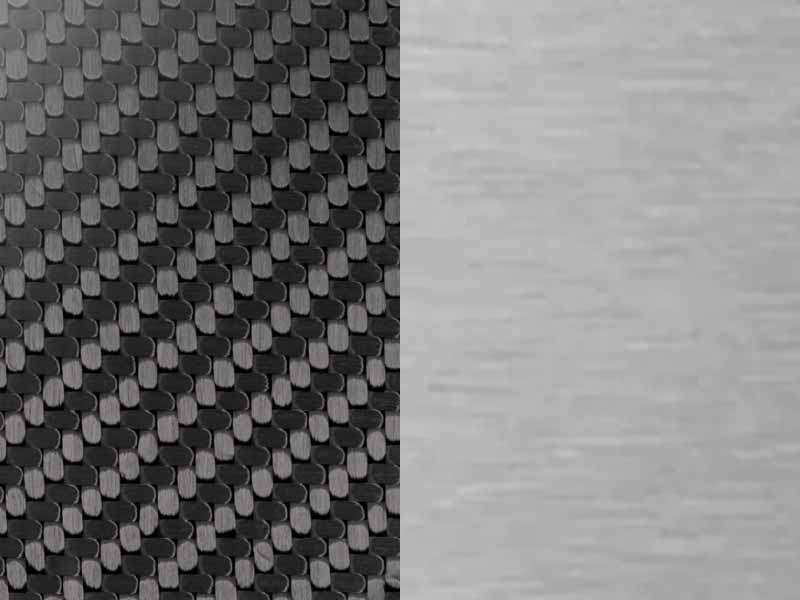
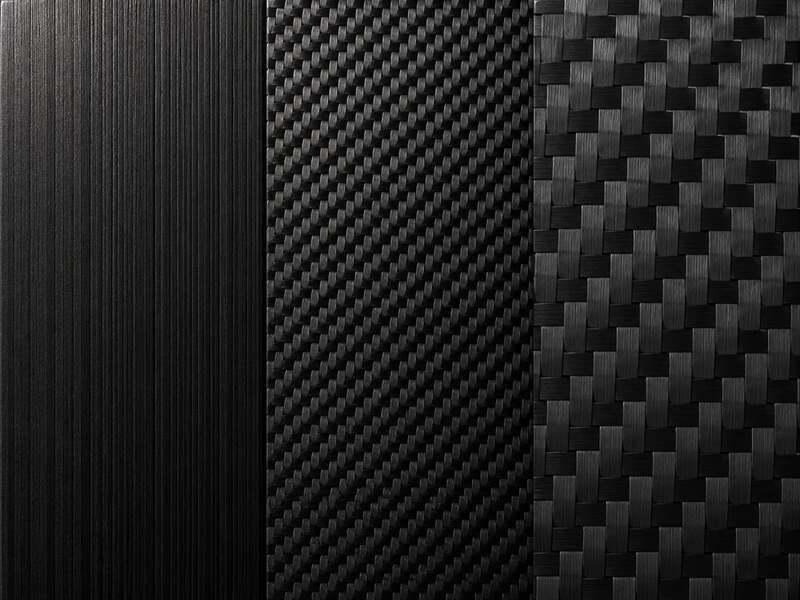
Carbon fiber is made of thin filaments bundled into tows, with a 3K tow offering a fine weave for smooth cosmetic surfaces.
Fiber orientation within the laminate controls how loads travel through a carbon fiber part. Aligning fibers with the primary load path increases stiffness and reduces unnecessary resin bulk.
Steel alloys are classified by carbon content and added elements such as chromium, nickel, or molybdenum. Higher alloy content generally raises strength and wear resistance.
Key Differences Between Carbon Fiber and Steel
This section compares density, strength to weight ratio, stiffness, and cost between carbon fiber and steel.
| Factor | Carbon Fiber | Steel |
|---|---|---|
| Density and Weight | Carbon fiber has a density of roughly 1.6 g/cm³, which helps reduce mass and inertia in moving parts. | Structural steel is closer to 7.85 g/cm³, making it heavier but predictable for stability-critical designs. |
| Strength to Weight | Carbon fiber composites deliver a high strength to weight ratio when fibers align with the main load path. | Steel achieves strength through alloy composition and heat treatment, but with higher mass. |
| Stiffness | Stiffness depends on fiber modulus and layup sequence, so rigidity can be tuned by direction. | Steel stiffness is nearly isotropic and remains more consistent in all directions. |
| Cost and Volume | Carbon fiber material and processing costs remain higher, especially in low-volume production. | Steel benefits from mature supply chains, rolling, stamping, and high-volume automation. |
Material and Production
This section outlines how carbon fiber composites are laid up compared to how steel parts are formed.
Composite Layup vs Steel Forming
Carbon fiber layup involves stacking fabric or prepreg sheets into a mold before curing, while steel forming uses stamping, rolling, or forging on solid stock.
Layup sequence in composites directly affects strength direction and surface finish.
Steel forming relies on die design and material flow rather than fiber alignment.
Prepreg vs Wet Layup
Prepreg and wet layup differ mainly in resin control, cure consistency, and defect risk.
- Prepreg fabric arrives pre-impregnated with resin before layup.
- Prepreg is cured at a controlled 120 °C in an autoclave or oven.
- Controlled prepreg cure improves resin distribution and reduces void formation.
- Wet layup applies resin manually onto dry fabric.
- Wet layup increases the risk of uneven resin content and surface defects.
Choosing between prepreg and wet layup depends on required consistency, part size, and available curing equipment.
Steel Heat Treatment
Steel heat treatment adjusts hardness and toughness through controlled heating and cooling cycles.
Quenching increases hardness, while tempering restores ductility after quenching.
Selecting the right cycle depends on the intended load and wear conditions of the part.
Mechanical Performance
This section reviews tensile strength, compression behavior, impact resistance, and fatigue life for both materials.
| Performance Factor | Carbon Fiber | Steel |
|---|---|---|
| Tensile Strength | The tensile strength of carbon fiber can reach around 3400 MPa for standard grades along the fiber direction. Off-axis loading reduces effective capacity. | Structural steel grades offer lower tensile strength than carbon fiber along the fiber axis, but perform consistently in every direction. |
| Compression Strength | Carbon fiber composites are sensitive to compression because fiber buckling can occur under axial load. | Steel resists compression more predictably because of its isotropic metallic structure. |
| Impact Resistance | Carbon fiber composites can fracture or delaminate without obvious surface warning after impact. | Steel usually absorbs impact through plastic deformation, making damage easier to see. |
| Fatigue Life | Carbon fiber can maintain good fatigue life when loads stay within fiber-dominated directions. | Steel fatigue life depends on surface finish, weld quality, holes, and stress concentration points. |
Thermal and Environmental Performance
This section explains how carbon fiber and steel respond to temperature change, heat exposure, corrosion, and electrical loading.
Thermal Expansion
Carbon fiber laminates show near-zero thermal expansion along the fiber direction, which helps maintain dimensional stability across temperature swings. Steel expands more uniformly with heat, which can affect fit in precision assemblies.
Mixing materials in a hybrid structure requires accounting for this expansion mismatch to avoid stress buildup at joints.
Heat Resistance
Carbon fiber parts depend on the resin system for heat resistance, since the resin softens before the fibers lose strength. Steel retains structural integrity at higher temperatures until it approaches its own melting or tempering range.
Selecting a high-temperature resin extends the usable service range of a carbon fiber composite exposed to heat.
Corrosion Resistance
Carbon fiber composites do not rust, though resin can degrade under prolonged UV or moisture exposure. Steel requires coatings, galvanizing, or alloying with chromium to resist corrosion in humid or marine environments. Choosing a stable resin system protects carbon fiber composite surfaces from long-term environmental degradation.
Electrical Conductivity
Carbon fiber conducts electricity, unlike most non-metallic composites. Steel is also conductive but behaves differently under electromagnetic exposure.
Machining and Joining
This section covers cutting, bonding, welding, and repair approaches for carbon fiber and steel parts.
| Process | Carbon Fiber | Steel |
|---|---|---|
| Cutting and Drilling | Proper carbon fiber cutting requires diamond-coated tools, controlled feed rates, and edge support to avoid delamination, fraying, splintering, or resin burn. | Uses high-speed steel or carbide tooling with coolant to manage heat and tool wear. |
| Tolerance Control | A machining tolerance around 0.1 mm helps prevent fiber pullout near drilled holes and assembly interfaces. | Steel can hold tight tolerances through machining, grinding, and standard metalworking processes. |
| Joining | Usually joined with structural adhesives because welding heat damages the resin matrix. | Commonly welded, bolted, riveted, or mechanically fastened. |
| Repair | Often repaired by scarfing the damaged area and applying new carbon fabric and resin patches. | Usually repaired by welding, machining, straightening, or replacing the damaged section. |
Defects and Inspection
This section reviews common defects in carbon fiber composites and steel, along with inspection methods used to detect them.
Delamination and Porosity
Delamination occurs when layers separate due to poor resin bonding or trapped air during cure. Controlling void content below 1% reduces the risk of delamination and improves interlaminar strength.
Porosity often forms from incomplete resin flow or incorrect cure pressure.
Monitoring cure parameters closely helps prevent both delamination and porosity in finished laminates.
Cracks and Fatigue
Steel cracks typically start at surface flaws, welds, or stress concentration points under repeated loading. Carbon fiber cracking often begins at fiber breaks or resin-rich zones within the laminate.
Identifying crack origin early helps determine whether a repair or full replacement is needed.
Inspection Methods
Inspection method should match the material and likely defect type:
- Ultrasonic testing detects internal delamination in carbon fiber composites without damaging the part.
- Magnetic particle testing is commonly used to find surface and near-surface cracks in steel.
- Radiography can detect subsurface cracks or internal flaws in steel parts.
- Visual inspection can identify surface damage but may miss hidden composite delamination.
- The right inspection method depends on defect type and part accessibility.
Cost and Scalability
This section examines how material, tooling, and labor costs compare between carbon fiber and steel production.
Materials and Tooling
Carbon fiber tooling requires precision molds that can withstand cure temperature and pressure cycles. Steel tooling for stamping or forging is generally more durable and reusable across higher volumes.
Mold quality directly affects surface finish and dimensional accuracy of the finished carbon fiber composite.
Labor and Production Scale
Carbon fiber layup often requires skilled manual labor, especially for complex geometries. Steel forming is more easily automated, which lowers labor cost at higher production volumes.
Scaling carbon fiber production usually requires automated layup or resin infusion to reduce labor dependency.
Carbon Fiber or Steel
This section summarizes when to select carbon fiber, when to select steel, and how hybrid structures combine both.
When to Choose Carbon Fiber
Choose carbon fiber when these requirements matter most:
- Weight reduction is a primary design goal.
- Directional stiffness control is more important than isotropic strength.
- The part works mainly along predictable load paths.
- Aerospace, motorsport, robotics, or high-performance sporting applications require low mass.
- The project can support specialized tooling, layup, curing, and inspection.
Selecting the correct fiber grade and layup sequence ensures the part meets its intended load requirements.
When to Choose Steel
Steel remains preferable for high-volume production, impact-heavy applications, and budget-sensitive projects. Its predictable isotropic strength simplifies design and reduces engineering complexity.
Choosing steel also avoids the specialized tooling and curing equipment required for composite manufacturing.
Hybrid Structures
Hybrid structures combine carbon fiber and steel to balance weight savings with impact resistance or cost control. Use a controlled design process when combining both materials:
- Define which material carries the main load path.
- Account for thermal expansion differences between carbon fiber and steel.
- Select bonding, bolting, or combined joining based on load, service temperature, and repair needs.
- Prevent stress concentration where carbon fiber composite meets steel components.
- Use isolation layers or sealants when galvanic corrosion is a concern.
FAQ
Is Carbon Fiber Stronger Than Steel?
Carbon fiber offers higher strength relative to its weight along the fiber direction. Steel remains stronger under multidirectional or impact loading.
Why is Steel Still Widely Used?
Steel is cost-effective, easy to form, and performs reliably in every direction. It also suits high-volume manufacturing better than composite processes.
Can Carbon Fiber and Steel Be Combined?
Yes, hybrid structures bond or bolt carbon fiber components to steel frames. This approach balances weight savings with impact tolerance.
Which Material Costs More?
Carbon fiber generally costs more due to material price and manual labor. Steel becomes more economical as production volume increases.
How Does Fiber Direction Affect Strength?
Carbon fiber composites are strongest along the fiber axis. Loads applied off-axis reduce the effective strength of the laminate.