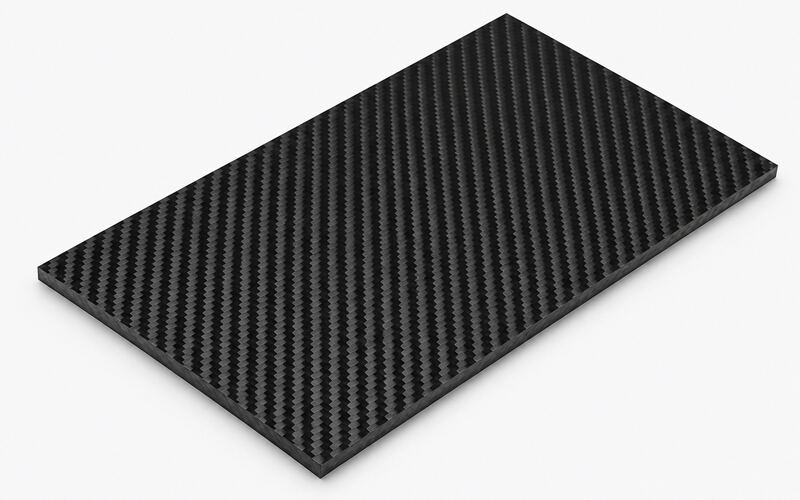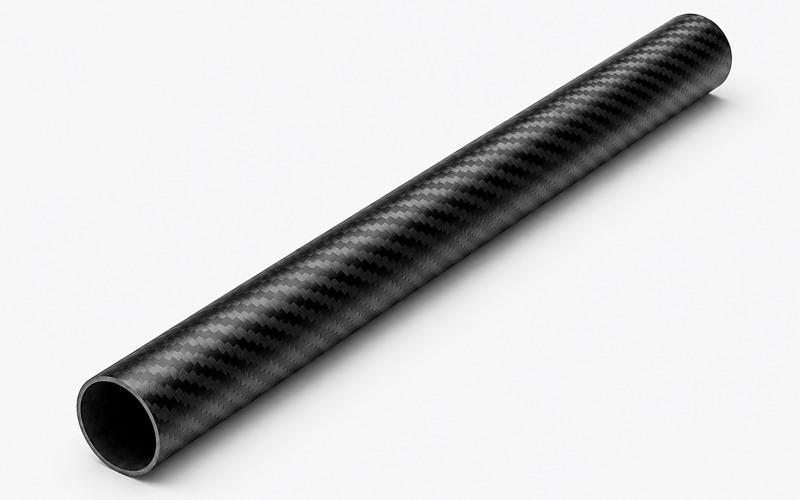
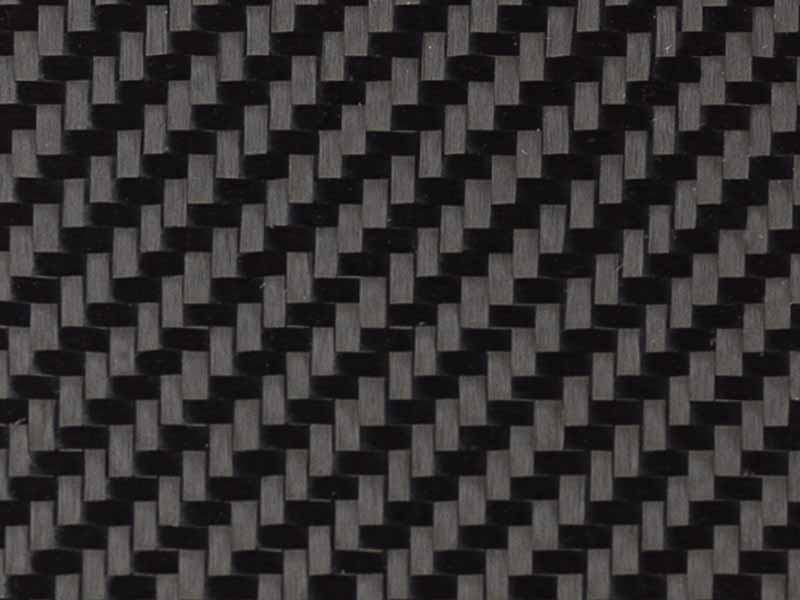
Main Structural Carbon Fiber Pattern Types
Structural patterns include different carbon fiber weave types, fiber orientations, and surface architectures that affect drape, appearance, and load behavior.
| Pattern Type | Main Feature | Best For | Main Limitation |
|---|---|---|---|
| Plain weave | Stable over-under interlacing | Flat panels and trim parts | Higher crimp |
| 2×2 twill | Diagonal pattern with lower crimp | Moderate curves and visible parts | Needs diagonal alignment control |
| 4×4 twill | Wider diagonal texture | Larger curved surfaces | Easier to distort during placement |
| Satin weave | Smooth surface and strong drape | Complex curvature | Tow sliding risk |
| Unidirectional | Fibers mainly in one direction | Directional stiffness | Placement errors affect response |
| Spread tow | Flat low-crimp bands | Smooth lightweight panels | Gaps and overlaps are visible |
Plain Weave Carbon Fiber Pattern
Plain weave uses frequent over-under interlacing, which locks the fabric and limits tow movement. This stability helps maintain visible alignment during cutting, handling, and layup.
The same interlacing creates higher crimp, so fibers deviate from the main load path. Designers use it for flat panels, trim parts, and laminates needing controlled appearance.
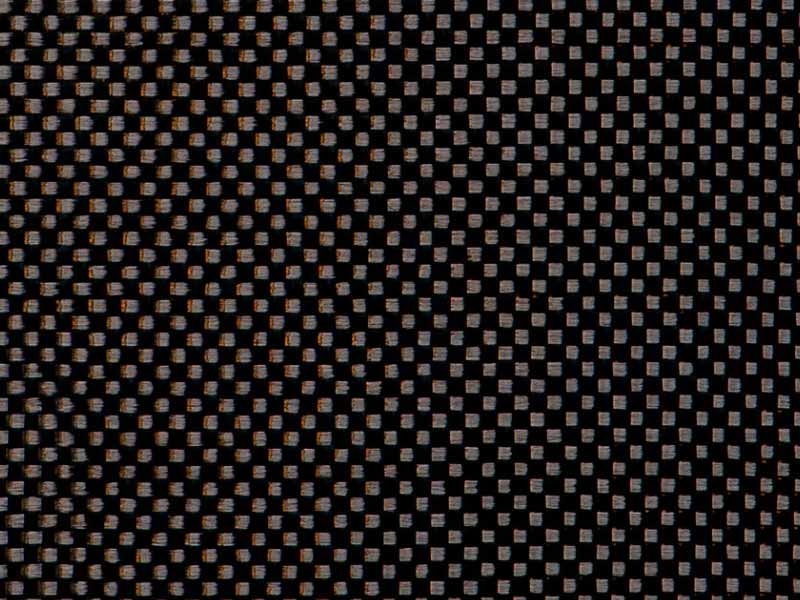
2×2 Twill Carbon Fiber Pattern
Twill weave creates a diagonal surface pattern with fewer interlacing points than plain weave. The lower crimp improves drape and helps fabric conform around moderate curves.
During layup, technicians must control diagonal orientation across adjoining plies. Poor alignment can create visual skew and uneven stiffness in the finished CFRP component.
4×4 Twill Carbon Fiber Pattern
4×4 twill has longer floats, giving a wider diagonal texture and softer handling. It can drape well, but the fabric becomes easier to distort during placement.
Layup teams usually use templates, reference lines, and careful debulking to preserve the pattern. If the tow path shifts, the part may show waviness and local stiffness loss.
Satin Weave Carbon Fiber Pattern
Satin weave reduces interlacing and produces a smoother surface with strong drape. It is useful where complex curvature requires fabric to move without severe wrinkling.
The long float structure needs careful handling because tows can slide during cutting. Controlled ply transfer and balanced compaction reduce weave distortion and surface streaks.
Unidirectional Carbon Fiber Pattern
Unidirectional fabric places most fibers in one main direction, so stiffness becomes highly directional. Engineers stack plies at planned angles to match tension, bending, and torsion loads.
This pattern has minimal woven texture and little visual symmetry. It requires accurate ply orientation because small placement errors can change laminate response.
Spread Tow Carbon Fiber Pattern
Spread tow flattens fiber bundles into thinner bands, producing a broad and low-crimp surface. The flatter path can improve laminate efficiency when processing control is consistent.
Because the tow is wide, gaps and overlaps become more visible during nesting. Operators control tension and placement to avoid resin pooling beside spread bands.
Decorative Carbon Fiber Surface Pattern Types
Decorative patterns focus on surface style, but they can still affect resin flow, finishing, and inspection visibility.
Forged Carbon Fiber Pattern
Forged carbon fiber uses randomly oriented chips or short segments inside a mold. Compression spreads the pieces into a marbled surface without regular woven repeats.
The visual result depends on charge placement, resin viscosity, mold closing speed, and pressure distribution. Uneven charge loading can create resin-rich zones, weak corners, or inconsistent surface density.
Chopped Carbon Fiber Pattern
Chopped carbon fiber pattern shows short fibers dispersed through a resin matrix. It is common in molded covers, housings, and parts with complex local features.
Flow direction can align some fibers and create visible streaking. Good mixing, controlled charge weight, and stable mold temperature help reduce dry fiber clusters.
Checkerboard and Micro Check Carbon Fiber Pattern
Checkerboard patterns use balanced visual blocks that make weave symmetry easy to inspect. Micro check versions use finer repeats and can hide small handling marks.
These patterns require consistent fabric orientation because rotation errors are easy to see. They are often selected when appearance repeatability matters across matched panels.
Colored Carbon Fiber Pattern
Colored carbon fiber pattern usually comes from dyed companion yarns, tinted resin, or surface coating systems. The color approach must remain compatible with the resin chemistry.
Heat exposure, ultraviolet aging, and sanding can change the visible tone. Process trials help confirm whether the color survives curing and finishing.
Printed Film and Hydrographic Carbon Fiber Pattern
Printed film and hydrographic finishes imitate carbon fiber patterns on non-structural surfaces. They do not create a true carbon fiber laminate.
Adhesion, coating thickness, and surface preparation control durability. These finishes can hide substrate defects, but they cannot replace structural fiber reinforcement.
Carbon Fiber Tow Size and Pattern Appearance
Tow size changes weave scale, surface texture, bend behavior, and how defects appear under clear resin.
1K Carbon Fiber Pattern
1K tow creates a fine visual scale for small parts and detailed cosmetic surfaces. The smaller bundle bends easily and shows tight pattern definition.
It needs careful handling because fine tows can fray during cutting. Stable resin wet-out helps preserve the crisp pattern without dry filaments.
3K Carbon Fiber Pattern
3K tow is widely used when a balanced cosmetic weave and manageable handling are required. It gives a recognizable pattern without excessive bundle width.
This tow size suits panels, tubes, shells, and visible trim parts. Controlled ply nesting keeps the repeat aligned across edges and joint lines.
6K and 12K Carbon Fiber Pattern
6K and 12K tows create a larger pattern scale and a more pronounced surface texture. The broader bundles can improve handling speed on larger laminates.
They need careful compaction because wide tows can bridge tight radii. If resin cannot fill around tow edges, small voids may follow the pattern.
24K Carbon Fiber Pattern
24K tow gives a coarse pattern with strong visual bands and larger tow footprints. It is often chosen where broad reinforcement coverage matters.
The larger bundle resists tight bending and can wrinkle on small features. Designers should match the tow scale to part curvature and required surface detail.
How Tow Size Changes Pattern Scale and Surface Texture?
Tow size changes carbon fiber pattern appearance and processing behavior in several ways:
- Larger tow sizes increase pattern visibility and create a coarser surface texture.
- Smaller tow sizes create finer detail but may increase handling effort.
- Large bundles can increase print through under thin resin coatings.
- Tow size affects resin wet-out and void sensitivity.
- Dense bundles need controlled compaction to avoid trapped air.
- Layup tension, debulking, and ply cutting should match the selected tow size.
Process engineers adjust layup tension, debulking, and ply cuts to control surface texture.
How Manufacturing Affects Carbon Fiber Patterns?
Manufacturing controls determine whether the selected carbon fiber pattern remains aligned, compacted, and free from visible distortion.
Dry Fabric and Prepreg Pattern Handling
Dry fabric moves easily, so the pattern can skew during cutting and transfer. Prepreg holds shape better because tack stabilizes the tow intersections.
Storage condition, release film removal, and operator handling all affect visible alignment. Wrinkles, bridging, and tow separation should be corrected before cure.
Hand Layup and Visible Weave Alignment
Hand layup depends on consistent placement pressure, reference marks, and ply sequencing. Operators align the weave with mold edges or design datums.
Excess stretching can distort twill diagonals and create mismatched cosmetic zones. Debulking between ply groups helps settle the laminate before final consolidation.
Vacuum Bagging and Autoclave Curing for Surface Quality
Vacuum bagging removes trapped air and presses fabric against the tool surface. Autoclave curing adds controlled heat and external pressure for tighter consolidation.
Bag leaks, poor breather paths, or trapped folds can mark the pattern. Correct tool preparation and balanced pressure reduce porosity and improve gloss uniformity.
Resin Infusion and RTM Effects on Weave Distortion
Resin infusion and RTM move liquid resin through dry reinforcement. Flow front speed, inlet placement, and fabric permeability control pattern stability.
If flow pressure is unbalanced, the weave can shear before gelation. Race tracking near edges may cause dry spots or resin-rich borders.
Compression Molding for Forged Carbon Fiber Patterns
Compression molding forms forged patterns by pressing a measured charge into a closed mold. Fiber chips redistribute as the resin flows under load.
Charge location, mold closing sequence, and venting control the final marbled pattern. Poor control can trap air or leave uneven fiber concentration near ribs.
How Carbon Fiber Pattern Affects Performance?
Pattern choice influences stiffness direction, fatigue behavior, damage tolerance, laminate thickness control, and surface-driven design limits.
Fiber Orientation and Directional Stiffness
Carbon fiber carries load most efficiently along the fiber direction. Pattern selection controls how much fiber supports each expected load path.
Woven fabrics distribute load across crossing directions, while unidirectional plies concentrate stiffness. Engineers combine patterns to balance bending, torsion, impact resistance, and cosmetic requirements.
Crimp Differences in Plain Twill Satin and Unidirectional Fabric
Crimp is the fiber waviness created when tows pass over and under each other. Higher crimp reduces direct load transfer along the fiber path.
Plain weave usually has more crimp than twill or satin structures. Unidirectional material minimizes crimp, but it requires careful stacking for balanced behavior.
Drape Impact Fatigue and Damage Tolerance by Pattern Type
Good drape helps fabric conform without wrinkles, bridging, or forced tow buckling. Wrinkles create stress concentrations and may reduce fatigue life.
Twill and satin patterns often conform better than tighter weaves. However, loose fabrics need stronger handling control to prevent misalignment before curing.
Surface Finish Versus Structural Performance
A clear, uniform carbon fiber pattern does not always indicate high structural quality. Structural evaluation should also check:
- Laminate design and ply orientation
- Fiber alignment below the surface
- Void content and resin wet-out
- Interlaminar bonding quality
- Cure cycle and process records
- Non-destructive inspection results when required
Cosmetic acceptance should never replace mechanical verification for load-bearing components.
Common Defects in Carbon Fiber Patterns
Pattern defects reveal handling, tooling, resin flow, curing, or machining problems that can affect appearance and performance.
| Defect | Main Cause | Effect | Control Method |
|---|---|---|---|
| Weave distortion | Tow shift or shear | Changed fiber orientation | Ply templates and gentle transfer |
| Fiber waviness | Tight radii or excess pressure | Lower load efficiency | Better darting and staged debulking |
| Voids | Trapped gas | Lower fatigue resistance | Vacuum and compaction control |
| Dry spots | Poor resin wet-out | Weak reinforcement bonding | Flow control |
| Print through | Resin shrinkage or tow height | Uneven surface finish | Controlled consolidation |
| Edge chipping | Cutting force and weak support | Delamination and splintering | Sharp tools and backing support |
Weave Distortion and Tow Misalignment
Weave distortion occurs when tows shear, spread, or shift away from the intended path. It often appears near corners, cutouts, and complex mold transitions.
Technicians control it with ply templates, gentle transfer, and local relief cuts. Severe misalignment changes fiber orientation and can reduce predictable stiffness.
Fiber Waviness on Curved Parts
Fiber waviness forms when fabric cannot follow a curve without compression. It may come from tight radii, poor ply planning, or excessive hand pressure.
Wavy fibers reduce load efficiency because the fiber path no longer stays straight. Better darting, staged debulking, and suitable weave choice reduce this defect.
Void Dry Spot and Resin Rich Area Problems
Voids are trapped gas pockets that weaken interlaminar regions and harm fatigue resistance. Dry spots occur when resin fails to wet the reinforcement fully.
Resin-rich areas add weight and can print through during finishing. Flow control, vacuum integrity, and correct compaction reduce these pattern-related defects.
Print Through and Uneven Surface Finish
Print through appears when the weave texture telegraphs through the cured surface. It is driven by resin shrinkage, tow height, cure behavior, and post-cure finishing.
Tool surface quality and controlled laminate consolidation reduce uneven gloss. Cosmetic plies, gel coats, or finishing layers may be used when structure allows.
Edge Chipping After CNC Cutting and Drilling
Edge chipping happens when cutting forces break brittle fibers at laminate boundaries. Pattern direction influences how fibers exit the cut line.
Edge chipping during CNC cutting and drilling can be reduced by controlling the machining setup:
- Use sharp tools to reduce fiber pull-out.
- Keep stable fixturing to prevent vibration.
- Control feed rate to limit breakout at laminate edges.
- Use backing support when drilling visible weave surfaces.
- Match tool path direction with laminate edge sensitivity.
- Seal exposed edges when moisture or handling damage is a concern.
Drilled holes need backing support to limit breakout around visible weave edges.
FAQ
What are the Main Carbon Fiber Pattern Types?
The main types include woven, unidirectional, spread tow, forged, chopped, colored, and printed surface patterns. Structural patterns control load paths more than decorative patterns.
Which Carbon Fiber Pattern Type is Strongest?
Unidirectional laminates are strongest along their fiber direction when designed correctly. Woven patterns provide more balanced behavior across crossing directions.
How Does 2×2 Twill Differ from Plain Weave Carbon Fiber?
2×2 twill has a diagonal appearance and fewer interlacing points. Plain weave is more stable but usually has more fiber crimp.
Is Forged Carbon Fiber Stronger Than Woven Carbon Fiber?
Forged carbon fiber is not automatically stronger than woven carbon fiber. Strength depends on fiber length, orientation, resin quality, compaction, and part design.
Does a Decorative Carbon Fiber Pattern Affect Structural Performance?
A decorative film does not add meaningful reinforcement. A real decorative outer ply can affect surface quality and local laminate balance.
Which Carbon Fiber Pattern Type Works Best on Curved Parts?
Twill and satin weaves usually drape well on curved parts. Unidirectional plies need careful cutting and placement around complex geometry.