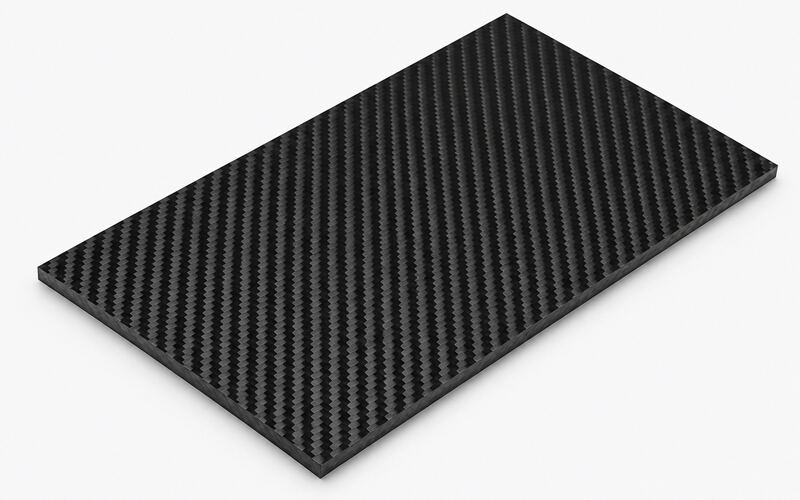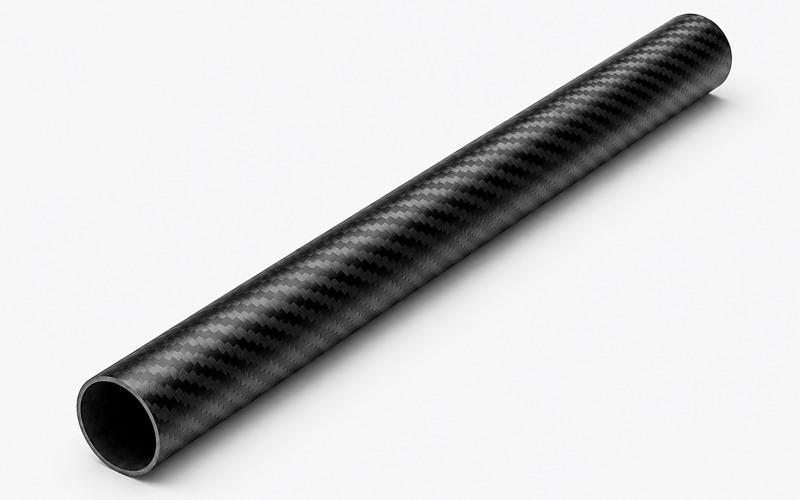
What Are Carbon Fiber and Forged Carbon Fiber
Carbon fiber composites use continuous reinforcement, while forged carbon relies on chopped fiber pressed under heat and pressure.
Woven Carbon Fiber Structure
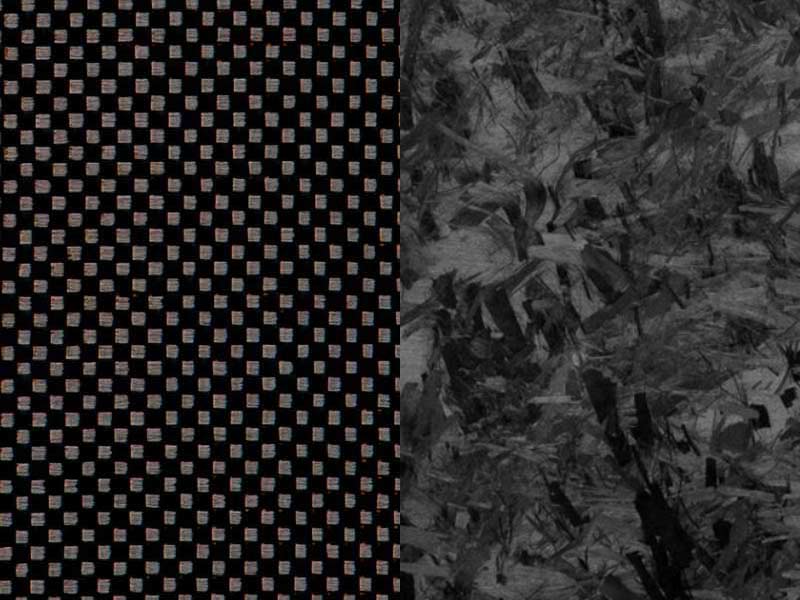
Woven carbon fiber uses continuous tows interlaced into a fabric, commonly a 2×2 twill pattern.
This structure spreads load evenly along two fiber directions, giving predictable in-plane strength.
Fiber crossover points create the visible weave.
Chopped Carbon Fiber Structure
Chopped carbon fiber consists of short fiber segments mixed with resin before molding.
The random orientation removes directional weave lines but reduces load-path uniformity.
Fiber length and distribution affect how stress transfers between segments.
Shorter fibers lower peak strength but simplify flow into complex mold cavities.
Why Forged Carbon Is Still Carbon Fiber
Forged carbon uses the same reinforcement fiber and resin systems as woven composites,
only rearranged. The fiber remains structural, not decorative filler within the laminate.
Classification depends on fiber type and resin matrix, not on weave presence.
Main Differences
Structural differences between woven and forged carbon fiber shape strength, cost, and surface appearance outcomes.
| Factor | Woven Carbon Fiber | Forged Carbon Fiber |
|---|---|---|
| Fiber Length and Arrangement | Uses continuous filaments running the full part length, usually woven into fabric or placed as prepreg plies. | Uses chopped carbon fiber segments, often under 50 millimeters, randomly dispersed through the resin matrix. |
| Resin and Fiber Content | Woven prepreg often holds defined resin content near 38 percent for consistent fiber volume fraction. | Resin ratios vary more because chopped fiber packing density changes between batches and molded regions. |
| Strength Direction | Carries higher load along fiber axes, producing strong but anisotropic behavior. | Distributes strength more evenly in multiple directions, though at a lower peak value. |
| Production Repeatability | Fixed ply schedules support repeatable mechanical results across production parts. | Fiber flow during molding introduces greater batch-to-batch and local variation. |
| Surface Pattern | Produces a uniform crosshatch appearance that repeats predictably. | Generates a marbled, non-repeating surface pattern from random fiber clustering. |
Manufacturing Processes
Processing methods define how fiber orientation, resin flow, and cycle time shape final part quality.
| Process Factor | Woven Carbon Fiber | Forged Carbon Fiber |
|---|---|---|
| Prepreg Layup and Compression Molding | Requires manual or automated ply placement before autoclave or press curing. Layup accuracy controls fiber alignment. | Uses compression molding, where chopped prepreg sheets flow under pressure into a closed die. |
| Curing Pressure and Temperature | Curing typically occurs near 120°C under controlled pressure to consolidate resin and remove trapped air. | Also relies on heat and pressure, but mold flow behavior controls local fiber distribution and strength. |
| Tooling and Cycle Time | Requires longer cycle time due to ply placement, vacuum debulking, and careful layup control. | Compresses cycle time because chopped material flows directly into shape during molding. |
| Complex Shape Production | Woven fabric struggles with ribs, bosses, undercuts, and tight geometry without wrinkling or bonded sub-components. | Chopped fiber flows into complex mold cavities, reducing the need for multiple bonded woven sections. |
Mechanical Performance
Mechanical behavior depends on fiber continuity, orientation, and resin distribution within the composite structure.
| Performance Factor | Woven Carbon Fiber | Forged Carbon Fiber |
|---|---|---|
| Tensile Strength | Continuous woven fiber achieves higher tensile strength along the load-bearing axis. | Chopped fiber interrupts load paths, lowering peak tensile values despite using similar fiber material. |
| Impact Resistance | Impact resistance concentrates along fiber axes, leaving off-axis zones more vulnerable. | Random fiber orientation can distribute impact energy across multiple directions. |
| Fatigue Life | Continuous fiber paths support longer fatigue life under repeated directional loading. | Fiber discontinuities create stress concentrations that shorten cyclic durability. |
| Stiffness and Modulus | Reaches higher stiffness when load aligns with the fiber direction. | Modulus stays lower and more uniform because no dominant fiber axis exists. |
| Strength-to-Weight Ratio | Delivers a superior strength-to-weight ratio for structural load paths. | Trades some ratio efficiency for shape freedom and faster part consolidation. |
Fiber Orientation and Material Grade
Fiber orientation and grade selection determine how each composite type responds to applied loads.
Continuous and Chopped Fiber Orientation
Continuous fiber orientation follows the ply stacking sequence chosen by the design engineer.
Chopped fiber orientation forms during mold filling, controlled by flow direction and cavity geometry.
Fiber Grade and Resin System
Standard modulus fiber commonly supports both woven and forged carbon applications.
Resin system selection affects heat resistance, toughness, and compatibility with the chosen molding process.
Fiber Volume and Part Performance
Fiber volume fraction directly affects stiffness, strength, and part weight.
Lower fiber volume in forged carbon regions can create softer zones within an otherwise rigid structure.
Defects and Consistency
Process control determines whether internal defects remain minor or compromise structural performance.
Fiber Wrinkles and Distortion
Woven fabric can wrinkle around tight radii during layup, distorting fiber alignment. This distortion reduces local strength and can trigger premature failure under load.
Fiber Clustering and Flow Lines
Chopped fiber can bunch into clusters as material flows through the mold.
Flow lines mark boundaries between merging fiber fronts, creating potential weak interfaces.
Voids and Resin-Rich Areas
Trapped air produces voids that lower strength and promote moisture ingress over time.
Resin-rich areas form when fiber packing becomes uneven, reducing stiffness locally.
Batch and Dimensional Variation
Woven parts maintain tighter dimensional tolerance due to fixed ply geometry. Forged carbon shows greater batch variation, since flow behavior changes with temperature and pressure conditions.
Surface Appearance
Surface pattern and finish quality influence both visual acceptance and inspection standards.
Woven and Random Patterns
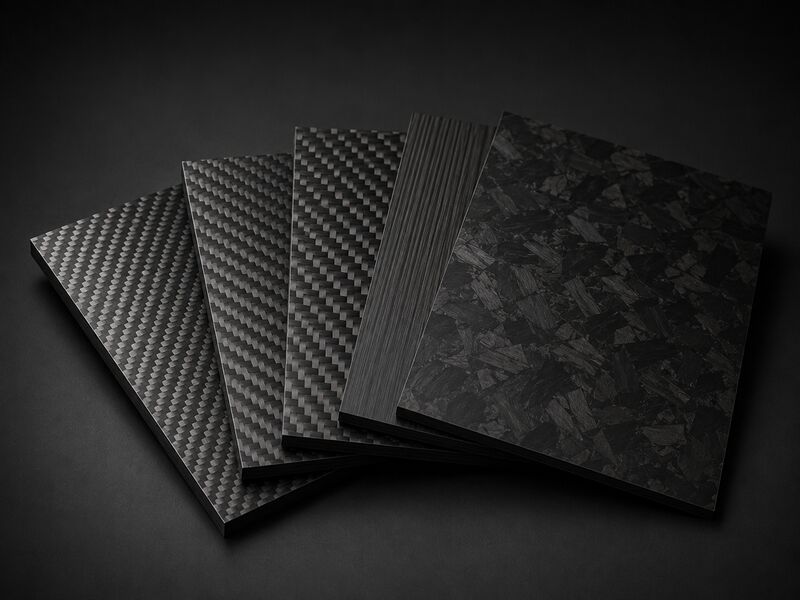
Woven fabric creates a repeating grid pattern recognized across the composite industry.
Forged carbon produces a random, marble-like surface unique to each molded part.
Pattern Variation Between Parts
Woven parts from the same tooling display nearly identical surface patterns.
Forged carbon patterns differ noticeably between parts, even when using identical mold and material batch.
Gloss and Matte Finishes
Clear coat application can produce gloss or matte finishes on either material type. Surface preparation before coating affects clarity of the underlying fiber pattern.
Surface Voids and Print-Through
Print-through occurs when underlying weave texture telegraphs through a thin gel coat layer. Surface voids in forged carbon appear as small pits requiring additional finishing work.
Cost and Production Scale
Cost differences stem from labor intensity, tooling investment, and achievable production volume.
Labor and Automation
Woven prepreg layup often requires skilled manual labor or automated fiber placement equipment. Forged carbon molding reduces labor input, since chopped material loads directly into the press.
Tooling Cost
Compression molds for forged carbon typically involve higher upfront tooling investment. Woven layup tooling costs less initially but adds labor expense across each production cycle.
Material Waste
Woven fabric generates trim waste when cutting shapes from flat prepreg sheets. Chopped fiber molding uses material more efficiently, since scrap can often be reprocessed.
Low- and High-Volume Production
Woven layup suits low-volume or prototype production where tooling cost must stay limited. Forged carbon molding favors higher production volume, spreading tooling cost across more parts.
Which Material Should You Choose
Material selection depends on load requirements, part geometry, appearance goals, and production volume.
High-Load Structural Parts
Woven carbon fiber suits structural components carrying defined directional loads. Its continuous fiber path delivers predictable strength for critical safety applications.
Complex Molded Parts
Forged carbon fits parts with ribs, bosses, or intricate geometry difficult to laminate manually. Flow-based molding replaces multiple bonded woven sections with a single component.
Decorative Components
Forged carbon offers a distinctive surface texture favored for visible trim and styling parts. Woven fabric remains preferred where a uniform, recognizable weave pattern is required.
Production Volume and Budget
Use a structured selection process when comparing woven carbon fiber with forged carbon fiber:
- Choose woven carbon fiber when directional strength, predictable stiffness, and structural reliability matter most.
- Choose forged carbon when complex molded geometry, faster molding, or a unique marbled surface is more important.
- Review whether the part carries defined load paths or mostly cosmetic and moderate structural loads.
- Compare tooling cost against production volume before choosing forged carbon molding.
- Validate mechanical performance with testing when the part is structural or safety-related.
FAQ
Is Forged Carbon Fiber as Strong as Woven Carbon Fiber?
Forged carbon fiber generally shows lower directional strength than woven carbon fiber. Continuous fiber in woven laminates carries higher load along the primary fiber axis.
Is Forged Carbon Fiber Cheaper?
Forged carbon fiber can lower per-part cost at higher production volume. Tooling investment remains higher, so cost savings depend on total part quantity.
Can Forged Carbon Replace Woven Carbon Fiber?
Forged carbon can replace woven fiber in complex or decorative parts. It cannot fully replace woven fiber in high-load structural applications requiring directional strength.
Why Does Forged Carbon Have a Random Pattern?
Chopped fiber orientation forms randomly as material flows through the mold cavity. This random orientation produces the marbled surface pattern unique to forged carbon.
Is Forged Carbon Fiber Actually Forged?
Forged carbon is not forged like metal, despite the name. The term refers to compression molding under heat and pressure, not traditional metal forging.
How Is Forged Carbon Fiber Tested?
Forged carbon fiber undergoes tensile, flexural, and impact testing similar to standard composites. Testing verifies fiber distribution consistency and confirms mechanical properties meet design requirements.