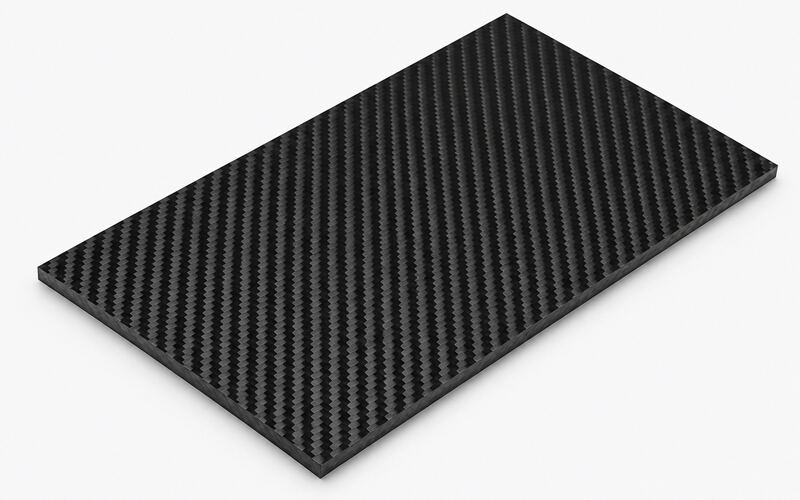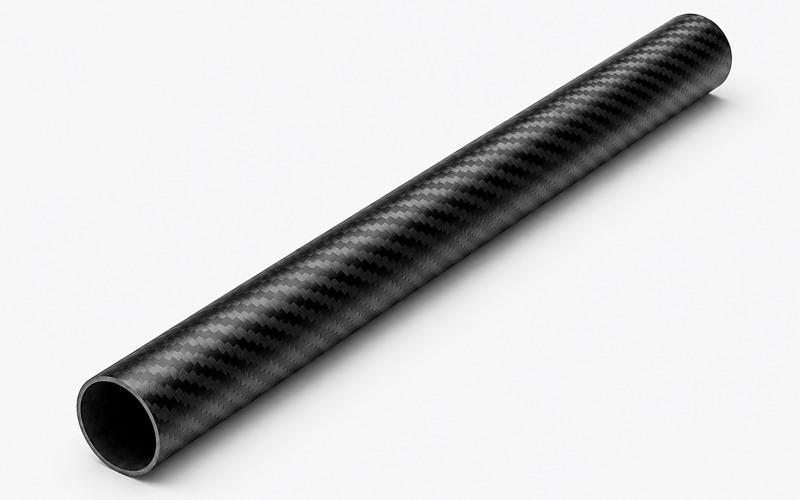
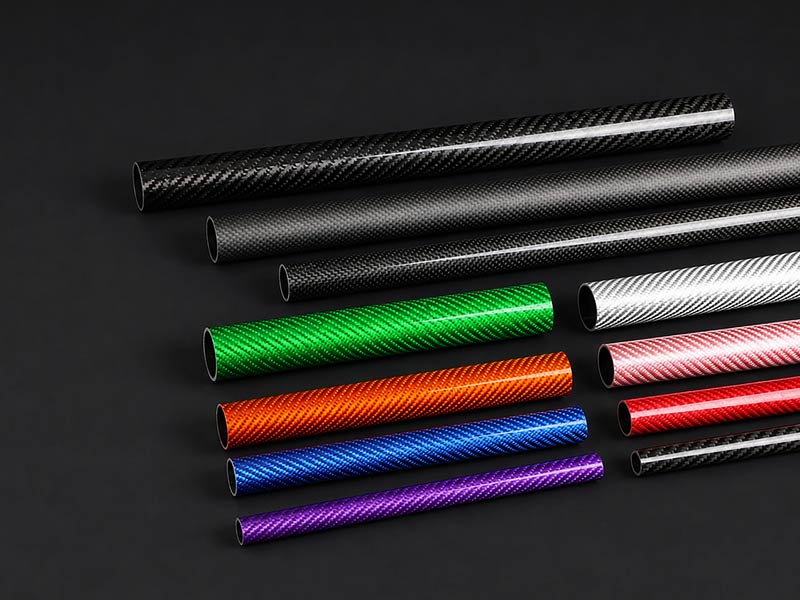
Colored carbon fiber describes a composite product where visible color comes from a source beyond the black reinforcement.
Carbon fiber refers to the black reinforcement filament itself, while a colored composite includes resin, coatings, or hybrid yarns.
The finished part is a CFRP laminate, not a single dyed material.
Where the Visible Color Comes From?
Visible color usually originates from one of three sources:
- Tinted or pigmented resin within the composite matrix.
- Colored fiberglass, aramid, or decorative yarn woven beside black carbon tow.
- A gel coat, paint, or colored clear coat applied over the cured laminate.
The carbon filaments themselves rarely contribute the actual hue seen on the surface.
Tinted resin, pigmented resin, and opaque paint each place color at a different depth within the structure. This layering explains why two colored parts can look similar but behave differently.
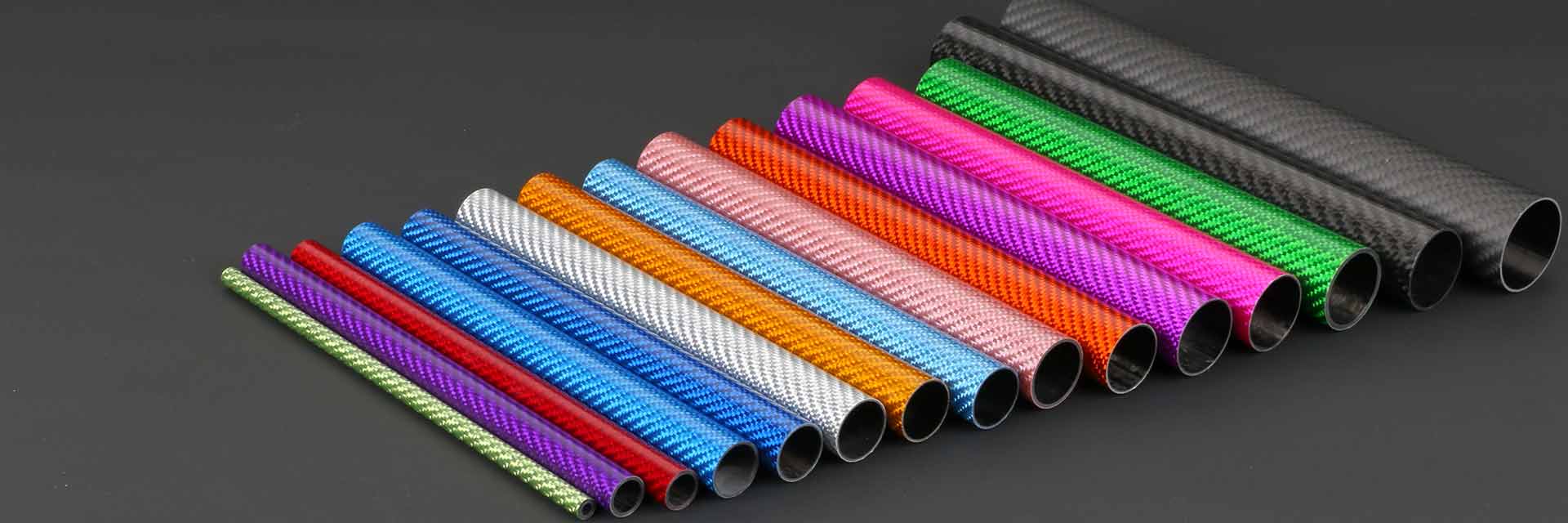
Main Carbon Fiber Coloring Methods?
Four primary methods introduce color into carbon fiber products, each affecting appearance and construction differently.
| Coloring Method | Color Source | Typical Appearance | Effect on Construction |
|---|---|---|---|
| Hybrid Colored Fabric | Colored fiberglass or aramid yarn woven with carbon tow | Colored bands within a visible weave | Changes part of the reinforcement composition |
| Pigmented Resin | Colorant dispersed through the resin matrix | Transparent, semi-opaque, or opaque color | May affect viscosity and processing behavior |
| Surface Coating | Gel coat, paint, or colored clear coat | Color above the cured laminate | Leaves the structural plies unchanged |
| Decorative Forged Carbon | Pigmented resin or decorative flakes mixed with chopped fiber | Random marbled pattern | Uses chopped rather than continuous woven reinforcement |
Hybrid Colored Fabrics
Hybrid fabrics weave colored yarn, such as fiberglass or aramid, alongside black carbon tow.
The colored strands remain visible between the carbon bands after resin infusion.
Pigmented Resin Systems
Pigmented resin disperses colorant particles throughout the resin matrix before layup or infusion.
This approach can produce opaque or semi-opaque coverage depending on pigment loading and dispersion quality.
Colored Surface Coatings
Surface coatings apply color after the laminate cures, through gel coat, paint, or colored clear coat.
These coatings sit above the structural plies and do not alter the reinforcement beneath them.
Decorative Forged Carbon
Forged carbon uses chopped fiber and pigmented resin compression molded into a marbled surface pattern.
Color enters through the resin system or decorative flakes mixed into the charge.
How Hybrid Colored Fabric Is Made?
Hybrid fabric production combines carbon tow with colored yarn during weaving to create a visible pattern.
Carbon and Fiberglass Hybrids
Fiberglass yarn accepts bright dye more readily than carbon fiber, making it a common choice for colored bands.
The woven result shows black carbon tow beside vivid glass yarn, changing both appearance and reinforcement composition.
Replacing part of the carbon content with fiberglass reduces stiffness slightly while adding cost-effective color options. Manufacturers select glass ratio based on desired contrast and mechanical requirements.
Carbon and Aramid Hybrids
Aramid yarn can supply yellow, red, or other manufacturer-specific hues within a carbon weave.
This substitution can influence impact tolerance and abrasion behavior depending on fiber placement.
Metallic and Decorative Yarns
Metallic yarns, metalized glass fibers, or reflective synthetic threads create gold, silver, or copper effects within the weave.
These decorative materials do not convert carbon filaments into metallic reinforcement.
Color Placement During Weaving
Colored yarn position within the warp or weft determines the final pattern scale and contrast.
Tow spacing and interlacing frequency control how much black carbon remains visible between colored sections.
Weave Pattern Selection
Plain weave and twill weave create different visual effects. Plain weave produces a uniform checkerboard appearance, while twill weave creates diagonal bands with stronger visual movement.
Weave choice changes optical texture without altering the natural color of the fibers.
Color placement, weave geometry, and decorative fibers can create different carbon fiber patterns across the finished surface.
How Colored Resin Is Prepared?
Resin coloring requires selecting compatible pigments and controlling dispersion before impregnation begins.
Pigment and Dye Selection
Pigment particles suspend within the resin, while dyes dissolve to create transparent tinting effects.
Selection depends on desired opacity, resin chemistry, and expected exposure conditions.
Pigment Dispersion in Resin
Thorough mixing prevents localized pigment concentration that causes streaking or blotchy shade variation.
Poor dispersion can also create inconsistent cure behavior across the laminate surface.
High-shear mixing equipment helps break down pigment clusters before the resin contacts reinforcement fibers. Insufficient mixing time remains a common cause of visible color defects.
Opaque and Transparent Color Systems
Transparent tints preserve weave visibility because light passes through to the black fiber beneath.
Opaque pigments block more light, hiding the underlying pattern and providing stronger color coverage.
Viscosity and Fiber Wet-Out
Higher pigment loading raises resin viscosity, which can restrict fiber wet-out during infusion or wet layup.
Manufacturers balance color intensity against processing behavior to avoid dry fiber areas.
Resin Mixing and Degassing
After pigment incorporation, resin requires degassing to remove trapped air before application.
Residual bubbles can migrate into the laminate and create surface pinholes after cure.
How Colored Laminates Are Molded?
Molding integrates cosmetic color with structural reinforcement through a controlled layup sequence.
Mold Preparation and Release Agent
A clean mold surface and properly applied release agent prevent surface defects that would disrupt the finished color.
Contamination at this stage often appears as visible flaws after demolding.
Cosmetic Ply Placement
The colored or hybrid ply is positioned against the mold surface first, since this layer becomes the visible exterior.
Alignment accuracy at this stage determines the final pattern orientation.
Structural Ply Layup
Black structural plies stack behind the cosmetic layer to provide load-bearing performance independent of surface appearance.
The visible ply does not represent the complete laminate composition.
Resin Infusion or Prepreg Processing
Wet layup and infusion introduce colored resin directly during fabrication, while prepreg arrives with resin already incorporated.
Each method requires different handling to maintain even pigment distribution.
Infusion demands consistent flow-front behavior, since pigment can settle unevenly across long flow distances. Prepreg processing instead relies on stored material consistency established before layup begins.
Vacuum Bagging and Consolidation
Vacuum bagging removes trapped air and compacts plies, supporting uniform resin distribution across the colored surface.
Inadequate vacuum integrity can leave visible dry spots or resin-rich patches.
How Surface Coatings Add Color?
Surface coatings apply color after structural curing, separate from the internal laminate composition.
In-Mold Gel Coat
Gel coat forms a resin-rich cosmetic layer applied to the mold before the structural plies are placed.
This layer can carry pigment that becomes the outermost visible surface once demolded.
Post-Cure Paint Application
Painting a cured CFRP part follows a controlled surface-finishing sequence:
- Surface inspection
- Controlled sanding
- Primer application
- Base coat application
- Clear coat application
Excessive sanding risks breaking through the resin and reaching structural fibers, which should be avoided.
Colored Transparent Clear Coat
A colored clear coat adds hue while preserving weave visibility beneath its transparent or translucent film.
Coating thickness and pigment concentration together determine the final visual depth.
Multiple Coating Layers
Some finishes combine primer, color coat, and clear coat to balance adhesion, coverage, and gloss protection.
Each layer requires proper cure time before the next application proceeds.
How Colored Forged Carbon Is Made?
Forged carbon relies on chopped fiber and pigmented resin compressed into a randomly patterned sheet.
Chopped Fiber Preparation
Carbon fiber is cut into short segments before blending with resin, differing entirely from continuous woven fabric.
This chopped format allows random distribution rather than an organized weave.
Resin and Pigment Mixing
Pigmented resin coats the chopped fiber charge before mold placement, determining the background color of the final sheet.
Mixing consistency affects how evenly color spreads through the compound.
Decorative Flake Placement
Colored flakes or metallic fragments may be layered into the charge to add secondary visual accents.
These inclusions provide decoration rather than structural reinforcement.
Compression Molding
Heat and pressure consolidate the charge within a closed mold, forcing resin flow around the chopped fibers.
Mold temperature and pressure influence both consolidation quality and surface pattern development.
Random Pattern Formation
Fiber and pigment movement during compression creates the marbled appearance associated with forged carbon.
Uneven charge placement before pressing can cause fiber clustering or localized color concentration.
Curing and Surface Finishing?
Curing stabilizes the resin matrix while finishing steps refine the final colored surface.
Cure Temperature and Time
A defined cure temperature, such as 120°C, activates the resin’s crosslinking reaction over a specified duration.
Deviating from the specified cure profile can affect both mechanical properties and final color depth.
Color Change During Curing
Resin often darkens or becomes more transparent as it cures, deepening the visible shade compared to the uncured mixture.
Hybrid yarn contrast frequently strengthens once full wet-out and cure are complete.
Demolding and Edge Trimming
After cure, the part is removed from the mold and trimmed to final dimensions.
Trimming can expose internal structural plies that differ from the cosmetic surface color.
Sanding and Polishing
Controlled sanding levels surface irregularities before polishing restores clarity and gloss.
Excessive sanding pressure risks cutting into the cosmetic ply and revealing structural fiber beneath.
Matte and Gloss Finishing
Matte and gloss finishing create different visual effects. Matte finishing scatters light for a softer appearance, while gloss finishing sharpens reflections and color contrast.
Neither finish changes the natural color of the underlying carbon fibers.
Common Colored Carbon Fiber Defects?
Manufacturing errors at any stage can disrupt the intended color or surface quality.
| Defect | Typical Cause | Visible or Structural Effect |
|---|---|---|
| Uneven Color Distribution | Inconsistent pigment mixing or resin flow | Streaks or patches with different shades |
| Dry Spots or Resin-Rich Areas | Insufficient wet-out or excess resin pooling | Dry fiber patches, glossy zones, or local weakness |
| Air Bubbles and Pinholes | Inadequate resin degassing | Surface imperfections and reduced coating adhesion |
| Weave Distortion | Fabric movement during layup | Permanent misalignment of the colored pattern |
| Coating Delamination | Poor surface preparation or contamination | Peeling or lifting of the cosmetic coating |
Uneven Color Distribution
Inconsistent pigment mixing or resin flow can leave streaks or patches of differing shade across the surface.
This defect often traces back to inadequate mixing time or flow control.
Dry Spots and Resin-Rich Areas
Insufficient wet-out leaves dry fiber patches, while excess resin pooling creates glossy, color-heavy zones.
Both conditions affect appearance and can weaken local laminate performance.
Air Bubbles and Pinholes
Trapped air from inadequate degassing surfaces as bubbles or pinholes after cure.
These defects disrupt coating adhesion and create visible surface imperfections.
Weave Distortion
Fabric handling errors during layup can shift colored yarn out of alignment, distorting the intended pattern.
This distortion becomes permanent once the resin cures around the misplaced fibers.
Coating Delamination
Poor surface preparation or contamination before painting weakens adhesion, leading to peeling or lifting over time.
Delamination separates the cosmetic coating from the structural laminate beneath.
Quality Control and Color Matching?
Consistent color across production batches requires structured inspection and testing procedures.
Batch-to-Batch Color Consistency
Pigment weighing, mixing time, and resin batch variation all influence whether new production matches approved samples.
Reference samples help identify drift before full-scale manufacturing continues.
Surface and Weave Inspection
Visual inspection checks weave alignment, pigment distribution, and surface contamination under controlled lighting.
This inspection confirms cosmetic quality rather than internal structural integrity.
Cure Quality Testing
Structural verification methods such as tap testing or ultrasonic inspection confirm proper consolidation beneath the colored surface.
Cosmetic approval alone does not guarantee adequate internal bonding.
UV and Weathering Tests
Exposure testing evaluates fading, chalking, or gloss loss under simulated sunlight and moisture conditions.
Results depend heavily on the specific resin, pigment, and coating combination used.
Sample Approval Before Production
Master samples approved under controlled lighting establish the accepted color standard for full production runs.
Uncontrolled lighting during approval can lead to mismatched expectations later.
Strength and Cost Considerations?
Coloring methods can influence both mechanical performance and total manufacturing expense.
Cosmetic Ply Versus Structural Ply
A decorative outer ply does not define the mechanical behavior of the plies stacked beneath it.
Buyers should confirm the complete laminate schedule rather than judging strength from surface color.
Hybrid Fiber Substitution
Replacing carbon yarn with fiberglass or aramid changes stiffness, weight, and impact response according to fiber proportion.
These property shifts result from reinforcement substitution, not from the color itself.
Pigment Loading and Resin Performance
Higher pigment content can affect resin viscosity, cure behavior, and void formation during processing.
Suppliers may require testing to confirm structural suitability for specific pigment ratios.
Additional Processing Costs
Custom hybrid fabric, specialty pigments, and post-cure coating stages each add labor and material expense.
Total component cost depends on tooling, cycle time, and inspection requirements combined.
Custom Color Production Volume
Small production runs often rely on manual layup and hand finishing, while larger volumes justify automated coating lines.
Volume requirements shape which coloring method proves most practical for a given project.
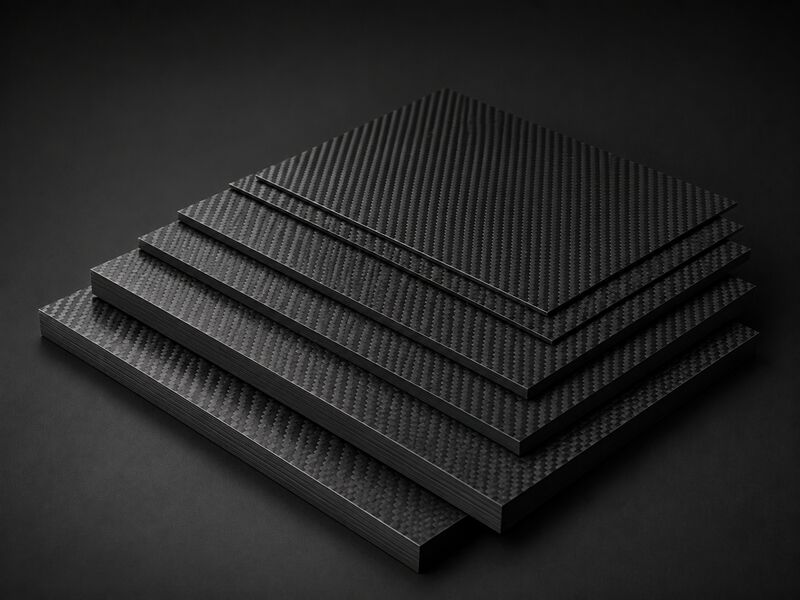
For projects requiring custom colors, weave appearance, or surface finishes, colored carbon fiber sheets can be produced to match specific cosmetic and dimensional requirements.
FAQ
Can Carbon Filaments Be Dyed?
Conventional carbon filaments resist simple dyeing due to their carbon-rich, non-absorbent structure.
Visible color instead comes from resin, hybrid yarn, or surface coatings.
Which Method Keeps the Weave Visible?
Tinted resin and colored clear coats preserve weave visibility because they remain transparent or translucent.
Opaque paint and heavy pigment loading tend to hide the underlying pattern.
Can Pigment Affect Resin Curing?
Certain pigments can influence viscosity and cure reaction depending on their chemical composition and loading level.
Compatibility testing helps confirm whether a specific pigment affects processing behavior.