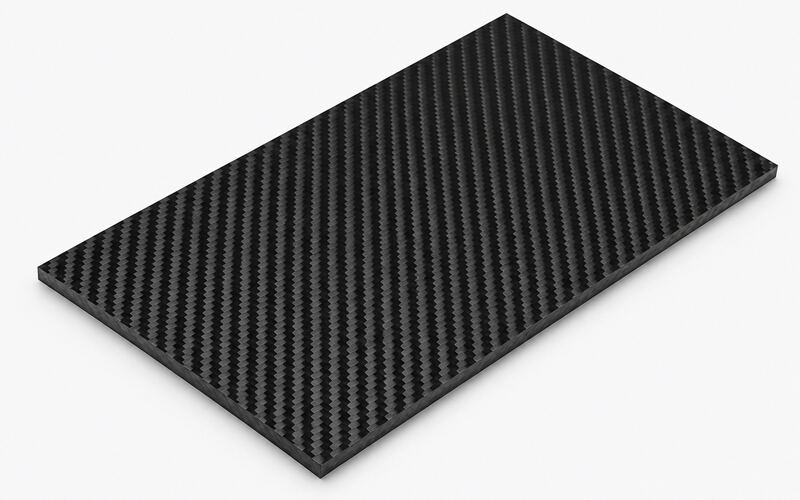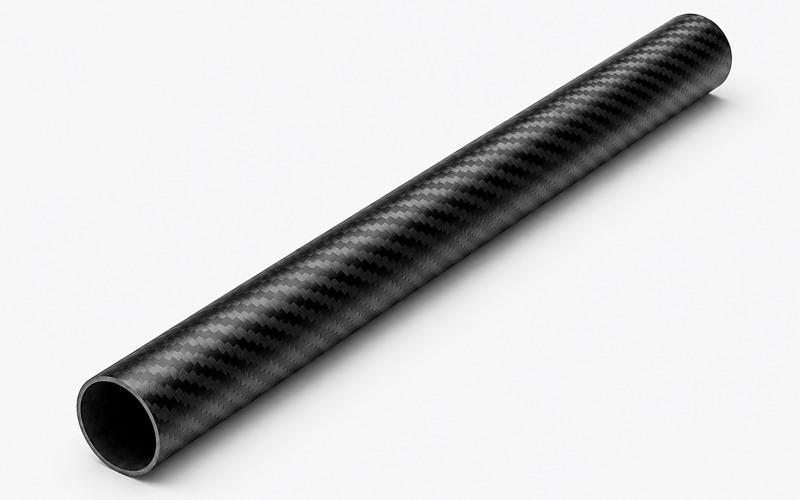
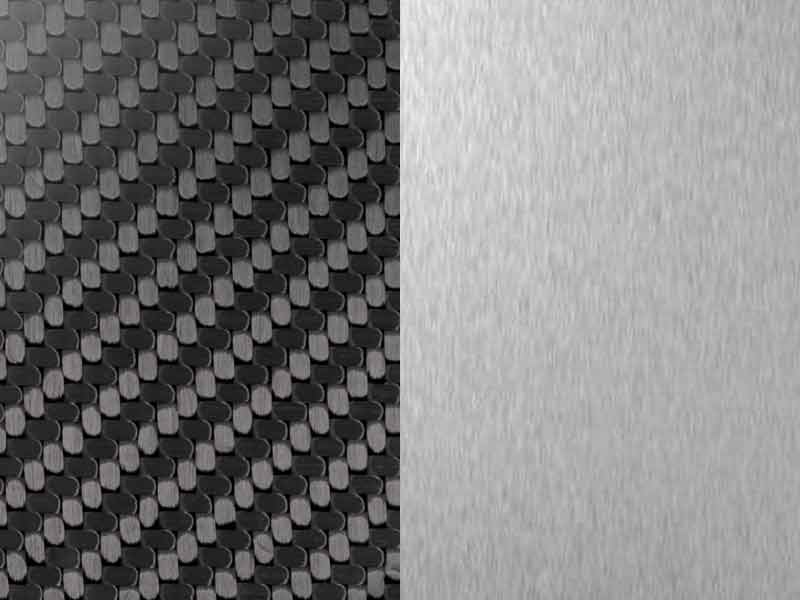
Carbon fiber vs aluminum is a common material comparison for lightweight structural parts, machined components, frames, brackets, plates, tubes, and high-performance assemblies. Aluminum is a lightweight metal with predictable behavior and mature processing routes.
Carbon fiber reinforced polymer, often called CFRP, is a composite material made from carbon fiber reinforcement and a resin matrix.
The right choice depends on weight target, load direction, stiffness requirement, cost, joining method, operating environment, and production volume. Carbon fiber can reduce mass and improve directional stiffness, while aluminum remains easier to machine, fasten, repair, and scale for many industrial parts.
Carbon Fiber vs Aluminum Material Properties
Material behavior depends on fiber direction, resin system, alloy condition, geometry, loading mode, and environmental exposure. The table below gives a simple engineering comparison before each property is discussed in more detail.
| Property | Carbon Fiber | Aluminum | Design Note |
|---|---|---|---|
| Weight | Very low density | Light metal | CFRP is better for weight reduction |
| Strength to Weight | High along fiber direction | Stable in all directions | CFRP needs correct layup |
| Stiffness | Depends on fiber modulus | Predictable and isotropic | CFRP needs laminate design |
| Fatigue | Good when fibers carry load | Well documented behavior | Joint design is critical |
| Impact Damage | May hide internal delamination | Dents are usually visible | CFRP may need ultrasonic inspection |
| Bearing Strength | Sensitive around holes | Handles bolts well | Use inserts or washers for CFRP |
Density and Weight Difference
Carbon fiber laminates are usually selected when mass reduction drives the design requirement. Aluminum offers light metal performance, but CFRP can reduce weight further when loads follow planned fiber paths.
The final weight depends on laminate schedule, resin content, core use, and inserted metal hardware. Poor layup design or oversized inserts can remove much of the expected weight advantage.
Strength to Weight Ratio
The strength to weight ratio of carbon fiber is a major reason it is compared with aluminum for lightweight structures. CFRP performs very well when fibers align with tensile and bending loads.
Aluminum is isotropic, so its strength is more consistent in every direction. This helps parts with complex load paths, threaded features, or unknown service loads.
A carbon fiber laminate must place fibers along the main load direction to use its strength. Off-axis loading, poor compaction, or resin-rich areas can reduce structural efficiency.
Stiffness and Elastic Modulus
Carbon fiber stiffness depends strongly on fiber modulus and orientation. High modulus carbon fiber improves deflection control, but it can reduce damage tolerance.
Aluminum has predictable stiffness in every direction and is easier to model for simple machined parts. CFRP needs laminate analysis because each ply contributes differently.
Use balanced and symmetric layups to reduce twisting, warping, and residual stress. Unbalanced fiber angles can create unwanted movement during curing and service.
Fatigue Resistance
Carbon fiber laminates can resist fatigue well when fibers carry the repeated load. Damage grows faster when cyclic loads create interlaminar shear or peel stress.
Aluminum fatigue behavior is well documented and easier to inspect with conventional methods. However, cracks can grow from holes, sharp corners, and machined marks.
For CFRP, void content, ply compaction, edge quality, and joint design must be controlled. Voids act as stress concentrators and can start delamination under repeated loading.
Impact Resistance and Damage Visibility
Aluminum usually dents when impacted, so damage is often visible during inspection. Carbon fiber may show little surface change while internal delamination grows.
CFRP impact response depends on fiber architecture, resin toughness, and backing support. Toughened resin systems can improve impact tolerance and reduce crack spread.
Thin laminates can chip, split, or lose compressive strength after impact. Critical carbon fiber parts may need tap testing, ultrasonic inspection, or proof loading.
Compression and Bearing Strength
Carbon fiber compression strength is sensitive to fiber waviness, ply stability, and laminate quality. Misaligned fibers reduce load capacity before the material reaches its tensile potential.
Aluminum handles bearing loads around bolts more predictably. It can deform locally while still showing visible warning signs.
CFRP holes need enough laminate thickness, washer support, and proper fiber orientation around the joint. Inserts, bushings, or bonded metal load spreaders help transfer point loads into the laminate.
Manufacturing Carbon Fiber and Aluminum Parts
Manufacturing route controls cost, repeatability, surface quality, structural consistency, and lead time for both material families.
CFRP Layup Molding and Curing
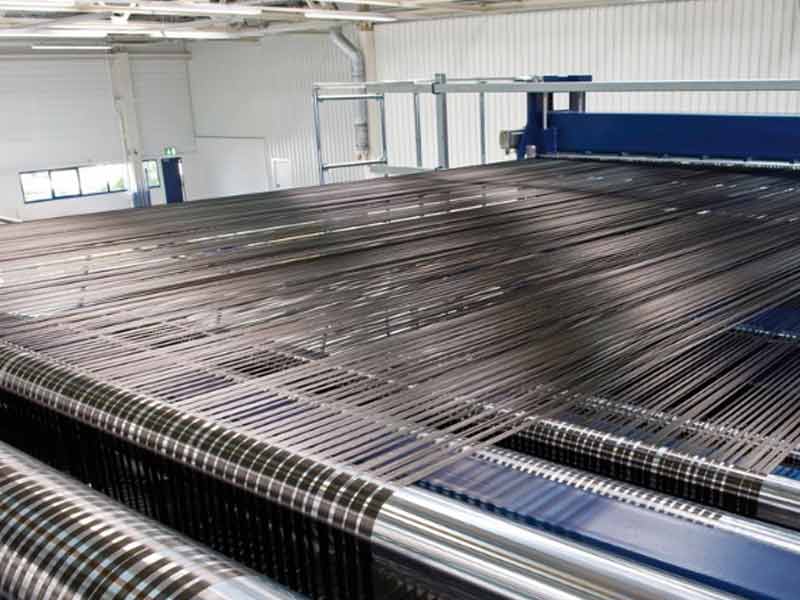
CFRP parts are made by placing dry fabric, prepreg, or preformed reinforcement into a tool. Fiber orientation is controlled during layup because it defines stiffness and strength directions.
Vacuum bagging removes trapped air and compacts the laminate against the mold surface. Poor bag sealing can cause porosity, dry spots, and thickness variation.
Prepreg laminates use controlled heat and pressure to cure the resin. The selected cure range affects crosslinking, dimensional stability, and final mechanical performance.
Aluminum CNC Machining Extrusion and Forming
Aluminum parts are commonly machined from plate, billet, or extruded profiles. The material supports threaded holes, sharp details, and repeatable metallic features.
CNC machining controls geometry by removing material with defined toolpaths. Heat, chip evacuation, and tool condition affect burr formation and dimensional accuracy.
Extruded and formed aluminum profiles can lower machining time when the cross section matches the design. Secondary operations still control holes, pockets, and interface surfaces.
Production Volume and Lead Time
Carbon fiber lead time depends on tooling, layup labor, curing capacity, and inspection requirements. Simple flat carbon fiber sheet can be faster than complex molded shells.
Aluminum prototypes can often be machined quickly when stock material is available. Complex geometry may still require multiple setups and fixture planning.
For production, CFRP can benefit from repeatable molds and controlled ply kits. Aluminum can scale through machining automation, extrusion planning, or forming tools.
Tolerance Surface Finish and Scrap Rate
Carbon fiber tolerances depend on tool accuracy, ply stack behavior, cure shrinkage, and trimming method. Spring-in can shift angles and mating features after demolding.
Aluminum machining can achieve tight mechanical interfaces with stable fixturing and tool compensation. Burrs, chatter, and thermal movement still need process control.
CFRP scrap often comes from layup errors, trapped air, bridge zones, and surface contamination. Aluminum scrap often comes from setup mistakes, tool wear, or distorted thin walls.
Machining and Joining Carbon Fiber vs Aluminum
Cutting and joining methods must match the failure behavior of composites and metals to avoid weak edges or unreliable interfaces.
CNC Cutting and Tool Wear
Carbon fiber is abrasive because hard fibers cut against the tool edge. Diamond-coated tools are often used to control wear and edge quality.
Aluminum machining focuses more on chip control, lubrication, and built-up edge prevention. Tool clogging can damage surface finish and reduce dimensional consistency.
When cutting carbon fiber, machining parameters must limit delamination, fraying, and heat damage to the resin. Support fixtures reduce vibration and keep laminate edges from lifting.
Drilling Holes in CFRP and Aluminum
Drilling carbon fiber requires sharp tools, backing support, and controlled feed. Exit-side breakout is a common defect when the laminate is unsupported.
Aluminum drilling creates chips and burrs that need removal before assembly. Burrs can change clamp load and create false seating during fastening.
CFRP holes should be inspected for delamination, fiber pull-out, and diameter consistency. Damaged hole edges can reduce bearing strength and fatigue life.
Adhesive Bonding and Surface Preparation
Bonding carbon fiber to aluminum requires clean, activated surfaces and compatible adhesive chemistry. Surface contamination is a common cause of weak bonds.
CFRP surfaces often need sanding, peel ply removal, or plasma treatment before bonding. Aluminum may need abrasion, degreasing, and conversion coating for stable adhesion.
Bondline thickness must be controlled with spacers, film adhesive, or glass beads. Too little adhesive can starve the joint, while excess adhesive adds weight.
Bolting Riveting and Bearing Stress
Bolting aluminum is straightforward because the metal tolerates local compression and threads. CFRP usually needs larger bearing areas and careful clamp control.
Over-tightening can crush the laminate, especially near thin sections. Under-tightening can allow slip and fretting at the joint interface.
Washers, sleeves, bonded inserts, and isolating layers help protect carbon fiber holes. These details reduce concentrated stress and slow damage growth.
Dust Control for Carbon Fiber Machining
Carbon fiber machining creates conductive and respirable dust. Extraction at the tool prevents contamination, electrical shorts, and worker exposure.
Wet cutting can reduce airborne dust, but it requires moisture control after machining. Dry extraction needs filtration suited for fine composite particles.
Machines should be cleaned before switching between CFRP and aluminum work. Mixed debris can scratch surfaces and contaminate bonded joints.
Thermal Electrical and Corrosion Behavior
Thermal movement, conductivity, and corrosion behavior strongly affect mixed-material assemblies and long-term dimensional reliability.
Thermal Expansion and Dimensional Stability
Carbon fiber laminates can show low thermal expansion along fiber directions. Aluminum expands more uniformly when temperature changes.
This difference matters in assemblies with long bonded joints or precise optical alignment. Differential movement can create shear stress at interfaces.
Laminate orientation controls dimensional response in CFRP. Symmetric layups help reduce warpage during temperature cycling.
Electrical Conductivity and Grounding
Carbon fiber conducts electricity through fiber networks, but conductivity is direction dependent. Resin-rich areas can interrupt reliable current paths.
Aluminum provides consistent electrical conductivity and is easier to ground with fasteners. Surface oxides must still be managed at contact points.
For CFRP structures, grounding points should use prepared contact surfaces and compatible hardware. Random contact through painted or clear-coated surfaces is unreliable.
Corrosion Resistance
Carbon fiber itself does not rust, and many resin systems resist moisture exposure. The full part still depends on edges, holes, coatings, and inserts.
Aluminum forms an oxide layer that helps protect the surface. Harsh environments may still require anodizing, coating, or sealants.
CFRP corrosion concerns often involve metal hardware rather than the laminate body. Sealing cut edges reduces moisture entry and protects bonded details.
Galvanic Corrosion Between Carbon Fiber and Aluminum
Carbon fiber and aluminum can create galvanic corrosion when electrically connected in moisture. Aluminum is usually the material at risk in this pairing.
Isolation layers, sealants, primers, and nonconductive washers reduce the electrical path. These controls are especially important around fasteners and exposed edges.
Bonded joints should prevent water traps and crevice conditions. Poor drainage can accelerate corrosion even when materials are otherwise compatible.
Cost Comparison of Carbon Fiber and Aluminum
Cost depends on raw material, processing route, labor content, scrap risk, inspection, and the value of saved mass.
Material Cost
Carbon fiber fabric, prepreg, and cured sheet usually cost more than common aluminum stock. Resin system, fiber grade, and storage requirements affect the purchase price.
Aluminum plate and extrusion are widely available in many sizes and conditions. This availability can reduce procurement risk for machined parts.
CFRP material cost should include backing films, breather, peel ply, and consumable vacuum materials. These items are necessary for controlled laminate quality.
Tooling and Processing Cost
Carbon fiber molded parts need tools that can tolerate cure conditions and release cycles. Tool design affects surface finish, dimensional repeatability, and demolding risk.
Aluminum machining often uses fixtures instead of full molding tools. Fixture complexity rises when parts are thin, flexible, or require many datum changes.
CFRP tooling cost is easier to justify when the same shape repeats. For one-off parts, machined carbon fiber sheet may reduce tool investment.
Labor Cycle Time and Scrap Cost
Carbon fiber layup is labor sensitive because ply placement must follow the engineering schedule. Mistakes in orientation or sequence can scrap the part.
Curing also adds waiting time, even when layup is efficient. Inspection after cure can reveal porosity, wrinkles, or bond-preparation issues.
Aluminum machining cycle time depends on material removal, tool access, and setup strategy. Scrap can occur late in the process if datums shift.
When Carbon Fiber Cost is Justified
Carbon fiber cost is justified when mass reduction improves performance, energy use, or payload capacity. The benefit must exceed higher material and processing effort.
CFRP also makes sense when stiffness is needed without thick metal sections. Tubes, panels, arms, and shells can use geometry and fiber direction efficiently.
Aluminum remains attractive when low cost, fast machining, and easy repair dominate. The selection should follow load case, environment, inspection plan, and production volume.
Carbon Fiber vs Aluminum Applications
Application choice depends on load path, weight target, operating environment, inspection access, and assembly method.
Drone Frames and UAV Structures
Drone frames often use carbon fiber tubes, plates, or molded arms to reduce mass. Lower frame weight can increase payload margin or flight efficiency.
Fiber orientation should follow motor thrust, landing loads, and arm bending loads. Poor ply design can cause twisting or vibration near motors.
Aluminum is useful for motor mounts, heat sinks, and threaded interfaces. Hybrid drone structures often combine CFRP arms with machined aluminum nodes.
Robotics and Automation Components
Robotic arms benefit from low moving mass and high stiffness. Carbon fiber tubes can reduce inertia while maintaining positioning response.
Aluminum is practical for joint housings, bearing seats, and precision-machined mounting faces. It handles threaded connections and complex pockets efficiently.
CFRP parts need bonded inserts or clamped sleeves where actuators connect. These features spread load and protect the laminate from bearing damage.
Automotive and Motorsport Parts
Motorsport parts use carbon fiber for panels, ducts, splitters, seat shells, and structural brackets. Fiber layout is matched to aerodynamic, bending, and impact loads.
Aluminum is still common for subframes, mounts, and serviceable brackets. It offers predictable repair methods and strong localized fastening.
CFRP automotive components require controlled curing and inspection. Wrinkles, dry spots, and resin-rich zones can reduce performance under vibration.
Electronics Enclosures and Mounting Plates
Carbon fiber enclosures provide stiffness and low mass, but conductivity needs planning. Uncontrolled conductive paths can affect antennas or electronics.
Aluminum enclosures support grounding, shielding, and heat spreading more easily. They also accept threaded bosses and repeated service access.
CFRP mounting plates should isolate electrical contacts when needed. Machined aluminum inserts can provide durable threads without crushing the laminate.
Industrial Fixtures and Lightweight Brackets
Carbon fiber fixtures are useful when operators handle tools repeatedly. Lower mass can reduce fatigue while maintaining stiffness.
Aluminum brackets remain economical for simple static support. They are easier to modify during process changes.
CFRP brackets need careful edge sealing, insert design, and load spreading. These controls prevent local damage at holes and contact points.
When to Choose Carbon Fiber or Aluminum?
Selection should follow engineering requirements, not material preference. Compare load direction, joining method, inspection access, cost, and environment.
| Requirement | Choose Carbon Fiber | Choose Aluminum |
|---|---|---|
| Weight reduction | Strong choice | Good but heavier |
| Low material cost | Usually higher cost | Better choice |
| Fast machining | Needs abrasive tools | Easier to machine |
| Threaded holes | Needs inserts | Easy to tap |
| Directional stiffness | Very strong advantage | Less efficient by weight |
| Complex load paths | Needs careful layup | More predictable |
| Electrical grounding | Needs planned contact points | Easier to ground |
| Mixed material assembly | Needs galvanic isolation | Needs coating or isolation |
Choose Carbon Fiber for Lightweight and Stiff Parts
Choose carbon fiber when weight and directional stiffness drive the design. It works well in beams, tubes, panels, shells, and repeatable molded forms.
The design must define fiber orientation, resin system, joint details, and inspection criteria. Without these controls, CFRP can underperform its datasheet values.
Carbon fiber is especially useful when bending stiffness matters more than ductility. It should be protected from sharp impacts and concentrated bearing loads.
Choose Aluminum for Lower Cost and Easier Fabrication
Choose aluminum when machining speed, low material cost, and easy fastening are priorities. It suits brackets, housings, frames, plates, and repairable structures.
Aluminum also works well when loads are multidirectional or poorly defined. Its isotropic behavior simplifies analysis and field modification.
Threaded holes, tight pockets, and precise mating faces are easier in aluminum. Surface treatments can improve corrosion behavior and appearance.
Use Hybrid Designs for Balanced Performance
Hybrid designs combine carbon fiber laminates with aluminum inserts, nodes, rails, or heat-spreading parts. This approach uses each material where it performs well.
The interface must control galvanic contact, bearing stress, and thermal movement. Adhesives, sealants, isolators, and mechanical load spreaders are common solutions.
Hybrid structures require clear inspection plans because defects can hide at interfaces. Bondline quality, fastener condition, and edge sealing should be checked during service.
FAQ
Is Carbon Fiber Stronger Than Aluminum by Weight?
Yes. Carbon fiber usually has a higher strength to weight ratio than aluminum when the fibers are aligned with the main load direction.
This is why CFRP is widely used in lightweight structures, drone frames, racing parts, robotic arms, and aerospace components.
However, carbon fiber is not automatically stronger in every direction. Aluminum is isotropic, while CFRP is directional.
A poor layup, weak joint, damaged edge, or unsupported hole can reduce the real strength of a carbon fiber part.
Is Carbon Fiber Stiffer Than Aluminum?
Carbon fiber can be stiffer than aluminum by weight, especially when the laminate uses suitable fiber orientation and part geometry. High modulus carbon fiber can provide very high stiffness for deflection-controlled parts.
Aluminum has more predictable stiffness in every direction. For parts with complex load paths or many machined interfaces, aluminum may be easier to design and validate.
Is Carbon Fiber More Expensive Than Aluminum?
Carbon fiber is usually more expensive than aluminum. The higher cost comes from fiber, resin, layup labor, curing time, tooling, trimming, inspection, and scrap risk.
Aluminum is generally cheaper, easier to source, and faster to machine. Carbon fiber cost is easier to justify when saved weight improves payload, speed, energy use, handling, or system performance.
Can Carbon Fiber Be Bolted to Aluminum?
Yes. Carbon fiber can be bolted to aluminum, but the joint needs careful design.
Direct contact between carbon fiber and aluminum can create galvanic corrosion when moisture is present.
Use isolation layers, sealants, primers, sleeves, washers, or bonded inserts to protect the aluminum. The CFRP hole also needs enough bearing area to prevent crushing, splitting, or delamination.
Does Carbon Fiber Corrode Like Aluminum?
Carbon fiber itself does not rust like steel and does not corrode like aluminum. The resin matrix can also resist many environments.
The main risk appears in mixed-material assemblies. When carbon fiber contacts aluminum in moisture, galvanic corrosion can attack the aluminum.
Proper isolation and edge sealing are important.