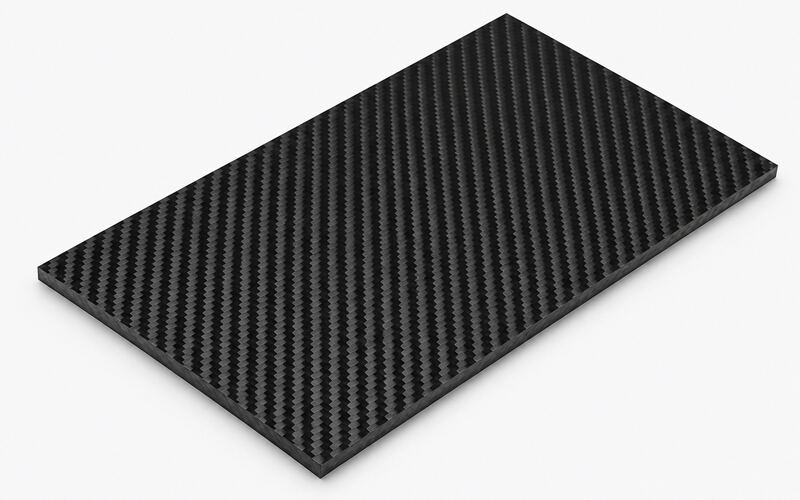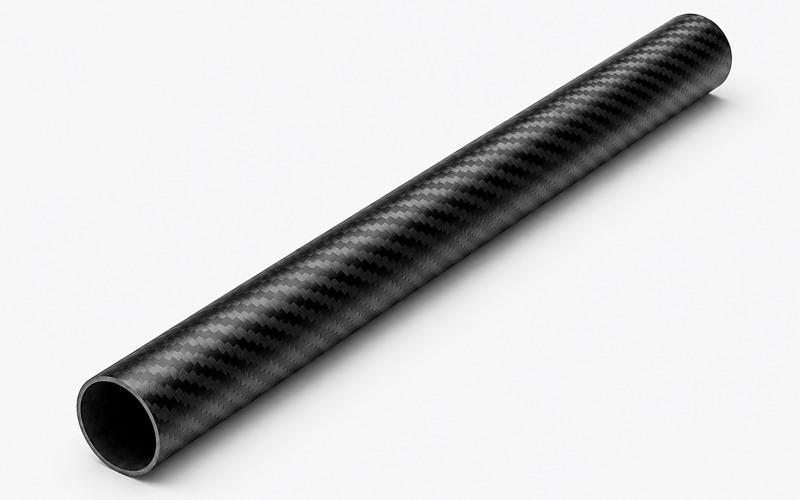
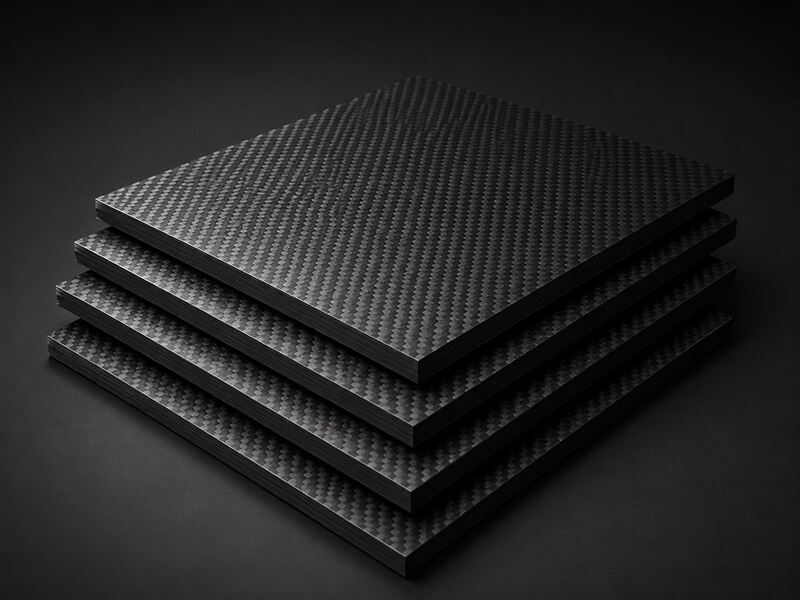
T300 and T700 are widely used PAN-based carbon fiber grades for industrial, automotive, sporting, and structural composite parts. Both belong to the standard-modulus category, but T700 provides higher tensile strength and greater elongation before fracture.
The better grade depends on structural load, laminate design, manufacturing method, cost target, and qualification requirements. Choosing T700 does not automatically produce a stiffer or stronger finished part because fiber orientation, resin quality, curing, and void content also control laminate performance.
What Are T300 and T700?
T300 and T700 are established carbon fiber families used to reinforce thermoset and thermoplastic composite matrices. Their grade designations describe fiber performance classes rather than complete laminate systems.
Fiber Grades and Product Types
T300 is a standard-modulus carbon fiber developed for general composite reinforcement. It remains common in woven fabrics, tooling laminates, sporting products, industrial carbon fiber panels, and moderately loaded structural parts.
T700 is a higher-strength standard-modulus grade designed for applications that require greater tensile capability without moving into a higher-modulus fiber class. It is widely used in structural prepregs, unidirectional tapes, pressure vessels, automotive parts, and performance equipment.
PAN-Based Fiber Structure
Both grades originate from polyacrylonitrile precursor fibers. Manufacturing includes stabilization, carbonization, surface treatment, and sizing application.
These processes create highly aligned carbon structures along the filament axis. Differences in precursor quality and process control give T700 a higher tensile strength while keeping its modulus close to that of T300.
Tow Sizes and Surface Treatment
T300 is frequently available in relatively small tow counts used for lightweight woven fabrics and detailed cosmetic surfaces. T700 is commonly supplied in larger tow sizes suited to structural tape, prepreg, filament winding, and efficient laminate production.
Surface treatment improves bonding between the carbon fiber and resin. A compatible sizing protects the filament during handling and promotes reliable fiber-matrix adhesion.
T300 vs T700 at a Glance
T300 and T700 share a similar stiffness category but differ in tensile strength, elongation, typical product form, cost, and structural use.
| Property | T300 Carbon Fiber | T700 Carbon Fiber |
|---|---|---|
| Fiber class | Standard-modulus carbon fiber | High-strength, standard-modulus carbon fiber |
| Typical tensile strength | About 3530 MPa | About 4900 MPa |
| Typical tensile modulus | About 230 GPa | About 230 GPa |
| Typical elongation at break | About 1.5% | About 2.1% |
| Density | Comparable to T700 | Comparable to T300 |
| Common product forms | Small-tow fabrics, woven reinforcement, and lightweight prepreg | Larger tows, unidirectional tape, structural fabric, and prepreg |
| Strain tolerance | Lower strain before filament fracture | Higher strain before filament fracture |
| Raw material cost | Generally lower | Generally higher |
| Typical applications | Tooling, cosmetic panels, general reinforcement, and moderate-load parts | Automotive structures, sporting goods, pressure vessels, and higher-load CFRP parts |
Mechanical Properties
Typical datasheet values show the fiber-level differences between T300 and T700. Finished laminate properties remain dependent on the resin system, fiber alignment, cure quality, and fiber volume fraction.
| Mechanical Property | T300 | T700 | Design Meaning |
|---|---|---|---|
| Tensile strength | Approximately 3530 MPa | Approximately 4900 MPa | T700 supports greater tensile load before filament fracture |
| Tensile modulus | Approximately 230 GPa | Approximately 230 GPa | Both grades provide similar fiber-level stiffness |
| Elongation at break | Approximately 1.5% | Approximately 2.1% | T700 tolerates greater tensile strain before failure |
| Strength class | General-purpose strength | Higher-strength grade | T700 is better suited to load-critical structures |
| Stiffness class | Standard modulus | Standard modulus | Changing from T300 to T700 does not automatically increase part rigidity |
Datasheet Testing Differences
Fiber-level values come from standardized filament or impregnated-strand testing rather than finished component testing. Test method, specimen preparation, conditioning, and the resin used for strand testing can shift reported results between suppliers.
Engineers should compare values from equivalent test standards and confirm the exact product designation instead of relying only on the T300 or T700 family name.
Laminate Performance
Cured laminate behavior depends on more than the grade printed on a fiber datasheet. Resin system, ply orientation, fiber volume fraction, consolidation, cure cycle, and defect content often have a greater effect on finished-part performance.
Fiber and Laminate Strength
Higher filament strength does not transfer directly into an equal percentage increase in laminate strength. The resin must distribute loads between fibers, while the laminate architecture must keep the reinforcement aligned with the applied force.
A poorly consolidated T700 laminate may perform worse than a well-designed T300 laminate. Fiber grade should therefore be evaluated together with the complete composite system.
Compression and Fatigue
T700 laminates can provide improved fatigue performance and strain tolerance under repeated loading. Their higher tensile capacity may reduce the risk of fiber fracture in load-critical regions.
Compression performance depends strongly on fiber straightness and resin support. Fiber waviness or resin-rich zones can cause micro-buckling in either grade.
Impact and Failure Behavior
T700 generally tolerates more tensile strain before filament failure, which can support better damage tolerance under selected impact conditions.
Carbon fiber laminates can still develop matrix cracking, delamination, and hidden internal damage. Resin toughness and laminate stacking sequence often influence impact performance more than the fiber grade alone.
Fiber Orientation
Ply orientation controls how loads move through the laminate. Fibers aligned with the principal load direction provide the greatest tensile strength and stiffness.
Off-axis plies improve multidirectional load capacity but reduce the proportion of reinforcement carrying the main tensile load. Poor alignment can eliminate much of the advantage offered by T700.
Resin and Fiber Content
Fiber volume fraction directly affects stiffness, strength, thickness, and weight. Excess resin lowers effective reinforcement content and increases laminate mass.
Too little resin can cause dry areas and poor fiber bonding. Controlled resin content is essential for both T300 and T700 systems.
Void Content and Curing
Voids reduce interlaminar strength, fatigue life, and environmental durability. They usually form because of trapped air, poor vacuum, unsuitable resin flow, or incomplete consolidation.
A controlled cure cycle helps the resin flow, remove trapped gas, and develop full crosslink density. T700 cannot compensate for poor curing or excessive porosity.
Processing Differences
Processing behavior varies with tow size, fabric architecture, sizing chemistry, and the intended molding method.
Dry Fiber and Prepreg Forms
T300 is widely available in woven dry fabrics for wet layup, vacuum infusion, and lightweight prepreg systems. Smaller tow fabrics can produce fine weave patterns and good surface conformity.
T700 is frequently supplied as unidirectional tape, structural prepreg, and heavier woven reinforcement. These forms support efficient load alignment in performance-driven components.
Sizing and Resin Compatibility
Sizing is a thin protective coating applied to the carbon filament. It reduces handling damage and improves compatibility with the intended resin system.
A mismatched sizing may reduce wet-out or interfacial adhesion. The exact T300 or T700 product should therefore be selected according to the chosen epoxy, vinyl ester, polyester, or thermoplastic matrix.
Handling and Layup
Lightweight T300 fabrics often drape well over curved tools and detailed surfaces. This makes them useful for cosmetic panels and components with complex contours.
Larger-tow T700 fabrics or tapes may require tighter tension and placement control. Poor handling can create tow gaps, overlaps, bridging, or fiber waviness.
Processing Defects
Both grades can develop fiber waviness, tow gaps, resin-rich zones, dry spots, and wrinkles when layup control is inconsistent.
Accurate cutting, controlled tension, vacuum consolidation, and stable curing reduce these defects more effectively than choosing a higher fiber grade.
Cost and Availability
Total component cost includes raw fiber, resin, material format, labor, tooling, curing, inspection, scrap, and qualification.
Material Price Factors
T300 generally has a lower purchase price because of its established production volume and broad industrial use.
T700 typically costs more because it provides higher strength and may require tighter precursor and manufacturing control. Price also varies according to tow size, fabric type, prepreg specification, and order quantity.
Supply and Lead Times
T300 is broadly available from numerous suppliers in woven fabric and prepreg forms. Flexible order quantities make it practical for general industrial projects.
T700 availability depends more heavily on the manufacturer and exact product form. Specialized prepregs, certified materials, or uncommon tow sizes may carry longer lead times.
Testing and Qualification
Load-critical T700 parts often require incoming material verification, batch traceability, mechanical testing, and process qualification.
Non-critical T300 components may need only basic inspection, although structural use still requires appropriate engineering validation.
Choosing T300 or T700
Fiber selection should match the actual load case, laminate architecture, qualification level, and cost target.
When to Use T300
T300 is a practical choice when the component requires:
- Standard-modulus structural stiffness
- Moderate tensile and fatigue performance
- Lower raw material cost
- Lightweight woven fabric construction
- Good drapability over curved surfaces
- Cosmetic panels, molds, tooling, or covers
- General industrial CFRP reinforcement
When to Use T700
T700 is more suitable when the component requires:
- Higher tensile strength
- Greater strain capability before fiber fracture
- Improved performance under concentrated structural loads
- Higher fatigue or impact demands
- Unidirectional tape or structural prepreg construction
- Weight reduction without increasing laminate thickness
- Automotive, sporting, aerospace, or performance applications
For applications requiring another step in tensile performance, see our T700 vs T800 carbon fiber comparison.
Balancing Strength and Cost
Specifying T700 throughout an entire component can increase cost without creating a proportional performance gain. Many parts are limited by stiffness, compression, interlaminar strength, geometry, or manufacturing defects rather than pure fiber tensile strength.
Engineers may use T700 only in highly loaded zones while retaining T300 in cosmetic or lightly stressed regions. This hybrid approach can balance structural performance and material cost.
Checking the Exact Fiber Grade
T300 and T700 are broad grade families rather than universal specifications. Actual strength, modulus, elongation, sizing, tow size, and recommended resin compatibility vary by supplier and product designation.
The supplier datasheet, certification documents, and processing recommendations should be reviewed before material approval.
FAQ
Is T700 Stronger Than T300?
Yes. T700 generally provides higher tensile strength than T300 at the fiber level. Finished laminate strength still depends on fiber orientation, resin quality, consolidation, and cure control.
Is T700 Stiffer Than T300?
Not significantly at the fiber level. Both grades normally fall within the standard-modulus range near 230 GPa. Part stiffness depends more heavily on laminate thickness and ply schedule.
Can T700 Replace T300?
T700 can replace T300 when higher tensile strength and strain capability are required. The substitution should still be reviewed for resin compatibility, processing behavior, cost, and qualification requirements.
Can T300 and T700 Be Combined?
Yes. Both grades can be used within one laminate to place higher-strength reinforcement in critical regions while controlling overall cost.
Does Fiber Grade Determine Part Strength?
No. Fiber grade defines potential reinforcement performance, but the finished part also depends on orientation, fiber volume fraction, resin system, void content, cure quality, and structural geometry.
Can T300 Be Used for Structural Parts?
Yes. T300 can be used for structural components when loads remain within its design limits and the laminate is properly engineered and manufactured.