What Are Carbon Fiber and Titanium?
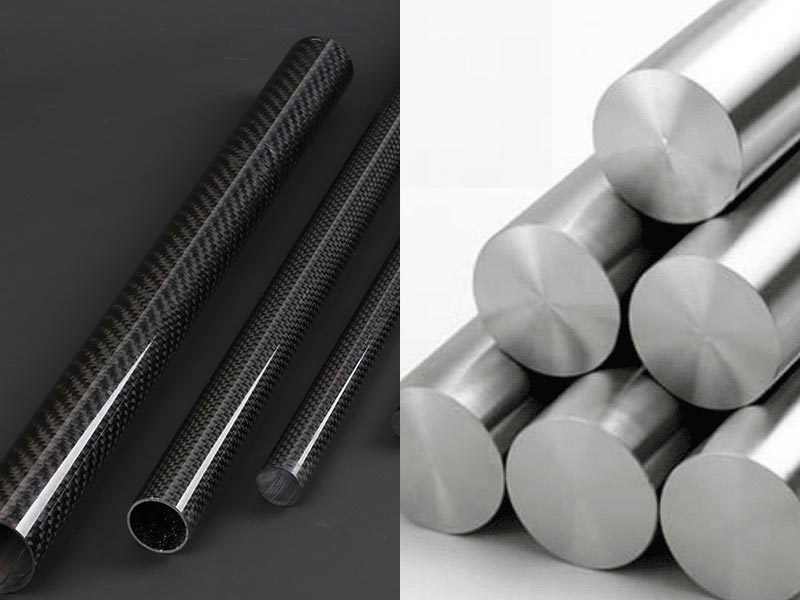
Carbon fiber and titanium serve structural roles but differ fundamentally in composition, processing, and mechanical behavior.
Carbon Fiber Composite Structure
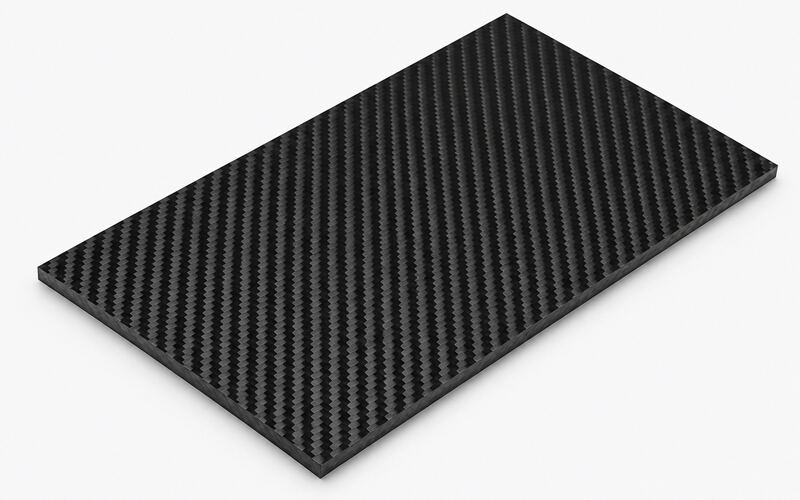
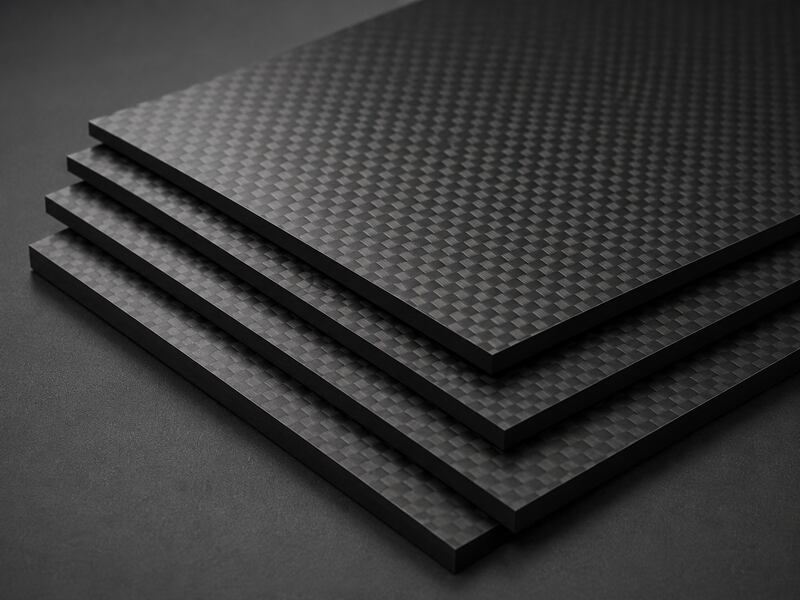
Carbon fiber composite consists of reinforcement fiber embedded in a resin matrix, forming an anisotropic laminate.
Fiber orientation, resin content, and fiber volume fraction govern stiffness, weight, and load direction response.
A 60% fiber volume fraction typically balances strength retention with manageable resin content in structural laminates. Poor consolidation can cause voids that reduce mechanical performance.
Titanium Alloys and Grades
Titanium is a metallic element alloyed with aluminum or vanadium to increase strength and corrosion resistance. Grade 5 titanium, or Ti-6Al-4V, is the most common structural alloy used in aerospace and medical parts.
Unlike carbon fiber, titanium behaves isotropically, meaning its properties remain relatively consistent regardless of loading direction. This simplifies design analysis but limits material tailoring for directional loads.
Comparison Basis
Comparing carbon fiber vs titanium requires evaluating density, strength, stiffness, environment, and manufacturing method together. Each material suits different load cases, service conditions, and production volumes.
Key Differences
Carbon fiber and titanium differ most in density, directional behavior, impact response, temperature capability, and production method.
| Factor | Carbon Fiber Composite | Titanium |
|---|---|---|
| Material structure | Fiber-reinforced resin laminate | Metallic alloy |
| Typical density | Approximately 1.6 g/cm3 | Approximately 4.5 g/cm3 |
| Directional behavior | Anisotropic and dependent on fiber orientation | Relatively isotropic |
| Specific stiffness | Very high when fibers align with the load path | Lower, but consistent in multiple directions |
| Impact response | Can delaminate or fracture internally | Absorbs energy through plastic deformation |
| Temperature resistance | Limited mainly by the resin system | Suitable for substantially higher temperatures |
| Primary manufacturing methods | Layup, molding, curing, and trimming | Machining, forging, forming, and additive manufacturing |
| Typical design priority | Minimum weight and directional stiffness | Multidirectional strength and environmental durability |
Weight and Density
Carbon fiber composite has a bulk density near 1.6 g/cm3, while titanium density reaches roughly 4.5 g/cm3. This difference makes carbon fiber parts significantly lighter at an equivalent volume.
Lower density reduces inertial loads in rotating or reciprocating components. Titanium remains heavier but provides uniform load-bearing capacity without requiring detailed fiber orientation planning.
Strength and Stiffness
High-modulus carbon fiber can exceed titanium in specific stiffness, meaning stiffness relative to material weight. Titanium provides more consistent strength across multiple directions without a laminate ply schedule.
Carbon fiber laminates achieve superior stiffness-to-weight ratios when fiber orientation aligns with the load path. Misaligned or insufficient transverse plies reduce this advantage substantially.
Directional Performance
Carbon fiber strength depends heavily on fiber orientation, creating strong longitudinal axes and weaker transverse directions. Titanium performance remains more uniform because its metallic structure does not rely on continuous directional reinforcement.
Cost and Production
Carbon fiber requires layup, curing, tooling, and secondary trimming, while titanium commonly requires machining from billet or forged stock. Production volume, part geometry, tolerance requirements, and material utilization determine which route becomes more economical.
Mechanical Performance
Mechanical behavior differences determine how each material responds to tension, compression, impact, and repeated loading.
- Tensile loading: Standard-modulus carbon fiber can reach approximately 3,500 MPa along the fiber direction. Titanium tensile strength is commonly near 900 MPa, but its performance remains more consistent across different loading directions.
- Compression and shear: Carbon fiber laminates are more sensitive to fiber waviness, microbuckling, and interlaminar shear. Titanium resists compression and shear more predictably through its continuous metallic structure.
- Impact loading: Titanium absorbs impact energy through plastic deformation. Carbon fiber can develop delamination, matrix cracking, or fiber breakage, sometimes without visible surface damage.
- Fatigue loading: Carbon fiber can provide excellent fatigue resistance when cyclic loads remain aligned with the reinforcement. Titanium may develop progressive fatigue cracks that can often be detected before final failure.
Tensile Strength
Standard-modulus carbon fiber tensile strength can reach approximately 3,500 MPa along the fiber direction.
Titanium tensile strength typically remains near 900 MPa, although the exact value depends on alloy grade and heat treatment.
Carbon fiber achieves higher directional tensile values, but transverse strength decreases sharply without cross-ply reinforcement. Titanium sacrifices peak directional strength for more predictable multidirectional behavior.
For a more detailed comparison of carbon fiber and titanium strength, consider tensile direction, laminate design, alloy grade, and load case separately.
Compression and Shear
Carbon fiber laminates show lower compressive strength than tensile strength due to fiber microbuckling under load. Titanium resists compression and shear more predictably because of its relatively uniform metallic structure.
Impact Resistance
Titanium absorbs impact energy through plastic deformation, helping it resist cracking under sudden loads.
Carbon fiber can suffer delamination or fiber breakage from impact, often without obvious external damage.
This hidden damage risk can favor titanium in impact-prone parts or require protective outer plies, core materials, and additional inspection for carbon fiber structures.
Fatigue and Failure
Carbon fiber laminates generally resist fatigue well when loads remain within fiber-dominated directions. Titanium can develop fatigue cracks that propagate progressively, providing opportunities for detection during scheduled inspection.
Thermal and Environmental Performance
Temperature exposure and environmental conditions influence the long-term durability of carbon fiber and titanium differently.
Service Temperature
Standard epoxy-based carbon fiber composites typically withstand continuous service temperatures near 120°C before resin softening becomes a concern. Titanium tolerates far higher temperatures and can retain useful structural properties above 500°C, depending on the alloy and exposure conditions.
Thermal Expansion
Carbon fiber laminates exhibit very low thermal expansion along the fiber direction, supporting dimensional stability in precision structures. Titanium expands more as temperature changes, requiring clearance and thermal growth allowances in some assemblies.
Corrosion Resistance
Titanium forms a stable oxide layer that provides strong corrosion resistance in marine and chemical environments. Carbon fiber itself resists corrosion but can promote galvanic corrosion when placed in direct contact with aluminum or other susceptible metals.
Electrical Conductivity
Carbon fiber conducts electricity moderately, which affects grounding, electromagnetic behavior, and lightning strike protection in aerospace structures. Titanium also conducts electricity, although less effectively than highly conductive metals such as copper and aluminum.
Manufacturing Differences
Production methods for carbon fiber and titanium differ in tooling, process control, precision, material waste, and joining approach.
Molding vs Machining
Carbon fiber parts form through processes such as autoclave curing, compression molding, resin transfer molding, and vacuum infusion. Titanium parts are produced through machining, forging, sheet forming, casting, or additive manufacturing.
Molding can produce complex curved geometries in a single cure cycle, while machining removes material to reach the final shape. Each method controls dimensions and surface quality differently, affecting cost and lead time.
Tooling and Production Volume
Carbon fiber tooling costs increase with mold size, surface requirements, and geometric complexity but can support repeat production. Titanium machining suits lower volumes without dedicated composite molds, although cycle time and tool wear increase with part complexity.
Tolerances and Surface Finish
Machined titanium can achieve tolerances near 0.05 mm through precision CNC processes. Carbon fiber tolerances depend on mold accuracy, laminate thickness variation, cure shrinkage, and trimming quality.
Joining and Fastening
Titanium components commonly use bolted, riveted, or welded joints. Carbon fiber structures often use adhesive bonding, co-curing, or mechanically fastened joints with local reinforcement to control bearing stress around drilled holes.
Inspection and Repair
Detecting damage and restoring structural performance differ significantly between composite and metallic components.
Carbon Fiber Defects
Carbon fiber laminates can develop delamination, porosity, resin-rich zones, or fiber waviness during curing or service. These defects often remain invisible externally, requiring nondestructive evaluation to confirm structural integrity.
Titanium Cracks and Damage
Titanium components can develop surface cracks or fatigue lines that grow progressively under cyclic loading. Visual inspection combined with dye penetrant or eddy current testing can detect many defects before final failure.
Inspection Methods
Ultrasonic testing effectively detects internal carbon fiber defects such as voids, disbonds, and delamination. Titanium inspection commonly uses dye penetrant, eddy current, or ultrasonic testing to identify surface and subsurface cracks.
Repair and Replacement
Carbon fiber repair can involve removing damaged material and bonding replacement plies through a controlled scarf repair. Titanium repair may involve removing damaged sections, welding under qualified conditions, or replacing the component when fatigue life cannot be restored reliably.
Cost Comparison
Total cost depends on raw material pricing, production volume, tooling, labor, inspection, assembly, and maintenance rather than material price alone.
| Cost Factor | Carbon Fiber | Titanium |
|---|---|---|
| Raw material | Varies widely by fiber grade, resin, and prepreg specification | Generally expensive, especially for certified aerospace alloys |
| Tooling | Requires molds, fixtures, and curing equipment | Often requires less dedicated forming tooling for machined parts |
| Processing | Requires layup labor, curing, trimming, and process control | Requires slow machining, rigid setups, and wear-resistant cutting tools |
| Material waste | Prepreg cutting and trimming create offcuts | Billet machining can remove a large percentage of the starting material |
| Inspection | May require ultrasonic or thermographic inspection | Uses established penetrant, eddy current, and dimensional inspection methods |
| Lifecycle value | Weight savings can reduce fuel or energy consumption | Heat and corrosion resistance can extend service life |
Material Cost
Titanium raw material often costs more than standard carbon fiber reinforcement or prepreg per kilogram. High-modulus carbon fiber and aerospace-qualified prepreg systems can approach or exceed titanium pricing.
Processing Cost
Carbon fiber processing may require curing ovens, autoclaves, controlled storage, and skilled layup labor. Titanium processing requires specialized cutting tools, controlled machining parameters, and effective heat management.
Inspection and Assembly Cost
Composite inspection can require ultrasonic equipment and trained technicians, adding cost per part. Titanium benefits from established metallic inspection methods, although aerospace-grade parts still require extensive documentation and testing.
Lifecycle Cost
Carbon fiber can reduce lifecycle cost through weight savings that lower fuel or energy consumption. Titanium can reduce long-term cost through extended service life in high-temperature, corrosive, or impact-prone environments.
Carbon Fiber vs Titanium Applications
Application requirements determine whether weight reduction, multidirectional strength, temperature capability, or impact resistance takes priority.
Aerospace Components
Aerospace structures use carbon fiber for wing skins, fuselage panels, control surfaces, and interior structures to reduce aircraft weight. Titanium remains common in engine mounts, landing gear components, fittings, and fasteners exposed to high stress or temperature.
Automotive and Motorsport Parts
Motorsport applications use carbon fiber body panels, monocoques, aerodynamic parts, and driveshafts to reduce vehicle mass. Titanium serves exhaust systems, valves, suspension components, and fasteners where heat resistance and durable strength are critical.
Medical and Marine Parts
Titanium is common in medical implants because of its biocompatibility, corrosion resistance, and mechanical strength. Carbon fiber appears in medical imaging tables, prosthetic components, marine masts, and lightweight structural panels.
Sports and Precision Equipment
Carbon fiber dominates bicycle frames, racket shafts, carbon fiber rods used in fishing equipment, and other products requiring low mass and directional stiffness. Titanium appears in bicycle frames, golf club heads, eyewear frames, and outdoor equipment that benefits from durability and flexibility.
Which Material Should You Choose?
Material selection should follow the governing load case, operating environment, manufacturing capability, production volume, and lifecycle requirements.
- Define the weight target. Carbon fiber is generally preferable when mass reduction has a direct effect on speed, energy consumption, or inertial loading.
- Identify the loading direction. Carbon fiber suits predictable load paths, while titanium performs more consistently under multidirectional or changing loads.
- Evaluate impact exposure. Titanium is usually more tolerant of concentrated impact, dents, and handling damage.
- Check the service temperature. Titanium is the stronger candidate for temperatures beyond the practical limit of the selected composite resin.
- Review corrosion and electrical contact. Both materials resist corrosion, but carbon fiber requires galvanic isolation when joined to susceptible metals.
- Compare manufacturing economics. Include molds, machining time, material waste, labor, inspection, assembly, and expected production volume.
- Consider a hybrid design. Carbon fiber panels combined with titanium fittings can balance low weight with durable joints and concentrated load transfer.
When to Choose Carbon Fiber
Choose carbon fiber when weight reduction and directional stiffness outweigh impact resistance and high-temperature requirements. It suits components with predictable load paths, controlled manufacturing conditions, and moderate service temperatures.
When to Choose Titanium
Choose titanium when isotropic strength, high-temperature resistance, impact tolerance, or corrosion resistance is critical. It suits components facing multidirectional loading, concentrated stresses, or harsh operating environments.
When to Use Both Materials
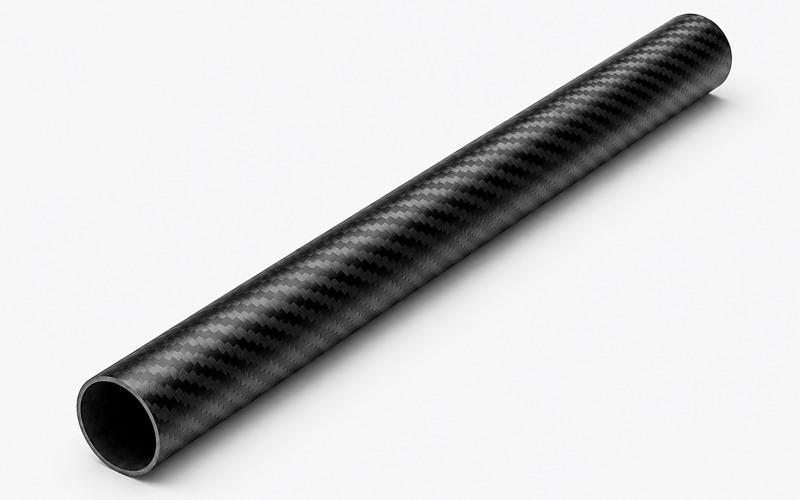
Hybrid designs combine carbon fiber skins or carbon fiber tubes with titanium fittings, inserts, and fasteners. This approach places lightweight composite material across broad structural areas while using titanium at joints and concentrated load-transfer points.
FAQ
Is Carbon Fiber Stronger Than Titanium?
Carbon fiber can exceed titanium in tensile strength along the primary fiber direction. Titanium provides more consistent strength under transverse, shear, and multidirectional loading.
Is Carbon Fiber Lighter Than Titanium?
Yes. Carbon fiber composite density is significantly lower than titanium density, which makes it preferable where component weight is a primary design constraint.
Which Material Handles Impact Better?
Titanium generally handles concentrated impact better because it can deform plastically before fracture. Carbon fiber can suffer hidden delamination or internal ply damage after an impact.
Can Carbon Fiber and Titanium Be Used Together?
Yes. Hybrid structures often combine carbon fiber panels or tubes with titanium fasteners, inserts, and fittings. Electrical isolation may be required depending on the environment and the other metals in the assembly.
Which Material Is Better for High Temperatures?
Titanium performs better at high temperatures than standard epoxy-based carbon fiber composites. Specialized high-temperature resin systems can extend composite service limits but generally do not match titanium in sustained extreme heat.
Which Material Costs More?
Neither material is always more expensive at the finished-part level. Titanium often carries high raw material and machining costs, while carbon fiber cost depends heavily on fiber grade, tooling, layup labor, curing, inspection, and production volume.