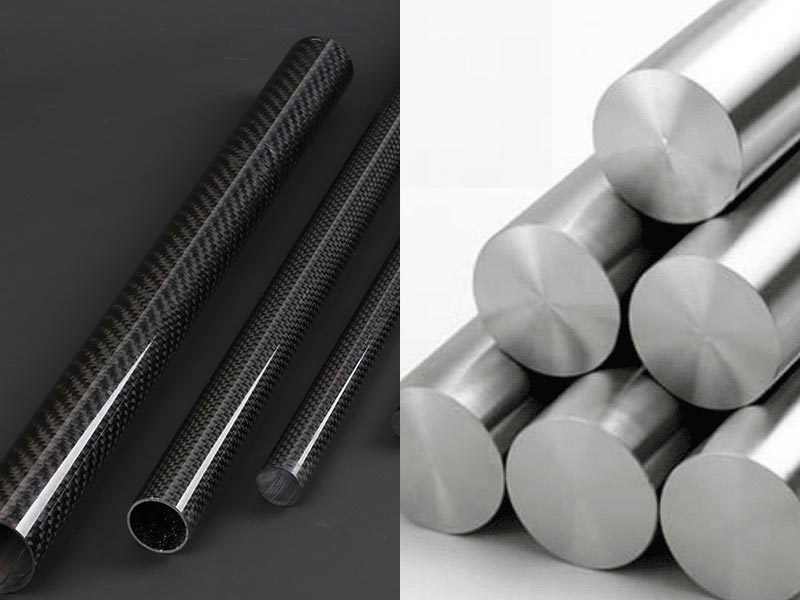
Carbon fiber and titanium excel under different loading conditions, so no single answer covers every case. The correct comparison depends on load type, direction, and part geometry.
A CFRP laminate can exceed titanium in tensile strength per unit weight when load runs along the fiber direction. Titanium alloys generally outperform CFRP in impact resistance, off-axis loading, and joint strength.
Strength values only apply to a specific loading direction and material form. A component also depends on stiffness, fatigue behavior, impact tolerance, and how loads transfer through joints.
What Materials Are Actually Being Measured?
Comparing carbon fiber to titanium requires defining the exact material form and titanium grade involved.
Raw Fibers Are Not Finished Carbon Fiber Parts
Raw carbon filaments show very high tensile strength in isolated fiber testing.
Once embedded in a resin matrix as a CFRP laminate, real-world strength drops due to resin behavior, voids, and fiber alignment.
How Fiber Layout Changes a CFRP Laminate?
Unidirectional and woven carbon fiber distribute reinforcement differently. A unidirectional laminate performs strongly along one axis but weakly across it, while a woven or quasi-isotropic layup spreads strength across multiple directions but lowers peak strength in any single direction.
Why Titanium Grade Also Changes the Result
Commercially pure titanium differs significantly from high-strength alloys such as Ti-6Al-4V.
Alloy selection changes tensile strength, fatigue life, and suitability for structural applications.
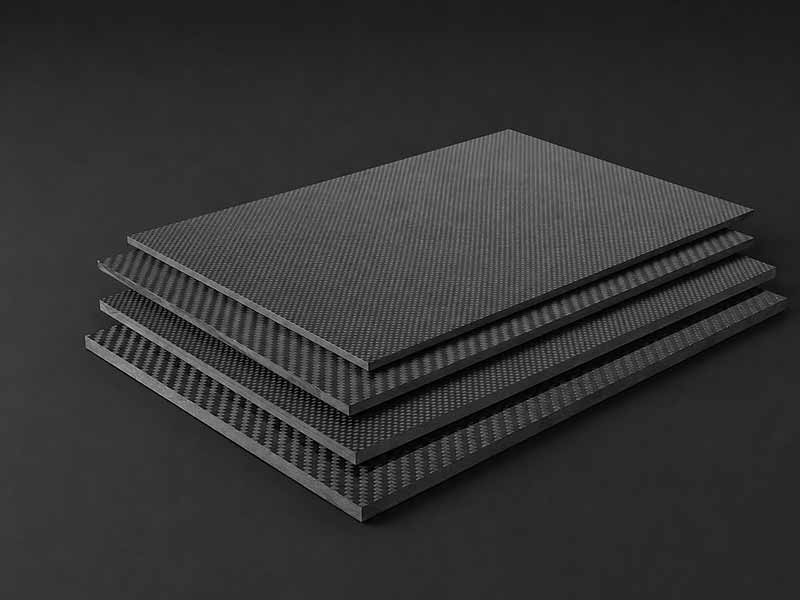
Which Material Handles More Tension?
Tensile performance depends on fiber orientation for CFRP and alloy composition for titanium.
Pulling Loads Along Carbon Fibers
A high-strength unidirectional CFRP laminate can reach tensile strength values well above many titanium alloys along the fiber axis. This performance requires precise fiber alignment and high fiber volume fraction.
Yield and Ultimate Strength of Titanium
Ti-6Al-4V typically shows yield strength near 830 to 950 MPa with predictable ductile behavior. Titanium maintains consistent tensile performance regardless of loading direction.
How Much Load Each Material Carries per Kilogram?
CFRP density near 1.6 g/cm³ compares to titanium density near 4.43 g/cm³.
This difference allows CFRP to achieve higher specific strength along its primary fiber direction, though not in every loading condition.
For another strength-focused comparison with an isotropic metal, see whether carbon fiber is stronger than steel.
The Weight Advantage of Carbon Fiber
Lower density gives CFRP an advantage in many mass-sensitive structures, though actual part weight depends on design requirements.
Why CFRP Is Much Less Dense?
Carbon fiber composites weigh roughly one third as much as titanium at equal volume. This density gap drives most weight-saving decisions in aerospace and motorsport structures.
Part Weight at the Same Size
A titanium panel and a CFRP panel of identical dimensions will not weigh the same due to density alone. The CFRP panel will typically weigh significantly less unless thickness must increase for stiffness or impact requirements.
If weight reduction is the main design priority, our carbon fiber vs aluminum comparison covers another common lightweight material choice.
Structural Capacity Under a Fixed Weight Limit
When mass is constrained, CFRP often allows greater load capacity along the fiber direction.
Titanium remains preferable when loads act in multiple directions or where damage tolerance is critical.
Resistance to Bending and Deflection
Stiffness depends on modulus and part geometry, not strength values alone.
How Rigid a Carbon Fiber Part Can Be?
High-modulus CFRP laminates can exceed 200 GPa in the fiber direction, surpassing titanium’s stiffness. This stiffness benefit disappears when load acts across the fibers.
How Titanium Responds to Elastic Loading?
Titanium alloys show a modulus near 110 to 114 GPa, consistent in every direction. This isotropic behavior simplifies design calculations for parts under variable loading.
Why Geometry Matters as Much as Modulus?
Wall thickness, cross-sectional shape, and rib placement significantly influence stiffness.
A thinner CFRP section can match a thicker titanium section only when fiber orientation aligns with the dominant load path.
Behavior Under Compression and Repeated Loads
Compression and fatigue performance depend heavily on laminate quality and metallurgical structure.
Crushing Loads and Local Buckling
CFRP performs well in compression along the fiber direction but is prone to local buckling in thin sections.
Titanium resists buckling more predictably due to its uniform ductile behavior.
Long-Term Loading and Fatigue Life
Titanium alloys offer excellent fatigue resistance across a wide stress range. Well-manufactured CFRP laminates also perform well in fatigue, provided void content remains low and fibers stay properly aligned.
How Layup Quality Affects Composite Durability
Poor resin infusion, misaligned plies, or excess voids reduce fatigue life and compressive strength.
Manufacturing consistency, not just carbon fiber grade, determines long-term CFRP performance.
What Happens After an Impact?
Impact response differs sharply between a ductile metal and a layered composite.
Titanium Denting and Plastic Deformation
Titanium typically dents or deforms visibly under impact, signaling damage clearly. This visible deformation supports straightforward inspection.
Internal Cracking Beneath a CFRP Surface
CFRP can suffer internal delamination without visible surface damage. Impact energy often creates hidden fiber breakage between laminate layers.
Why Composite Damage Can Be Hard to Detect?
Standard visual inspection may miss subsurface delamination in a CFRP part. Ultrasonic or thermographic inspection is often required to confirm structural integrity after impact.
Why Fiber Orientation Changes the Answer?
CFRP performance shifts dramatically depending on the angle between load and fiber direction.
High Strength Along the Main Fiber Path
Unidirectional fibers aligned with the load path deliver the highest tensile and stiffness values.
This orientation produces the strongest possible comparison against titanium.
Lower Capacity Across the Fibers
Transverse and interlaminar strength values are much lower than in-plane fiber strength. Titanium’s isotropic strength often exceeds CFRP performance in these directions.
Balancing Several Load Directions With Ply Angles
Engineers combine multiple ply angles to distribute strength across directions. This approach sacrifices peak single-direction strength for more predictable multidirectional performance.
How the Two Materials Fail?
Failure mode influences safety margins and inspection requirements.
Titanium alloys show ductile yielding before ultimate failure, providing visible warning signs. This behavior supports predictable failure analysis.
CFRP laminates often fail suddenly with minimal plastic deformation beforehand. Brittle fiber fracture can occur without warning under overload conditions.
Stress concentrations near holes and fasteners can trigger delamination in CFRP. Titanium handles these stress concentrations more predictably due to its ductile metallic structure.
Where Carbon Fiber Has the Clearer Advantage?
Certain structural conditions favor CFRP’s directional strength and low density.
Lightweight Beams, Panels, and Shells
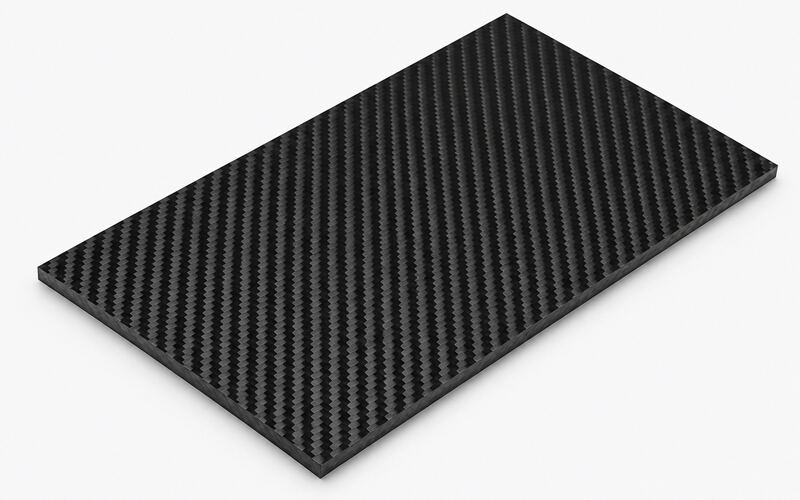
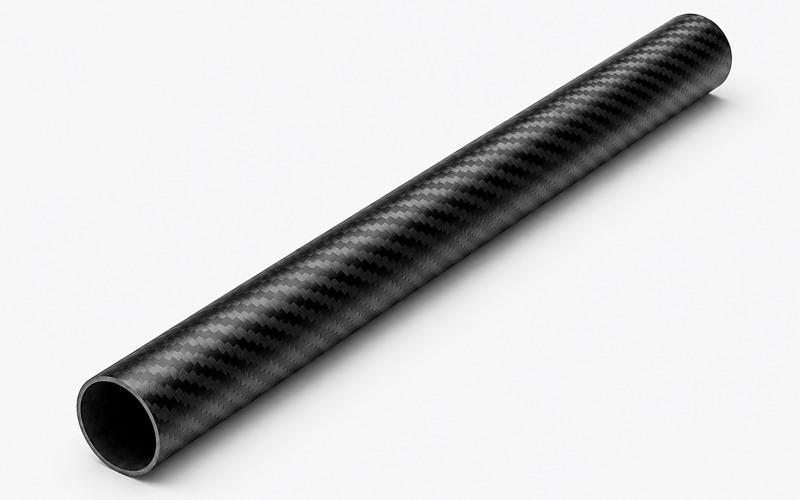
Structures with a dominant load direction benefit from aligned CFRP layups. Carbon fiber panels and shells can provide significant weight savings without sacrificing directional stiffness.
Parts Designed Around Predictable Load Paths
When engineers can predict load direction precisely, CFRP layups can be optimized accordingly. This reduces material waste compared to isotropic metal designs.
Structures Limited by Mass or Rotational Inertia
Rotating components benefit from CFRP’s low density, reducing inertia and energy loss.
Aerospace spars and motorsport wheels frequently use this advantage.
Where Titanium Remains the Safer Choice?
Certain structural demands favor titanium’s isotropic and ductile characteristics.
Bolted Joints, Threads, and Bearing Loads
Titanium threads and bearing surfaces handle concentrated loads more reliably than laminated composites.
CFRP often requires local reinforcement or metal inserts near fasteners.
Impact-Prone or High-Temperature Areas
Titanium withstands higher temperatures and sudden impacts without hidden internal damage. This makes it preferable for engine-adjacent or high-risk impact zones.
Parts Requiring Ductility and Easier Inspection
Visible plastic deformation in titanium simplifies damage assessment. CFRP requires specialized inspection methods to detect comparable internal damage.
Using Carbon Fiber and Titanium Together
Hybrid designs combine each material’s strengths at critical structural interfaces.
Titanium Inserts Inside Composite Structures
Titanium inserts reinforce bolt holes and load introduction points within CFRP structures.
This combination improves bearing strength without adding excessive weight.
Managing Stress Around Fasteners and Interfaces
Engineers use bushings, doublers, and tapered inserts to reduce stress concentrations.
Proper transition design prevents premature delamination near metal-composite joints.
Preventing Galvanic Corrosion Between Materials
Direct carbon-titanium contact carries lower galvanic risk than carbon-aluminum contact, but isolation layers are still often used. Barrier coatings or fiberglass interlayers help prevent long-term degradation.
| Property | CFRP Laminate | Titanium Alloy (Ti-6Al-4V) |
|---|---|---|
| Density | ~1.6 g/cm³ | ~4.43 g/cm³ |
| Tensile Strength (fiber direction) | 600–1500 MPa | 830–950 MPa |
| Elastic Modulus | 70–200+ GPa (direction dependent) | ~110–114 GPa |
| Impact Behavior | Prone to internal delamination | Ductile denting, visible damage |
| Directional Behavior | Anisotropic | Isotropic |
FAQ
Is Carbon Fiber Stronger Than Titanium for Its Weight?
CFRP can offer higher specific strength than titanium along the primary fiber direction. This advantage narrows or disappears under off-axis or multidirectional loading.
Which Material Is Stronger in Compression?
Titanium generally provides more predictable compressive strength across all directions. CFRP compressive performance depends heavily on fiber alignment and resistance to local buckling.
Will Titanium Bend Before Carbon Fiber Breaks?
Titanium typically yields and deforms visibly before reaching ultimate failure. CFRP can fracture with little visible warning once its failure limit is reached.