What Are Carbon Fiber and G10?
Carbon fiber and G10 are reinforced composite materials built from fiber layers bonded within a cured resin system.
Carbon Fiber Composite Structure
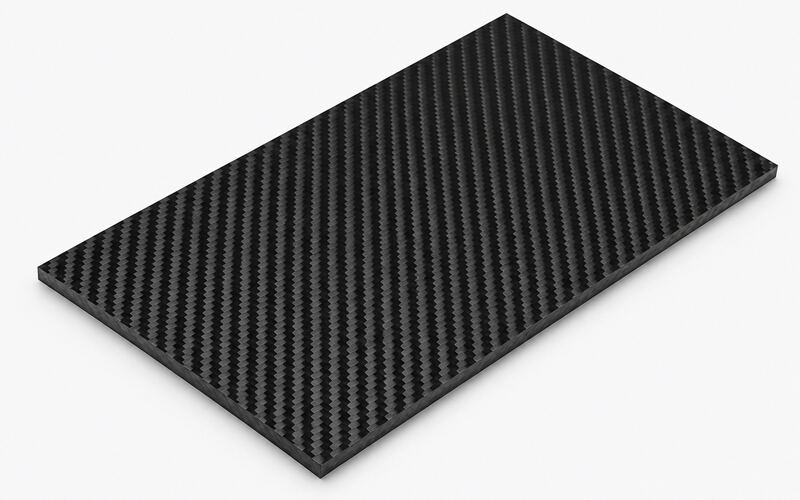
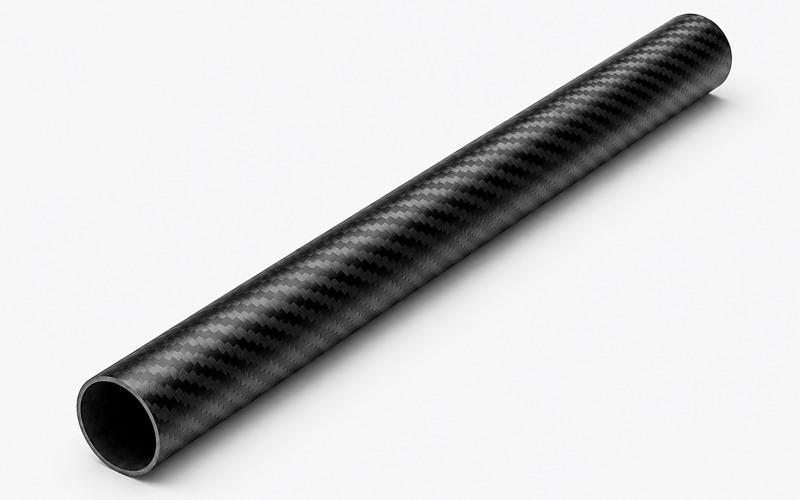
Carbon fiber composite consists of woven or unidirectional carbon fiber fabric bonded with epoxy resin under controlled pressure.
The cured laminate forms a rigid, anisotropic structure where strength depends on fiber direction.
G10 Fiberglass Laminate Structure
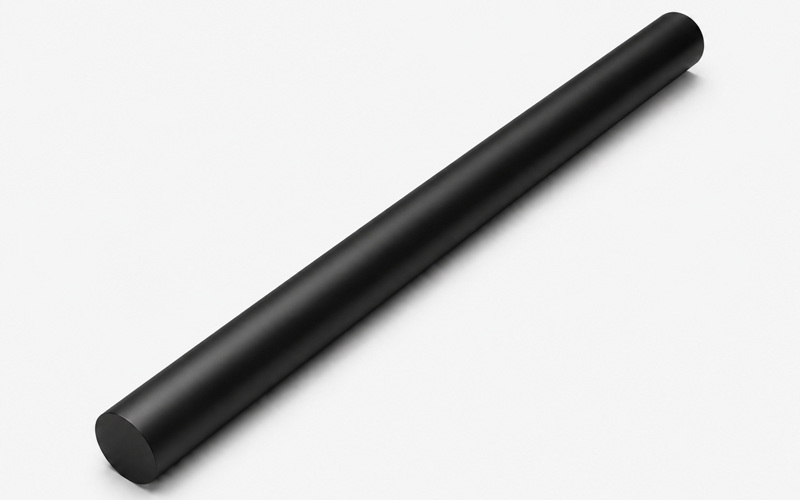
G10 is a fiberglass laminate made from multiple layers of woven glass fiber cloth impregnated with epoxy resin. The layers are pressed and cured into a dense, uniform sheet.
For a broader comparison of carbon reinforcement and glass-fiber composites, see our carbon fiber vs fiberglass guide.
Shared Epoxy Resin Matrix
Both materials rely on an epoxy resin matrix to bind reinforcement fibers and transfer load between layers.
Resin quality governs bonding strength, moisture resistance, and long-term durability.
Composition and Material Structure
Fiber type, orientation, and resin ratio shape mechanical behavior in carbon fiber and G10 laminates.
Carbon Fiber Reinforcement
Carbon fiber reinforcement uses continuous filaments with high tensile modulus, giving the laminate directional stiffness.
Fiber grade selection controls how much load the composite structure can carry before fiber breakage occurs.
Glass Fiber Reinforcement
Glass fiber reinforcement offers lower stiffness than carbon fiber but provides more elongation before failure.
This added elasticity helps G10 absorb impact energy without immediate fracture.
Fiber Orientation and Weave
Fiber orientation changes stiffness along the primary load direction in both materials.
A 2×2 twill weave balances strength across two axes, while unidirectional layers concentrate strength in one direction.
Resin Quality and Fiber Content
Resin content influences laminate weight, void formation, and surface quality during curing.
A fiber volume fraction near 60% typically balances stiffness with resin-driven toughness in structural laminates.
Weight and Mechanical Performance
Density, stiffness, and tensile behavior separate carbon fiber composites from G10 fiberglass laminates.
| Property | Carbon Fiber | G10 |
|---|---|---|
| Density and weight | Lower density produces lighter parts at an equivalent thickness. | Higher density results in heavier components of the same size. |
| Tensile strength | Higher tensile strength along the primary fiber direction. | Moderate tensile strength with more balanced multidirectional behavior. |
| Stiffness | Higher elastic modulus provides stronger resistance to bending. | Flexes more under the same load and distributes stress over a wider area. |
| Strength-to-weight ratio | Superior ratio for lightweight structural applications. | Lower ratio but sufficient for many industrial and insulating parts. |
| Best performance focus | Low weight, rigidity, and directional structural strength. | Toughness, flexibility, and balanced laminate behavior. |
Impact and Failure Behavior
Impact response and failure mode differ sharply between brittle carbon fiber and tougher G10 laminates.
- Impact resistance: G10 absorbs sudden impact more effectively because glass fibers stretch before breaking. Carbon fiber carries static loads well but may fracture abruptly under concentrated impact.
- Crack and delamination risk: Carbon fiber laminates are more prone to delamination when impact stress exceeds the resin bond strength. G10 benefits from the greater elongation of its glass fiber layers.
- Concentrated loading: Carbon fiber can fail suddenly around sharp or localized loads. G10 tends to deform locally and spread stress across a wider laminate area.
- Damage visibility: Carbon fiber damage may appear as fiber splintering, cracking, or surface whitening. G10 impact damage is often less obvious and may appear as a dent rather than an open fracture.
Heat and Environmental Resistance
Thermal exposure, moisture, and chemical contact influence long-term stability in carbon fiber and G10 parts.
Heat Resistance
Both materials tolerate moderate heat, though performance depends on the resin system rather than the fiber type. Extended exposure above the resin’s glass transition temperature can soften the laminate structure.
Moisture Absorption
Carbon fiber composites absorb minimal moisture due to the non-porous nature of carbon filaments. G10 also resists moisture well, since dense glass fiber layers limit water penetration into the laminate.
Chemical and Fuel Resistance
Epoxy resin gives both materials solid resistance to common fuels, oils, and mild solvents.
Prolonged exposure to strong chemicals can weaken the resin matrix in either laminate.
UV and Outdoor Exposure
Carbon fiber surfaces can fade or roughen under prolonged UV exposure without a protective coating. G10 shows similar surface degradation, requiring sealants for extended outdoor use.
Dimensional Stability
Carbon fiber maintains tighter dimensional stability due to its low thermal expansion along the fiber direction.
G10 expands slightly more under temperature shifts, affecting tight-tolerance component fit.
Electrical and Thermal Properties
Electrical behavior marks one of the clearest technical distinctions between carbon fiber and G10.
| Property | Carbon Fiber | G10 |
|---|---|---|
| Electrical conductivity | Conductive because carbon filaments carry current along their length. | Non-conductive and widely used as an electrical insulation material. |
| Use near circuits | Requires insulating barriers near exposed connections and sensitive circuits. | Can be used near live components without creating a conductive path. |
| Thermal conductivity | Transfers heat more efficiently, especially along the fiber direction. | Slows heat transfer and acts as a thermal insulator. |
| Electronic applications | Suitable for structural parts when conductivity is controlled. | Preferred for circuit board substrates, insulating brackets, and switchgear parts. |
Machining and Fastening
Cutting, drilling, and fastening methods differ due to fiber hardness and resin abrasiveness in each material.
Cutting and CNC Machining
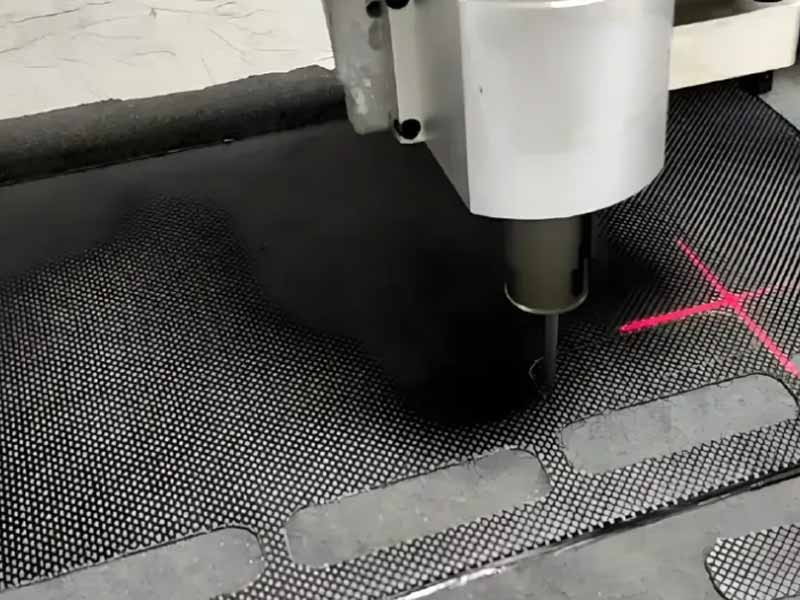
Cutting carbon fiber requires diamond-coated tooling because carbon filaments are highly abrasive. G10 machines more easily with standard carbide tooling, though dust control remains necessary.
Drilling and Edge Finishing
Drilling carbon fiber demands controlled feed rates to prevent fiber pull-out and delamination at exit points.
G10 drills more predictably, producing cleaner edges with fewer specialized tool requirements.
Screw and Pin Retention
G10 holds screws and pins securely due to the elasticity of its glass fiber layers. Carbon fiber can crack around fastener points unless reinforced with inserts or bushings.
Tool Wear and Dust Control
Carbon fiber accelerates tool wear and produces fine conductive dust requiring dedicated extraction systems.
G10 generates fiberglass dust that demands filtration but causes less rapid tool degradation.
Surface and Appearance
Visual finish and surface texture influence both aesthetic appeal and handling in finished components.
Weave Pattern and Visual Finish
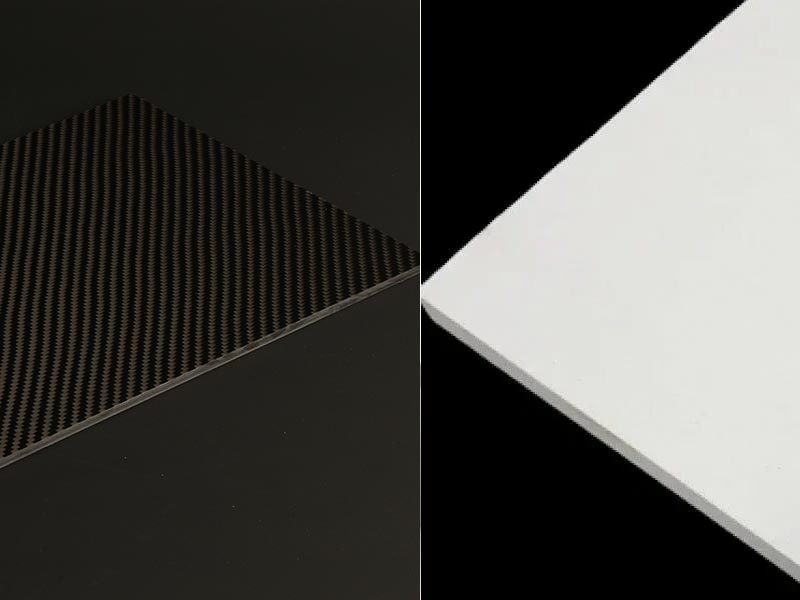
Different carbon fiber weave types produce distinct surface patterns prized for their technical appearance in visible parts. G10 has a flat, uniform surface without a visible fiber weave texture.
Texture and Grip
Carbon fiber surfaces feel smooth and rigid, sometimes requiring texturing for improved hand grip. G10 can be sandblasted or textured easily to create a consistent non-slip surface.
Scratch Visibility
Carbon fiber scratches can disrupt the visible weave pattern, making surface damage noticeable.
G10 scratches are less visually distracting due to its flat, colored surface finish.
Available Colors and Finishes
Carbon fiber is typically limited to black or tinted resin finishes over the natural weave. G10 comes in multiple colors, since dyed resin layers create varied surface appearances.
Cost and Production Considerations
Material cost and processing complexity affect total production expense for both composite options.
Raw Material Cost
Carbon fiber costs more than G10 due to the complex carbonization process required to produce reinforcement filaments. G10 uses lower-cost glass fiber, reducing raw material expense significantly.
Machining and Finishing Cost
Carbon fiber machining costs rise due to specialized tooling and required dust extraction systems.
G10 machining costs stay lower, since standard tooling and simpler dust control apply.
Material Availability
G10 is widely available in standard sheet sizes from multiple laminate suppliers. Carbon fiber sheets are available in different fiber grades, weave styles, and laminate thicknesses.
Suitability for Volume Production
G10 suits high-volume production due to lower material and processing costs per part.
Carbon fiber remains better suited to lower-volume runs where weight savings justify the added expense.
Where Each Material Performs Best
Application requirements determine whether carbon fiber or G10 delivers better long-term performance.
- Lightweight structural parts: Carbon fiber suits aerospace brackets, drone frames, robotic arms, and other parts where low mass and high stiffness improve performance.
- Electrical insulation components: G10 suits circuit board substrates, switchgear spacers, insulating brackets, and housings positioned near live electrical connections.
- Knife and tool handles: G10 offers impact toughness, grip texture, and secure fastener retention. Carbon fiber is used in premium handles where appearance and low weight take priority.
- Robotics and electronic equipment: G10 suits protective enclosures where insulation and durability matter. Carbon fiber suits moving structural components where stiffness and reduced inertia improve motion control.
- Decorative and consumer products: Carbon fiber provides a visible woven pattern for premium panels and accessories. G10 provides varied colors and a durable, uniform surface.
How to Choose Between Carbon Fiber and G10
Material selection depends on weight targets, impact exposure, electrical needs, and budget constraints.
Choose Carbon Fiber for Low Weight
Select carbon fiber when component weight directly affects performance, such as in aerospace or drone parts. Its strength-to-weight ratio outperforms G10 in most stiffness-critical applications.
Choose G10 for Impact Resistance
Select G10 when parts face repeated impact or rough handling in demanding environments. Its glass fiber structure absorbs shock better than brittle carbon fiber laminates.
Choose G10 for Electrical Insulation
Select G10 for any component near live circuits or exposed electrical connections. Carbon fiber’s conductivity makes it unsuitable without added insulating layers.
Balance Performance and Cost
Weigh raw material cost, machining expense, and performance requirements before finalizing material choice. G10 often provides sufficient performance at a lower total production cost.
FAQ
Is Carbon Fiber Stronger Than G10?
Carbon fiber has higher tensile strength and stiffness along the fiber direction than G10. G10 offers better impact toughness despite lower overall tensile strength.
Is G10 More Impact Resistant?
Yes, G10 resists impact better because glass fibers stretch before breaking under sudden load. Carbon fiber can fracture abruptly when struck with concentrated force.
Which Material Is Lighter?
Carbon fiber is lighter than G10 due to its lower fiber density and laminate weight. This makes carbon fiber preferable where mass reduction is critical.
Can G10 Replace Carbon Fiber?
G10 can replace carbon fiber where weight savings matter less than impact resistance or cost. It cannot match carbon fiber’s stiffness-to-weight performance in structural applications.