How hard is carbon fiber? Learn how resin, fiber grade, cure control, machining, defects, and testing affect CFRP hardness.
Carbon Fiber Hardness Basics
Carbon fiber hardness depends on fibers, resin, laminate design, and surface condition. It is not a single material value.
Hardness vs Strength and Stiffness
Hardness, strength, and stiffness describe different material behaviors:
- Hardness describes resistance to indentation, scratching, or local surface damage.
- Carbon fiber strength describes how much load a laminate carries before failure.
- Stiffness describes how much the CFRP component deflects under load.
A part can feel very hard but still crack if load paths are poorly designed. Engineers therefore specify hardness with tensile, flexural, compression, and impact requirements.
This prevents surface hardness from being confused with structural durability.
Why Resin Controls Surface Hardness?
In most carbon fiber parts, the visible surface is resin-rich. The indenter, scratch tip, or abrasive first contacts the cured resin layer.
Fiber reinforcement improves structural performance below the surface. However, resin chemistry controls surface indentation, gloss retention, and micro-scratch behavior.
A harder resin can improve scratch resistance but may reduce toughness. A tougher resin may resist impact better while showing more surface marking.
Good surface hardness requires balanced resin selection, controlled cure, and consistent compaction. Poor cure leaves the surface softer and more prone to wear.
Carbon Fiber Hardness Under Load
Carbon fiber behaves differently under tension, compression, impact, and abrasion. Each load case reveals a different hardness-related limitation.
Tensile Strength and Modulus
Carbon fibers carry tensile load very efficiently along their length. The laminate becomes hard to stretch when fibers align with the load path.
Use a fiber tensile strength above 3500 MPa when the part needs high load capacity and limited cracking risk. This parameter controls how much axial stress the fibers can resist before fracture.
Use a tensile modulus above 230 GPa when the design requires low deflection and high apparent rigidity. This parameter affects perceived hardness under bending or pulling loads.
If fibers are misaligned, tensile properties fall quickly. The part may still look solid but fail below the intended working load.
Compression Limits
Compression failure often starts with fiber microbuckling, matrix yielding, or local waviness. These defects reduce how hard the laminate resists crushing loads.
Compression performance depends strongly on fiber alignment and resin support. The matrix must brace fibers so they do not kink under load.
Machined holes, sharp corners, and impact dents can start compression damage. Designers reduce this risk with generous radii and controlled bearing areas.
Processing also matters because voids reduce local support. Better compaction gives the laminate a more reliable compression response.
Resin Surface Hardness
Surface hardness is commonly governed by epoxy, vinyl ester, phenolic, or thermoplastic matrix behavior. The selected matrix controls indentation response and heat sensitivity.
Use a glass transition temperature above 120 °C when the part must keep surface hardness near warm service conditions. This parameter delays softening and helps maintain dimensional stability.
Under-cured resin may feel tacky, mark easily, or show poor solvent resistance. Excessive cure stress can create brittle surfaces and microcracks.
Quality control checks cure schedule, post-cure condition, and surface finish. These controls help keep hardness consistent across production batches.
Impact and Delamination
Carbon fiber composites are hard and stiff, but impact can separate plies internally. This damage is called delamination and may be hidden from the surface.
The resin absorbs some impact energy while fibers bridge the damaged region. Brittle matrices may crack faster, while tougher systems reduce damage spread.
Layup sequence also affects impact hardness. Balanced ply orientation helps distribute local loads before a crack grows.
Inspection is needed after tool drops, stone strikes, or service impacts. A small surface dent can mask reduced compression strength.
Scratch Abrasion and Wear
Scratch resistance depends on the exposed resin, clear coat, filler, and fiber exposure. Carbon fibers themselves are abrasive but not usually the first contact surface.
Use a cured resin surface hardness above Shore D 80 when repeated handling may mark the part. This parameter improves resistance to indentation from contact tools and fixtures.
Abrasion can cut through resin and expose fibers. Once fibers are exposed, edges can become fuzzy and moisture paths may increase.
Protective coatings improve surface wear but add process sensitivity. Poor coating adhesion can peel under abrasion and expose the laminate.
How Hard is Carbon Fiber to Machine?
Carbon fiber is difficult to machine because fibers abrade tools and laminates can delaminate. Cutting quality depends on tooling and dust control.
Tool Wear and Cutting Tools
When cutting carbon fiber, the abrasive fibers can quickly dull standard metalworking tools. Standard metalworking tools dull quickly and generate heat at the laminate edge.
Diamond-coated or polycrystalline diamond tools are used to reduce wear. Sharp edges cut fibers cleanly instead of pushing them through the matrix.
Tool wear increases cutting force and delamination risk. It also creates frayed edges, heat marks, and poor dimensional repeatability.
Operators monitor edge quality, spindle load, and tool life. Replacement schedules should be based on laminate behavior, not only machine time.
Feeds Speeds and Delamination
Cutting parameters must shear fibers without lifting plies. Excessive feed can pry layers apart before the tool finishes cutting.
Use a machining tolerance of 0.1 mm when edge fit affects assembly hardness and load transfer. This parameter controls joint consistency and prevents local stress concentration.
Spindle speed, feed rate, support method, and tool geometry work together. A rigid backup reduces vibration and keeps plies compressed.
If cutting heat rises, resin can smear or soften locally. That weakens the edge and reduces surface quality.
Drilling and Exit Breakout
Drilling creates thrust that can push final plies outward. This causes exit breakout, splintering, or ring-shaped delamination.
Special drill geometries reduce thrust and cut fibers progressively. Backing plates support the exit side and prevent unsupported ply lift.
Pecking may help remove dust, but aggressive pecking can worsen edge damage. Coolant choice must consider resin compatibility and contamination risk.
Hole quality affects fastener bearing strength. Poor drilling can make a hard laminate weak around the joint.
Tolerance Finish and Edge Quality
Carbon fiber edges require controlled trimming, sanding, or routing. Edge quality affects appearance, sealing, bonding, and stress concentration.
A smooth edge reduces fiber pull-out and improves adhesive contact. A ragged edge traps dust and can start delamination during service.
Finishing methods should avoid overheating the resin. Heat can glaze the surface and reduce bonding performance.
Dimensional checks confirm that machining did not distort thin sections. Fixture design is important because thin laminates can vibrate during cutting.
Dust and Particle Control
Carbon fiber machining produces fine conductive dust. This dust can irritate skin and damage electrical equipment.
Local extraction, enclosed cutting, and suitable filters are standard controls. Operators should also prevent dust from entering bonded interfaces.
Dry dust on a bonding surface lowers adhesion and reduces joint hardness. Cleaning must remove particles without leaving solvent residue.
Good dust control protects workers and improves part quality. It also reduces rework from contaminated finishes and poor edge sealing.
Carbon Fiber vs Other Materials
Hardness comparisons must separate surface indentation, stiffness, impact behavior, fatigue, and corrosion response. Each material fails differently.
Carbon Fiber vs Steel and Aluminum
Carbon fiber, steel, and aluminum should be compared by the actual load case, not surface hardness alone.
- Steel usually has higher metallic surface indentation resistance than resin-rich CFRP.
- Aluminum is softer than many steels but deforms plastically before cracking.
- Carbon fiber composites resist stretching and bending very well along fiber directions.
- Metals are isotropic, so properties are similar in many directions.
- Carbon fiber is anisotropic, so incorrect layup can create weak directions.
For structural parts, compare specific stiffness, damage tolerance, repair method, and joining design. Surface hardness alone gives an incomplete material ranking.
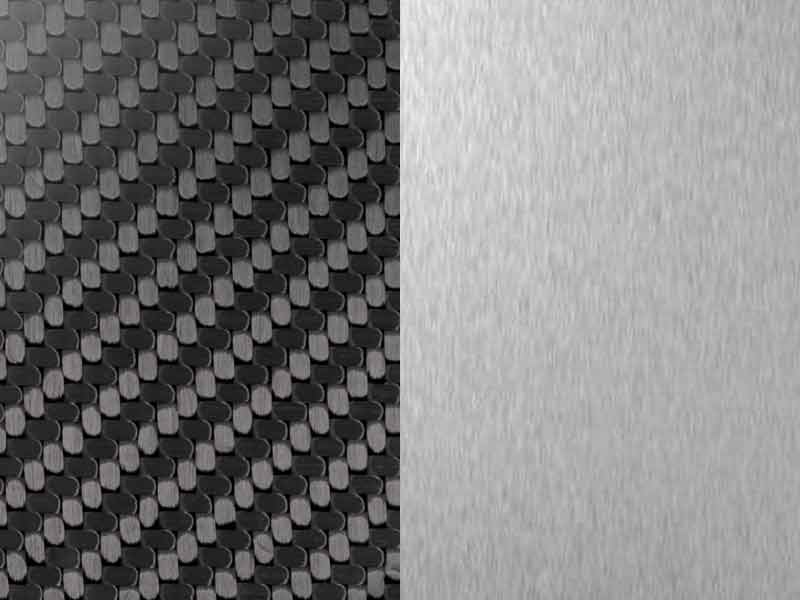
Carbon Fiber vs Fiberglass
Carbon fiber laminates are generally stiffer than fiberglass laminates at similar weight. This gives carbon fiber a harder feel under bending loads.
Fiberglass can offer better visible impact tolerance in some applications. Its fibers may stretch more before failure.
Carbon fiber is more sensitive to fiber direction in highly loaded structures. Fiberglass is often more forgiving during low-cost fabrication.
Surface hardness still depends on the resin in both materials. A hard coating can make either composite more scratch resistant.
Scratch Resistance Comparison
Scratch resistance should compare the actual exposed surface, not only the reinforcement. Clear coat, gel coat, paint, or bare resin changes results.
Polished metal may resist light scratching better than bare resin. However, metal can dent while a supported carbon laminate remains dimensionally stable.
Carbon fiber parts used cosmetically need coating control. Orange peel, pinholes, and poor cure can reduce perceived hardness.
Impact Damage Comparison
Metals usually dent visibly after impact. Carbon fiber composites may keep shape while internal delamination grows.
This makes inspection methods important for CFRP components. Visual appearance alone may not confirm structural hardness after impact.
Fiberglass often shows whitening or cracking near damage. Carbon fiber may show less visible warning before stiffness loss.
Fatigue and Corrosion Resistance
Carbon fiber composites resist corrosion because the matrix separates fibers from many environments. Metals may need coatings or galvanic isolation.
Fatigue behavior depends on fiber direction, resin toughness, and defect control. A well-designed laminate can retain stiffness under repeated load.
Galvanic corrosion can occur when carbon contacts certain metals with moisture. Designers use isolation layers, sealants, or compatible fasteners.
What Affects Carbon Fiber Hardness?
Carbon fiber hardness changes with fiber grade, tow form, architecture, thickness, resin content, and defects. These variables must be specified together.
Fiber Type and Grade
Fiber grade sets the base stiffness and strength of the reinforcement. High-strength fibers improve fracture resistance, while high-modulus fibers improve rigidity.
The selected grade must match the load case. A very stiff fiber can be less tolerant of impact or handling damage.
Manufacturers control grade selection through prepreg specification, incoming inspection, and batch traceability. Mixing grades without design approval creates unpredictable laminate response.
Hardness under load also depends on fiber sizing compatibility. Poor resin wet-out weakens the interface and reduces damage resistance.
Standard High Strength and High Modulus Fiber
Standard high-strength fiber is often used where toughness and cost control matter. It provides strong tensile response with broad processing familiarity.
High-modulus fiber increases bending stiffness and a harder structural feel. It is selected when deflection control is more important than impact tolerance.
Designers may combine fiber types in a laminate. This balances stiffness, damage tolerance, and manufacturing risk.
The interface between fiber and resin remains critical. Poor bonding can waste the benefit of a higher-grade fiber.
Tow Size and Fiber Volume
Tow size and fiber volume affect surface texture, resin distribution, stiffness, and consolidation quality.
- Tow size affects surface texture, resin distribution, and drape.
- Fine tow can create smoother cosmetic surfaces and tighter fabric definition.
- Use a 3K tow when the component needs fine weave appearance and stable surface texture.
- Use a fiber volume fraction near 60 percent when the design needs high stiffness without excess resin weight.
Too much fiber can cause dry spots and poor consolidation. Too much resin can increase weight and lower structural hardness.
Weave Type and Fiber Direction
Fiber direction is one of the strongest controls on carbon fiber hardness under load. Fibers work hardest when aligned with the principal stress.
Woven fabrics improve handling and surface stability but introduce crimp. Crimp lowers straight-fiber efficiency and can reduce stiffness.
Unidirectional plies give stronger directional performance but require careful stacking. Poor balance can cause warping, splitting, or weak transverse response.
Use balanced ply orientation when the part sees mixed loading. This reduces directional softness and improves damage distribution.
Thickness Resin Content and Voids
Laminate thickness changes bending stiffness and perceived hardness. Thicker sections deflect less, but they can trap heat during cure.
Resin content controls surface wet-out, void formation, and fiber support. Excess resin creates softer resin-rich zones and may crack under thermal cycling.
Control void content below 2 percent when the laminate must maintain interlaminar strength and fatigue resistance. This parameter reduces crack initiation inside the composite.
Voids, dry spots, and resin-rich areas create inconsistent hardness. These defects are managed through compaction, degassing, and controlled resin flow.
Carbon Fiber Hardness After Curing
Curing transforms soft resin and loose reinforcement into a consolidated laminate. Process control determines final surface hardness and structural response.
Layup and Compaction
Layup controls fiber orientation, ply placement, and laminate symmetry. Errors here can reduce hardness more than small material changes.
Compaction removes air and improves fiber contact. Vacuum, rollers, debulking, and matched tooling help prevent bridging and wrinkles.
Poor compaction leaves porosity and resin-rich pockets. These areas indent more easily and can start delamination.
Operators verify ply sequence before cure. Once cured, hidden layup mistakes are difficult to repair.
Autoclave Cure Conditions
Autoclave processing uses heat and pressure to consolidate prepreg laminates. It improves surface quality when bagging and tooling are correctly prepared.
Use an autoclave pressure of 0.6 MPa when the prepreg system requires strong consolidation and void reduction. This parameter helps compact plies and stabilize surface hardness.
Temperature ramps must follow the resin supplier schedule. Fast heating can trap volatiles, while poor dwell control can leave under-cured resin.
Tool cleanliness and release condition also affect hardness appearance. Contamination can cause print-through, pits, or poor coating adhesion.
Infusion RTM and Compression Molding
Infusion and RTM rely on controlled resin flow through dry reinforcement. Flow paths must wet fibers before gelation blocks movement.
Dry spots reduce local hardness because fibers lack matrix support. Resin-rich zones may look smooth but add weight and lower stiffness.
Compression molding uses matched pressure to shape prepreg or molding compounds. It can produce consistent thickness when charge placement is controlled.
Each process needs venting, temperature control, and tooling stiffness. Otherwise, porosity and dimensional drift affect final hardness.
Pultrusion and Filament Winding
Pultrusion produces constant-section carbon fiber profiles with continuous reinforcement. Fiber alignment makes the part very stiff along its length.
Die temperature, pulling speed, and resin cure must stay balanced. Incomplete cure creates soft surfaces and poor edge durability.
Filament winding places fibers around tubes, tanks, and shafts. Winding angle controls hoop stiffness, axial stiffness, and impact response.
Poor tension control creates gaps or waviness. These defects reduce structural hardness and can cause premature cracking.
Post Cure and Glass Transition Temperature
Post cure completes resin crosslinking when the system requires additional heat exposure. It can improve heat resistance and surface hardness.
The selected post-cure schedule must avoid thermal shock. Rapid changes can distort thin laminates or print internal plies through the surface.
Glass transition temperature defines when the resin begins losing stiffness. Above that region, surface hardness and dimensional stability decline.
Final inspection should occur after the laminate cools and stabilizes. This avoids measuring temporary thermal distortion as permanent error.
How to Measure Carbon Fiber Hardness?
Testing carbon fiber hardness requires both surface tests and structural tests. Inspection must detect visible and hidden defects.
Shore Barcol Rockwell and Microhardness
Surface hardness testing should follow a clear sequence:
- Select Shore, Barcol, Rockwell, or microhardness testing based on surface thickness and indenter suitability.
- Confirm the specimen is flat, supported, and fully cured before testing.
- Record surface condition, cure records, and test location with the hardness reading.
- Compare the result with structural test data when the part has load-bearing requirements.
A hard reading on a resin-rich area may not represent structural performance.
Tensile Flexural and Compression Testing
Tensile testing evaluates fiber-dominated strength along selected directions. Flexural testing shows how the laminate resists bending and surface strain.
Compression testing reveals fiber stability, matrix support, and sensitivity to waviness. It is important for panels, tubes, and bolted structures.
Specimen preparation must avoid machining damage. Edge delamination can reduce measured strength before the test begins.
Test data should be matched to ply direction and process route. A single coupon result cannot describe every carbon fiber part.
Impact Puncture and Abrasion Testing
Impact testing measures how the composite handles sudden local energy. It helps evaluate delamination, cracking, and residual strength.
Puncture testing is useful for panels, guards, and protective housings. It shows how resin toughness and layup sequence resist penetration.
Abrasion testing checks surface wear from sliding contact or repeated handling. It is most relevant when bare resin or clear coat is exposed.
After impact, parts should be inspected below the surface. Internal damage can reduce hardness under later compression loads.
Ultrasonic C Scan and Visual Inspection
Visual inspection finds scratches, pits, cracks, weave distortion, and edge fraying. It is fast but cannot confirm internal laminate quality.
Ultrasonic C scan detects delamination, void clusters, and disbonds. It is used when hidden defects could reduce hardness under service load.
Inspection sensitivity depends on calibration, geometry, and operator procedure. Complex shapes may need complementary methods.
Results should be reviewed against acceptance criteria. Not every indication has the same structural meaning.
Porosity Waviness and Resin Rich Areas
Porosity reduces matrix continuity and weakens interlaminar strength. It also makes surface hardness less consistent across the part.
Fiber waviness lowers stiffness because fibers no longer carry load straight. Waviness is often caused by poor drape, bridging, or compaction errors.
Resin-rich areas may appear glossy and smooth. They can still be softer than fiber-dominated regions and crack under repeated strain.
Good inspection links defects to process causes. Correcting vacuum leaks, ply handling, or resin flow improves future hardness consistency.
FAQ
Is Carbon Fiber Harder Than Steel?
Carbon fiber is not simply harder than steel. Steel often has higher surface indentation resistance, while CFRP can be stiffer by weight.
Does Carbon Fiber Scratch Easily?
Bare resin surfaces can scratch under abrasive contact. Coatings and harder resin systems improve surface wear resistance.
Can Carbon Fiber Crack?
Carbon fiber can crack when impact, overload, or poor cure damages the laminate. Cracks may also form around holes or sharp corners.
Why is Carbon Fiber Hard to Drill?
Carbon fibers abrade cutting edges quickly. Drill thrust can also lift plies and create exit delamination.
What Resin Makes Carbon Fiber Harder?
High glass-transition epoxies often improve cured surface hardness. Toughened systems may trade some indentation hardness for better impact resistance.