Is carbon fiber stronger than aluminum? Compare CFRP and aluminum alloys in tensile strength, stiffness, weight, and load capacity.
The answer depends on which property, loading direction, and material form are compared.
Carbon Fiber and Aluminum Basics
Understanding material forms clarifies why strength comparisons vary across sources and test conditions.
CFRP Versus Raw Carbon Fiber
Raw carbon fiber filaments show extremely high tensile strength in isolation. A cured CFRP laminate combines fibers with a resin matrix, changing effective strength.
Resin content, fiber volume fraction, and curing quality all influence final laminate properties. Component-level comparisons must use finished laminate data rather than filament specifications.
Aluminum Grades and Strength Ranges
Aluminum alloys vary widely in strength depending on alloy series and temper. Common structural alloys like 6061-T6 or 7075-T6 differ significantly in tensile capacity.
Alloy selection changes how aluminum compares against a given CFRP layup. Generalizing “aluminum strength” without specifying grade produces misleading conclusions.
Composite Versus Metal Structure
Aluminum is a homogeneous metal with uniform internal structure after processing. CFRP is a layered composite where reinforcement direction defines mechanical behavior.
This structural difference explains why CFRP performance varies with orientation while aluminum performance does not.
Carbon Fiber Versus Aluminum Strength
Comparing tensile, compressive, and shear strength clarifies where each material provides an advantage.
Tensile Strength Along the Fibers
High-modulus unidirectional CFRP laminates can reach tensile strengths well above common aluminum alloys. This performance applies specifically to loads parallel to the fiber direction.
Perpendicular to the fibers, tensile strength drops substantially due to resin-dominated behavior. Aluminum does not show this directional strength drop.
Aluminum Strength in Multiple Directions
Aluminum alloys maintain comparable tensile strength regardless of the direction tested. This uniformity benefits components experiencing variable or unpredictable load paths.
Engineers rely on this predictability when designing brackets, fittings, and structural frames.
Compression and Shear Strength
CFRP compressive strength is typically lower than its tensile strength due to fiber microbuckling. Aluminum alloys show more balanced tensile and compressive behavior.
Shear strength in CFRP depends heavily on resin performance and interlaminar bonding quality. Aluminum shear strength remains more consistent across service conditions.
Actual Part Load Capacity
A component’s real load capacity depends on geometry, thickness, and stress concentrations, not raw material strength alone. A CFRP part with poor fiber alignment may underperform an equivalent aluminum part.
Load capacity comparisons must always specify part design, not isolated material properties.
Strength-to-Weight Comparison
Specific strength comparisons explain why CFRP often outperforms aluminum in weight-sensitive designs.
Density of CFRP and Aluminum
CFRP laminates typically range from about 1.5 to 1.6 g/cm³ depending on resin and fiber content. Structural aluminum alloys range from about 2.6 to 2.8 g/cm³.
Specific Strength Differences
| Property | CFRP Laminate | Aluminum Alloy |
|---|---|---|
| Density | ~1.5–1.6 g/cm³ | ~2.6–2.8 g/cm³ |
| Tensile Strength (fiber direction) | 600–1500 MPa | 270–570 MPa |
| Specific Strength | High along fiber axis | Moderate, uniform |
Why Lighter Does Not Always Mean Stronger
A lighter CFRP laminate does not guarantee higher absolute load capacity in every design. Thickness, ply count, and layup sequence all affect final part performance.
Specific strength advantages apply mainly when loading matches the fiber orientation used in the laminate.
For another strength-focused comparison with a heavier structural metal, see whether carbon fiber is stronger than steel.
Stiffness and Deflection
Stiffness comparisons are separate from strength and influence how parts deflect under load.
Elastic Modulus Comparison
Unidirectional CFRP can reach elastic modulus values from 70 GPa to over 200 GPa depending on carbon fiber grade. Aluminum alloys have a consistent modulus near 69 GPa.
Specific Stiffness Comparison
CFRP generally offers higher specific stiffness than aluminum due to lower density combined with high fiber-direction modulus.
This advantage supports thinner, lighter panels for equivalent bending resistance.
The benefit decreases when loads act across multiple directions rather than along the primary fiber path.
Thickness and Part Geometry
Aluminum parts can achieve required stiffness through geometry changes like ribs or increased thickness. CFRP designers use ply count and orientation to reach similar stiffness targets.
Fiber Direction and Laminate Design
Laminate architecture determines how closely CFRP performance approaches its theoretical maximum strength.
Unidirectional Carbon Fiber
Unidirectional and woven carbon fiber distribute reinforcement differently. Unidirectional layups deliver the highest strength and stiffness along a single axis, while woven fabrics spread reinforcement across two primary directions.
Perpendicular properties remain significantly weaker and resin-dependent.
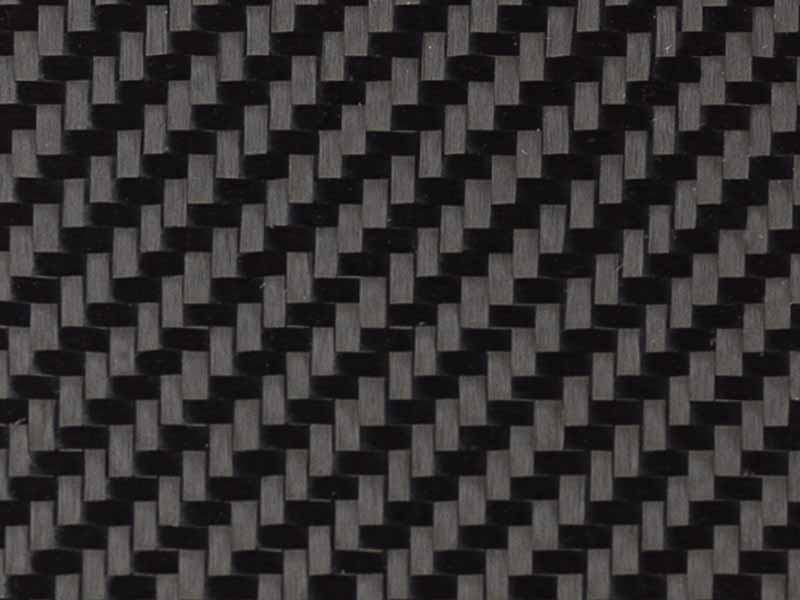
Woven Carbon Fiber
Woven fabrics distribute strength across two primary directions rather than one.
This reduces peak directional strength compared to unidirectional laminates.
Quasi-Isotropic Laminates
Quasi-isotropic layups combine multiple ply angles to approximate uniform in-plane properties.
This design sacrifices maximum directional strength for more balanced load handling.
Such laminates behave more like aluminum in multidirectional loading scenarios.
Off-Axis Loading Weaknesses
CFRP strength drops sharply when loads apply outside the intended fiber direction. Aluminum does not experience this directional weakness under similar conditions.
Impact Fatigue and Failure
Failure behavior differs fundamentally between ductile metal yielding and composite fracture mechanisms.
Aluminum Yielding and Deformation
Aluminum yields plastically before fracture, providing visible warning of overload. This ductile behavior allows some load redistribution before failure.
Carbon Fiber Cracking and Delamination
CFRP typically fails through fiber breakage, matrix cracking, or delamination without significant plastic deformation. Failure can occur suddenly with limited visible warning.
Delamination between plies often initiates from impact damage or manufacturing defects.
Impact Damage Resistance
Aluminum generally dents or deforms under impact while retaining structural continuity. CFRP may suffer internal delamination without visible surface damage, complicating inspection.
Fatigue Under Repeated Loads
Well-designed CFRP laminates often show excellent fatigue resistance along the fiber direction. Aluminum fatigue performance depends heavily on alloy, surface finish, and stress concentrations.
Durability and Manufacturing
Environmental resistance and manufacturing considerations affect long-term component performance.
Corrosion and Environmental Exposure
Aluminum can corrode without proper surface treatment, particularly in marine environments. CFRP resists corrosion but can suffer galvanic corrosion in aluminum fasteners or fittings when in direct contact.
Temperature Limits
Aluminum alloys typically tolerate higher continuous service temperatures than standard epoxy-based CFRP systems. Resin softening limits CFRP use in high-temperature structural applications.
Joints Holes and Stress Concentrations
Aluminum tolerates drilled holes and mechanical fasteners with predictable bearing strength. CFRP requires reinforcement around holes to avoid fiber breakage and localized delamination.
Repair and Inspection Differences
Aluminum damage is often visible and repairable through straightforward metalworking techniques. CFRP repair requires specialized bonding procedures and nondestructive inspection to detect internal damage.
For a broader comparison covering weight, stiffness, corrosion resistance, manufacturing, and applications, see our carbon fiber vs aluminum guide.
When to Use Carbon Fiber or Aluminum?
Material selection depends on load direction, weight targets, impact exposure, and production requirements.
Weight-Sensitive Structural Parts
CFRP suits applications where minimizing mass under directional loading provides measurable performance benefits. Carbon fiber panels used in aerospace and other lightweight structures often justify this approach.
Impact and Multidirectional Loads
Aluminum remains preferable for components facing unpredictable impacts or multidirectional stresses. Its ductile failure mode improves safety margins in these conditions.
Cost and Production Volume
- Aluminum suits high-volume production with lower per-part material and tooling costs.
- CFRP requires specialized tooling and curing processes, raising cost at low volumes.
- Aluminum machining and forming remain faster for rapid design iterations.
Hybrid Carbon Fiber and Aluminum Designs
Hybrid structures combine aluminum fittings with CFRP panels to balance strength, weight, and joint reliability. Careful galvanic isolation prevents corrosion at contact interfaces.
For applications where both low weight and high material performance matter, our carbon fiber vs titanium comparison covers another common engineering material choice.
FAQ
Is Carbon Fiber Stronger Than Aluminum by Weight?
Yes, CFRP generally offers higher specific strength than aluminum alloys along the fiber direction.
Is Carbon Fiber Stronger Than Aluminum in Tension?
Along the fiber direction, many CFRP laminates exceed aluminum tensile strength significantly.
Is Aluminum Stronger in Compression?
Aluminum often shows more balanced compressive performance, while CFRP compressive strength can be lower than its tensile strength.
Does Carbon Fiber Break More Easily?
CFRP can fail suddenly through cracking or delamination, unlike aluminum’s gradual yielding behavior.
Can Carbon Fiber Replace Structural Aluminum?
CFRP can replace aluminum in specific weight-critical, directionally loaded applications, but not universally across all structural roles.