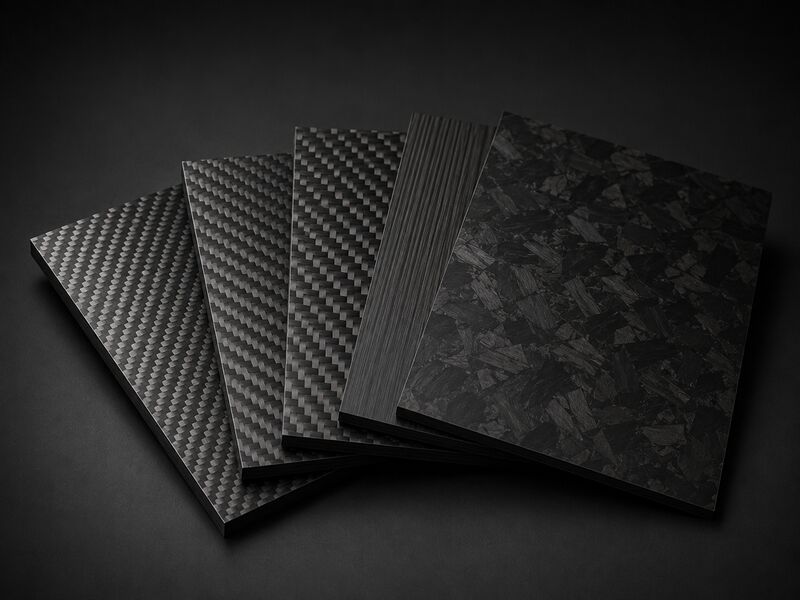
Weave geometry describes how carbon fiber tows interlace during fabric production. The pattern affects fabric handling, forming behavior, and surface appearance before resin impregnation and curing begin.
A 1×1 plain weave alternates each tow over and under one crossing tow. This frequent interlacing produces a stable, low-distortion fabric with a uniform checkerboard surface pattern.
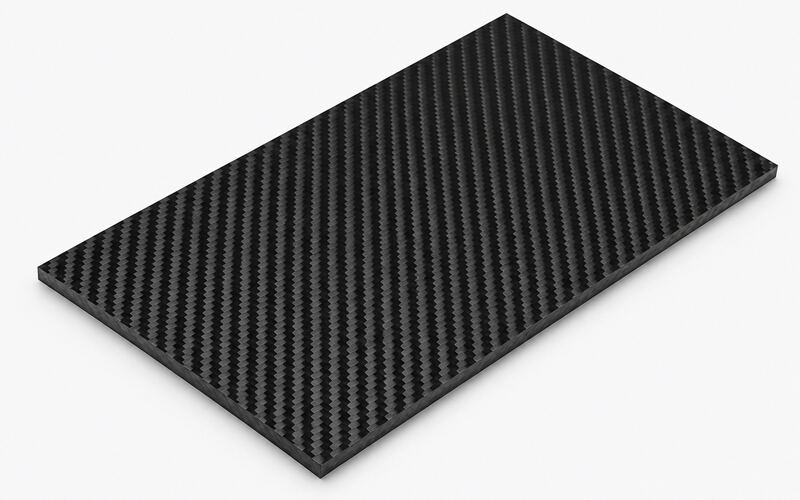
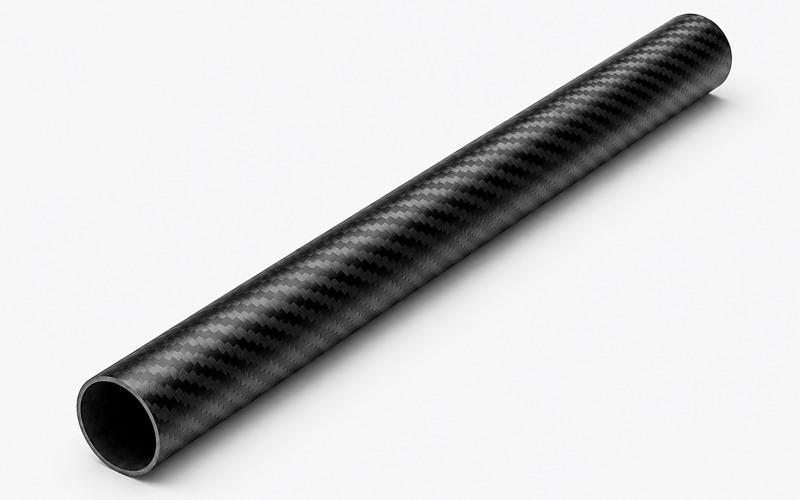
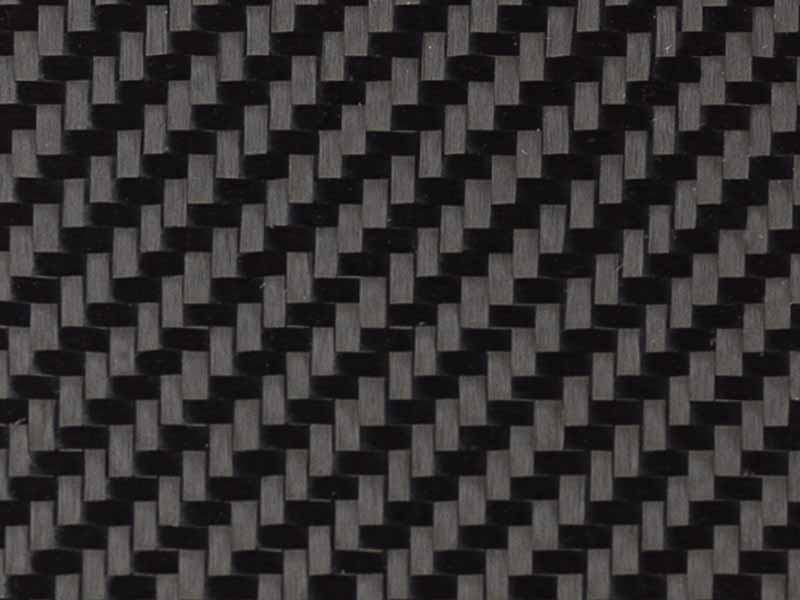
A 2×2 twill weave passes each tow over two and under two crossing tows. The longer floats create a diagonal pattern and give the fabric a softer, more flexible hand than plain weave.
1×1 vs 2×2 Carbon Fiber Weave Comparison
Plain weave offers tighter interlacing and greater dimensional stability, while twill weave offers longer floats and improved conformity over curved molds. Neither weave is inherently stronger in every application when fiber grade, resin content, fiber volume fraction, and cure quality remain equal.
| Comparison Factor | 1×1 Plain Weave | 2×2 Twill Weave |
|---|---|---|
| Interlacing pattern | Over one, under one | Over two, under two |
| Fiber crimp | Higher | Lower |
| Fabric stability | Higher | Moderate |
| Drapeability | Lower | Higher |
| Edge fraying | Less likely | More likely |
| Shear deformation | More restricted | More flexible |
| Surface pattern | Checkerboard | Diagonal |
| Typical use | Flat and simple parts | Curved and complex parts |
Crimp and Mechanical Behavior
Interlacing Frequency
Plain weave interlaces at every crossing point, producing frequent bends along each carbon fiber tow. Twill weave interlaces less often because each tow floats over two crossing tows before changing direction.
Fiber Straightness and Load Transfer
Lower crimp in twill weave creates straighter fiber paths within each float.
Straighter fibers may support more efficient in-plane load transfer, although the practical effect depends on fiber grade, tow size, fabric weight, ply orientation, and laminate design.
Plain weave introduces more localized fiber curvature. This geometry can slightly affect stiffness and tensile performance in some loading conditions, but the difference is often secondary to fiber volume fraction, void content, and processing quality.
Why Weave Alone Does Not Determine Strength
Finished laminate strength depends on fiber grade, resin system, ply schedule, fiber orientation, consolidation pressure, and curing quality rather than weave style alone.
Laminates made with different weaves can achieve similar mechanical performance when these variables are controlled.
Weave selection generally has a more direct effect on manufacturability, forming behavior, and appearance than on ultimate laminate strength. Structural qualification should therefore rely on laminate-level testing rather than weave classification alone.
Drapeability and Mold Conformity
Flat and Simple Shapes
Flat panels and gently curved surfaces can use either weave without major forming difficulty. Plain weave remains practical where the mold geometry is simple and fabric stability matters more than forming flexibility.
Compound Curves
Compound curves benefit from the longer floats found in twill weave.
The tows can shift more easily during forming, helping the fabric follow double-curvature mold surfaces with less bridging and wrinkling.
Plain weave resists in-plane shear more strongly.
When forced over tight compound geometry, it may develop puckering, folds, or local fiber distortion unless the fabric is carefully manipulated or cut into smaller plies.
Shear and Pattern Distortion
Shear deformation changes the angle between warp and weft tows as the fabric conforms to a mold.
Twill weave generally accommodates more shear and conforms to complex geometry more easily, although excessive movement can distort its visible diagonal pattern.
Plain weave permits less tow movement and maintains dimensional stability more effectively. This can benefit flat laminates but limits conformity on molds with sharp transitions or complex contours.
Handling and Cutting
Plain Weave Handling
Frequent interlacing points lock the carbon fiber tows into position, making plain weave comparatively stable during storage, cutting, and layup.
- Maintains fabric shape during handling
- Resists edge fraying more effectively
- Reduces unintended tow movement
- Simplifies cutting of repeatable ply shapes
- Makes pattern alignment easier to control
Twill Weave Handling
The longer floats in twill weave provide greater forming flexibility but permit more tow movement during cutting and placement.
- Conforms more easily during mold layup
- May fray more readily along cut edges
- Requires careful handling to limit distortion
- Needs closer control of diagonal alignment
- May benefit from edge sealing or cutting templates
Resin Impregnation and Laminate Quality
Fabric Permeability
Fabric permeability describes how easily resin flows through and across the reinforcement during impregnation.
Twill weave may permit slightly easier in-plane resin movement because its longer floats create fewer interlacing restrictions.
Actual permeability also depends on tow size, fabric weight, stitching, sizing chemistry, nesting between plies, and compaction pressure. Weave pattern should not be treated as the only predictor of resin flow.
Wet-Out and Void Risk
The frequent crossing points in plain weave can create small regions where air becomes trapped if vacuum, pressure, or resin flow is poorly controlled. Twill weave provides longer flow paths along the tow surface, which may support more uniform wet-out in some processes.
Neither weave eliminates void formation. Excessive resin viscosity, poor vacuum integrity, inadequate debulking, rapid infusion, or insufficient consolidation can create voids in either fabric architecture.
Tow Size and Fabric Weight
A fabric areal weight near 200 g/m² is common for thin cosmetic and structural plies in both plain and twill constructions.
Heavier fabrics increase resin demand and cured ply thickness regardless of weave pattern.
Large tow fabrics may also contain thicker bundles that require more time or pressure for complete impregnation. Tow size and areal weight therefore need to be considered together with weave style.
Prepreg, Wet Layup, and Infusion
Prepreg systems use controlled resin content applied before layup, reducing wet-out variation between plain and twill fabrics.
Consolidation pressure, debulking, and cure cycles become the main factors affecting laminate quality.
Wet layup and resin infusion depend more directly on fabric permeability and operator control.
Twill weave may support easier flow in some configurations, while plain weave may require closer attention around dense interlacing points.
Appearance and Surface Finish
Checkerboard and Diagonal Patterns
These carbon fiber patterns create different visual effects. Plain weave produces a symmetrical checkerboard pattern with short, evenly distributed tow segments. It is often selected for technical panels, industrial covers, and cosmetic parts that require a uniform visual structure.
Twill weave produces a diagonal pattern that is widely associated with automotive trim, sporting goods, consumer products, and other visible carbon fiber components.
Weave Alignment and Symmetry
Visible carbon fiber panels require accurate ply placement to maintain consistent tow direction and symmetry.
Twill weave misalignment is particularly noticeable because its diagonal lines create a strong directional reference.
Plain weave has a more balanced visual pattern, but uneven tension or local tow movement can still produce visible waviness after curing.
Print-Through and Clear-Coat Finish
Print-through occurs when the underlying weave texture remains visible beneath the resin-rich surface or clear coat.
Fabric weight, resin shrinkage, cure temperature, surface preparation, and coating thickness generally influence print-through more than weave style alone.
Both plain and twill fabrics can produce a smooth Class A surface when the laminate, tooling, resin system, and finishing process are properly controlled.
Variables Beyond Weave Style
Weave pattern is only one part of carbon fiber fabric and laminate selection. The following variables may have an equal or greater effect on final performance:
- Fiber grade: Grades such as T300 and T700 define filament-level tensile strength, strain capability, and modulus.
- Tow size: Tow counts such as 3K, 6K, and 12K affect pattern scale, tow width, and fabric construction.
- Fabric areal weight: Heavier fabrics increase cured ply thickness and resin demand.
- Resin system: Resin viscosity, toughness, glass transition temperature, and cure chemistry affect processing and laminate behavior.
- Cure process: Temperature, pressure, vacuum, and dwell time influence consolidation and void content.
- Fiber volume fraction: The fiber-to-resin ratio strongly affects laminate stiffness, strength, thickness, and weight.
- Ply orientation: Fiber directions such as 0°, 90°, and ±45° determine how the laminate carries tensile, bending, and shear loads.
- Ply sequence: The position of each layer influences bending stiffness, damage resistance, symmetry, and warpage.
How to Choose 1×1 or 2×2 Weave
The preferred weave depends on mold geometry, handling requirements, manufacturing process, structural design, and appearance expectations.
| Application | Recommended Weave | Main Reason |
|---|---|---|
| Flat structural panels | 1×1 plain weave | Greater stability during cutting and layup |
| Gently curved panels | Either weave | Both can conform to simple geometry |
| Compound curved parts | 2×2 twill weave | Improved drapeability and shear deformation |
| Complex molded components | 2×2 twill weave | Lower risk of bridging and wrinkling |
| High-volume cutting operations | 1×1 plain weave | Better edge and tow stability |
| Automotive cosmetic parts | 2×2 twill weave | Recognizable diagonal appearance |
| Uniform cosmetic panels | 1×1 plain weave | Balanced checkerboard pattern |
| OEM replacement parts | Match the original weave | Maintains visual consistency with adjacent parts |
Flat Structural Panels
Plain weave is commonly used for woven carbon fiber sheets and other flat parts because the fabric remains stable during cutting carbon fiber, positioning plies, and consolidating the laminate.
Curved and Complex Parts
Components with compound curves generally favor twill weave because it can deform in-plane and follow the mold more easily. Improved conformity helps reduce wrinkles, bridging, and local resin-rich areas.
Cosmetic Carbon Fiber Parts
Cosmetic panels frequently use twill weave because its diagonal pattern is widely recognized as a carbon fiber finish. Plain weave remains suitable where a smaller, more symmetrical checkerboard pattern is preferred.
Matching OEM Weave Patterns
Replacement and aftermarket parts should normally match the original tow size, weave pattern, and diagonal direction. A mismatch remains noticeable even when the mechanical performance of the replacement laminate is acceptable.
FAQ
Is 2×2 Carbon Fiber Stronger Than 1×1?
Neither weave is universally stronger. Laminate strength depends more heavily on fiber grade, resin system, fiber volume fraction, ply orientation, void content, and cure quality. Twill weave has lower crimp, but this does not automatically produce a stronger finished component.
Which Weave Is Better for Curved Parts?
2×2 twill weave generally conforms more easily to compound curves because its longer floats permit greater tow movement and in-plane shear. Plain weave remains practical for flat panels and gently curved parts.
Does Weave Pattern Affect Resin Infusion?
Weave pattern affects fabric permeability and resin flow paths. Twill weave may permit slightly easier resin movement, while plain weave may require closer process control around frequent interlacing points. Tow size, fabric weight, resin viscosity, vacuum quality, and compaction remain equally important.