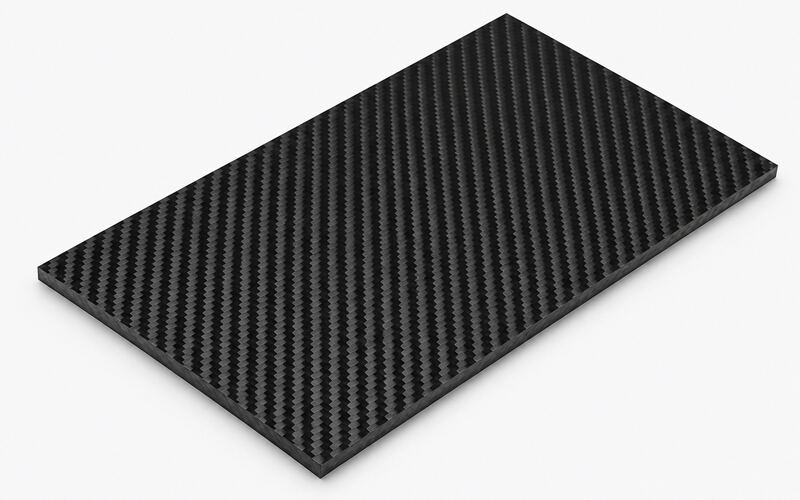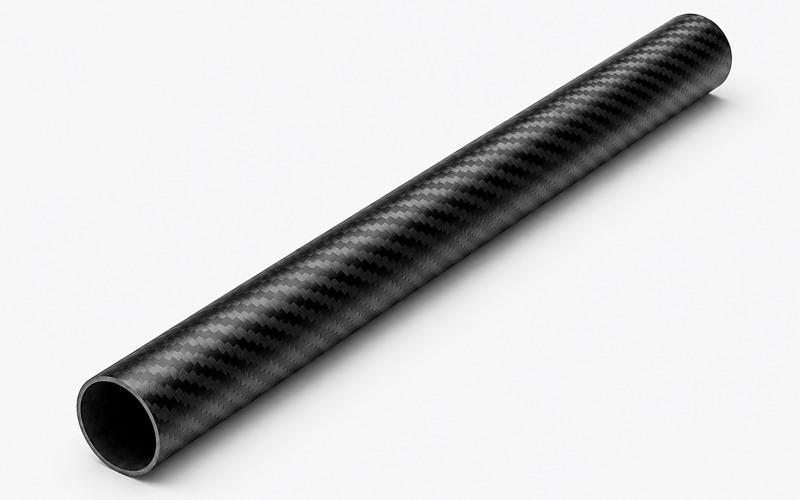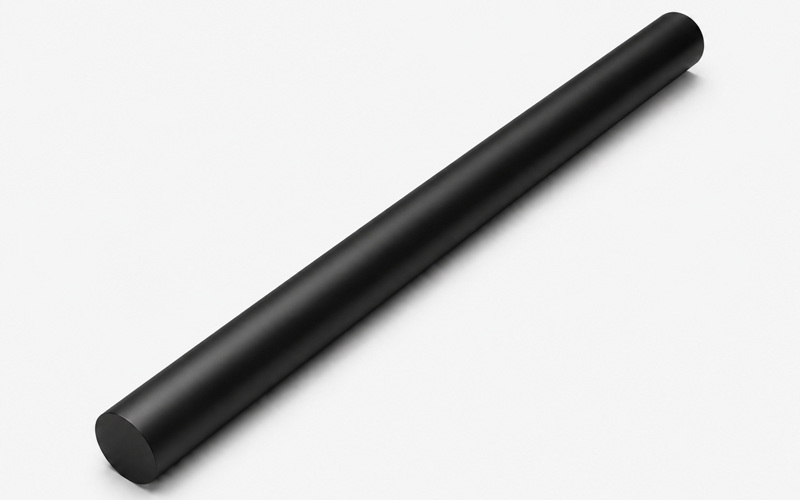
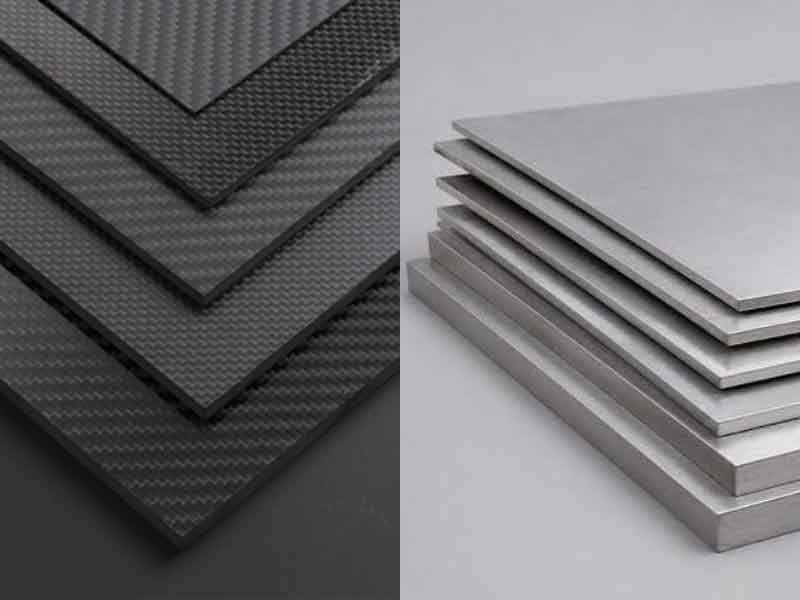
Magnesium alloys and carbon fiber composites are lightweight structural materials used to reduce mass without sacrificing mechanical performance. Magnesium offers isotropic metallic properties, excellent castability, and good thermal conductivity. Carbon fiber provides exceptional strength-to-weight ratio, high stiffness, and outstanding fatigue resistance through engineered fiber reinforcement.
The better material depends on structural loading, manufacturing method, operating environment, production volume, and cost objectives.
What Are Magnesium and Carbon Fiber?
Although both materials target lightweight design, their internal structures and load-transfer mechanisms differ completely. Magnesium behaves as a homogeneous metal alloy, while carbon fiber relies on directional reinforcement embedded within a polymer matrix.
Magnesium Alloy Composition
Magnesium alloys combine magnesium with alloying elements such as aluminum, zinc, manganese, zirconium, or rare-earth elements to improve strength, corrosion resistance, and castability.
Unlike composites, the alloy exhibits nearly identical mechanical properties in every loading direction. This isotropic behavior simplifies structural analysis and machining.
Carbon Fiber Composite Structure
Carbon fiber composite consists of carbon reinforcement surrounded by a cured resin matrix. Fibers carry most of the tensile load while the resin transfers stress between adjacent filaments and protects the reinforcement.
Mechanical properties depend heavily on fiber orientation, ply sequence, fiber volume fraction, and curing quality. Proper laminate design is therefore essential for structural performance.
Key Differences
Magnesium and carbon fiber differ in material structure, mechanical behavior, thermal properties, manufacturing methods, and production economics.
| Property | Magnesium Alloy | Carbon Fiber Composite |
|---|---|---|
| Material structure | Homogeneous metallic alloy with isotropic properties | Fiber-reinforced composite with directional properties |
| Typical density | Approximately 1.8 g/cm³ | Typically 1.5–1.6 g/cm³ depending on laminate design |
| Strength-to-weight ratio | High among structural metals | Higher, especially along the fiber direction |
| Elastic modulus | Uniform in all directions | Varies with fiber orientation and fiber grade |
| Impact behavior | Ductile deformation before fracture | High stiffness but possible internal delamination |
| Vibration damping | Good compared with many structural metals | Excellent due to resin damping between fiber layers |
| Thermal conductivity | High | Directional and generally lower through laminate thickness |
| Corrosion | Requires protective treatment | Fiber does not corrode, though resin requires UV protection |
| Production volume | Highly suitable for die casting | Better suited to lower-volume structural production |
| Typical applications | Housings, brackets, cast structural parts | Aircraft, drones, sporting goods, lightweight structures |
Mechanical Performance
Mechanical behavior differs because magnesium distributes loads uniformly throughout the metal, while carbon fiber concentrates strength along the reinforcement direction.
Tensile Strength
Carbon fiber laminate provides much higher tensile strength when fibers align with the applied load. This characteristic allows lightweight structures with excellent specific strength.
Magnesium delivers consistent tensile properties regardless of loading direction, making design simpler for components experiencing multidirectional stress.
Compressive Strength
Magnesium alloys perform predictably under compression because deformation occurs throughout the metallic grain structure.
Carbon fiber composites can lose compressive performance if fiber waviness, resin-rich areas, or local instability cause fiber micro-buckling.
Impact Resistance
Magnesium absorbs impact through plastic deformation and visible bending. This behavior often provides warning before complete structural failure.
Carbon fiber maintains stiffness under moderate impact but can develop hidden internal delamination beneath an undamaged outer surface.
Fatigue Performance
Carbon fiber generally provides excellent fatigue resistance because the reinforcement carries repeated loads with minimal permanent deformation.
Magnesium fatigue life depends on alloy composition, machining quality, stress concentration, and surface finish. Sharp corners and surface defects significantly reduce fatigue performance.
Failure Behavior
Magnesium usually fails through yielding followed by fracture. Carbon fiber tends to fail suddenly once the reinforcement exceeds its strain limit.
The different failure modes influence inspection requirements, repair strategy, and safety margins during structural design.
Structural Design
Design methods differ because metals distribute properties uniformly while composites allow stiffness to be tailored through fiber orientation.
Wall Thickness
Magnesium castings generally require thicker sections to achieve the desired rigidity across an entire component.
Carbon fiber laminates often achieve comparable stiffness with thinner walls because reinforcement is concentrated along principal load paths.
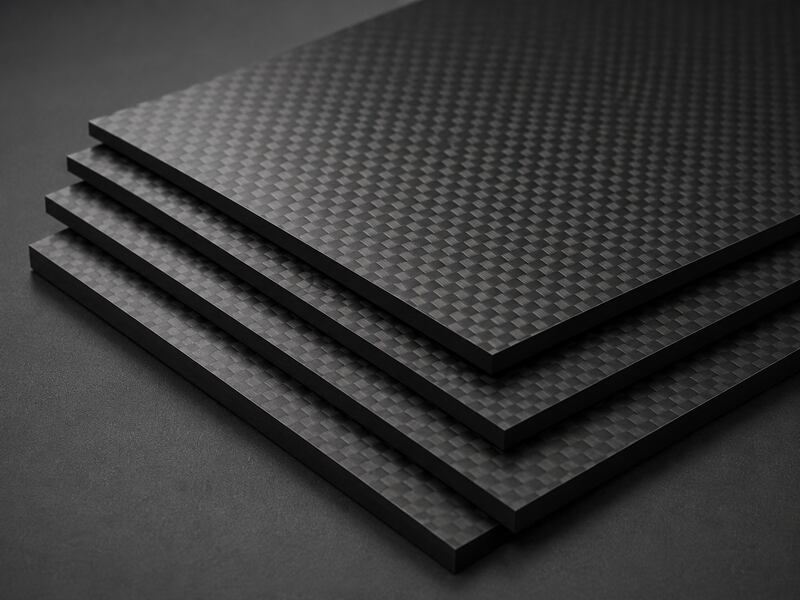
Fiber Orientation
Fiber orientation is one of the most important design variables in carbon fiber structures. Aligning fibers with the primary load increases stiffness while minimizing unnecessary material.
Poor ply orientation can dramatically reduce structural efficiency even when material quality remains unchanged.
Directional Strength
Carbon fiber exhibits high strength along the reinforcement direction but much lower properties across the fibers. Designers must evaluate every principal loading direction during laminate development.
Magnesium provides nearly identical strength regardless of direction, simplifying finite-element analysis and structural optimization.
Complex Shapes
Magnesium die casting efficiently produces ribs, bosses, mounting features, and complex geometries in a single operation.
Carbon fiber can also produce intricate shapes, although layup complexity, mold design, and curing control increase manufacturing effort.
Thermal Performance
Thermal expansion, heat transfer, and resin limitations influence performance at elevated temperature.
Thermal Conductivity
Magnesium transfers heat efficiently through its metallic structure, making it useful for electronic housings and heat-dissipating components.
Carbon fiber composites conduct heat mainly along the fiber direction, while through-thickness conductivity remains relatively low.
Thermal Expansion
Magnesium expands more with temperature changes than carbon fiber laminates.
Carbon fiber can achieve near-zero thermal expansion along the fiber direction, supporting high dimensional accuracy in aerospace, robotics, and precision equipment.
Heat Resistance
Magnesium retains structural performance until elevated temperatures begin reducing alloy strength.
Carbon fiber itself tolerates high temperatures, but the resin matrix determines the practical operating limit of the finished laminate.
Dimensional Stability
Carbon fiber maintains excellent dimensional stability under changing temperatures because of its low thermal expansion.
Magnesium experiences greater thermal movement, which designers must consider when assembling precision components.
Corrosion and Environmental Resistance
Environmental exposure affects each material differently because one is metallic and the other is a composite.
Magnesium Corrosion
Magnesium corrodes rapidly when exposed to moisture without suitable surface protection. Conversion coatings, anodizing, painting, and sealing significantly improve durability.
Carbon Fiber Environmental Resistance
Carbon fiber itself resists corrosion and moisture. Long-term durability depends mainly on resin quality, UV protection, and manufacturing defects.
Galvanic Corrosion
Direct electrical contact between magnesium and carbon fiber creates a galvanic cell that accelerates magnesium corrosion.
Insulating washers, adhesive layers, coatings, or composite inserts should separate the two materials whenever possible.
Moisture and UV Exposure
Ultraviolet radiation gradually degrades exposed resin surfaces if no protective coating is applied. Magnesium does not suffer UV damage but remains sensitive to moisture and corrosive environments.
Manufacturing Methods
Production methods differ significantly in tooling, automation, labor requirements, and production speed.
| Manufacturing Factor | Magnesium Alloy | Carbon Fiber Composite |
|---|---|---|
| Primary process | Die casting or CNC machining | Fabric or prepreg layup followed by curing |
| Tooling | Precision steel die for casting | Composite molds, matched tools, or autoclaves |
| Initial tooling cost | High for die casting | Usually lower for low-volume production |
| Cycle time | Very short after tooling is complete | Longer due to layup and curing |
| Labor requirement | Highly automated production | Often requires skilled laminate fabrication |
| Design flexibility | Complex cast geometry in one operation | Fiber orientation tailored to structural loads |
| Common defects | Porosity, shrinkage, incomplete filling | Voids, delamination, fiber waviness |
| Machining | Requires fire-safe chip management | Requires diamond tooling and dust extraction |
| Production volume | Excellent for mass production | More suitable for low to medium volumes |
Joining and Repair
Joining methods must accommodate the different mechanical behavior of metals and composites.
Mechanical Fastening
Mechanical fasteners perform well in magnesium because the alloy distributes bearing loads evenly around holes.
Carbon fiber often requires metallic inserts, washers, or locally reinforced laminate regions to prevent crushing around fasteners.
Adhesive Bonding
Structural adhesives distribute loads efficiently across large bonded areas and reduce stress concentrations.
Proper cleaning and surface preparation are essential for both magnesium and carbon fiber before bonding.
Magnesium Welding
Magnesium welding requires careful shielding to prevent oxidation during melting. Heat input must be controlled to reduce distortion and porosity.
Carbon Fiber Repair
Carbon fiber repair normally removes damaged plies before replacing them with correctly oriented reinforcement and fresh resin.
Structural repairs should restore fiber orientation, laminate thickness, and curing quality as closely as possible to the original design.
Cost and Production
Material price alone does not determine total component cost. Tooling, labor, inspection, production volume, and finishing all contribute to manufacturing economics.
Material Cost
Magnesium generally costs less than aerospace-grade carbon fiber composite. Carbon fiber pricing varies with fiber grade, resin system, and manufacturing process.
Tooling Cost
Die casting requires expensive tooling but supports very long production runs. Carbon fiber tooling is often less expensive initially but supports slower production.
Production Speed
Magnesium casting produces finished parts rapidly after mold setup. Carbon fiber manufacturing requires cutting, layup, vacuum processing, curing, trimming, and inspection.
High-Volume Manufacturing
Magnesium becomes highly economical in mass production because automation spreads tooling cost across large quantities.
Carbon fiber remains more competitive in specialized, lower-volume applications where structural performance outweighs manufacturing speed.
Common Applications
Each material excels in different engineering environments depending on structural, thermal, and economic requirements.
Automotive Parts
Magnesium is widely used for transmission housings, steering components, instrument supports, and structural castings.
Carbon fiber appears in body panels, roof structures, drive shafts, and performance components where weight reduction improves vehicle dynamics.
Aerospace Components
Carbon fiber dominates aircraft structures because of its outstanding stiffness-to-weight ratio and fatigue performance.
Magnesium has more limited aerospace use because corrosion protection and flammability require additional engineering controls.
Electronics Housings
Magnesium provides electromagnetic shielding, dimensional stability, and efficient heat dissipation for electronic enclosures.
Carbon fiber offers lower weight but significantly lower thermal conductivity through the laminate thickness.
Sports Equipment
Carbon fiber is widely used in bicycles, rackets, paddles, and other sporting equipment requiring stiffness and vibration control.
Magnesium appears in selected frames, supports, and impact-resistant components.
Drones and Robotics
Carbon fiber tubes and plates dominate drone structures because of their excellent stiffness-to-weight ratio.
Magnesium components are used where heat transfer, machining, or isotropic strength provide greater design advantages.
Which Material Should You Choose
The best material depends on structural loading, production volume, operating environment, and cost targets.
When to Choose Magnesium
Choose magnesium when the design requires:
- Uniform mechanical properties in every direction
- High thermal conductivity
- Complex die-cast geometry
- High-volume automated production
- Good machinability after casting
- Moderate weight reduction at competitive cost
- Electronic housings or structural brackets
When to Choose Carbon Fiber
Choose carbon fiber when the design requires:
- Maximum strength-to-weight ratio
- High structural stiffness
- Excellent fatigue resistance
- Low thermal expansion
- Thin lightweight structures
- Tailored fiber orientation
- Aerospace, drones, robotics, or performance equipment
When to Combine Both Materials
Hybrid assemblies combine magnesium frames or housings with carbon fiber structural panels or tubes. Magnesium provides machinability and metallic attachment features, while carbon fiber reduces structural weight.
Electrical isolation is essential wherever the two materials contact each other to prevent galvanic corrosion.
FAQ
Is Magnesium Lighter Than Carbon Fiber?
The two materials have similar densities. Carbon fiber structures are often lighter because higher stiffness allows thinner laminate sections.
Is Carbon Fiber Stronger Than Magnesium?
Yes. Carbon fiber generally provides much higher tensile strength along the fiber direction. Magnesium provides more consistent multidirectional properties.
Which Material Is More Rigid?
Carbon fiber usually provides higher stiffness when fibers align with structural loads. Magnesium delivers uniform rigidity in every direction.
Which Material Handles Impact Better?
Magnesium usually absorbs impact through ductile deformation, while carbon fiber maintains stiffness but may develop hidden delamination after severe impact.
Does Carbon Fiber Cause Magnesium Corrosion?
Direct electrical contact can accelerate galvanic corrosion of magnesium. Proper insulation prevents this reaction.
Which Material Costs More?
Carbon fiber composite generally costs more because of reinforcement materials, labor, and curing processes. Magnesium becomes more economical for high-volume production.
Can Magnesium and Carbon Fiber Be Used Together?
Yes. Hybrid structures frequently combine both materials when electrical isolation prevents galvanic corrosion and each material is used where its properties provide the greatest benefit.