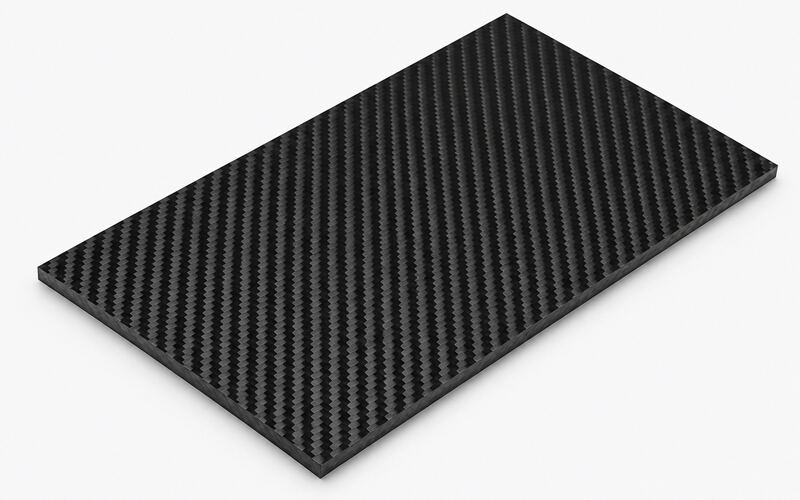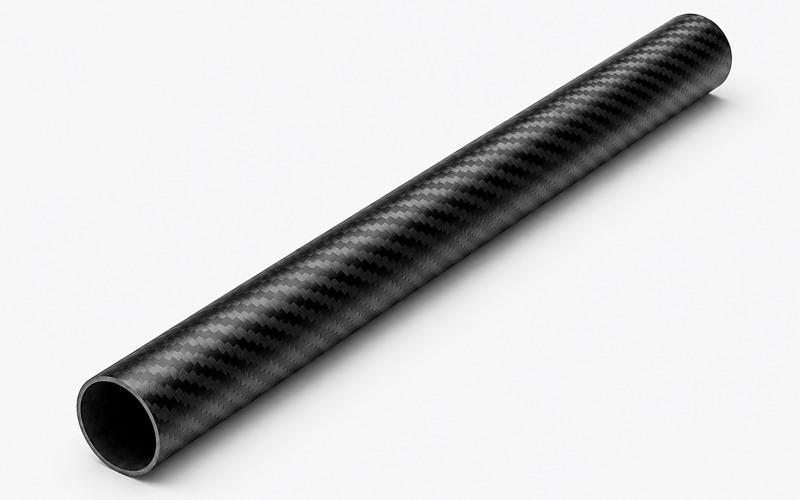

Matte and gloss carbon fiber describe differences in surface treatment rather than changes to the underlying composite structure.
Gloss carbon fiber uses a smooth, reflective clear coat that returns more light from the surface. Matte carbon fiber uses a modified clear coat that scatters reflected light. The coating formulation, rather than the reinforcement fiber, creates the visual contrast.
Matte vs Gloss Carbon Fiber Finishes
Matte and gloss carbon fiber differ mainly in light reflection, weave visibility, coating chemistry, and finishing requirements.
| Comparison Factor | Matte Carbon Fiber | Gloss Carbon Fiber |
|---|---|---|
| Light reflection | Diffuses light and reduces glare | Produces sharp, mirror-like reflections |
| Weave visibility | Creates a softer and more muted pattern | Deepens contrast between fiber tows |
| Clear coat formulation | Contains flattening agents or fine additives | Uses a smooth, high-flow clear coat |
| Surface appearance | Flat, understated, and low glare | Deep, reflective, and visually pronounced |
| Post-cure finishing | Usually requires little or no polishing | Often requires polishing and buffing |
| Production time | Generally shorter | Generally longer |
How Each Finish Is Made?
Finish type depends on clear coat chemistry, application method, curing conditions, and post-cure processing.
Clear Coat Application and Curing
Both finishes begin with a clear coat applied over the cured carbon fiber laminate.
Curing temperature and coating thickness influence hardness, clarity, and adhesion.
Incorrect curing can cause bubbling, uneven gloss, poor bonding, or inconsistent surface texture.
Flattening Agents in Matte Coatings
Matte coatings contain fine particles or silica-based additives that interrupt smooth light reflection.
These agents control the gloss level but can slightly reduce coating clarity. Uneven distribution may create blotchy areas or inconsistent texture.
Polishing and Buffing Gloss Coatings
Gloss surfaces often require multi-stage polishing to remove minor imperfections left after curing.
Buffing compounds refine the clear coat until it develops a deep, reflective surface.
Excessive pressure can create haze or reduce coating thickness unevenly.
Scratches and Surface Damage
Surface damage appears differently on matte and gloss carbon fiber because each finish reflects light in a different way.
Scratch Resistance and Visibility
Scratch resistance depends mainly on clear coat hardness rather than gloss level. Scratch visibility, however, is strongly affected by surface reflection. A hard matte coating may resist abrasion well but still reveal marks when its texture is disrupted.
Common Damage Characteristics
Matte carbon fiber
- Hides some fine swirl marks and light wiping lines.
- May reveal deeper scratches through visible texture disruption.
- Can show fingerprints or oily marks under angled light.
- Cannot usually be polished without creating shiny patches.
- Requires accurate texture matching during local repairs.
Gloss carbon fiber
- Shows swirl marks and micro-scratches more clearly.
- Reveals wiping marks under direct or concentrated lighting.
- Can develop haze after improper polishing or buffing.
- Supports localized polishing for minor surface defects.
- Requires careful blending to maintain uniform reflection.
Repair Difficulty
Gloss repairs require controlled polishing to restore uniform reflection without leaving visible transition lines. Matte repairs require matching the original gloss level and surface texture, which can be difficult to reproduce on a small repaired area.
UV Resistance and Weathering
Long-term durability depends more on clear coat quality than on whether the surface is matte or gloss.
Clear Coat Quality and UV Protection
UV-stabilized clear coats reduce resin degradation, yellowing, and fading of the visible fiber pattern.
Lower-quality coatings can crack, discolor, or lose adhesion after prolonged outdoor exposure.
Both matte and gloss formulations can provide effective UV protection when suitable stabilizers are included.
Long-Term Finish Stability
Matte finishes may develop chalking or uneven sheen as flattening agents and surface texture degrade.
Gloss finishes may gradually lose reflection as micro-abrasions accumulate.
Regular cleaning and suitable protective products can slow these changes.
Cleaning and Maintenance
Cleaning requirements differ because polishing compounds, waxes, and sealants affect matte and gloss surfaces differently.
| Maintenance Item | Matte Carbon Fiber | Gloss Carbon Fiber |
|---|---|---|
| Recommended cleaner | pH-neutral matte-safe cleaner | Automotive clear coat cleaner |
| Cleaning cloth | Soft, clean microfiber towel | Soft, clean microfiber towel |
| Polishing | Avoid abrasive polishing | Periodic polishing is acceptable |
| Wax | Avoid standard gloss wax | Automotive wax may be used |
| Protective product | Matte-specific sealant or coating | Wax, sealant, or gloss coating |
| Main maintenance risk | Uneven shiny patches or altered texture | Swirl marks, haze, and reduced clarity |
Cleaning Matte Carbon Fiber
Use a pH-neutral cleaner and a soft microfiber towel. Avoid abrasive compounds, polishing pads, and aggressive rubbing. These methods can smooth the surface texture and create glossy areas that are difficult to blend with the surrounding finish.
Maintaining Gloss Carbon Fiber
Gloss carbon fiber can be polished periodically to remove light oxidation, haze, and fine surface marks. Products formulated for automotive clear coats generally work well when applied with controlled pressure and clean equipment.
Using Matte-Safe Sealants
Matte-specific sealants add protection without increasing surface reflection. Standard gloss waxes should be avoided because they can create uneven sheen and make the panel appear blotchy.
Strength Comparison
Surface finish has little influence on the mechanical performance of a carbon fiber component.
Effect of Surface Finish on Strength
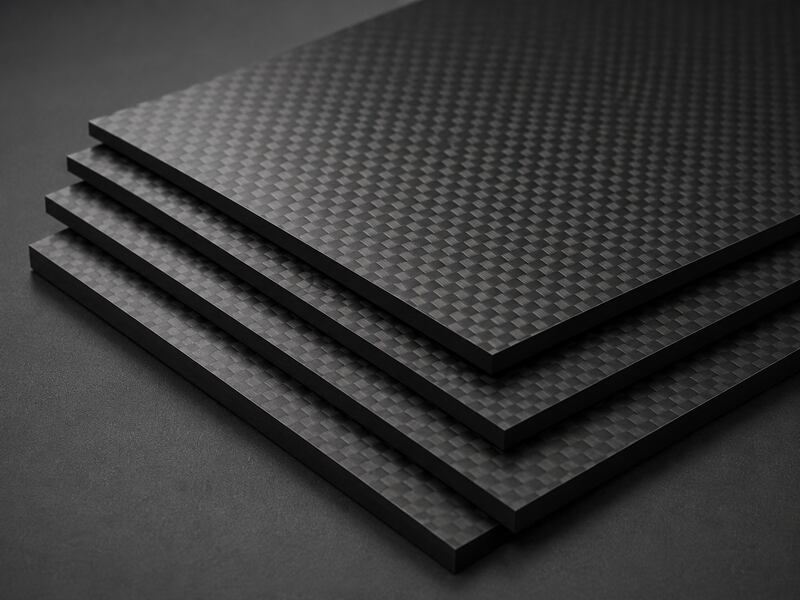
Clear coat type does not change fiber orientation, resin content, fiber volume fraction, or laminate stacking sequence. The coating layer is generally too thin to produce a meaningful change in stiffness or load-bearing capacity. Matte and gloss parts should therefore have similar carbon fiber strength when their laminate structures are identical.
Main Structural Factors
Fiber modulus, resin properties, fiber volume fraction, laminate thickness, and ply orientation govern most mechanical performance. Weave pattern and manufacturing quality also have a much greater effect on strength than the surface gloss level.
Cost Comparison
Cost differences arise mainly from finishing labor, quality-control requirements, and repair complexity.
Production Cost
Gloss finishing often requires extra sanding, polishing, and buffing after curing. These additional operations increase labor time and total production cost. Matte finishing may require fewer post-cure steps, although achieving a consistent low-gloss texture still requires careful coating control.
Repair and Refinishing Cost
Gloss repairs require skilled polishing to blend the repaired area into the surrounding reflection. Matte repairs require precise sheen and texture matching. Either finish can become expensive to repair when the damaged area is highly visible or covers a large panel.
FAQ
Does Matte or Gloss Carbon Fiber Scratch More Easily?
Scratch resistance depends mainly on clear coat hardness rather than gloss level. Gloss surfaces usually reveal scratches more clearly because they reflect more light.
Can Matte Carbon Fiber Be Polished to a Gloss Finish?
Matte coatings generally cannot be polished into a uniform gloss finish. Polishing may create irregular shiny areas. A proper gloss conversion normally requires removing or preparing the matte coating and applying a new gloss clear coat.
Is Gloss Carbon Fiber Stronger Than Matte Carbon Fiber?
No. Gloss and matte coatings do not significantly affect laminate strength. Mechanical performance depends on fiber type, resin properties, laminate thickness, weave structure, and ply orientation.
Which Finish Requires Less Maintenance?
Matte finishes do not require regular polishing and may hide some minor swirl marks. However, they need matte-safe cleaning products. Gloss finishes require more frequent care to preserve shine and remove visible surface marks.
Can Matte and Gloss Finishes Be Repaired the Same Way?
No. Gloss repairs normally rely on sanding, polishing, and buffing. Matte repairs require matching the original texture and sheen. Localized matte repairs can be more difficult to blend without visible differences.