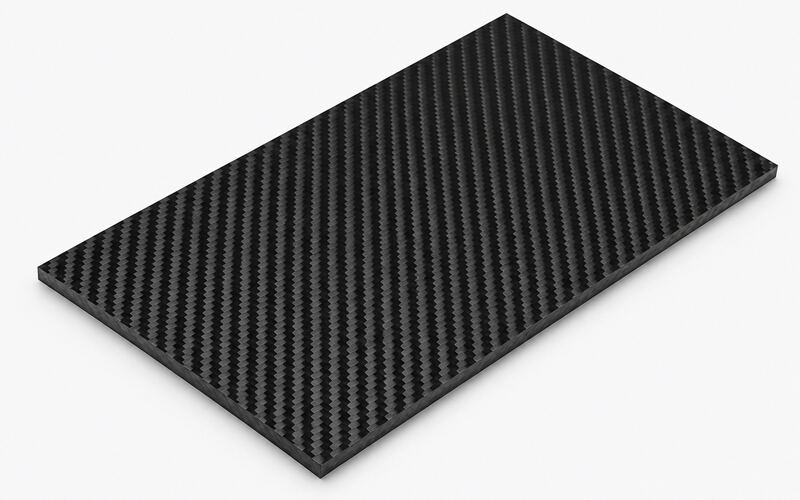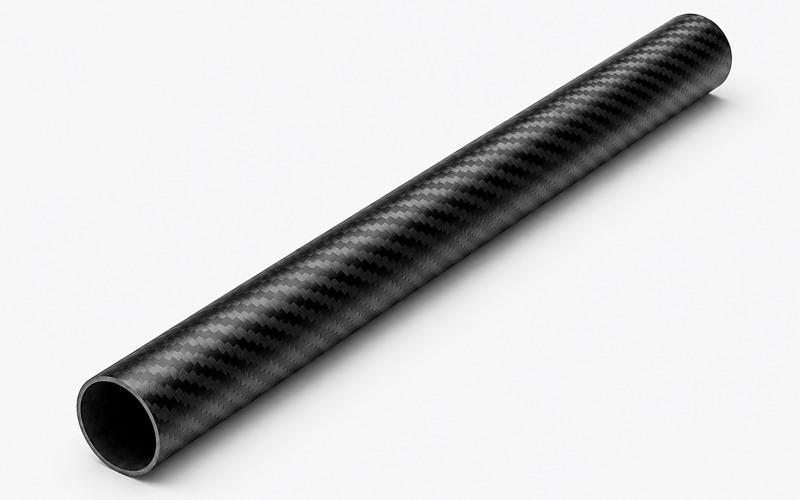
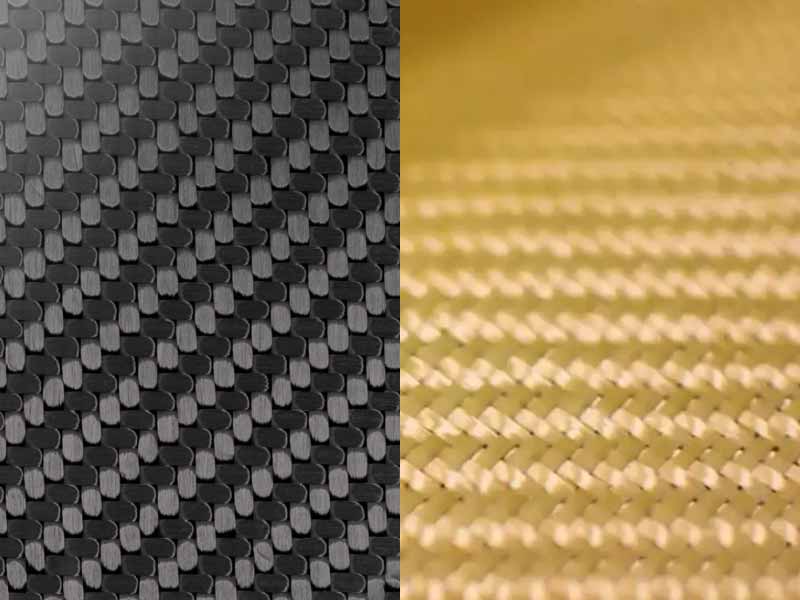
Aramid and carbon fiber are reinforcement fibers used in composite structures requiring low weight and high strength.
Carbon fiber consists of aligned carbon crystallites formed through the carbonization of a precursor such as PAN.
Aramid fiber is a synthetic polymer chain built from aromatic rings linked by amide bonds.
Aramid vs Carbon Fiber Material
Mechanical behavior separates aramid from carbon fiber more than any other comparison factor in composite design.
| Factor | Aramid Fiber | Carbon Fiber |
|---|---|---|
| Tensile Strength and Elongation | Aramid fiber shows greater elongation, allowing more energy absorption before rupture. | Carbon fiber offers high tensile strength with limited elongation before brittle failure occurs. |
| Stiffness and Elastic Modulus | Aramid fiber has a lower elastic modulus, resulting in a more flexible laminate under bending loads. | Carbon fiber modulus values commonly exceed 230 GPa, producing a rigid composite structure. |
| Density and Specific Strength | Aramid fiber density is lower, near 1.44 g/cm³, favoring weight-sensitive protective applications. | Carbon fiber density near 1.8 g/cm³ combines with high strength to deliver strong specific strength. |
| Failure and Fracture Behavior | Aramid fiber fails through fibrillation, absorbing additional energy as fibers separate gradually. | Carbon fiber fractures abruptly once its strain limit is reached, producing sharp fiber ends. |
Impact and Wear Resistance
Impact response separates aramid and carbon fiber composites in protective and structural design decisions.
Impact Energy Absorption
Aramid fiber absorbs impact energy through fiber stretching and controlled fibrillation rather than sudden cracking.
Carbon fiber absorbs less energy before matrix cracking begins, since its low elongation limits deformation.
This difference explains why aramid fiber dominates ballistic and puncture-resistant composite structures.
Cracking and Shattering
Carbon fiber composites can shatter under high-energy impact due to limited fiber elongation.
Aramid composites resist shattering, since fiber stretching delays complete structural failure.
Abrasion and Cut Resistance
Aramid fiber resists cutting and abrasion, supporting its use in protective gloves and reinforced hoses.
Carbon fiber offers moderate abrasion resistance but performs weaker against sharp cutting forces.
Compression Performance
Compression behavior highlights a clear performance gap between aramid fiber and carbon fiber composites.
Aramid Under Compression
Aramid fiber performs poorly under compression, since its polymer chains buckle under compressive load. This buckling limits aramid use in load-bearing structural components requiring compressive strength.
Carbon Fiber Under Compression
Carbon fiber maintains strong compressive performance due to its rigid crystalline structure.
This compressive strength supports its use in structural tubes, panels, and load-bearing composite parts.
Environmental Resistance
Environmental exposure influences long-term durability differently for aramid and carbon fiber composites.
| Environmental Factor | Aramid Fiber | Carbon Fiber |
|---|---|---|
| Moisture and Dimensional Stability | Aramid fiber absorbs moisture, which can reduce mechanical properties and cause dimensional drift over time. | Carbon fiber resists moisture absorption, preserving stiffness and dimensional stability in humid environments. |
| UV Resistance | Aramid fiber degrades under prolonged UV exposure and often requires protective coatings or resin encapsulation. | Carbon fiber resists UV degradation, though the surrounding resin still requires a UV-stable formulation. |
| Chemical Resistance | Aramid fiber shows sensitivity to strong acids, which can weaken its polymer chain over time. | Carbon fiber withstands most industrial chemicals without structural damage. |
| Galvanic Corrosion Risk | Aramid fiber carries no galvanic corrosion risk because it lacks electrical conductivity. | Carbon fiber can cause galvanic corrosion when placed in direct contact with aluminum or steel fasteners. |
Electrical and Thermal Properties
Electrical and thermal behavior often determines suitability for aerospace, automotive, and RF-sensitive applications.
Electrical Conductivity
Carbon fiber conducts electricity due to its graphitic crystalline structure.
Aramid fiber is electrically insulating, making it suitable for applications requiring non-conductive reinforcement.
Wireless Signal Interference
Carbon fiber can block or distort wireless signals because of its conductive fiber network.
Aramid fiber allows signal transmission, supporting antenna housings and RF-transparent composite panels.
Heat Resistance and Conductivity
Carbon fiber withstands elevated temperatures and conducts heat more efficiently than aramid fiber. Aramid fiber resists heat through inherent flame resistance but conducts thermal energy poorly.
Composite Manufacturing
Processing requirements differ significantly between aramid fiber and carbon fiber during composite fabrication.
| Manufacturing Factor | Aramid Fiber | Carbon Fiber |
|---|---|---|
| Weaving and Fiber Handling | Aramid fiber is tougher during handling but generates fuzz that can affect fabric surface quality. | Carbon fiber tows are brittle and require careful tension control during weaving to avoid filament breakage. |
| Resin Bonding | Aramid fiber requires surface treatment because its smooth polymer structure can limit resin adhesion. | Carbon fiber bonds well with epoxy resin due to surface treatment and micro-roughness. |
| Cutting and Machining | Aramid fiber resists cutting, often fraying under standard blades and requiring specialized shears or laser cutting. | Carbon fiber machines cleanly with diamond-coated tooling, producing controlled edge quality. |
Hybrid Aramid Carbon Fiber Laminates
Hybrid laminates combine aramid toughness with carbon fiber stiffness to balance impact and rigidity requirements.
Layer Sequence
Placing aramid layers on impact-facing surfaces improves energy absorption before reaching stiffer carbon fiber layers. This sequencing reduces the likelihood of catastrophic cracking through the entire laminate thickness.
Fiber Orientation
Fiber orientation controls how hybrid laminates distribute load between aramid and carbon fiber layers. Aligning carbon fiber along the primary load direction preserves stiffness while aramid layers manage transverse impact.
Hybrid Laminate Design Process
Use a structured design process when combining aramid and carbon fiber in one laminate:
- Define whether impact resistance, stiffness, or weight reduction is the primary goal.
- Place aramid layers on impact-facing surfaces when puncture or impact energy absorption matters.
- Align carbon fiber along the main load path to preserve stiffness and compressive strength.
- Check resin bonding compatibility with both fiber surfaces before production.
- Validate the laminate with impact, flexural, and compression testing when the part is structural.
Applications and Material Selection
Material selection depends on whether impact resistance, stiffness, or weight reduction drives the design priority.
Protective and Impact Components
Aramid fiber remains the preferred choice for body armor, helmets, and impact-resistant panels. Its elongation and fibrillation behavior absorb energy more effectively than rigid carbon fiber structures.
Rigid Structural Components
Carbon fiber suits structural tubes, panels, and load-bearing frames requiring high stiffness. Its compressive strength and low elongation support demanding structural performance requirements.
Sports and Consumer Products
Carbon fiber dominates lightweight performance products such as bicycle frames and paddles. Aramid fiber often reinforces edges or impact zones where added toughness prevents cracking.
Cost Comparison
Cost differences stem from raw material sourcing, fiber processing, and composite fabrication requirements.
Material Costs
Carbon fiber generally costs more than aramid fiber due to energy-intensive carbonization processing. Aramid fiber production involves fewer thermal processing stages, lowering base material expense.
Processing Costs
Carbon fiber cutting and machining require specialized tooling, increasing overall processing expense. Aramid fiber cutting demands specialized blades as well, adding cost despite lower material pricing.
FAQ
Is Aramid Stronger Than Carbon Fiber?
Carbon fiber has higher tensile strength and stiffness than aramid fiber. Aramid fiber offers greater elongation and impact toughness instead of raw strength.
Which Fiber Has Better Impact Resistance?
Aramid fiber provides better impact resistance due to its energy-absorbing fibrillation behavior. Carbon fiber resists impact poorly, since limited elongation leads to brittle cracking.
Can Aramid and Carbon Fiber Be Combined?
Aramid and carbon fiber can be combined into hybrid laminates for balanced performance. Layer sequencing controls how impact resistance and stiffness are distributed.
Which Material Costs More?
Carbon fiber typically costs more than aramid fiber due to processing intensity. Fabrication and machining expenses can narrow this cost gap depending on part complexity.
Does Carbon Fiber Block Wireless Signals?
Carbon fiber can block or weaken wireless signals because of its conductive structure. Aramid fiber remains signal-transparent, making it suitable for RF-sensitive components.