Carbon fiber strength depends on fiber type, laminate design, and how the part is cured, machined, and tested.
Strength describes the load a material can carry before it fails. Stiffness describes resistance to deformation under that load. Toughness describes how much energy the material absorbs before cracking.
These three properties do not always move together in a carbon fiber part. A laminate can be very stiff but still fail suddenly if toughness is low.
Fiber Strength vs Laminate Strength
Individual carbon filaments carry very high tensile loads along their length. Once fibers are combined with resin into a laminate, the measured strength drops due to fiber alignment, resin bonding, and layup quality.
Laminate strength reflects how well the fibers, resin, and cure process work together. Poor wetting or misaligned plies reduce the strength that the raw fiber alone can achieve.
Engineers design around laminate-level data rather than single-filament data for this reason.
Strength-to-Weight Ratio
Carbon fiber composite typically has a density near 1.6 g/cm³, far lower than most structural metals. This low density is why the strength-to-weight ratio stays high even at moderate strength values.
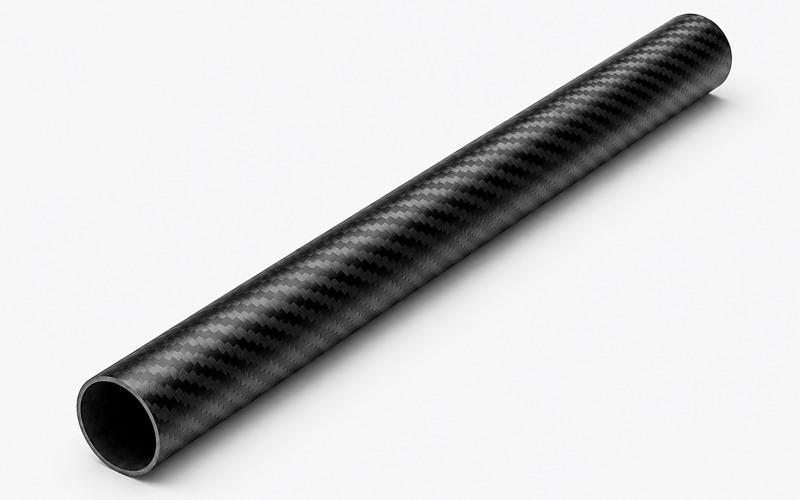
A carbon fiber tube can match a metal part’s load capacity while weighing significantly less. This ratio is controlled by fiber grade, fiber volume fraction, and laminate thickness.
Reducing resin-rich areas helps preserve this weight advantage without sacrificing strength.
Carbon Fiber Strength Under Load
Carbon fiber behaves differently under tension, compression, bending, and repeated cyclic loading conditions.
Tensile Strength and Modulus
Standard modulus carbon fiber typically reaches a tensile strength near 3500 MPa with a tensile modulus around 230 GPa. These values describe how much pull-load the fiber resists and how little it stretches under that load.
Tensile modulus controls stiffness along the fiber direction, which affects deflection in structural carbon fiber parts. Higher modulus fiber grades trade some strain capacity for greater stiffness.
Selecting the correct grade depends on whether the application prioritizes rigidity or load capacity.
Compression and Flexural Strength
Compression strength in carbon fiber laminates is usually lower than tensile strength due to fiber micro-buckling under compressive load. Flexural strength combines both tension and compression behavior across the laminate thickness during bending.
Poor fiber alignment or resin-starved zones reduce compression performance first. Controlling fiber volume fraction and cure pressure helps maintain consistent compression and flexural results.
Fatigue, Impact, and Notch Sensitivity
Carbon fiber laminates generally resist fatigue well under tension-dominated cyclic loads. Impact resistance is lower than in ductile metals because damage often forms internally without visible surface signs.
Notches, drilled holes, or edge damage concentrate stress and lower fatigue life. Careful edge preparation reduces this notch sensitivity in load-bearing regions.
Carbon Fiber vs Steel, Aluminum, and Fiberglass
Comparing carbon fiber to common structural materials clarifies where its strength and stiffness advantages actually apply.
Specific Strength and Stiffness Compared
When comparing carbon fiber and steel, the density difference is substantial: steel is near 7.8 g/cm³, while CFRP is much lighter. Because carbon fiber combines lower density with comparable or higher strength, its specific strength and specific stiffness usually exceed both metals.
Fiberglass has similar density to carbon fiber but lower tensile modulus. This makes carbon fiber the stiffer option when weight savings and rigidity are both required.
Failure Mode Ductile vs Brittle
Steel and aluminum tend to deform visibly before failure, giving a ductile warning sign. Carbon fiber composite is largely brittle and can fail without significant visible deformation beforehand.
This difference changes how engineers apply safety margins in structural design. Inspection and testing become more important when ductile warning behavior is not available.
Corrosion and Thermal Stability
Carbon fiber composite resists corrosion far better than steel in most environments. Its thermal expansion is also lower than aluminum, which helps dimensional stability.
What Determines Carbon Fiber Strength
Fiber grade, orientation, weave type, fiber volume fraction, and resin system all directly control final part strength.
Fiber Grade (PAN vs Pitch, Standard to High Modulus)
PAN-based carbon fiber is the most common grade and offers a strong balance of tensile strength and modulus for general structural parts. Pitch-based carbon fiber can reach much higher modulus values, which suits stiffness-critical applications over strength-critical ones.
Standard modulus grades favor toughness and load capacity, while high modulus grades favor rigidity and minimal deflection. Choosing the correct grade depends on whether the part must resist bending, stretching, or vibration.
Mixing grades within one laminate can fine-tune stiffness in specific directions.
Fiber Orientation and Weave Type
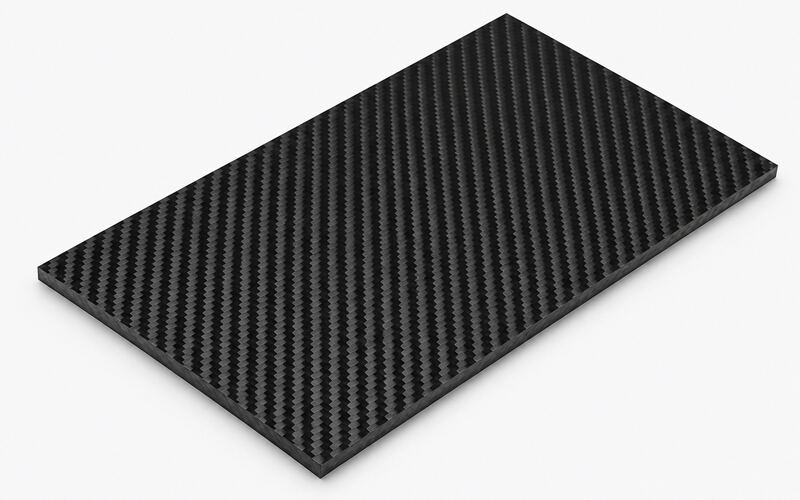
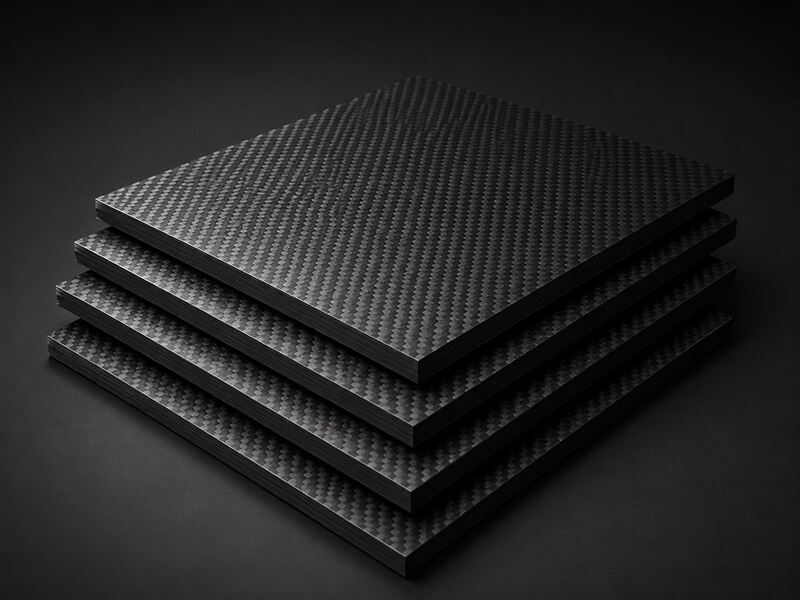
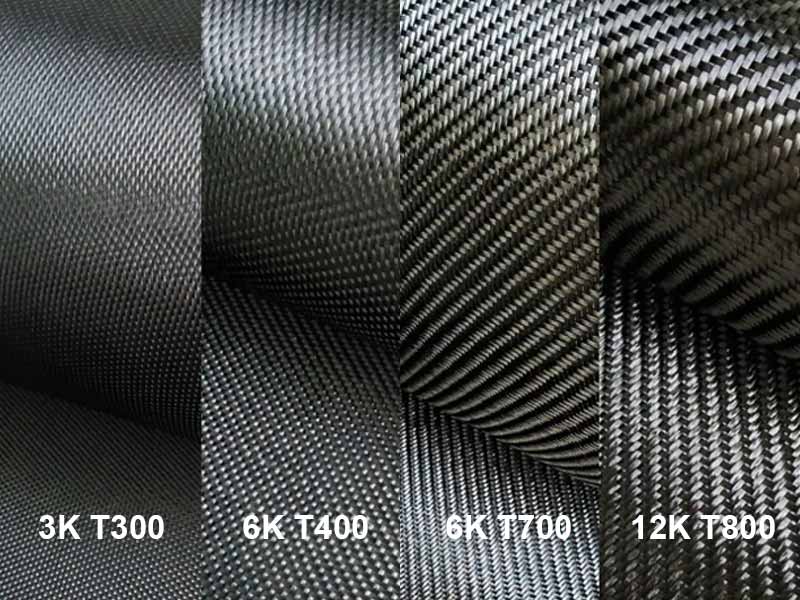
Fiber orientation determines which direction carries the most load in a carbon fiber laminate. Unidirectional layups concentrate strength along one axis, while woven fabrics such as 3K twill spread load across two directions.
Using a 3K tow supports a fine surface weave and stable laminate appearance for visible parts. Orientation mismatches with the actual load path reduce effective strength even when fiber quality is high.
Designers align plies to match expected load direction before layup begins.
Fiber Volume Fraction and Resin System
Fiber volume fraction describes the proportion of fiber versus resin in the cured laminate. A fiber volume fraction near 60% is common for structural carbon fiber parts and supports high strength with controlled resin content.
Too much resin adds weight without adding strength, while too little resin risks dry fibers and poor bonding. The resin system also affects toughness, heat resistance, and how well the laminate resists microcracking.
Balancing these factors keeps the laminate strong without unnecessary weight.
Strength After Curing and Machining
Post-layup steps such as curing, consolidation, and machining strongly influence the final strength of a carbon fiber part.
Cure Process and Consolidation
Curing typically occurs in a temperature range of 120 °C to 180 °C depending on the resin system selected. This step consolidates the laminate, removes trapped air, and locks fiber orientation in place.
Incomplete cure lowers strength and leaves the part sensitive to heat and moisture later. Applying correct cure pressure alongside the selected cure range improves fiber-resin bonding and reduces void formation.
Consistent cure cycles are essential for repeatable strength across production batches.
Voids, Waviness, and Delamination Risk
Void content should stay below 1% to protect interlaminar strength and reduce fatigue risk in structural laminates. Fiber waviness distorts load paths and can lower compression strength significantly.
Delamination separates laminate layers internally, often without clear surface signs. Controlling void content, cure pressure, and layup pressure together reduces these three related defect risks.
Drilling, Cutting, and Edge Damage
Drilling and cutting carbon fiber can introduce stress concentrations at the edges if tooling or feed rates are incorrect. Maintaining a machining tolerance near ±0.1 mm helps preserve fit and reduces local edge stress.
Delamination at drilled holes is a common defect caused by dull tooling or excessive feed pressure. Using sharp, carbide, or diamond-coated tools reduces fiber pullout and edge fraying during machining.
Post-machining inspection catches edge damage before the part reaches final assembly.
How Carbon Fiber Strength Is Tested
Mechanical testing and inspection confirm whether a cured carbon fiber part meets its required strength and quality targets.
Tensile, Compression, and Flexural Testing
Tensile testing pulls a sample to failure to measure strength and modulus along a chosen fiber direction. Compression testing applies axial load to check resistance to buckling and crushing.
Flexural testing bends a sample to evaluate combined tension and compression behavior. These three tests together validate whether the laminate meets its intended design strength.
Ultrasonic and Visual Inspection
Ultrasonic scanning detects internal voids, delamination, and disbonds that are not visible on the surface. Visual inspection checks for surface defects such as resin-rich patches, dry spots, or fiber misalignment.
Both methods are used together because internal and surface defects affect strength in different ways. Parts that fail either inspection are typically reworked or rejected before use.
Acceptance Criteria and Tolerances
Acceptance criteria define the maximum allowed void content, surface defects, and dimensional error. Parts outside the specified tolerance or defect limits do not pass quality release.
FAQ
Is Carbon Fiber Stronger Than Steel?
Carbon fiber composite has higher specific strength than steel because it is much lighter for a similar load capacity. Steel can still exceed carbon fiber in raw toughness and impact resistance.
How Much Force Can Carbon Fiber Hold?
The load a carbon fiber part can hold depends on fiber grade, orientation, and laminate thickness. There is no single force value, since design and fiber volume fraction both change the result.
Does Carbon Fiber Bend, Crack, or Shatter?
Carbon fiber composite has limited flexibility and behaves in a brittle manner under overload. It typically cracks or fractures rather than bending like ductile metals.
Is Woven Carbon Fiber as Strong as Unidirectional?
Woven carbon fiber spreads strength across two directions instead of concentrating it along one axis. Unidirectional layups are usually stronger along their single fiber direction for the same weight.
What Defects Make Carbon Fiber Weak?
Voids, delamination, fiber waviness, and resin-rich zones are common defects that reduce strength. Poor curing and machining damage can also lower a laminate’s load capacity.