Carbon Fiber Rod Cutting Basics
Clean carbon fiber cutting starts with understanding the rod structure, resin behavior, and how tool pressure affects the exposed fibers.
Pultruded Rod Structure
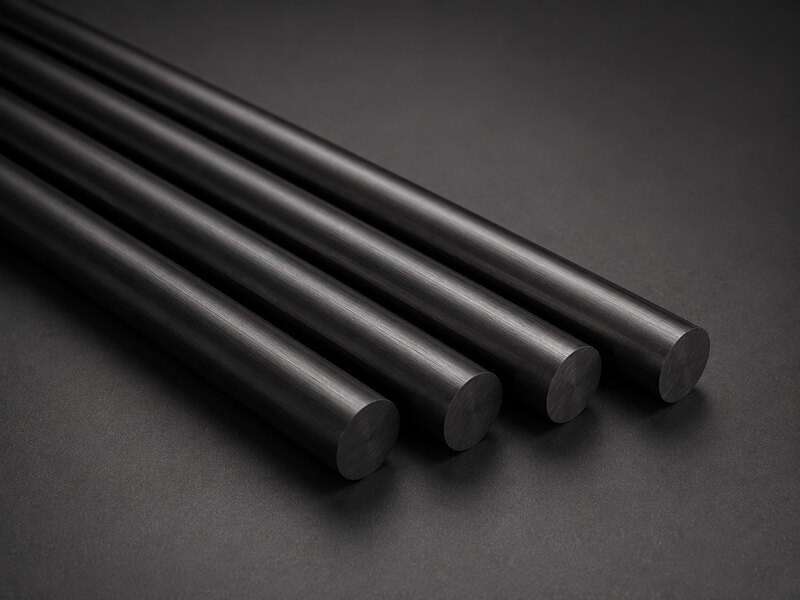
Pultruded carbon fiber rods contain continuous fibers running along the rod length. This structure gives high axial stiffness but poor resistance to crushing at the cut end.
During cutting, the tool must sever fibers without bending or peeling them from the resin matrix. Excess side pressure can split the unidirectional bundle and create a weak end.
Support the rod close to the cut line and avoid levering the tool. A stable setup keeps the fibers aligned and reduces end flare.
Rod Diameter and Edge Quality
Rod diameter strongly affects the cutting method and achievable edge quality:
- Thin rods can often be rolled under a razor blade.
- Larger rods usually need abrasive cutting for gradual material removal.
- A small contact area allows controlled fiber scoring and lower crushing force.
- A larger cross section needs more support to prevent chipping.
- Brittle resin systems chip more easily when the tool vibrates or overheats.
Edge quality also depends on resin toughness and fiber packing. Stable support and controlled pressure reduce end flare and splintering.
Razor Roll Cutting Method
Razor rolling is a controlled method for small pultruded rods when dust, heat, and end damage must be minimized.
Mark Length and Kerf Allowance
Set the rod length before cutting and allow for minor end finishing:
- Mark the rod with a fine, visible line before cutting.
- Place the mark where the finished length should be after sanding and sealing.
- Allow slight extra length because end finishing can shorten the part.
- Use a square block or simple cutting guide when length repeatability matters.
- Check the mark before cutting because a crooked mark produces a slanted end.
Use a Wet Paper Towel
Lay the rod on a wet paper towel before rolling it under the blade. The water captures fine carbon dust and stabilizes loose particles.
The towel also cushions the rod and prevents sliding. Too much softness can let the rod sink and produce uneven blade contact.
Keep the towel damp, not flooded, so the cutting area remains visible. Replace it when black residue builds up near the cut line.
Control Blade Pressure and Rolling Speed
Place a sharp razor blade on the marked line and apply light downward pressure. Roll the rod slowly while keeping the blade steady.
The goal is progressive scoring through the resin and fibers. Heavy pressure crushes the pultruded bundle before the fibers are fully cut.
Use repeated light passes rather than forcing the blade through. Slow rolling improves cut symmetry and reduces frayed strands.
If the blade drags or skips, replace it before continuing. A dull edge tears fibers and leaves a rough, weakened end.
Separate the Last Fibers Cleanly
As the cut nears completion, reduce pressure and support both rod ends. Unsupported ends can snap and pull fibers from the resin.
Do not twist the rod apart before the final fibers are severed. Twisting creates a broomed end and may start a lengthwise split.
Finish with gentle blade contact until the pieces separate naturally. This preserves the cylindrical profile and reduces later sanding.
Sand the Cut End Flat
After cutting, lightly sand the end against a flat abrasive surface. Move the rod vertically to keep the face square.
Sanding removes raised fibers, small chips, and resin lips from the cutting operation. Excess sanding can shorten the part and round the edge.
Use wet sanding when possible to capture particles at the source. Rinse or wipe the rod before bonding or sealing.
Saw and Abrasive Wheel Cutting
Saws and abrasive wheels suit larger rods, production trimming, and cuts where a razor cannot penetrate cleanly.
Fine Tooth Hobby Hacksaw
A fine tooth hobby hacksaw can cut carbon fiber rods when speed is controlled. Use a light feed and short strokes near the cut line.
The blade should abrade and sever fibers rather than grab them. Aggressive sawing can lift fibers and leave a ragged exit edge.
Clamp the rod gently with soft support material around it. Hard clamping can crush the rod surface before cutting begins.
Rotate the rod during cutting when practical. This helps balance the kerf and prevents the final wall of fibers from tearing.
Diamond Cutoff Wheel
A diamond cutoff wheel removes carbon fiber by abrasion rather than tooth engagement. This reduces snagging on continuous fibers.
Keep the wheel aligned with the marked cut line and avoid side loading. Side pressure widens the kerf and can heat the resin.
Use steady movement through the material instead of dwelling in one area. Dwelling raises local temperature and may soften the matrix.
Inspect the wheel condition before cutting. A damaged wheel increases vibration and worsens edge chipping.
Masking Tape for End Support
Wrap masking tape tightly around the cut zone before sawing or wheel cutting. The tape supports surface fibers as the tool exits.
Tape also improves mark visibility on glossy carbon fiber rods. It should be removed after cutting to inspect the actual edge.
Do not rely on tape to correct poor tool control. It supports fibers, but it cannot prevent heat damage or misalignment.
Low Heat and Feed Control
Carbon fiber rods need low heat input during abrasive cutting. Excess heat can soften the resin and smear the cut face.
Feed control is more important than cutting speed alone. A steady, gentle feed allows particles to clear from the kerf.
If the cut smells strongly of hot resin, pause and let the area cool. Discoloration or gloss change can indicate matrix damage.
Use water mist or wet support only when the tool and power source allow it. Electrical safety must control the setup choice.
Tool Selection by Rod Diameter
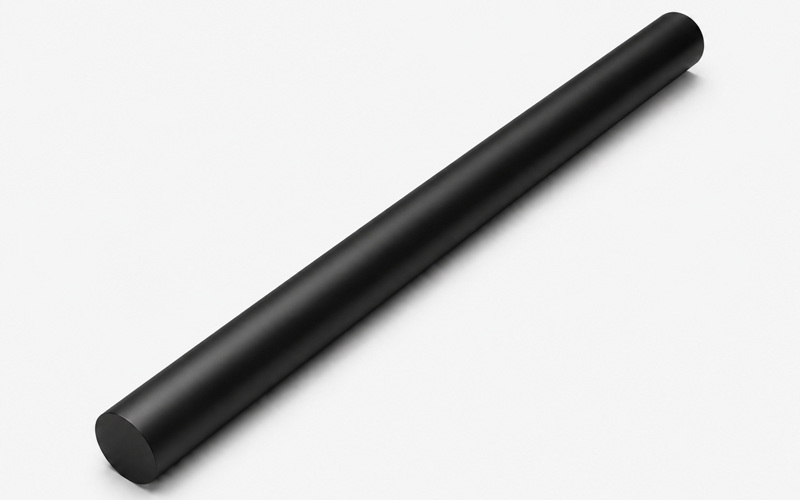
Tool choice depends on rod diameter, fiber brittleness, production volume, and the required finish quality.
Razor Cutting for Small Rods
Razor cutting works well for small carbon fiber rods because the blade can score the full circumference. It produces little heat and limited airborne dust.
The method is slow, but it offers strong control over end quality. It is useful for model structures, linkages, and trim pieces.
Use this method only when the rod can roll smoothly under the blade. Ovality, surface damage, or thick diameter can make the cut uneven.
Sawing for Thicker Rods
Thicker rods need sawing or abrasive wheel cutting because a razor cannot penetrate evenly. The tool must remove material through the full cross section.
Use a guide, tape support, and low feed force to protect the cut edge. Poor support causes exit chipping and fiber breakout.
Sawing also helps when several rods need matched length. A fixture improves repeatability and reduces manual marking errors.
Dust Control and Safety
Carbon fiber dust is conductive, irritating, and difficult to remove from equipment without proper capture methods.
Wet Cutting and Particle Capture
Wet cutting reduces loose carbon fiber dust at the source and keeps particles from spreading across the work area.
- Use damp towels, wet sanding, or controlled mist depending on the tool.
- Keep electrical equipment isolated from water exposure.
- Collect wet residue immediately after cutting and dispose of it as shop waste.
- Do not allow slurry to dry and become airborne again.
- Clean the rod surface before bonding, sealing, or inspection.
Residue can reduce adhesive wetting and hide edge defects.
Respirator, Eye Protection, and HEPA Cleanup
Wear a respirator suited for fine composite dust during dry cutting. Eye protection prevents sharp splinters from reaching the eyes.
Use gloves when handling freshly cut rods because exposed fibers can irritate skin. Avoid dragging fingers across the cut end.
Clean work surfaces with HEPA vacuum equipment or damp wipes. Compressed air spreads conductive particles into motors and electronics.
Carbon Fiber Rod Cutting Quality
Cutting quality depends on the fiber form, resin toughness, tool sharpness, and thermal control during the cut.
Fiber Type and Brittleness
Higher modulus carbon fibers are generally more brittle than standard strength fibers. Brittle fibers fracture sharply and can chip at the cut edge.
Pultruded rods with tightly packed fibers may cut cleanly but resist bending during separation. If forced, the final fibers can splinter outward.
Choose a cutting method that minimizes bending and local compression. Abrasive removal is often safer for brittle, larger sections.
Inspect unfamiliar rod stock with trial cuts before production trimming. Different suppliers can use different fiber and resin combinations.
Resin Heat Sensitivity
The resin matrix holds fibers in place during and after cutting. Heat can soften, smear, or microcrack the matrix near the kerf.
Thermoset epoxy systems tolerate brief cutting heat better than many lower temperature matrices. Even so, prolonged friction can reduce edge integrity.
Control heat with sharp tools, light feed, and short contact time. If cooling is used, dry the rod before adhesive work.
Heat affected ends can lose bonding reliability because the surface chemistry changes. Remove damaged material before structural assembly.
Carbon Fiber Rod Cutting Defects
Most cutting defects come from excessive pressure, poor support, heat buildup, dull tools, or uncontrolled final separation.
Frayed Fibers and Crushed Ends
Frayed fibers occur when the tool pulls strands instead of cutting them. This often comes from a dull blade or aggressive saw teeth.
Crushed ends happen when clamping or blade pressure compresses the pultruded bundle. The damage may extend below the visible surface.
Prevent these defects with sharp abrasive tools, soft supports, and gradual cutting force. Tape support helps, but it is not a substitute for control.
Reject rods with severe brooming when they carry load through the end. The defect reduces contact area and bond reliability.
Heat Damage and Strength Loss
Heat damage appears as discoloration, gloss change, resin smell, or smeared material at the cut face. These signs indicate excessive friction.
Localized overheating can weaken the resin that transfers load between fibers. The rod may look intact while the edge has poor shear strength.
Reduce heat by slowing feed pressure and improving particle removal. Replace worn wheels or blades before they polish instead of cut.
For critical CFRP components, trim away suspect material and recut under controlled conditions. Do not seal over thermal damage.
Cut End Finishing and Sealing
Finishing removes cutting debris, restores end flatness, and prepares the rod for assembly, bonding, or long-term service.
CA and Epoxy Edge Sealing
CA adhesive can seal small exposed fibers quickly after trimming. Apply only a thin amount so the end does not build unevenly.
Epoxy sealing offers better gap filling when the end has minor porosity. It should wet the fibers without forming a bulky cap.
Sealing reduces fiber irritation and limits moisture paths into the cut face. It also stabilizes loose strands before handling.
Do not seal over dust, oil, or heat damaged resin. Contamination weakens the seal and can interfere with later bonding.
Surface Prep for Bonding
Bonding requires a clean, slightly abraded surface near the joint area. Wipe away sanding slurry and let the rod dry fully.
Do not polish the bond area to a glossy finish. Adhesives need mechanical keying and a compatible resin surface.
Use controlled abrasion along the bond length, not only on the end face. Load transfer usually occurs through the side surface.
Handle prepared rods with clean gloves after cleaning. Finger oils can reduce wetting and cause weak adhesive spots.
Dimensional Inspection
Inspection confirms that cutting and finishing produced the required length, end shape, and defect-free surface condition.
Length, Squareness, and Burr Height
Check length, squareness, and burr height after all finishing work is complete:
- Measure finished length only after sanding and sealing operations are complete.
- Check squareness by placing the rod end against a flat reference surface.
- Look for gaps that show an angled cut or uneven sanding.
- Confirm burr height is low enough for the rod to seat fully in its mating part.
- Check adhesive clearance when the rod will be used in bonded assemblies.
Raised fibers can stop full insertion and change alignment. For bonded assemblies, dimensional errors can create uneven adhesive thickness and reduce predictable load transfer.
Visual Defect Inspection
Inspect the cut end under bright light and rotate the rod slowly. Look for split fibers, chips, cracks, and glossy heat marks.
Check the side surface near the cut for lengthwise splitting. Damage can start at the end and continue beyond the obvious cut zone.
Reject or rework rods with loose fiber bundles at structural interfaces. Cosmetic sanding is not enough when internal fibers are separated.
FAQ
What is the Cleanest Way to Cut 2 mm Carbon Fiber Rods?
The cleanest method is usually razor rolling on a damp towel. Use light pressure, slow rotation, and wet sanding afterward.
Can Carbon Fiber Rods Be Cut With Side Cutters?
Side cutters are not recommended for carbon fiber rods. They crush fibers before cutting and often split the pultruded bundle.
Is a Dremel Safe for Cutting Carbon Fiber Rods?
A Dremel can be safe with a diamond wheel and dust control. Use eye protection, respiratory protection, and low feed pressure.
Should Cut Carbon Fiber Rod Ends Be Sealed?
Cut ends should usually be sealed after finishing. CA or epoxy helps lock exposed fibers and reduce handling irritation.