Raw carbon fiber is not a complete composite material by itself. It is a high-performance reinforcement made from carbon-rich filaments.
The fibers carry tensile load well along their length. They still need a matrix to hold shape, transfer stress, and protect the fibers.
CFRP is the material most people mean when they say carbon fiber composite. It combines carbon fiber reinforcement with a polymer resin matrix.
The fibers provide stiffness and strength in selected directions. The resin binds the fibers, supports compression, and protects the laminate surface.
Why Carbon Fiber and CFRP are Often Confused
The finished surface of a CFRP component often shows carbon fiber fabric. This visible fabric makes the part look like raw carbon fiber.
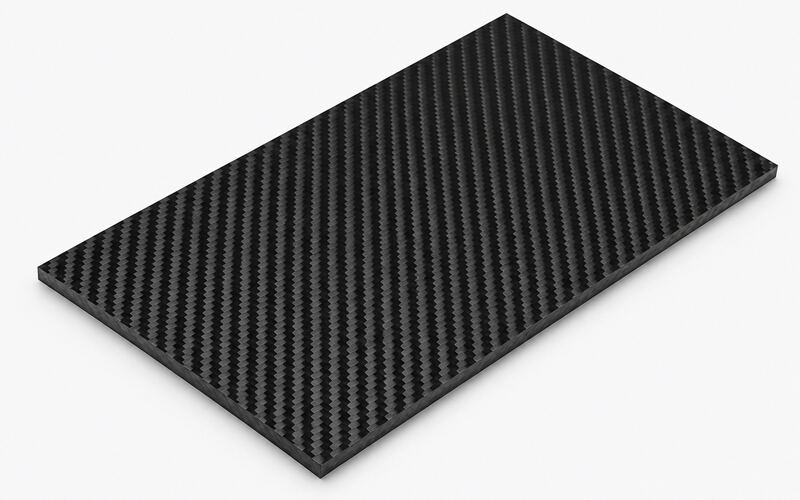
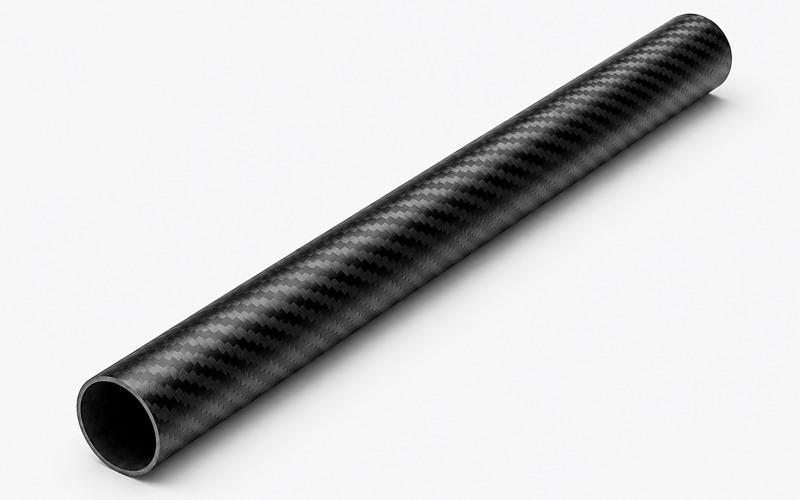
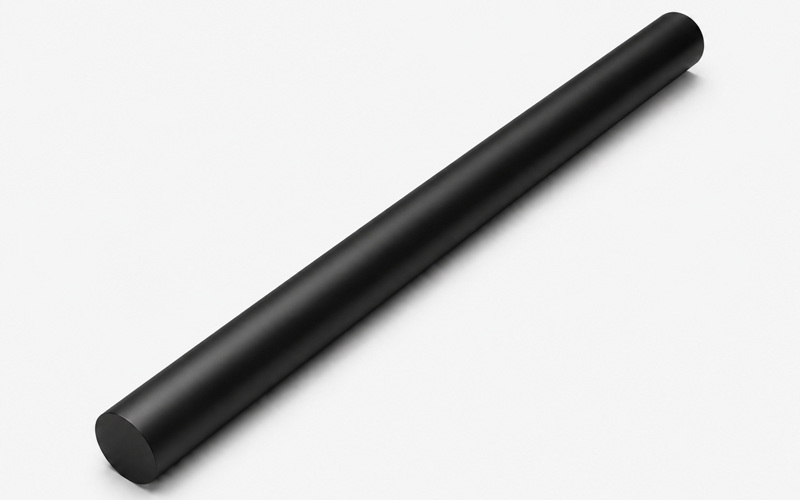
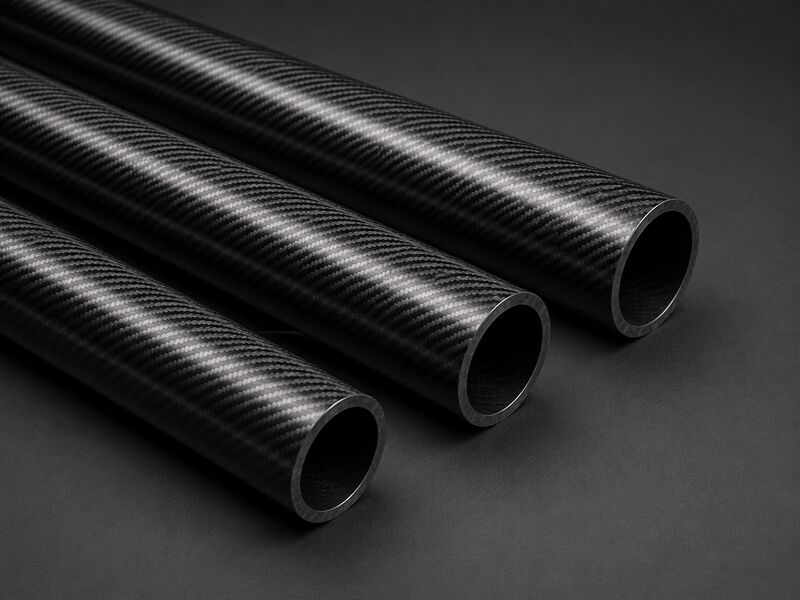
Common carbon fiber applications include CFRP sheets, tubes, panels, and molded structural parts.. Designers should confirm whether the term means dry fiber, prepreg, or cured laminate.
| Term | What It Means | Composite Material? |
|---|---|---|
| Raw carbon fiber | Carbon-rich filaments used as reinforcement | No |
| Carbon fiber fabric | Woven or stitched textile reinforcement | No |
| Prepreg carbon fiber | Carbon fiber pre-impregnated with resin | Partly processed material |
| CFRP | Carbon fiber plus cured resin matrix | Yes |
This distinction affects material selection, cutting method, bonding approach, and quality inspection. Confusion can lead to wrong resin choice or unsuitable manufacturing conditions.
What Makes Carbon Fiber Composite?
A carbon fiber composite needs reinforcement, matrix, and bonding that work together under load and manufacturing conditions.
Carbon Fiber as the Reinforcement
Carbon fiber reinforcement defines the main load paths inside the composite. The fiber direction controls where the laminate becomes stiff and strong.
Engineers choose fabric, unidirectional fiber, or tow form based on the load case. Poor orientation can create bending weakness, twist, or early cracking.
Fiber alignment must be controlled during cutting, layup, and consolidation. Wrinkles or waviness reduce load efficiency and can start delamination.
Resin Matrix as the Binding Material
The resin matrix turns loose carbon fiber into a continuous carbon fiber composite. It surrounds the fibers and transfers load between adjacent filaments.
Resin choice affects several key properties:
- Toughness and impact resistance
- Heat resistance and service temperature
- Chemical resistance in harsh environments
- Processing method and cure condition
- Repair, bonding, and end-use durability
Too much resin adds weight and may create brittle resin-rich areas. Too little resin can leave dry spots and weak interlaminar bonding.
Controlled resin flow is therefore central to consistent CFRP part quality.
Fiber Matrix Bonding and Load Transfer
The fiber matrix interface determines how stress moves from resin into carbon fiber. A strong interface improves shear transfer and reduces fiber pullout.
Surface sizing on the fiber is selected to match the resin chemistry. Incompatible sizing can reduce adhesion even when the laminate looks complete.
During curing, pressure and temperature control resin wet-out and bond development. Poor consolidation can trap air and weaken the bonded interface.
Testing often checks interlaminar behavior because this zone fails before the fiber itself. Good bonding supports impact resistance, fatigue life, and machining stability.
Carbon Fiber Composite vs Carbon Fiber Fabric
Carbon fiber fabric is a textile reinforcement, not a finished structural material. It can be woven, stitched, or spread before resin is added.
A carbon fiber composite includes fabric plus resin after consolidation and cure. The cured laminate has stable thickness, edge geometry, and load transfer.
Dry fabric handles easily but cannot hold complex service loads alone. Composite processing converts that flexible textile into a rigid CFRP component.
Common Carbon Fiber Composite Materials
Carbon fiber composites differ by resin chemistry, reinforcement form, storage condition, and processing route.
Epoxy Based CFRP
Epoxy based CFRP is common in structural carbon fiber laminates. Epoxy offers strong adhesion, controlled cure behavior, and good fatigue performance.
The resin can be supplied as prepreg or infused into dry carbon fiber fabric. Cure control is important because undercure leaves low glass transition behavior.
Overheating or uneven heating can cause residual stress and dimensional drift. Tooling design, heat ramp, and vacuum integrity help stabilize finished parts.
Vinyl Ester and Phenolic Carbon Fiber Composites
Vinyl ester carbon fiber composites are used when chemical resistance is important. They process well in infusion and wet layup systems.
Phenolic matrices are selected where fire response and smoke behavior matter. They can be more difficult to process because volatiles require careful cure control.
Both systems need proper fiber wet-out and compatible sizing. Poor compatibility can reduce bonding and cause early surface cracking.
Thermoplastic Carbon Fiber Composites
Thermoplastic carbon fiber composites use melt-processable polymer matrices. They can offer improved impact toughness and faster forming cycles.
Processing requires heat and pressure to melt, flow, and reconsolidate the matrix. Incomplete melting can leave weak knit areas or poor fiber wet-out.
Thermoplastic CFRP can be reheated for forming or welding operations. This changes joining strategy compared with thermoset laminates.
Prepreg, Dry Fabric, and UD Tape Forms
Prepreg contains carbon fiber already impregnated with controlled resin. It provides repeatable resin content and stable ply handling.
Dry fabric is used with infusion, RTM, or wet layup. It offers process flexibility but requires close resin flow management.
UD tape places fibers mainly in one direction for directional strength. It is useful when engineers need precise stiffness along known load paths.
How Carbon Fiber Becomes a Composite Part?
Manufacturing converts reinforcement and resin into a consolidated component with controlled fiber position, cure quality, and defect level.
Layup, Vacuum Bagging, and Autoclave Curing
Layup places each carbon fiber ply on the tool in the required orientation. Vacuum bagging removes air and compacts the laminate before cure.
Autoclave curing adds external pressure and controlled heating around the bagged part. This improves consolidation and reduces void formation when the bag is sealed correctly.
Leaks, bridging, and misplaced bleeder materials can disturb resin movement. These defects may cause porosity, resin starvation, or print-through on visible surfaces.
Operators verify bag integrity before curing and monitor the selected cure cycle. Stable cure improves laminate strength, thickness control, and dimensional repeatability.
Resin Infusion, RTM, and Compression Molding
Resin infusion pulls liquid resin through dry carbon fiber under vacuum. Flow media, inlet position, and vent placement control wet-out uniformity.
RTM injects resin into a closed mold containing the dry preform. This method improves surface finish and dimensional control when the preform remains stable.
Compression molding uses matched tools to consolidate charge material or prepreg stacks. Pressure and closing speed affect fiber movement, flash, and thickness variation.
| Process | How It Works | Main Risk |
|---|---|---|
| Resin infusion | Pulls resin through dry carbon fiber under vacuum | Dry spots and race tracking |
| RTM | Injects resin into a closed mold with dry preform | Preform movement and trapped air |
| Compression molding | Consolidates charge material with matched tools | Fiber movement and thickness variation |
Dry spots, race tracking, and trapped air are common risks. Flow simulation and trial panels help set the manufacturing window.
Pultrusion and Filament Winding
Pultrusion pulls continuous carbon fiber through resin and a heated die. It produces constant-profile carbon fiber rods, strips, and structural shapes.
Fiber tension must remain stable to prevent waviness and uneven fiber distribution. Die temperature and pulling speed affect cure completion and surface quality.
Filament winding places resin-impregnated fiber around a rotating mandrel. Winding angle controls hoop strength, axial stiffness, and burst resistance.
Incorrect tension can create gaps, fiber slippage, or resin squeeze-out. Mandrel release and cure shrinkage must also be considered.
Cure Quality, Resin Flow, and Void Control
Cure quality determines whether the resin reaches its intended mechanical and thermal state. Incomplete cure can reduce stiffness, heat resistance, and chemical stability.
Resin flow must fill the fiber bed without washing fibers from their design position. Excess flow can create resin-rich zones and local weight increase.
Void control starts with dry material handling, clean tools, and correct vacuum practice. Trapped moisture or air can expand during cure and form porosity.
Inspection may use visual checks, tap testing, or ultrasonic methods. Defect limits should match the structural role of the CFRP component.
Carbon Fiber Composite Structure
Composite structure depends on textile architecture, ply orientation, resin ratio, and directional behavior within the laminate.
Plain Weave, Twill Weave, Satin, and Unidirectional Fiber
Plain weave locks fibers tightly and helps maintain fabric stability during layup.
Twill weave drapes more easily over curved tools and leaves a familiar diagonal appearance. It may shift if handled without care.
Satin weave provides high drape and smoother fiber paths for complex geometry. Unidirectional fiber gives the most direct load carrying along one axis.
The selected architecture affects surface quality, resin flow, and fiber crimp. Lower crimp usually improves directional stiffness in the laminate.
Ply Orientation and Stacking Sequence
Ply orientation defines how each layer supports tension, compression, shear, and torsion. A balanced stacking sequence helps reduce warping after cure.
Designers place fibers along expected load directions instead of relying on the resin. Off-axis layers help manage shear and damage tolerance.
Poor stacking can concentrate stress between dissimilar layers. This may cause edge splitting, spring-in, or interlaminar cracking.
Manufacturing records should preserve the approved layup order. A reversed ply can change stiffness even when thickness looks correct.
Fiber Volume Fraction and Resin Content
Fiber volume fraction describes how much reinforcement occupies the cured composite structure. It strongly affects stiffness, weight, and damage behavior.
Resin content controls fiber wet-out, surface finish, and void resistance. Excess resin can add mass and reduce fiber-dominated performance.
Insufficient resin leaves dry areas and weak bonding between plies. Process control balances compaction, bleed, and resin supply.
Quality checks compare laminate mass, thickness, and visual condition against the approved specification. Stable content improves repeatable carbon fiber part performance.
Anisotropy in Carbon Fiber Laminates
Carbon fiber laminates are anisotropic because properties change with direction. Strength is highest where fibers align with the applied load.
The resin-dominated directions are weaker and more sensitive to impact or peeling. Designers must account for this during joint, hole, and edge design.
Anisotropy is controlled through ply orientation and laminate symmetry. Ignoring it can create unexpected deflection or local failure.
FAQ
Is Raw Carbon Fiber a Composite Material?
No, raw carbon fiber is a reinforcement fiber. It becomes part of a composite only after bonding with a matrix.
What Makes CFRP Different from Carbon Fiber Fabric?
Carbon fiber fabric is dry or uncured reinforcement. CFRP is a cured material where resin binds the fabric into a stable laminate.
Is Carbon Fiber Composite Stronger than Steel or Aluminum?
Carbon fiber strength depends on laminate design, resin system, fiber direction, and loading mode.
Which Resin Turns Carbon Fiber into a Composite Material?
Epoxy is widely used for structural CFRP parts. Vinyl ester, phenolic, and thermoplastic resins can also form carbon fiber composites.