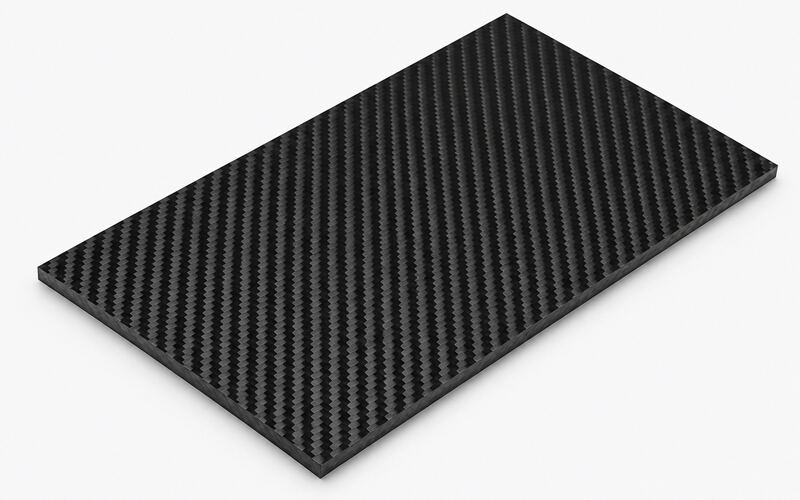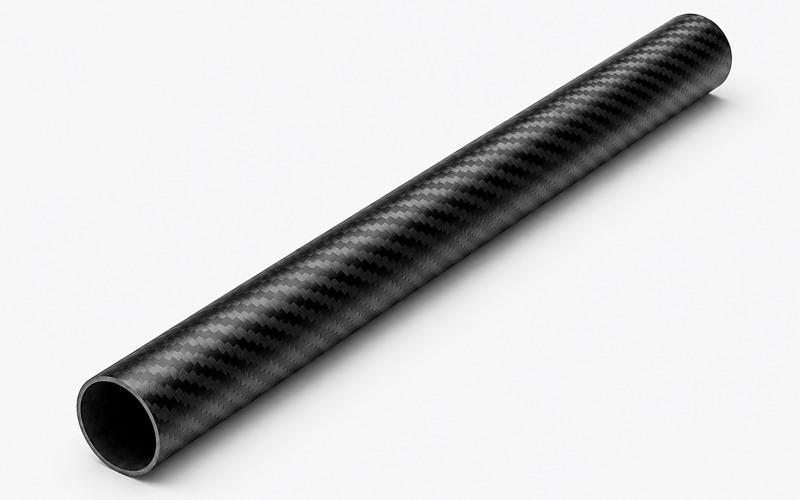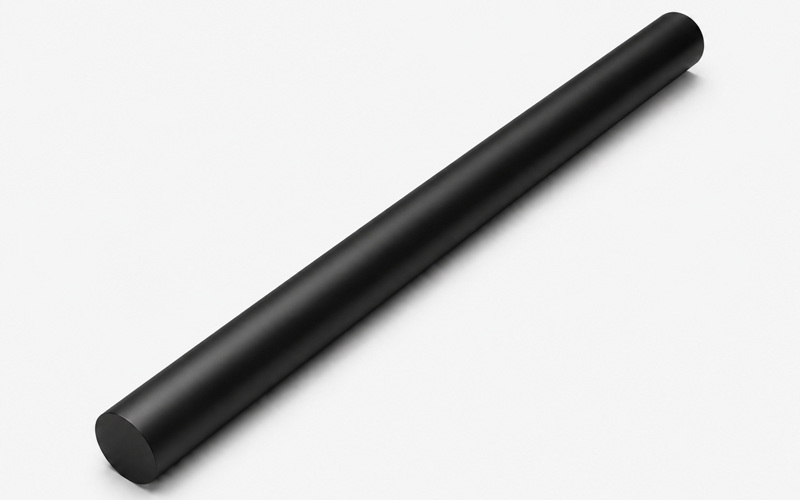
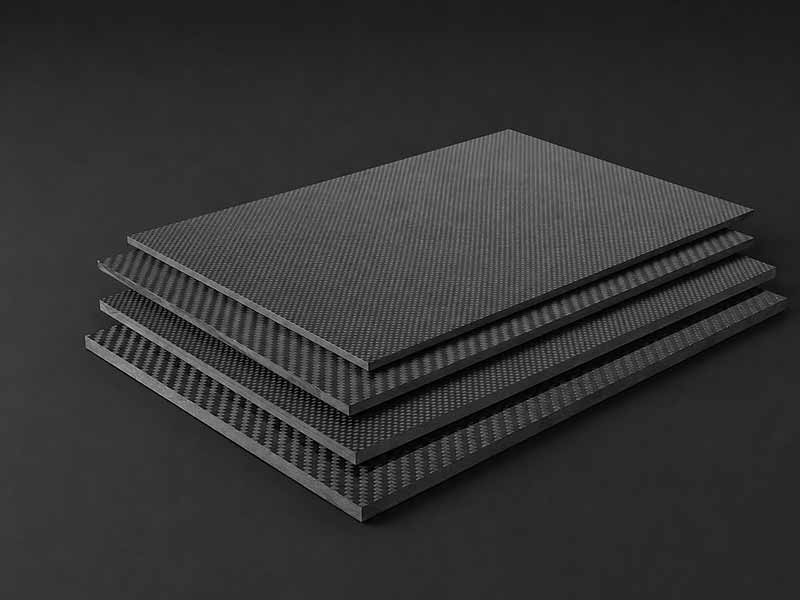
Carbon fiber is mainly used for lightweight structural components that require high stiffness, a high strength-to-weight ratio, fatigue resistance, corrosion resistance, and dimensional stability. Carbon fiber plates specifically serve as flat structural elements in machines, aircraft, robots, and medical equipment where rigidity and low mass matter more than raw impact toughness.
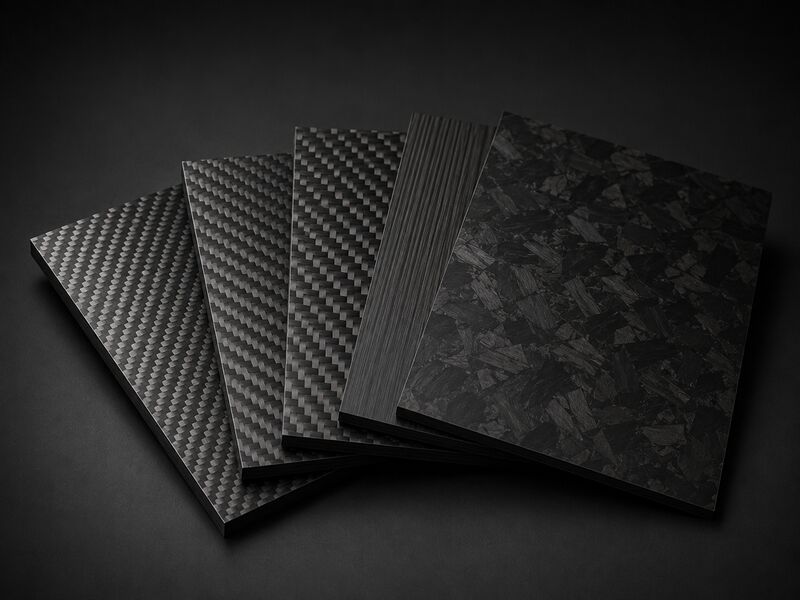
A carbon fiber plate is a cured laminate made from multiple layers of carbon fiber fabric or unidirectional tape bonded with resin. Unlike raw carbon fiber filament, the finished plate’s performance depends on fiber orientation, resin system, fiber volume fraction, and layup design. Two plates made from the same fiber grade can behave very differently depending on how the layers are stacked.
For standard sizes, thicknesses, and custom machining options, see our carbon fiber sheets.
Common Applications and Industries Using Carbon Fiber Plates
Carbon fiber plates are used as mounting bases for robotic end effectors, structural panels in UAV fuselages, backing plates for optical and imaging equipment, and load-bearing panels in automation fixtures. Engineers select plates when a component needs to stay flat under load while adding minimal weight to a moving system.
- Robotic arm mounting plates and end-of-arm tooling bases
- UAV structural panels and equipment bays
- X-ray table tops and imaging equipment panels
- Machine vision camera mounts and inspection fixtures
- Battery enclosure covers in electric vehicles
Carbon Fiber Plates Compared With Other Composite Forms
Plates differ from carbon fiber tubes and rods in how they carry load. A plate resists bending across a wide surface, while a tube resists bending and torsion along a single axis, and carbon fiber rods primarily carry axial compression or tension. Selecting between these forms depends on whether the application involves surface-mounted loads, rotational shafts, or linear support members. Applications of Carbon Fiber Tubes and Applications of Carbon Fiber Rods cover these product forms in more detail.
How Carbon Fiber Plates Are Made?
Carbon Fiber Fabric, Tow, and Prepreg Materials
Plates can use woven and unidirectional carbon fiber, as well as pre-impregnated prepreg materials. Woven fabric provides balanced strength in two directions, while unidirectional prepreg concentrates strength along a single fiber axis. Prepreg material simplifies resin control during layup, producing more consistent laminate quality than wet layup methods.
Fiber Orientation and Laminate Structure
Layer orientation determines how a plate resists bending and torsion. A 0/90-degree layup resists bending equally in two directions, while a quasi-isotropic layup, such as 0/45/90/-45, distributes stiffness more evenly across all directions. Engineers specify orientation based on the direction of applied load in the final assembly.
Composite Construction and Manufacturing Methods
Most industrial carbon fiber plates are produced using compression molding or autoclave curing of prepreg stacks. Compression molding suits high-volume flat panels, while autoclave curing produces higher fiber consolidation for aerospace-grade parts. After curing, plates are typically CNC machined to final dimensions, since cutting cured laminate preserves fiber alignment better than machining before cure.
Why Use Carbon Fiber Plates?
High Strength With Low Weight
Carbon fiber plates offer tensile strength comparable to steel at roughly one-fifth the density. This allows engineers to replace metal panels in moving assemblies, reducing inertia in robotic arms and lowering total aircraft weight without sacrificing load capacity.
High Stiffness and Dimensional Stability
Carbon fiber has a higher specific modulus than aluminum, meaning a plate can achieve the same bending stiffness at lower thickness and weight. This matters in precision equipment, where deflection under load must stay below micrometer-level tolerances, such as camera mounts or optical benches.
For a broader comparison of weight, stiffness, corrosion resistance, and manufacturing, see our carbon fiber vs aluminum guide.
Fatigue and Corrosion Resistance
Carbon fiber laminates resist cyclic loading fatigue far better than aluminum, which develops microcracks after repeated stress cycles. Carbon fiber plates also resist corrosion in humid or chemically exposed environments, making them suitable for marine decks and outdoor UAV frames without protective coatings.
Aerospace and UAV Applications
Aircraft Panels and Structural Components
Aircraft interior panels, wing access covers, and secondary structural components use carbon fiber plates because weight savings directly reduce fuel consumption. Aerospace-grade plates typically use aerospace-certified prepreg with tightly controlled fiber volume fraction to meet strength certification requirements. Fiber orientation is engineered to match flight load paths, particularly bending loads along the wing span.
Drone Frames and Lightweight Assemblies
UAV frames and equipment bay panels rely on carbon fiber plates to keep total airframe weight low while maintaining rigidity during flight vibration. A stiffer frame reduces vibration transfer to onboard cameras and sensors, improving image stability. Thin plates, often between 1 mm and 3 mm, are common in multirotor drone frames where every gram affects flight time.
Robotics and Industrial Applications
Robot Mounting Plates and Machine Components
Robotic arm end effectors and mounting plates use carbon fiber to reduce moving mass, which lowers motor torque requirements and increases positioning speed. Lower mass at the arm’s end also reduces inertia during rapid direction changes, improving repeatability in pick-and-place operations. Plates in this application typically require tight flatness tolerances to maintain alignment with tooling interfaces.
Fixtures, Tooling, and Equipment Panels
Inspection fixtures, test equipment panels, and jig bases use carbon fiber plates when dimensional stability under temperature change is critical. Carbon fiber has a lower coefficient of thermal expansion than aluminum, so fixtures maintain calibration accuracy across temperature swings in manufacturing environments.
Automotive and Marine Applications
Vehicle Panels and Lightweight Structures
Automotive body panels, underbody covers, and structural reinforcements use carbon fiber plates to cut vehicle weight, which improves acceleration and reduces energy consumption in electric vehicles. High-performance and motorsport applications favor carbon fiber over aluminum because the stiffness-to-weight ratio allows thinner panels without compromising structural integrity during impact loading.
Marine Decks and Composite Components
Marine deck panels and hull reinforcements use carbon fiber plates in environments where saltwater corrosion would degrade metal components over time. Corrosion resistance eliminates the need for protective coatings that add weight and require maintenance. Marine-grade laminates typically use vinyl ester or epoxy resin systems selected for water resistance.
Medical and Imaging Applications
X-Ray and Imaging Table Components
X-ray table tops and CT scanner components use carbon fiber plates because the material is radiolucent, allowing X-rays to pass through with minimal image interference. This property, combined with structural rigidity to support patient weight, makes carbon fiber a standard choice over aluminum or steel table tops in diagnostic imaging equipment.
Lightweight Medical Equipment Structures
Portable medical devices and mobile imaging carts use carbon fiber panels to reduce equipment weight, easing transport between hospital departments. Lower structural weight also reduces strain on motorized positioning systems in mobile diagnostic units.
How to Choose a Carbon Fiber Plate?
Thickness, Size, and Fiber Direction
Plate thickness should match the expected bending load and support span. Thicker plates increase bending stiffness but add weight, so engineers calculate the minimum thickness that meets deflection limits under the applied load. Fiber direction must align with the primary load axis; a plate loaded mainly in one direction benefits from unidirectional layup, while multidirectional loading requires woven or quasi-isotropic construction.
| Selection Factor | Engineering Consideration |
|---|---|
| Thickness | Matches required bending stiffness and deflection limit |
| Fiber orientation | Aligned with dominant load direction |
| Surface finish | Determines bonding and cosmetic requirements |
| Flatness tolerance | Affects mounting accuracy in precision equipment |
| Machining need | Determines whether CNC cutting or drilling is required |
Surface Finish and Machining Options
Plates are available with matte and glossy finishes, depending on cosmetic and bonding requirements.
When cutting carbon fiber sheets, CNC machining allows drilling, slotting, and edge trimming to final dimensions, but requires suitable tooling because carbon fiber is abrasive. Machining after cure preserves fiber alignment and avoids distortion that can occur when cutting uncured laminate.
FAQ
What Are Carbon Fiber Plates Used For?
Carbon fiber plates are used as structural panels in aerospace components, robotic mounting bases, UAV frames, medical imaging tables, and industrial fixtures where low weight and high stiffness are required.
How Strong Are Carbon Fiber Plates?
Strength depends on fiber orientation and layup, but standard carbon fiber laminates offer tensile strength comparable to steel while weighing significantly less, making them suitable for load-bearing panels in weight-sensitive applications.
Can Carbon Fiber Plates Be Machined?
Yes, cured carbon fiber plates can be CNC machined, drilled, and trimmed using diamond-coated tooling to achieve precise dimensions and mounting holes without damaging fiber structure.