Twill and Plain Weave Basics
Carbon fiber fabric structure defines how the fiber tows interlace. The selected weave affects fabric drape, tow stability, load distribution, resin flow, and surface appearance.
2×2 Twill Weave
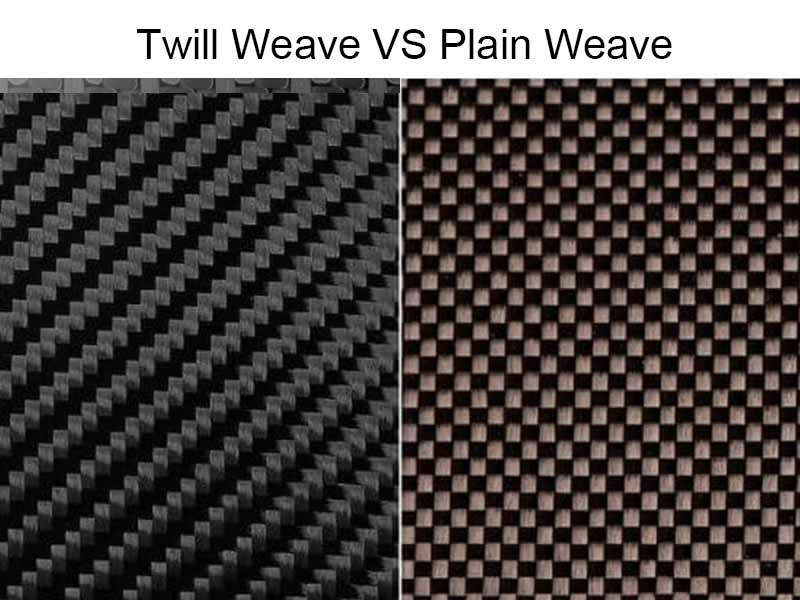
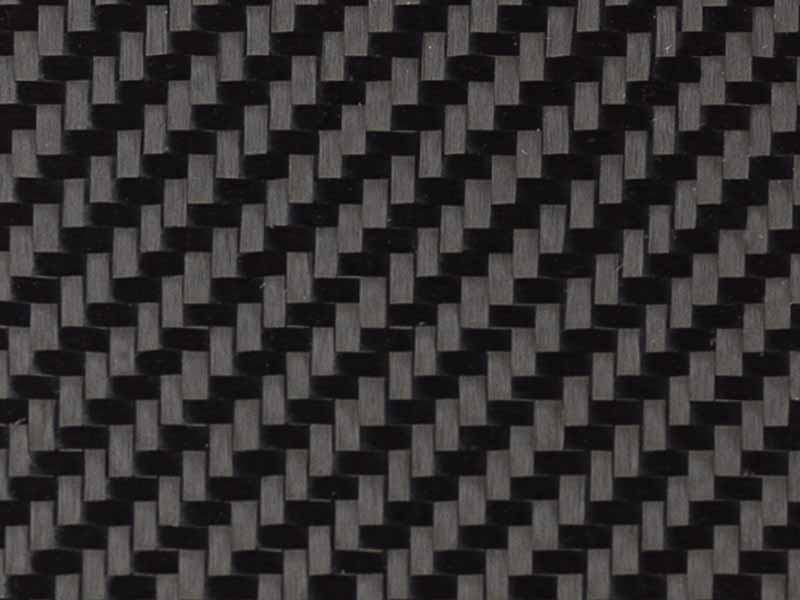
In a 2×2 twill weave, each tow passes over two and under two crossing tows. This construction creates the diagonal pattern commonly associated with visible carbon fiber components.
The reduced number of crossover points lowers fiber crimp and allows the fabric to shift more easily around curved surfaces. This flexibility makes twill weave suitable for complex molds and parts with compound geometry.
1×1 Plain Weave
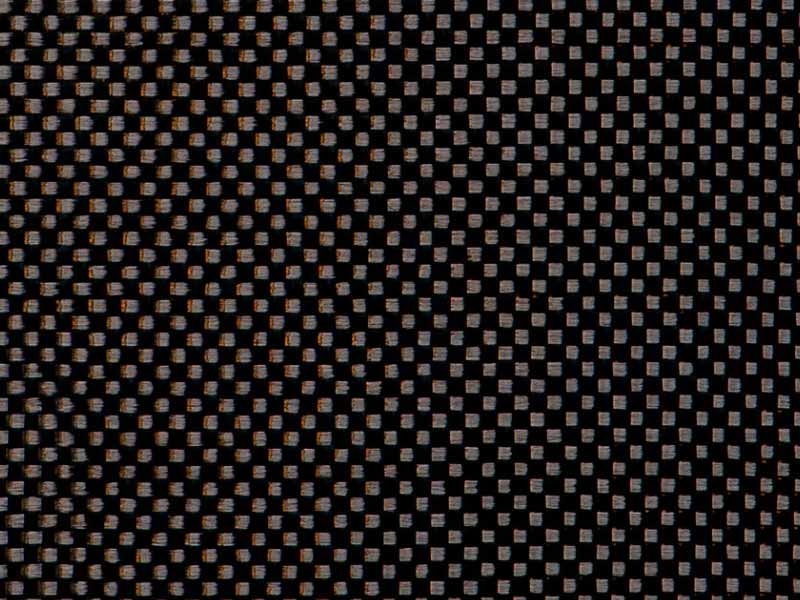
In a 1×1 plain weave, each tow alternates over and under a single crossing tow. The result is a tight grid with a uniform checkerboard appearance.
The frequent interlacing points improve tow stability but increase fiber crimp. Plain weave is less likely to shift during cutting and handling, although it does not conform to complex curves as easily as twill fabric.
Twill vs Plain Weave
Weave geometry governs drapability, surface pattern, dimensional stability, and handling behavior during carbon fiber layup.
| Feature | Twill Weave | Plain Weave |
|---|---|---|
| Weave structure | 2×2 over-under pattern | 1×1 over-under pattern |
| Visual pattern | Diagonal lines | Uniform grid |
| Fiber crimp | Lower | Higher |
| Drapability | Better on curved surfaces | Better on flat surfaces |
| Tow stability | More prone to shifting | More stable during handling |
| Typical use | Curved and visible components | Flat and dimensionally stable parts |
Weave Pattern and Fiber Crimp
Twill construction has fewer interlacing points, which reduces fiber crimp and keeps the tows closer to a straight load path.
Plain weave forces the fibers to change direction at every crossover point, creating greater waviness.
Lower crimp can improve load transfer through the laminate.
The effect is usually modest, but it may become more relevant in highly loaded or fatigue-sensitive structures.
Appearance and Surface Pattern
Twill fabric displays a pronounced diagonal pattern.
It is widely used for exposed automotive panels, sporting goods, decorative covers, and other components where the carbon fiber surface remains visible.
Plain weave creates a compact checkerboard pattern.
Its appearance is more uniform and understated, which may suit technical parts or products requiring a less prominent carbon fiber texture.
Drapability on Curved Surfaces
Twill weave can shear more freely along its diagonal direction.
This movement allows the fabric to conform around compound curves, corners, and changing contours without excessive cutting.
Plain weave resists shear movement because of its dense crossover structure. On tight radii, this resistance can cause puckering, bridging, wrinkles, or local resin-rich areas.
Pattern Stability and Distortion
Plain weave holds the tows firmly in position during cutting, transport, and layup.
It is less likely to lose alignment when technicians move the dry fabric across a mold.
Twill weave can distort when pulled off-axis.
Careful cutting and placement are necessary when the surface pattern must remain straight and visually consistent.
Mechanical Performance
Weave structure influences strength efficiency, stiffness distribution, and damage behavior in a cured carbon fiber laminate.
Tensile Strength and Load Transfer
The lower crimp of twill fabric produces straighter fiber paths.
Under tensile loading, these paths can transfer force more efficiently along the primary fiber directions.
Plain weave contains more fiber waviness at crossover points.
This geometry may slightly reduce peak tensile efficiency compared with an equivalent twill laminate using the same fiber type, resin system, and fiber volume fraction.
Stiffness and Flexibility
Plain weave provides stable and balanced reinforcement along both principal fabric directions.
Its tight interlacing supports consistent handling and relatively uniform laminate behavior.
Twill fabric can move more easily along its diagonal bias direction before curing.
Once cured, laminate stiffness depends mainly on fiber orientation, fiber volume, resin properties, and ply arrangement.
Impact and Damage Behavior
The dense crossover structure of plain weave can restrict some crack movement between adjacent tows.
This behavior may support localized damage containment under certain impact conditions.
Twill weave has longer fiber floats between crossover points. Damage may travel farther along these paths before reaching another interlacing point.
Resin toughness, laminate thickness, impact energy, ply orientation, and manufacturing quality usually have a greater effect on impact resistance than weave pattern alone.
Effect of Ply Orientation
Ply orientation determines how loads travel across the complete laminate. Layers may be positioned at 0°, 90°, and selected bias angles to distribute stress and reduce directional weakness.
Both twill and plain weave can be combined with unidirectional carbon fiber or other reinforcement layers to achieve the required stiffness, strength, and damage tolerance.
Layup and Laminate Quality
Fabric construction affects impregnation, air removal, surface consistency, and defect formation during composite manufacturing.
Resin Wet-Out
Twill weave contains fewer tight crossover points, which can support resin movement through and around the fabric. This structure often makes wet-out easier during hand layup, resin infusion, or prepreg consolidation.
Plain weave has a denser interlacing pattern. Air may remain around tightly packed crossover areas when resin viscosity, vacuum pressure, or processing time is not properly controlled.
Incomplete wet-out can produce dry fibers and weak zones within the cured laminate.
Void and Resin Control
Excessive void content reduces interlaminar strength and fatigue life. Twill fabric may support more uniform resin movement because its structure contains fewer restrictive crossover points.
However, acceptable void levels depend on the complete process. Resin viscosity, vacuum integrity, consolidation pressure, cure temperature, and operator technique all affect laminate quality.
Surface Print-Through
The weave pattern may remain visible through a thin gelcoat or clear resin layer. This condition is known as print-through.
Twill weave usually creates a softer diagonal texture, while plain weave can produce sharper grid lines. Surface film, resin thickness, mold quality, and cure shrinkage also influence the final appearance.
Defects During Curing
Uneven resin distribution and trapped air can cause porosity, resin-rich areas, fiber waviness, or surface irregularities.
Twill fabric reduces wrinkling risk on complex shapes because it follows the mold more easily. Plain weave requires closer tension control and may need additional cuts or overlaps around tight curves.
The curing temperature and pressure must match the selected resin system. An unsuitable cure cycle can increase shrinkage stress and defect frequency regardless of the fabric weave.
Manufacturing Differences
Production methods must account for weave-specific handling, forming, cutting, and placement behavior.
Forming Curves and Complex Shapes
Twill fabric conforms readily to compound curves and changing mold profiles. Technicians can often form the material without adding numerous cuts, darts, or overlapping sections.
Plain weave is easier to keep aligned on flat surfaces but becomes harder to form around corners and deep contours. Complex shapes may require segmented patterns or additional seams.
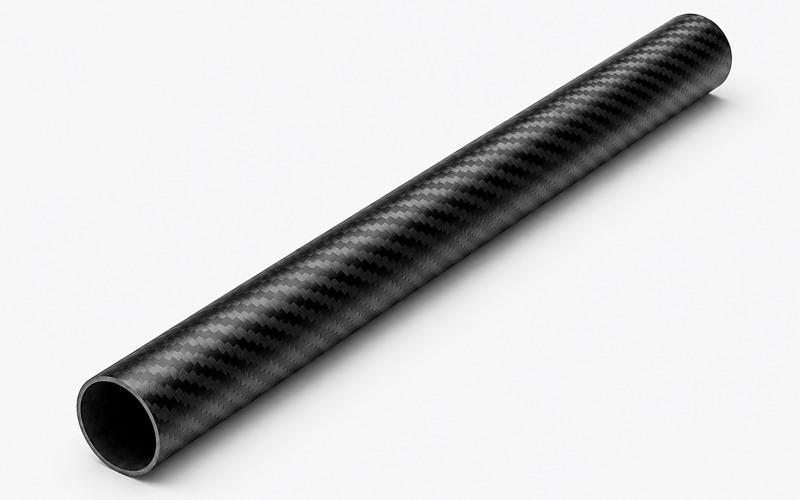
This difference matters when producing curved carbon fiber tubes, shells, fairings, housings, and automotive body components.
Layup Speed and Labor
Twill weave can reduce layup time on complex tooling because it follows curved surfaces with less manual adjustment.
Plain weave may increase labor when technicians must control puckering, bridging, or fabric tension. On flat panels, however, its stable structure can make positioning and alignment straightforward.
Weave Distortion During Molding
Excessive shear during forming changes the angle between the warp and weft tows. This distortion can alter local thickness, fiber orientation, and mechanical performance.
Twill weave accepts moderate shear movement before wrinkling. Plain weave resists movement more strongly and may buckle when forced into a shape beyond its natural forming limit.
Tow Size and Appearance
Tow size describes the number of individual carbon filaments within each bundle. It interacts with the weave pattern to determine fabric texture, weight, coverage, and surface detail.
1K 3K and 12K Tow Patterns
| Tow Size | Pattern Appearance | Typical Characteristics | Common Applications |
|---|---|---|---|
| 1K | Fine and compact | Subtle texture and small tow width | Small parts and premium visible surfaces |
| 3K | Moderately sized | Balances appearance, availability, and handling | Automotive panels, tubes, and general CFRP parts |
| 12K | Large and bold | Higher fabric weight and faster material coverage | Structural layers and large components |
Texture and Cosmetic Finish
A 1K twill fabric produces a fine diagonal pattern that works well on small or highly detailed visible components. A 3K fabric creates the familiar carbon fiber pattern used in many automotive and consumer products.
A 12K fabric forms a larger and more prominent texture. Manufacturers often use it for thicker structural reinforcement or large parts where rapid material coverage matters more than fine cosmetic detail.
Plain weave produces a tighter visual grid at each tow size, while twill weave creates longer and more noticeable diagonal lines.
Cost and Applications
Fabric selection should balance material price, manufacturing labor, surface requirements, part geometry, and structural performance.
Fabric and Production Costs
Twill fabric may cost more because of its weaving process and demand in cosmetic applications. Premium tow grades and tight visual tolerances can further increase its price.
Plain weave is often a cost-efficient choice for flat structural layers. Its dimensional stability can also reduce handling errors and material waste during simple layup operations.
Total part cost depends on more than fabric price. Complex forming, additional cutting, surface finishing, curing time, and rejection rates may have a larger effect on production cost.
When to Choose Twill Weave
Choose twill weave when the component requires:
- Conformity over curved or compound surfaces
- A visible diagonal carbon fiber pattern
- Lower fiber crimp along the main fiber directions
- Faster layup on complex molds
- Reduced bridging and wrinkling risk
When to Choose Plain Weave
Choose plain weave when the component requires:
- Stable tow alignment during cutting and handling
- A uniform checkerboard appearance
- Reliable placement on flat or gently curved molds
- Balanced reinforcement in the warp and weft directions
- A cost-efficient fabric for straightforward structures
FAQ
Is Twill or Plain Weave Stronger?
Twill weave may provide slightly better tensile efficiency because it contains less fiber crimp. Plain weave remains structurally competitive and provides stable reinforcement in both primary fabric directions.
The final strength depends more heavily on fiber grade, resin type, fiber volume fraction, laminate thickness, ply orientation, and manufacturing quality.
Does Weave Affect Performance or Only Appearance?
Weave affects more than appearance. It influences fabric drape, fiber crimp, tow stability, resin wet-out, surface print-through, and load transfer.
The mechanical differences between twill and plain weave are often moderate, but they can matter in highly optimized structural components.
Which Weave Works Better on Curved Parts?
Twill weave generally works better on curved and compound surfaces because it shifts more easily along the diagonal direction.
Plain weave is better suited to flat or gently curved parts. Tight radii may require extra cutting, overlapping, or manual adjustment.
Can Twill and Plain Weave Be Combined?
Yes. A laminate can use twill fabric on the visible outer surface and plain weave within the internal structural layers.
Manufacturers may also combine woven fabrics with unidirectional carbon fiber to control strength and stiffness in specific directions.
Which Weave Costs More?
Twill fabric often costs more because of its weaving complexity and demand for cosmetic components. Plain weave generally provides a lower-cost option for flat and structurally stable applications.
Processing labor should also be considered. Twill may reduce production time on curved molds, which can offset part of the higher material cost.