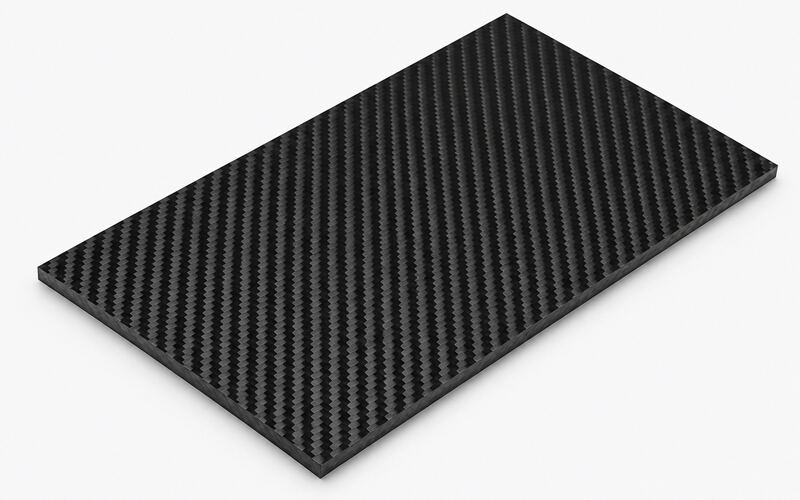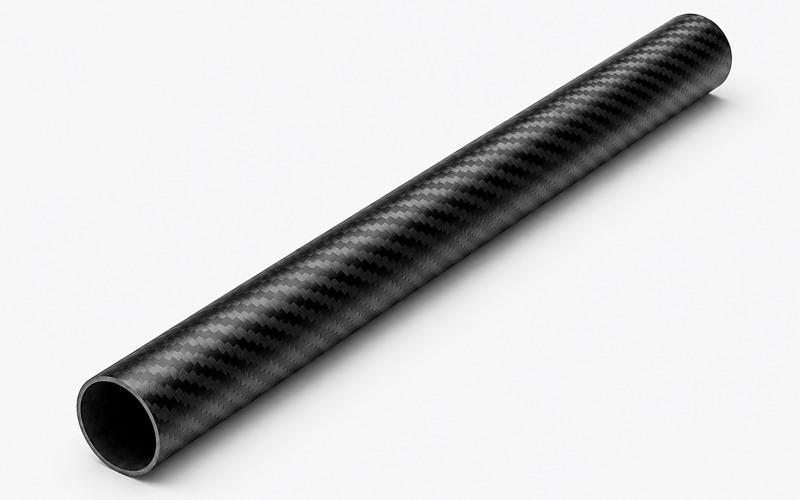
Carbon Fiber Type Overview
Carbon fiber type defines the fiber source, format, grade, tow, fabric architecture, and resin route.
- Precursor type: PAN, pitch, or rayon based carbon fiber.
- Fiber form: Continuous, chopped, milled, or recycled carbon fiber.
- Mechanical grade: Standard modulus, high strength, high modulus, or ultra high modulus fiber.
- Tow size: 1K, 3K, 12K, 24K, 50K, or other filament counts.
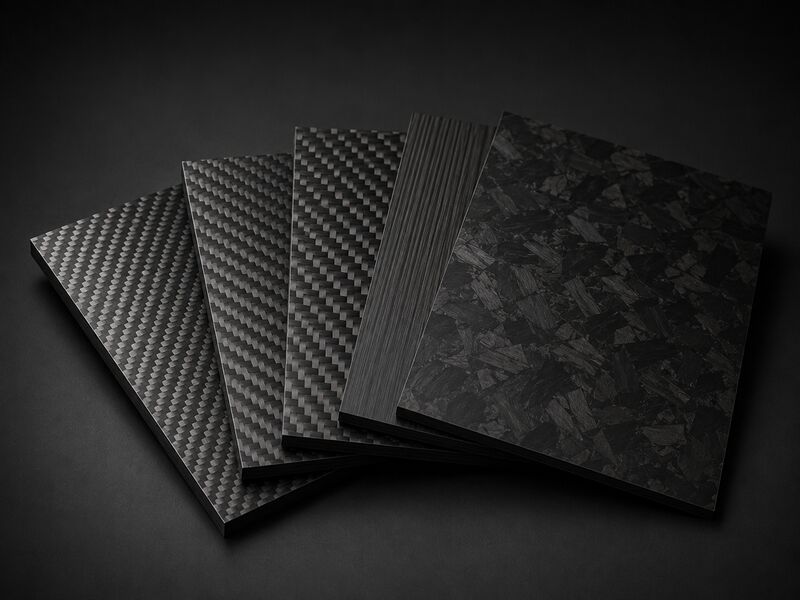
- Fabric architecture: Plain weave, twill weave, satin weave, unidirectional, or non crimp fabric.
- Resin form: Dry fabric, prepreg, thermoplastic, or vinyl ester composite form.
Main Ways to Classify Carbon Fiber
Carbon fiber is classified by precursor, physical form, mechanical grade, tow size, weave, and resin system. Each classification affects how a CFRP component is designed, processed, inspected, and used.
How Carbon Fiber Type Affects Performance?
Fiber type controls tensile behavior, stiffness, fatigue response, surface appearance, and processing stability. Wrong selection can cause fiber waviness, resin-rich zones, weak bonding, or unexpected laminate deflection.
Carbon Fiber by Precursor
The precursor determines fiber chemistry, graphitization potential, cost structure, and final mechanical balance. It also affects how carbon fiber is made, especially during stabilization, carbonization, and graphitization.
| Precursor Type | Main Advantage | Main Limitation | Typical Use |
|---|---|---|---|
| PAN Based Carbon Fiber | Balanced strength, stiffness, and processing | Requires controlled stabilization and carbonization | Structural CFRP laminates, tubes, sheets, prepregs |
| Pitch Based Carbon Fiber | Very high stiffness and thermal conductivity | More brittle and handling sensitive | Thermal management, space structures, precision parts |
| Rayon Based Carbon Fiber | Useful for selected thermal and ablative uses | Less common for structural composites | Specialty thermal and ablative applications |
PAN Based Carbon Fiber
PAN based carbon fiber is the most common structural fiber for CFRP laminates. It provides a balanced combination of strength, stiffness, handling, and process repeatability.
It suits automotive parts, tubes, sheets, prepregs, and sporting goods.
Pitch Based Carbon Fiber
Pitch based carbon fiber is selected when very high stiffness or thermal conductivity matters. It can be more brittle, so designers control bend radius and laminate layup carefully.
Poor handling can introduce broken filaments and local stress points.
Rayon Based Carbon Fiber
Rayon based carbon fiber is used mainly in specialty thermal and ablative applications. It is less common for modern structural composite parts.
Carbon Fiber by Form
Fiber form affects reinforcement length, flow behavior, laminate continuity, and mechanical efficiency.
Continuous Carbon Fiber
Continuous carbon fiber carries load along uninterrupted filaments. It is used in woven fabric, unidirectional tape, pultrusion, filament winding, and prepreg laminates.
Fiber alignment must match the load path to prevent inefficient stiffness and early cracking.
Chopped Carbon Fiber
Chopped carbon fiber reinforces molded compounds and filled resins. Short fiber length improves flow, but it reduces directional strength compared with continuous reinforcement.
Gate design, mixing, and fiber breakage control final part consistency.
Milled Carbon Fiber
Milled carbon fiber is a fine reinforcement for conductivity, wear resistance, and dimensional control. It adds less structural strength than longer fibers.
Dispersion quality is critical because agglomerates can create weak spots.
Recycled Carbon Fiber
Recycled carbon fiber comes from reclaimed scrap or end-of-life composites. It is useful in nonwoven mats, compounds, and lower-load structures.
Fiber length distribution and surface condition must be checked before design approval.
Carbon Fiber by Grade
Grade selection controls strength, modulus, strain capacity, damage tolerance, and cost sensitivity.
Standard Modulus Carbon Fiber
Standard modulus carbon fiber is used for general structural laminates. It offers practical handling and balanced performance.
It works well when toughness, cost control, and manufacturability matter more than maximum stiffness.
Intermediate Modulus Carbon Fiber
Intermediate modulus fiber increases stiffness while retaining useful strength. It is common in aerospace, racing, and precision tubes.
Designers use it when deflection limits are tighter than ordinary structural parts.
High Strength Carbon Fiber
High strength fiber is chosen for impact-sensitive or tension-loaded CFRP parts. It supports higher strain before failure than very stiff fibers.
Laminate design must still control notches, holes, and ply drops.
High Modulus Carbon Fiber
High modulus fiber reduces elastic deformation under load. It is useful for robot arms, optical benches, and stable tooling.
It needs careful processing because brittle fibers tolerate less bending and misalignment.
Ultra High Modulus Carbon Fiber
Ultra high modulus fiber is used where stiffness dominates the design. It is sensitive to handling damage and compression microbuckling.
The laminate must minimize waviness, voids, and uncontrolled fiber angles.
Common Carbon Fiber Grades
Common Carbon Fiber Grades
Commercial carbon fiber grades often describe fiber families, not fabric styles or tow sizes.
T300 Carbon Fiber
This grade is a common standard-modulus reference fiber. It is often used in general composites, prototypes, and stable structural laminates.
Selection should consider resin compatibility and required laminate thickness.
T700 Carbon Fiber
This grade is widely used where higher tensile strength is needed. It suits pressure vessels, sporting goods, UAV structures, and performance tubes.
It is a fiber grade, not a weave description.
T800 and T1000 Carbon Fiber
These grades are associated with higher performance structural applications. They are selected when weight reduction and high tensile capability justify stricter processing control.
Layup accuracy and cure quality become more important.
M40J and M55J Carbon Fiber
These grades are associated with high-modulus applications. They are useful where stiffness and dimensional stability dominate the design.
They require careful forming to avoid broken filaments and compression weakness.
T700 vs 3K vs 12K Carbon Fiber
The first term describes a fiber grade, while the other terms describe tow size. A tow size indicates filament count, not strength by itself.
Compare fiber grade, resin system, layup, and process before judging performance.
Carbon Fiber Tow Sizes
Tow size affects fabric texture, drape, spreading behavior, resin wet-out, and visible weave scale.
1K Carbon Fiber
This tow is used when fine surface detail and small part drape are important. It can produce a refined appearance, but material cost and handling sensitivity are usually higher.
3K Carbon Fiber
This tow is common in visible carbon fiber fabric. It balances appearance, drape, and laminate handling.
Use it when cosmetic weave scale and controlled ply placement are important.
6K and 12K Carbon Fiber
These tow sizes provide wider bundles and faster material coverage. They suit larger panels, tubes, and structural skins.
Wider bundles may show more texture and require good resin wet-out control.
24K and 50K Carbon Fiber
Large tow fibers are used where productivity and cost efficiency matter. They are common in industrial structures and compounds.
Designers must manage spreading, impregnation, and local thickness variation.
How Tow Size Affects Carbon Fiber?
Smaller tow improves drape and surface definition, while larger tow improves coverage rate. Tow choice affects fabric thickness, resin flow, and corner conformity.
Poor tow selection can create bridging, dry spots, or uneven laminate appearance.
Carbon Fiber Weave Types
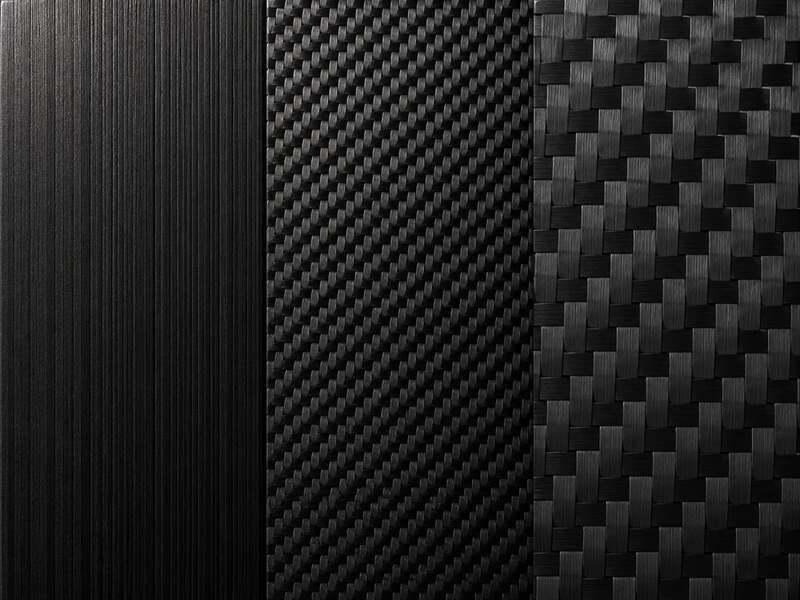
Weave architecture controls drape, stability, crimp, surface pattern, and in-plane mechanical response.
| Weave Type | Main Feature | Best For | Key Limitation |
|---|---|---|---|
| Plain Weave | Stable and easy to handle | Flat sheets and simple molds | More crimp than straighter fabrics |
| Twill Weave | Good drape and diagonal pattern | Curved visible parts | Can distort during layup |
| Satin Weave | Smooth surface and strong drape | Complex shells and decorative skins | Less stable during cutting |
| Unidirectional Carbon Fiber | Fibers run mainly in one direction | Directional stiffness and strength | Needs careful ply orientation |
| Non Crimp Fabric | Straighter fibers with stitched layers | Efficient structural layups | Stitching can affect resin flow |
Plain Weave Carbon Fiber
Plain weave has high fabric stability and resists distortion during handling. It is useful for flat sheets and simple molds.
Fiber crimp can slightly reduce stiffness compared with straighter architectures.
Twill Weave Carbon Fiber
Twill weave drapes more easily around curves and complex surfaces. It is widely used for visible automotive and sports parts.
The fabric can distort if technicians pull it unevenly during layup.
Satin Weave Carbon Fiber
Satin weave offers good drape and a smoother surface appearance. It suits complex shells and decorative skins.
Lower interlacing can make the fabric less stable during cutting and transfer.
Unidirectional Carbon Fiber
Unidirectional carbon fiber aligns most fibers in one direction. It gives high efficiency along the main load path.
Designers stack orientations to control bending, torsion, and splitting risk.
Non Crimp Carbon Fiber Fabric
Non crimp fabric keeps fibers straighter than woven cloth. Stitching holds layers in place for faster layup and better directional efficiency.
Stitch pattern and handling must avoid local resin pockets.
Carbon Fiber Material Forms
Material form links fiber architecture with resin chemistry, storage, curing, and molding route.
Dry Carbon Fiber Fabric
Dry fabric is impregnated during infusion, RTM, wet layup, or similar processes. Resin flow must reach every fiber bundle.
Poor vacuum control can cause porosity, dry areas, and weak interlaminar bonding.
Carbon Fiber Prepreg
Prepreg contains controlled resin content before molding. It improves repeatability, fiber wet-out, and surface quality when stored and cured correctly.
Wrong thawing, layup time, or cure control can reduce laminate reliability.
Thermoplastic Carbon Fiber
Thermoplastic carbon fiber uses melt-processable matrix systems. It supports welding, reshaping, and faster cycle concepts.
Processing must control temperature, pressure, and crystallinity for stable mechanical behavior.
Vinyl Ester Carbon Fiber
Vinyl ester carbon fiber composites balance chemical resistance and processing practicality. They are used in marine, industrial, and corrosion-related structures.
Cure control matters because undercure reduces heat and chemical resistance.
Unidirectional Prepreg Tape
Unidirectional prepreg tape provides efficient straight fiber placement. It is used in automated layup, tubes, spars, and local reinforcement.
Placement errors can create gaps, overlaps, and stiffness variation.
How to Choose Carbon Fiber Type?
Selection should connect material properties, manufacturing route, geometry, inspection, and service loads.
- Load requirement: Check tensile load, bending, torsion, impact, and fatigue.
- Stiffness target: Select modulus based on deflection limits, not only strength.
- Part geometry: Match fabric drape and tow size to the mold shape.
- Manufacturing route: Choose dry fabric, prepreg, molding compound, pultrusion, or winding.
- Surface requirement: Use suitable weave and resin control for visible parts.
- Cost and volume: Balance material grade, labor, scrap, tooling, and inspection needs.
Strength and Stiffness Requirements
Start with load cases, allowable strain, deflection limits, and safety factors. Choose fiber grade by the failure mode, not only by tensile strength.
A stiffer fiber may fail earlier if impact or compression dominates.
Appearance and Weave Selection
Visible parts need weave consistency, clean cutting, and controlled resin finish. Cosmetic fabrics still need structural validation if they carry load.
Clear coating cannot hide fiber waviness or bridging defects.
Part Shape and Molding Process
Complex shapes need fabrics that drape without wrinkling. Infusion, compression molding, autoclave curing, and pultrusion each favor different material forms.
Poor process matching causes voids, distortion, and inconsistent thickness.
Load Direction and Fiber Orientation
Place fibers along primary load paths to use carbon fiber efficiently. Add off-axis plies for shear, torsion, and damage tolerance.
Ignoring orientation can make a strong material behave like a weak laminate.
Cost and Production Volume
Cost depends on grade, tow size, resin form, labor, scrap, and inspection needs. High-volume parts often favor repeatable fabrics or molding compounds.
Low-volume parts may justify prepreg for accuracy and surface quality.
Carbon Fiber Type Applications
Carbon fiber applications use different fiber types because loads, appearance, cycle time, and durability vary.
Automotive Parts
Automotive carbon fiber parts use woven, prepreg, infused, or chopped formats. Exterior panels prioritize surface quality and repeatable finish.
Structural parts require validated layup, inserts, bonding, and crash behavior.
Drone and Robotics Parts
Drones and robots need lightweight stiffness, vibration control, and dimensional stability. Tubes, arms, plates, and shells often combine woven skins with unidirectional reinforcement.
Fiber direction strongly affects bending and torsional response.
Sports Equipment
Sports equipment uses carbon fiber laminates for tuned stiffness and energy response. Layup design controls flex, impact behavior, and fatigue resistance.
Small changes in fiber angle can noticeably change feel.
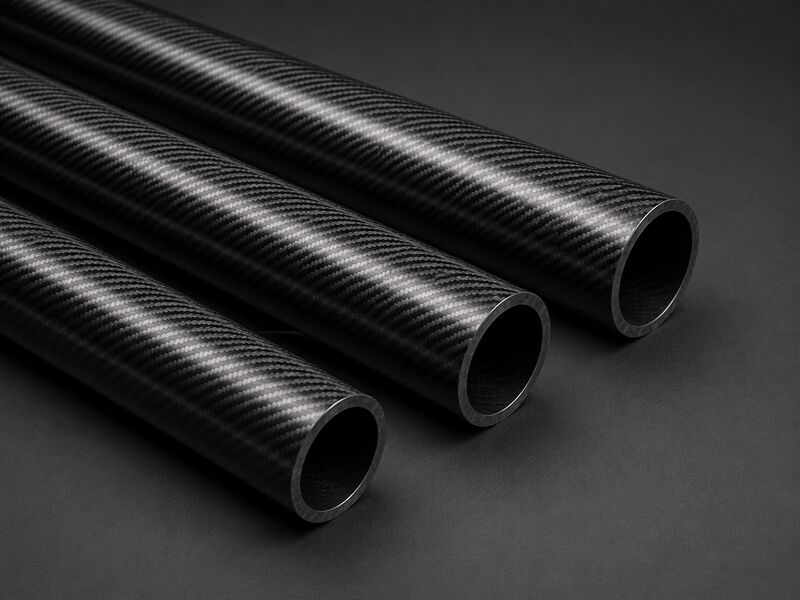
Carbon Fiber Rods and Tubes
Rods and tubes use pultrusion, roll wrapping, or filament winding. Unidirectional fibers improve axial stiffness, while angled layers improve torsion and hoop strength.
Poor mandrel control can cause ovality and wall variation.
Injection Molded Carbon Fiber Parts
Injection molded carbon fiber parts usually use chopped fiber compounds. They provide complex shapes and faster production than continuous laminates.
Fiber orientation follows melt flow, so gate position affects strength distribution.
FAQ
What is the Strongest Type of Carbon Fiber?
The strongest choice depends on fiber grade, resin system, laminate design, and loading mode. High strength PAN based fibers are common for tensile-dominated structures.
The final CFRP part can still fail early from voids, notches, or poor orientation.
Which Carbon Fiber Has the Highest Stiffness?
Pitch based and ultra high modulus PAN based fibers can provide very high stiffness. They are used when deflection control is critical.
Designers must manage brittleness, compression behavior, and handling damage.
What is PAN Based Carbon Fiber?
PAN based carbon fiber is made from polyacrylonitrile precursor. It is the dominant structural carbon fiber family.
It offers a practical balance of strength, stiffness, availability, and processing reliability.
Is 3K Carbon Fiber Stronger than 12K Carbon Fiber?
Not automatically. These terms describe tow size, not guaranteed mechanical grade.
Strength depends on fiber grade, resin, fiber volume, layup orientation, cure quality, and defect control.
Is T700 the Same as 3K Carbon Fiber?
No. One describes the fiber grade, while the other describes tow size.
A fabric can combine a specified grade with a chosen tow size depending on supplier availability.
Which Carbon Fiber Weave is Best?
No single weave suits every carbon fiber part. Plain weave offers stability, twill improves drape, and unidirectional material improves directional efficiency.
Choose based on geometry, load path, surface needs, and process route.