From consumer camera drones to agricultural sprayers and long-endurance defense UAVs, carbon fiber applications in drones span nearly every category of unmanned flight. The material’s combination of low weight and high stiffness solves the same core engineering problem across all of them: how to carry more payload, fly longer, and stay stable in the air.
Why Carbon Fiber Is the Standard Structural Material for Drones?
Strength-to-Weight Ratio and Its Impact on Flight Time
Every gram added to a drone’s frame is a gram subtracted from usable payload or flight time. Carbon fiber offers one of the highest strength-to-weight ratios of any structural material available to drone manufacturers, letting engineers build airframes, arms, and booms that are light without sacrificing the rigidity needed to carry cameras, sensors, or spray tanks.
This weight advantage compounds across a mission: a lighter frame needs less energy to stay airborne, which directly extends battery life and range for the same size power system.
Stiffness, Vibration Damping, and Flight Stability
Beyond weight, carbon fiber’s high stiffness keeps a drone’s arms and frame from flexing during flight, which reduces vibration transmitted to onboard cameras, gimbals, and sensors. A more rigid airframe also holds its shape better in wind, contributing to steadier flight and more accurate autonomous navigation.
Carbon Fiber in Consumer and Aerial Photography Drones
Carbon Fiber Arms and Frame Components
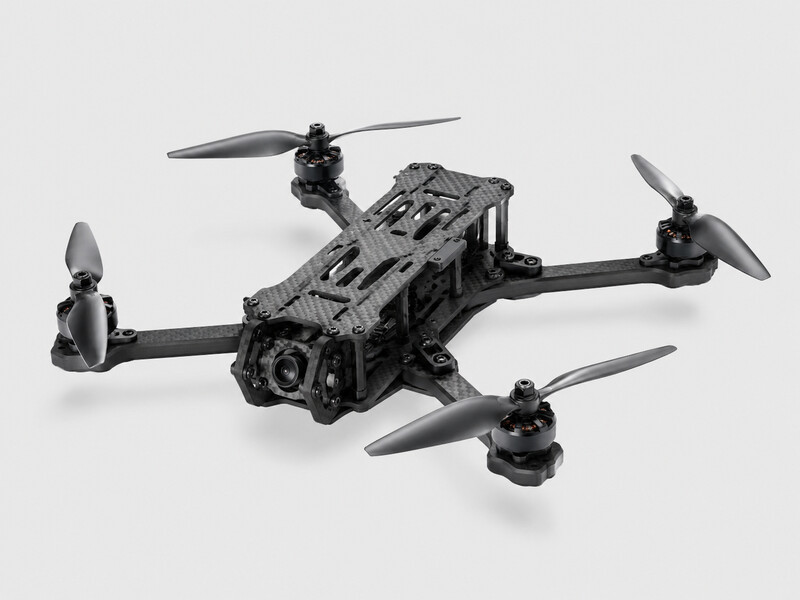
Carbon fiber arms and frame plates are common in consumer and professional camera drones because they keep the airframe light while resisting the flex that would otherwise blur footage or destabilize a gimbal-mounted camera during flight.
Carbon Fiber Propellers for Smoother, Quieter Flight
Professional aerial photography drones increasingly use carbon fiber propellers built from multi-layer carbon fiber prepreg, compression-molded under high temperature, typically in sizes ranging from about 10 to 30 inches depending on the aircraft.
These propellers are aerodynamically optimized for thrust and flight efficiency, often incorporating a swept-tip, rounded-edge design specifically intended to reduce turbulence and blade noise compared to standard plastic propellers.
Manufacturers also apply precision dynamic balancing to carbon fiber propellers to minimize vibration during flight, along with wear-resistant coatings intended to extend service life under repeated professional use.
Carbon Fiber in Agricultural Spraying Drones
Carbon Fiber Booms, Arms, and Frames for Heavy Payloads
Agricultural drones represent one of the fastest-growing commercial drone categories, and their airframes face a demanding combination of heavy payloads and constant vibration from onboard pumps and rotors. One patented agricultural spraying drone design uses carbon fiber arms attached to an aluminum chassis, supporting a payload capacity of up to 150 kilograms across four rotors powered by waterproof batteries.
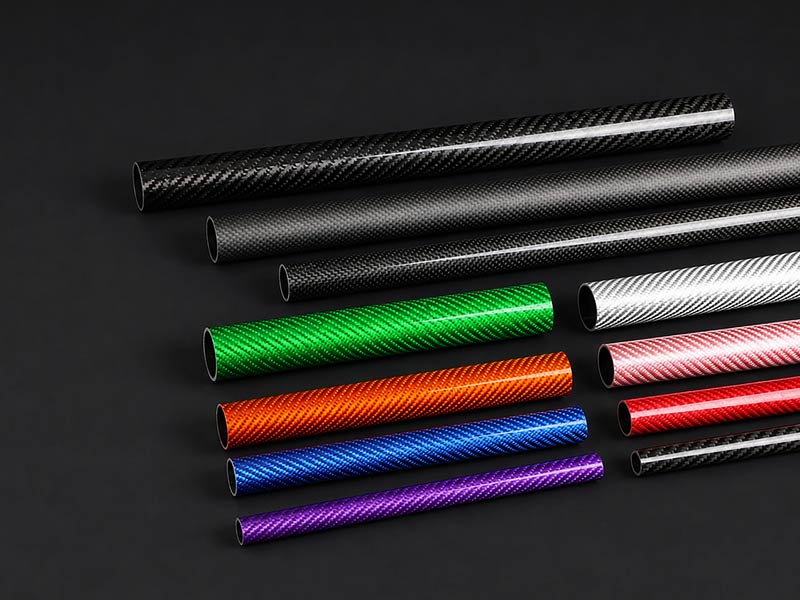
Carbon fiber rods, prepreg carbon fiber tubes, and CNC-machined carbon fiber parts are increasingly replacing aluminum and fiberglass as the standard material for the frame, arms, and boom structures on these sprayer drones, specifically because of the strength-to-weight advantage over those alternatives.
This shift is happening as the market itself grows quickly — the global crop-spraying drone market was valued at roughly $4.48 billion in 2026 and is projected to reach $13.88 billion by 2030, putting pressure on manufacturers to build airframes that hold up under real farm conditions.
Why Weight Savings Directly Increase Payload and Flight Time
Because every gram removed from the frame can be converted directly into additional chemical payload or extra flight time, carbon fiber’s weight savings have a direct, measurable effect on how much area a single drone can cover. A single agricultural drone operator can spray up to roughly 50 acres a day, a productivity level that depends heavily on the aircraft carrying a heavier tank while staying airborne between battery charges.
Carbon Fiber in Mapping, Surveying, and Industrial Inspection Drones
Lightweight Airframes for Extended Survey Flights
Mapping and inspection missions often require covering large areas in a single flight, so a lighter carbon fiber airframe translates directly into longer survey coverage per battery charge, which reduces the number of flights needed to complete a job such as a land survey or infrastructure inspection.
Carbon Fiber in VTOL Fixed-Wing Hybrid Drones
Carbon fiber is central to vertical take-off and landing (VTOL) fixed-wing drones, which combine multirotor hovering with efficient fixed-wing cruise flight. These aircraft are used to inspect high-voltage power lines, offshore wind farms, and oil pipelines, as well as to conduct land surveys and generate 3D models for construction and urban planning, all of which benefit from the combination of long range and precise hovering that a lightweight carbon fiber structure helps enable.
Carbon Fiber in Delivery and Logistics Drones
Structural Frames for Long-Range, Payload-Carrying Missions
Delivery-focused VTOL drones use carbon fiber airframes to help carry medical supplies, urgent cargo, and spare parts to remote or disaster-affected areas, where the combination of reduced structural weight and extended range is what makes practical delivery distances achievable in the first place.
Carbon Fiber in Defense and Industrial-Grade UAVs
Aerospace-Grade Carbon Fiber (T700/T800) for Long-Endurance Airframes
Industrial-grade and defense UAVs often use aerospace-grade T700 or T800 carbon fiber composite for their airframes, which manufacturers report can reduce structural weight by up to roughly 30% compared to conventional construction while maintaining high tensile strength and torsional rigidity for stable, long-endurance flight.
This weight reduction is particularly valuable for high-payload missions that require carrying multiple cameras, LiDAR units, or radar systems simultaneously, since the airframe savings directly free up capacity for additional sensor equipment.
Heat, UV, and Corrosion Resistance for Field Deployment
Beyond weight and stiffness, aerospace-grade carbon fiber airframes used in industrial and defense UAVs are typically heat-resistant, UV-resistant, and corrosion-proof, which matters for aircraft that operate outdoors for extended periods in variable field conditions.
How Carbon Fiber Drone Components Are Manufactured
Prepreg Compression-Molded Propellers
High-performance carbon fiber propellers are typically built from multiple layers of carbon fiber prepreg — fabric pre-impregnated with resin — compression-molded under high temperature and pressure into the final aerodynamic blade shape.
CNC-Machined Frame Plates and Pultruded Arms/Booms
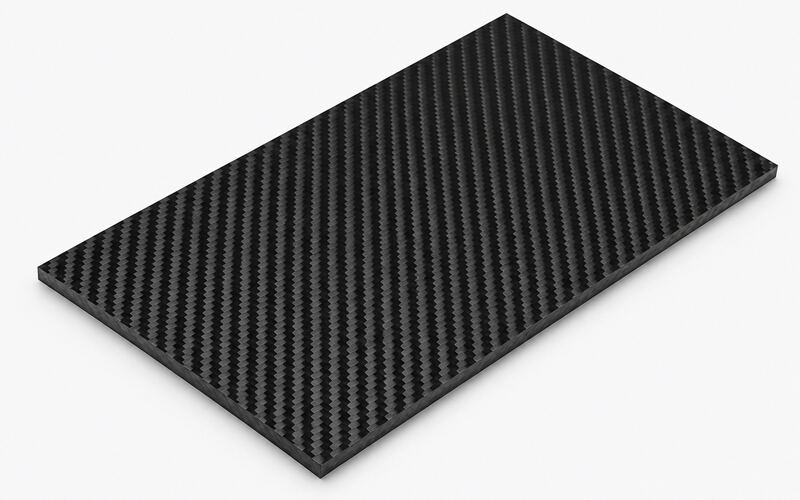
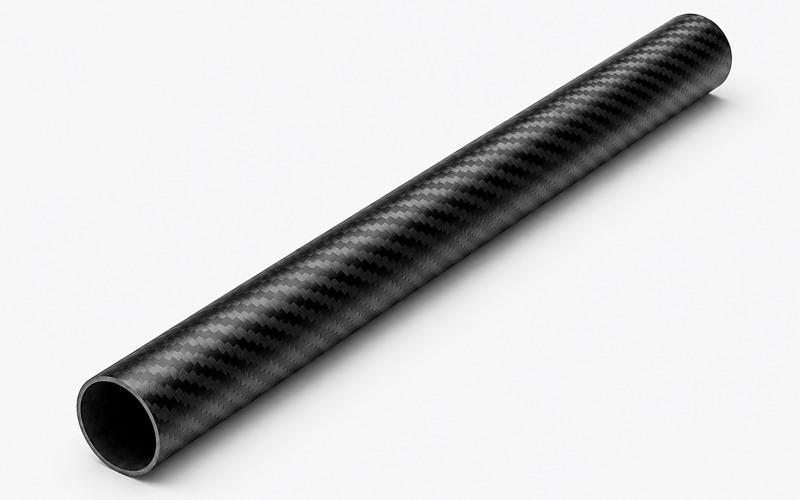
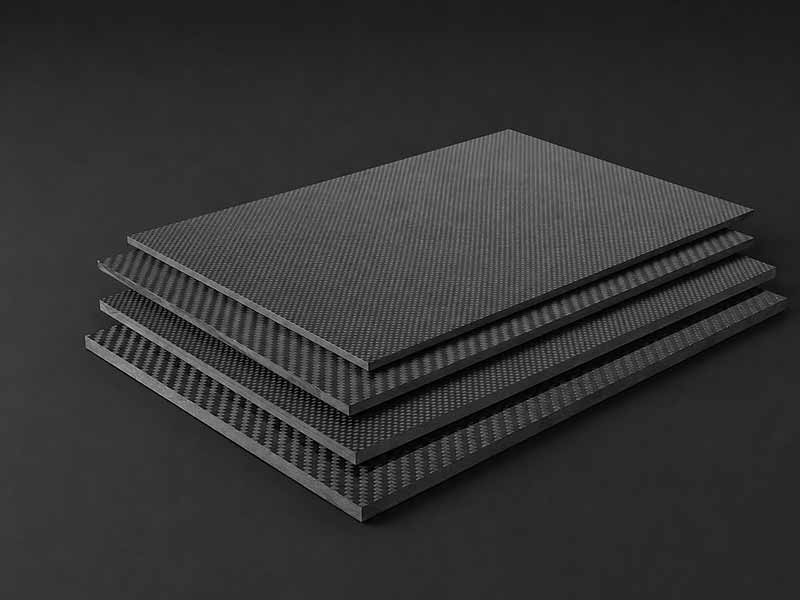
Flat frame components such as top and bottom plates are generally CNC-machined from carbon fiber sheet, while arms and booms are more commonly produced through pultrusion, which pulls continuous carbon fiber through a resin bath and heated die to create constant cross-section tubes and rods.
Carbon Fiber vs. Plastic and Aluminum in Drone Design
Carbon Fiber vs. Plastic Frames
Plastic frames are cheaper and more forgiving in low-speed impacts, but they flex more under load and add unwanted weight relative to their strength, which is why plastic is more common on entry-level rather than professional drones.
Carbon Fiber vs. Aluminum Frames and Arms
Aluminum remains a viable structural choice, and some heavy-payload agricultural drones use an aluminum chassis paired with carbon fiber arms specifically to balance cost, durability, and weight across different parts of the same airframe.
Limitations and Design Considerations
Cost and Repairability After a Crash
Carbon fiber components generally cost more than plastic or aluminum equivalents, and unlike aluminum, carbon fiber does not bend on impact — it can crack or delaminate, which sometimes makes a damaged carbon fiber arm or frame plate a full replacement rather than a simple repair.
Signal and Electromagnetic Interference Considerations
Because carbon fiber can conduct electricity, a carbon fiber frame positioned near GPS or radio antennas can interfere with signal reception, which is why many drone designs mount antennas above the frame or use non-conductive materials at critical antenna locations.
FAQ
Why Do Most Professional Drones Use Carbon Fiber Frames?
Carbon fiber’s high strength-to-weight ratio and stiffness reduce vibration and extend flight time, which together improve both camera stability and overall mission range compared to heavier or more flexible materials.
Do Carbon Fiber Propellers Really Perform Better Than Plastic Ones?
Carbon fiber propellers generally hold their shape better at high RPM and are manufactured with more precise balancing, improving efficiency and reducing vibration, though they typically cost more and can be more brittle in a hard strike than flexible plastic props.
Is Carbon Fiber Used in Delivery and Agricultural Drones, or Just Racing Drones?
Carbon fiber is widely used across commercial and industrial drone categories — including agricultural sprayers, delivery aircraft, mapping UAVs, and defense platforms — not only in racing and hobby drones.