Whether it’s an off-road basher, a 3D aerobatic plane, or a racing quadcopter, hobbyists keep reaching for the same upgrade material: carbon fiber. Carbon fiber in RC models shows up in chassis plates, wing spars, drone arms, and rotor blades because it solves the same problem across every vehicle type — cutting weight without sacrificing strength.
Why Carbon Fiber Is a Popular Material?
Strength-to-Weight Ratio and Stiffness Explained
Carbon fiber can be up to five times stronger than steel and roughly twice as stiff as aluminum, while weighing significantly less than either. For RC builders, that translates into parts that flex less under load yet add minimal weight to the finished model.
A stiffer chassis, wing, or frame holds its shape better during hard cornering, aerobatics, or aggressive FPV maneuvers, which is why carbon fiber has become the default upgrade material across nearly every RC category.
Impact Resistance and Fatigue Performance in Repeated Use
Beyond raw strength, carbon fiber resists fatigue well, meaning it can absorb the constant vibration and repeated stress cycles typical of RC use — from motor vibration in a drone frame to landing shocks on a plane — without gradually weakening the way some plastics do.
Carbon Fiber Applications in RC Cars and Trucks
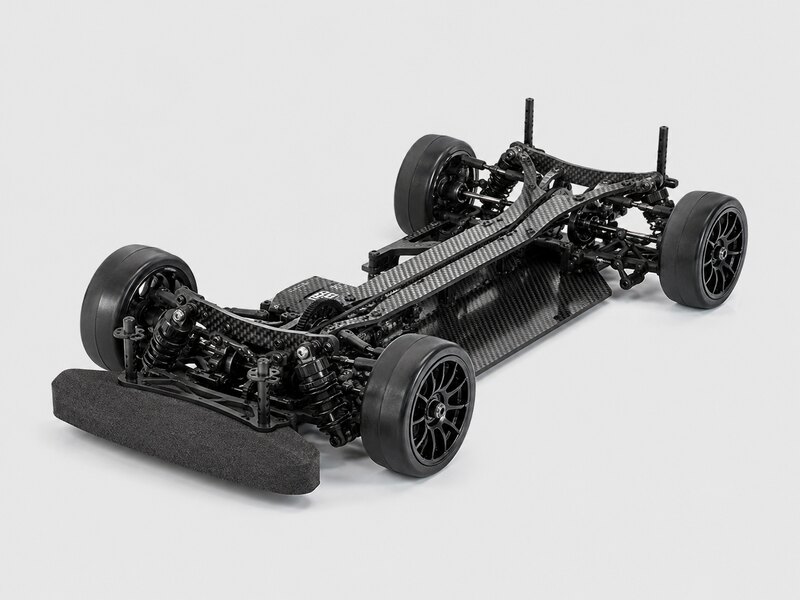
Carbon Fiber Chassis Plates and Top Decks
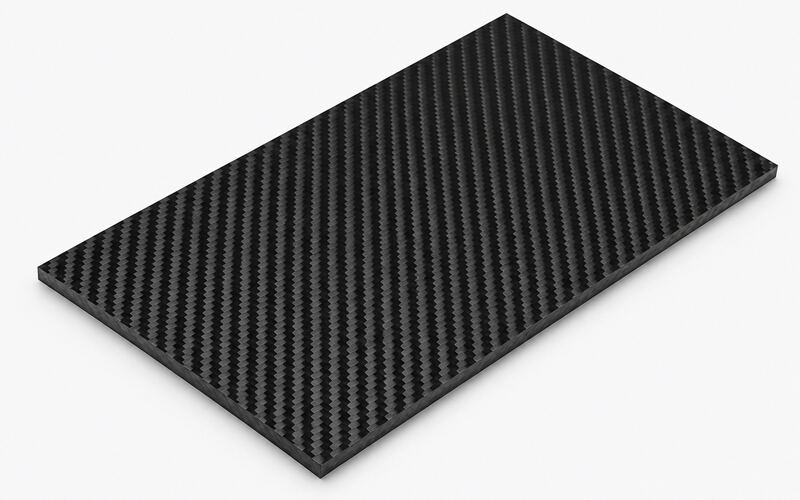
The chassis plate is the most recognizable carbon fiber RC part. Aftermarket and factory-team chassis plates and top decks are typically CNC-machined from high-quality carbon fiber sheet — commonly Toray 3K weave — in thicknesses ranging from about 2mm for low-grip touring cars up to 4-5mm for larger bashing and off-road trucks.
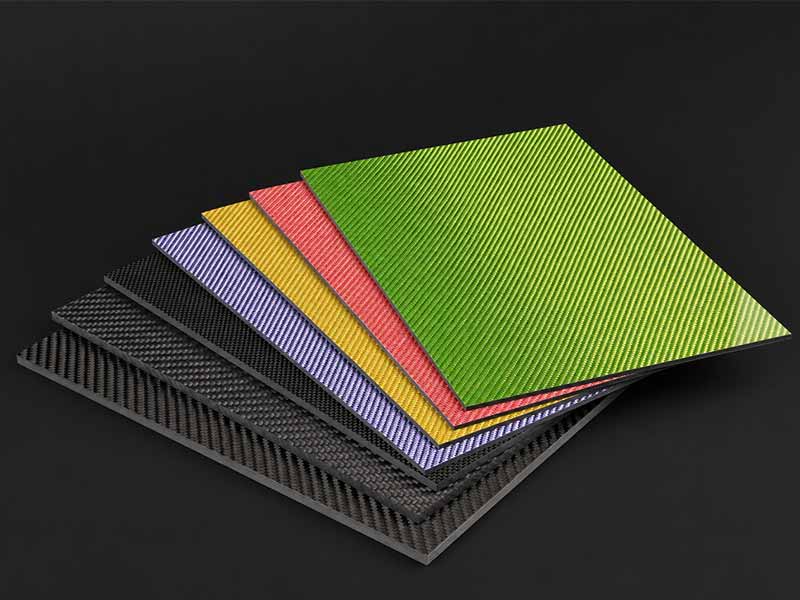
Thinner plates flex slightly for better traction feel on low-grip surfaces, while thicker plates resist torque twist under high-power motors. This tunability is a major reason racers swap chassis thickness between track conditions.
Top decks, which brace the rear of the chassis, are built the same way and serve to fine-tune overall chassis rigidity alongside the main plate.
Shock Towers and Chassis Braces
Shock towers and chassis braces are often made from carbon-fiber-impregnated composite material rather than solid machined sheet. One factory-team product line reports roughly 12% weight savings over standard “hard” plastic option parts while improving rigidity and durability.
Hybrid Chassis Designs Combining Carbon Fiber with Metal
Many high-end RC chassis combine a carbon fiber main plate with 7075-T6 aluminum end pieces at high-stress mounting points. This hybrid approach avoids a common carbon fiber weak point — screws or droop-adjustment hardware embedding into thin composite sections — while keeping most of the chassis lightweight.
Carbon Fiber Applications in RC Airplanes and Gliders
Solid Carbon Fiber Rods for Wing Spars and Pushrods
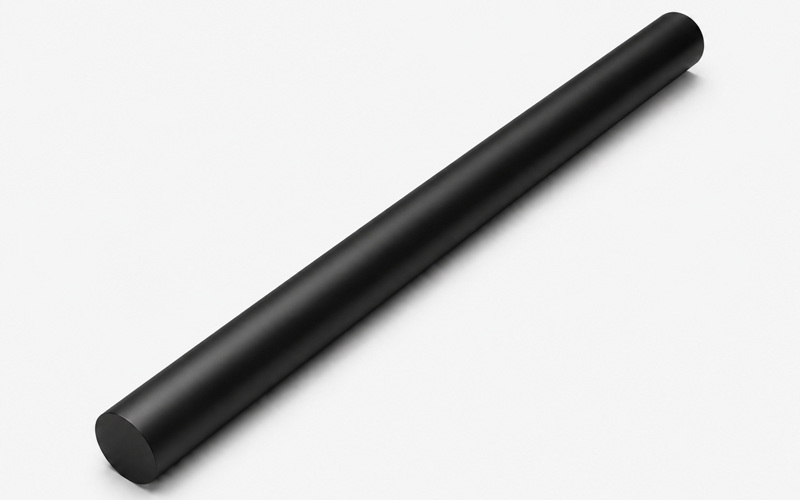
Solid carbon fiber rods are widely used as wing spars, control-surface pushrods, and fuselage reinforcement members. Their high strength-to-weight ratio lets them resist bending during high-speed passes and aerobatic maneuvers without adding significant weight.
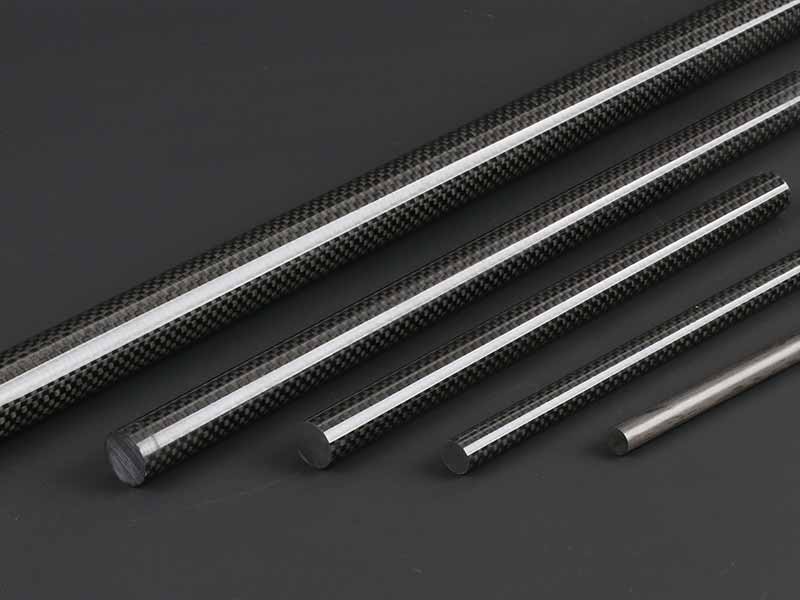
A common pushrod standard uses 3/16-inch outer diameter rod (about 0.195 inch actual OD), sized to pair with 4-40 hardware or metal rod ends — a size builders report as reliable across many stunt and sport aircraft.
Because solid rod is stiffer than tube of the same diameter, builders typically choose it specifically for control linkages, where any flex translates directly into sloppy control response.
Carbon Fiber Tubes for Fuselage and Wing Structures
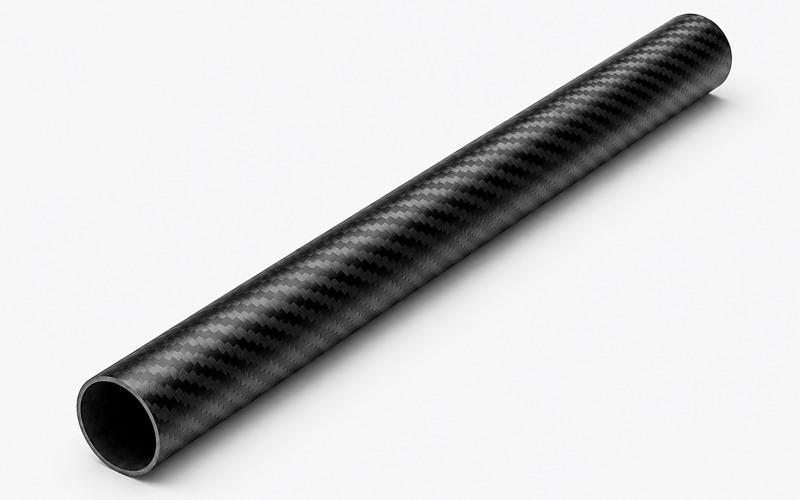
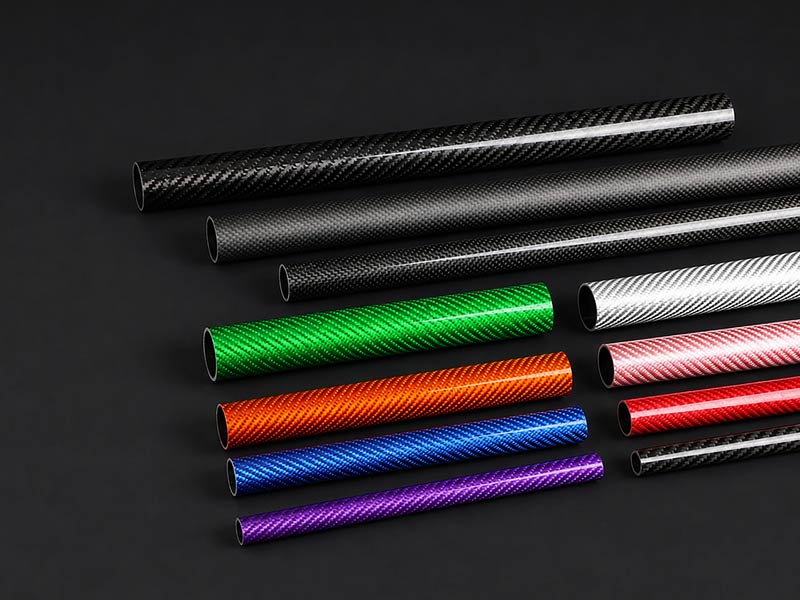
Hollow carbon fiber tubes are lighter than solid rods of the same diameter while still resisting bending forces well, making them the preferred choice for fuselage structures and wing spars on smaller or weight-sensitive aircraft.
Carbon Fiber Landing Gear for Lightweight, Springy Legs
Competition landing gear, such as gear built for 2-meter F3A pattern aircraft, is precision-layered from carbon fiber to achieve a “snap-back” resilience after hard landings, with some sets weighing as little as roughly 37 grams per leg.
Carbon Fiber Applications in FPV Drones and Multirotors
Carbon Fiber Frame Plates
FPV racing and freestyle drone frames are typically built from a top plate, bottom plate, and side plates cut from carbon fiber sheet, commonly ranging from about 2.5mm to 5mm thick depending on the plate’s structural role.
Full 3K carbon fiber construction is standard across popular racing frame designs because it offers the stiffness needed to keep the frame rigid under motor vibration and hard impacts.
Carbon Fiber Arms and Motor Mounts
Drone arms, which hold the motors and absorb crash impacts, are usually made from thicker carbon fiber — commonly 3mm to 5.5mm — and often include built-in dampers at the motor mount to prevent arm breakage during hard landings or crashes.
Carbon Fiber Applications in RC Helicopters
Carbon Fiber Main and Tail Rotor Blades
Carbon fiber main and tail rotor blades are common upgrades over plastic blades because the added rigidity reduces blade flex and improves anti-torsion behavior, which is especially valuable during aggressive 3D aerobatic flying where blade tracking needs to stay consistent.
How Carbon Fiber RC Parts Are Manufactured
CNC-Machined Carbon Fiber Sheets
Flat components like chassis plates, drone frame plates, and top decks are typically cut from pre-manufactured carbon fiber sheet using CNC machining for precise mounting holes and edge profiles.
Pultruded Rods and Tubes
Rods and tubes used for wing spars, pushrods, and drone arms are generally produced through pultrusion, a process that pulls continuous carbon fiber through a resin bath and heated die to create a constant cross-section profile.
Injection-Molded Carbon-Fiber-Reinforced Composites
Smaller reinforcement parts, such as chassis braces, are sometimes injection-molded from a nylon material impregnated with chopped carbon fibers rather than machined from solid sheet, balancing cost and complex geometry with a meaningful weight reduction.
Carbon Fiber vs. Other RC Model Materials
Carbon Fiber vs. Plastic
Plastic chassis and frame parts are cheaper and more forgiving in low-speed crashes, but they flex more under load, which reduces precision in high-speed driving or flying.
Carbon Fiber vs. Aluminum
Aluminum offers a middle ground in weight and cost, but carbon fiber generally provides better stiffness at a lower weight, though aluminum parts are often easier to bend back into shape after a moderate impact.
When Plastic or Aluminum Is Still the Better Choice
Plastic or aluminum remains a practical choice for beginner builds, high-impact bashing, or budget-limited projects where crash resistance and repair cost matter more than maximum stiffness.
Limitations and Maintenance Considerations
Cost Compared to Plastic and Aluminum Parts
Carbon fiber components generally cost more than equivalent plastic or aluminum parts, reflecting the material and machining costs involved in producing them.
Brittleness Under Sharp Impacts and Crash Damage
Unlike aluminum, carbon fiber does not bend — it can crack or delaminate under a sharp, concentrated impact, particularly around screw holes or mounting points, which is why many designs reinforce these areas with metal inserts or end pieces.
Basic Care and Inspection Tips for Carbon Fiber Parts
Regularly inspecting carbon fiber plates and rods for hairline cracks, avoiding overtightening screws directly into thin composite sections, and using washers or metal inserts at high-stress mounting points can meaningfully extend part life.