Manufacturing lines live and die by fractions of a second. A 0.1-second reduction in cycle time on an injection molding line can be worth hundreds of thousands of dollars a year, and every gram of unnecessary weight on a moving arm or gantry adds up to wasted energy, wear, and downtime. This is the core reason carbon fiber in industrial automation has moved from a specialty material to a practical engineering solution for end effectors, structural frameworks, and precision measurement systems on the factory floor.
Why Carbon Fiber Is Gaining Ground in Industrial Automation
Key Material Properties That Matter on the Factory Floor
Carbon fiber composites combine a high strength-to-weight ratio with excellent structural stiffness, low thermal expansion, and strong resistance to fatigue and corrosion. These are not abstract lab specifications — each property maps directly onto a factory-floor problem: stiffness keeps a moving arm from flexing under load, fatigue resistance matters when a part cycles thousands of times a day, and corrosion resistance keeps components performing in washdown or chemical-exposure environments where steel would degrade over time.
How Weight Reduction Translates into Real Production Gains
In automated systems that run continuously at high speed, every kilogram of moving mass directly increases the load on motors, actuators, and bearings. Replacing heavy metal components with optimized carbon fiber structures reduces these inertial loads, which lowers part cycle time, cuts energy consumption, and extends maintenance intervals.
Because these gains compound across thousands of daily cycles, even a modest weight reduction on a single end effector or arm segment can produce measurable improvements in throughput and equipment lifespan — a relationship examined in more detail later in this article.
Core Applications of Carbon Fiber in Industrial Automation
Robotic End Effectors and Grippers — Sheets, Tubes, and C-Channels
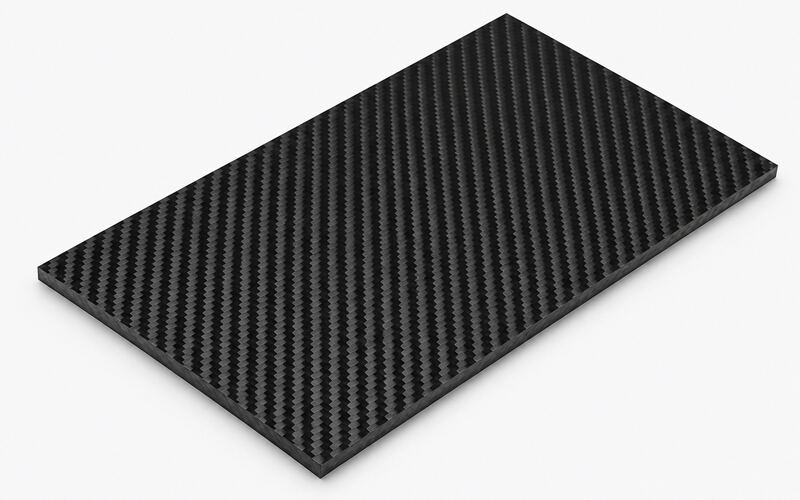
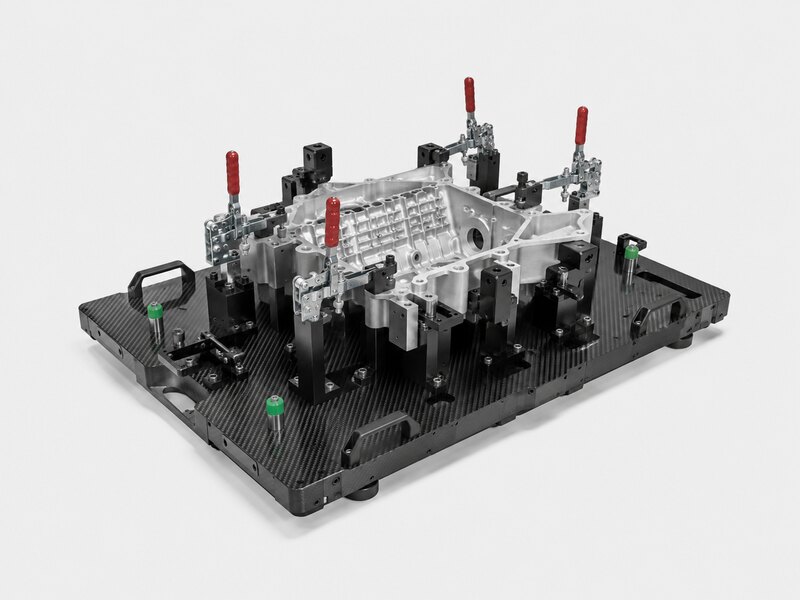
End-of-arm tooling is one of the most common places carbon fiber appears in automation. Using basic structural shapes — flat sheets, angles, hat stiffeners, C-channels, and rectangular tubes — engineers can redesign end effectors that traditionally weighed around 40 pounds down to 15 pounds or less, often without requiring a full custom mold for every design.
Typical weight reductions for carbon fiber end effectors range from 50% to 75% compared to metal designs. This substantially reduces vibration during fast pick-and-place motions, as well as the bearing and motor wear that comes from repeatedly accelerating and decelerating a heavy tool.
These redesigns can frequently be retrofitted into existing production lines with minimal other changes, since the carbon fiber tooling is built to match the same mounting geometry and payload requirements as the metal part it replaces.
Structural Frameworks and Gantry Systems — Tubes, Gussets, and Flat Plates
Entire robotic frameworks and linear gantry systems can be built from square or rectangular carbon fiber tubes connected with flat gusset plates. This combination creates frames that are extremely strong yet far lighter than welded steel or aluminum structures.
Because the carbon fiber layup and tube dimensions can be customized, engineers can tune a framework’s stiffness and deflection characteristics to match specific load requirements — an option that is harder to achieve economically with standard metal extrusions.
Precision Metrology Equipment — Low-CTE Tubes in CMM Probes and Arms
Quality control equipment is one of the more demanding automation applications, since even tiny dimensional changes from temperature swings can throw off a measurement. For coordinate measuring machine (CMM) extensions, three factors determine accuracy: weight, thermal expansion, and static stiffness — and the extension material has the greatest influence on all three.
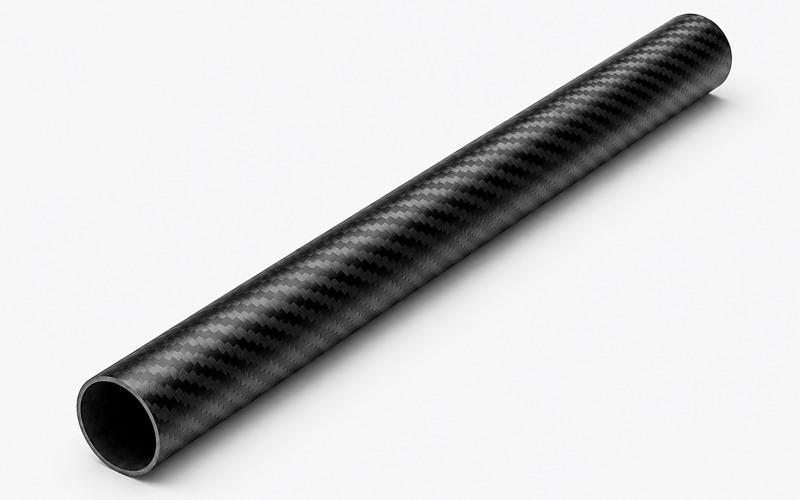
Hexagon’s Romer Arm, a portable CMM, illustrates the shift clearly: the previous limiting technology was steel or aluminum cylindrical tubing, which did not resist thermal expansion well enough for production-line use. The manufacturer replaced it with high-modulus carbon fiber/epoxy composite tubing bonded to machined metal joints, creating an ultra-lightweight articulating arm capable of three-dimensional measurements accurate to within 3 microns.
This performance is possible because braided carbon fiber tubing has a coefficient of thermal expansion that is nearly zero. Independent testing on a cold-forged carbon fiber structure intended for robot links recorded a coefficient of thermal expansion of about 3.4 µm/m·°C — roughly 71% lower than an equivalent steel-based structure — while maintaining high dynamic stiffness without compromising its strength-to-weight ratio. Metrology suppliers such as ZEISS now sell dedicated carbon fiber CMM extension product lines rated specifically on weight, thermal expansion, and deflection performance.
High-Temperature Automation Tooling — Heat-Resistant Composites
Some automation environments — near ovens, welding cells, or heat-forming equipment — expose tooling to significant heat. Specialized carbon fiber composite materials have been developed that can survive direct exposure to a propane torch flame for 30 to 60 seconds with only a minor reduction in stiffness, making them viable for lightweight tooling in select high-temperature automated processes.
Carbon Fiber Hydraulic Cylinders for Linear Actuation
Carbon fiber is also used in the construction of hydraulic cylinders for automation equipment. By embedding carbon fibers in a polymer matrix for the cylinder body, manufacturers produce actuators that are lighter and more fatigue-resistant than traditional steel cylinders, while the piston, seals, and fluid ports still generate the same linear motion when hydraulic fluid is pumped through the system.
Measurable Benefits: Cost, Speed, and Reliability
Cycle Time Reduction and Throughput Gains
Lighter tooling accelerates and decelerates faster, which directly shortens the time a robot or automated system needs to complete each motion cycle. Over the course of a production shift, this small per-cycle saving multiplies into a significant throughput gain.
The financial case is well documented: for applications like injection molding, a 0.1-second reduction in cycle time can translate into a yearly savings of $300,000 or more, and one manufacturer reported saving roughly $1 million per year after switching to a custom carbon fiber robotic arm solution.
Reduced Motor, Actuator, and Bearing Wear
Lower inertial loads during acceleration and deceleration reduce stress on motors, actuators, and bearings, extending component service life and reducing unplanned downtime from mechanical wear.
Improved Dimensional Accuracy Through Thermal Stability
Beyond speed, carbon fiber’s near-zero thermal expansion keeps probe extensions and articulating measurement arms dimensionally stable as shop-floor temperatures fluctuate throughout a production day.
This matters most in-line, where quality-control equipment is no longer confined to temperature-controlled labs but is instead installed directly next to hot machinery — the exact scenario where aluminum and steel extensions historically lost accuracy.
How Carbon Fiber Automation Components Are Manufactured
Pultruded Tubes, Rods, and Structural Profiles
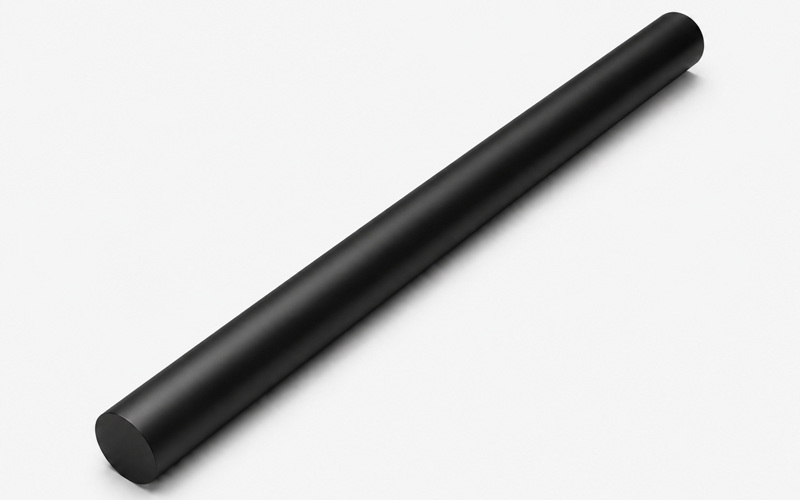
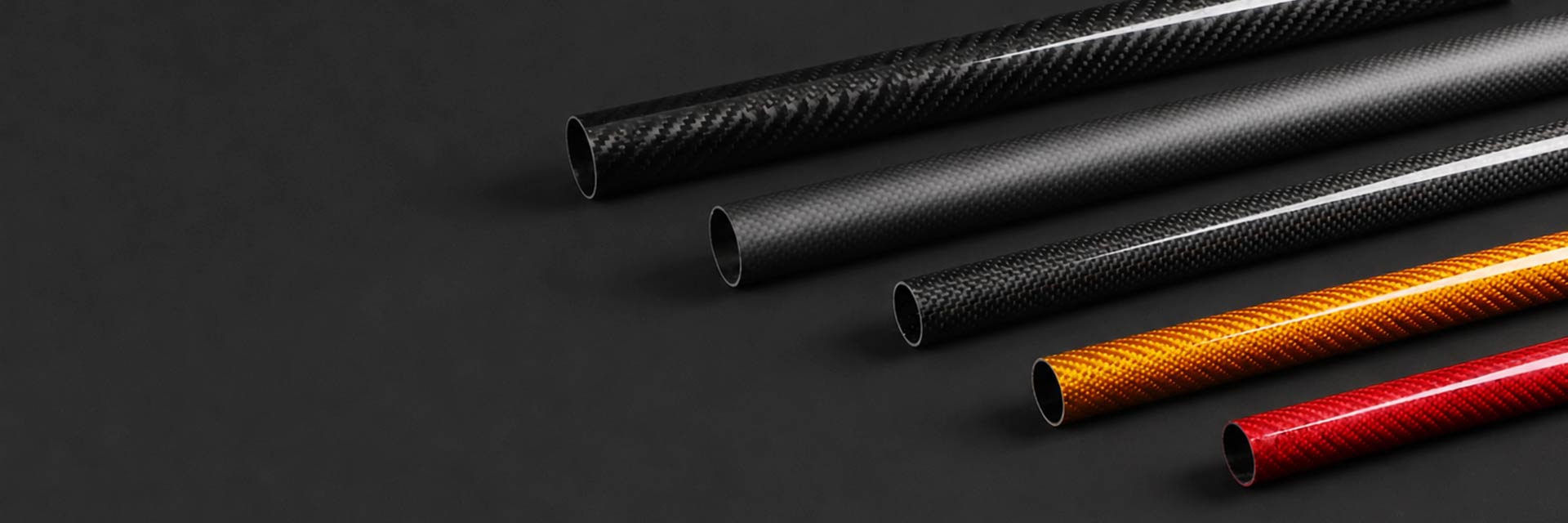
Pultrusion is used to produce constant cross-section carbon fiber tubes, rods, and structural profiles efficiently, forming the backbone of many automation frames and end-effector supports.
Flat Sheets, Angles, and C-Channels for End Effector Design
For custom tooling, manufacturers rely on a library of standard carbon fiber shapes — flat sheets, angles, hat stiffeners, and C-channels — that can be cut, bonded, and assembled into lightweight end effectors. This modular approach lets integrators design a functional carbon fiber gripper or bracket without commissioning a full custom composite mold for each project.
Custom Filament-Wound Tubes for Metrology-Grade Precision
Where extreme dimensional stability is required, such as in CMM extensions, manufacturers use custom filament-wound or braided carbon fiber tubing bonded to precision-machined metal fittings, tailoring fiber orientation and layup to hit specific stiffness and thermal-expansion targets for that application.
Carbon Fiber vs. Aluminum and Steel in Automation Systems
Weight and Stiffness Comparison
Carbon fiber structures typically offer a better stiffness-to-weight ratio than aluminum or steel, allowing automation designers to hit the same structural performance target at a fraction of the mass.
Thermal Stability Comparison
Aluminum performed adequately in temperature-controlled quality labs, but it does not handle the temperature swings common on production floors well. Carbon fiber’s near-zero coefficient of thermal expansion makes it far more dimensionally stable in these environments.
This is precisely why carbon fiber has increasingly replaced aluminum in precision metrology hardware, and why some suppliers explicitly rate their carbon fiber CMM extensions against aluminum and titanium on weight, expansion, and deflection performance side by side.
Where Metal Still Wins
Metal remains the better choice for applications requiring extremely high impact resistance or exposure to chemicals that are incompatible with carbon fiber resins, as well as for budget-constrained lines where the upfront material cost of composites is harder to justify.
Limitations and Design Considerations
Higher Upfront Material Costs vs. Long-Term ROI
Carbon fiber components generally cost more upfront than comparable aluminum or steel parts. In high-speed, high-cycle-count automation, however, this investment is often recovered quickly through cycle time savings and reduced maintenance.
Documented cases showing six- and seven-figure annual savings from cycle-time reduction alone suggest that for many high-throughput applications, the return on investment period can be relatively short, even though the exact payback period will vary by application and production volume.
Electrical Conductivity and EMI Shielding Considerations
Because some carbon fiber composites are electrically conductive, designers need to account for this near sensitive electronics or wiring — either isolating conductive components or taking advantage of the material’s shielding properties where appropriate.
Bonding, Machining, and Repair Requirements
Carbon fiber structural components are typically joined using tube connector systems, bonded joints, or gusset plates rather than welding, and machining or drilling composite parts requires different tooling and techniques than metal fabrication.
Future Outlook for Carbon Fiber in Industrial Automation
Wider Adoption in Retrofit and Upgrade Projects
As more manufacturers document concrete ROI from swapping metal tooling and arms for carbon fiber equivalents, composite retrofits are increasingly being considered for existing automation lines, not just new equipment designs.
Modular Carbon Fiber Framing Systems Replacing Aluminum Extrusions
Standardized tube-and-gusset connector systems are making it easier to design and assemble custom carbon fiber frameworks for robotic cells and automated machinery, positioning composite framing as a practical alternative to traditional aluminum extrusion systems.