Robotics engineers are under constant pressure to build machines that move faster, last longer, and consume less energy — all without sacrificing strength. This is exactly why carbon fiber in robotics has moved from a niche aerospace material to a mainstream engineering choice. From industrial robot arms to drone frames and prosthetic limbs, carbon fiber composites are quietly redefining what robotic hardware can do.
What Is Carbon Fiber and Why It Matters in Robotics?
Basic Composition of Carbon Fiber Composites
Carbon fiber is made from thin, tightly woven strands of carbon atoms embedded in a polymer resin — typically epoxy. The result is a composite material, often called carbon fiber reinforced polymer (CFRP), that combines the tensile strength of the fiber with the shape-holding properties of the resin matrix.
Key Mechanical Properties
The defining trait of carbon fiber is its strength-to-weight ratio: it delivers strength comparable to steel at a fraction of the mass. It is also extremely stiff and resistant to corrosion, chemicals, and temperature swings, which is why it performs well in cleanrooms, chemical plants, and offshore environments where metal parts corrode over time. One important caveat: carbon fiber is strongest along the direction of its fibers (tension and compression) but noticeably weaker when force is applied sideways, or in bending. Robotic components must therefore be engineered so loads travel longitudinally through the material.
Benefits of Carbon Fiber in Robotics
- Reduced weight and lower inertia – Lighter moving parts mean less energy is needed to accelerate and decelerate a robotic arm or joint, which directly reduces motor and actuator loads.
- Increased stiffness and structural stability – A stiffer arm resists unwanted flex, which translates into higher positioning accuracy during fast, repetitive motions.
- Corrosion, chemical, and temperature resistance – Unlike aluminum or steel, carbon fiber does not rust, making it suitable for food processing, marine, and chemical-industry robots.
- Improved speed, precision, and energy efficiency – Lower mass and higher stiffness together allow robots to complete more cycles per minute while using less power, improving overall production throughput.
Common Applications of Carbon Fiber in Robotics
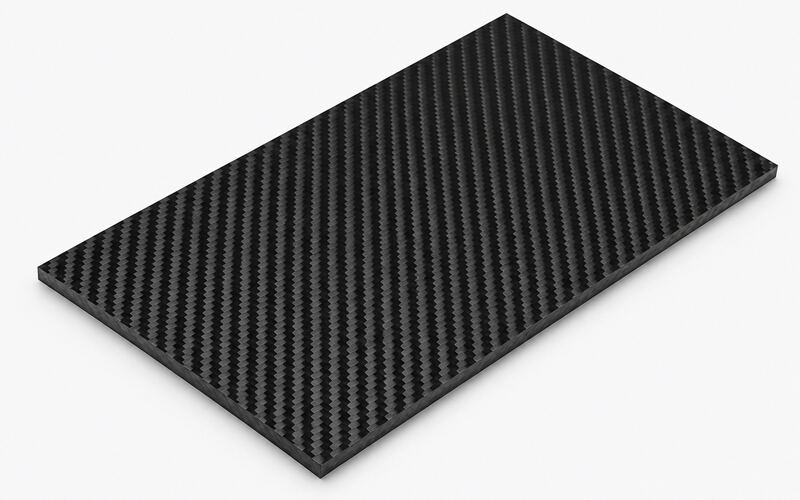
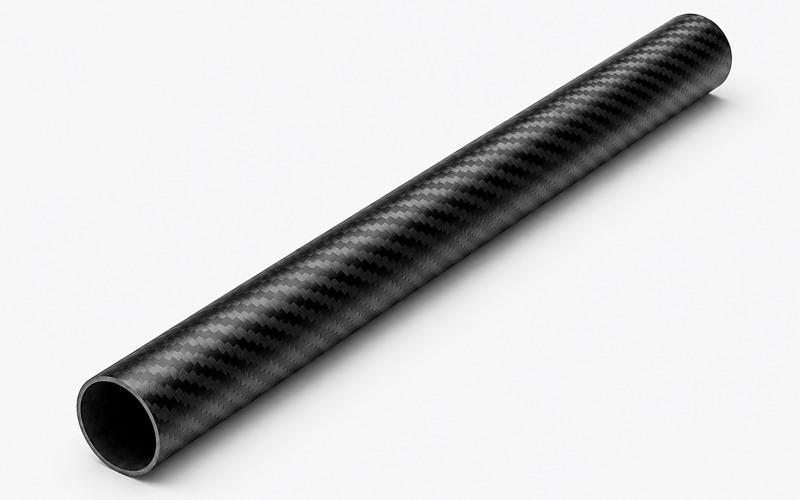
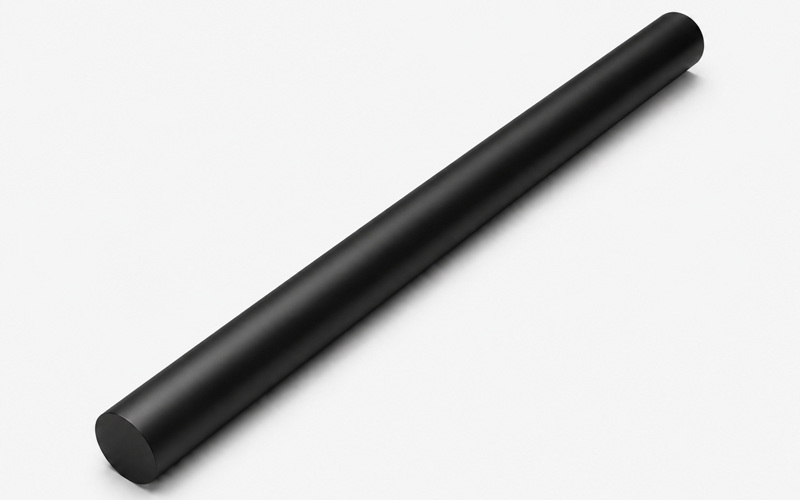
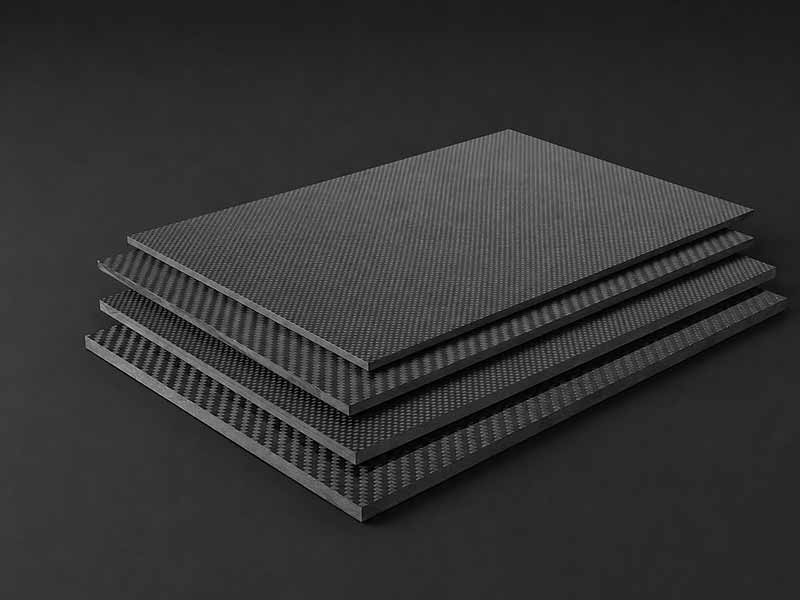
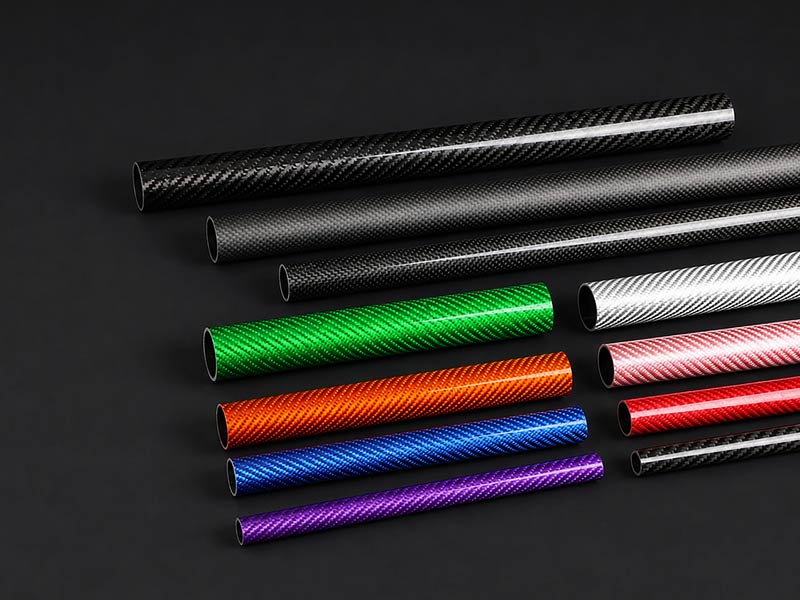
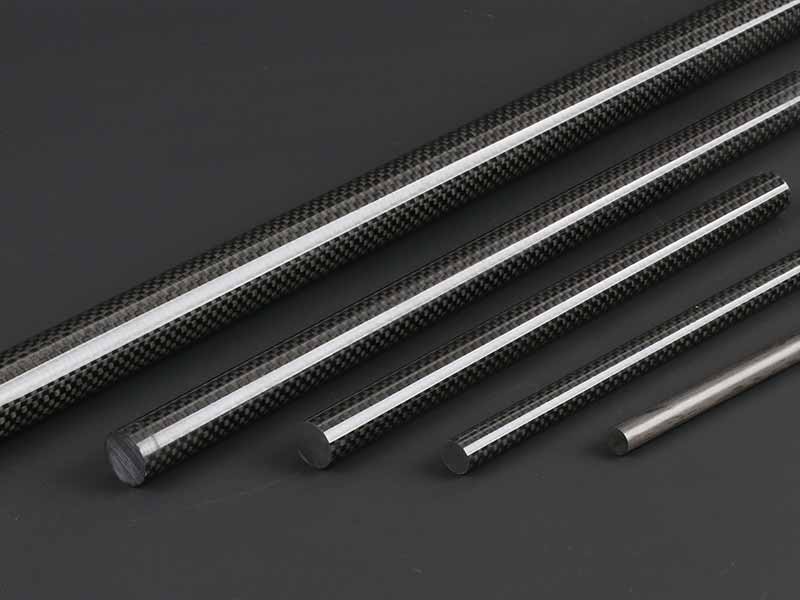
Carbon fiber isn’t used in a single “one-size-fits-all” shape. Depending on the load direction and function of the part, robotics engineers choose between tubes, rods, plates, laminated sheets, or pultruded profiles.
Industrial Robot Arms
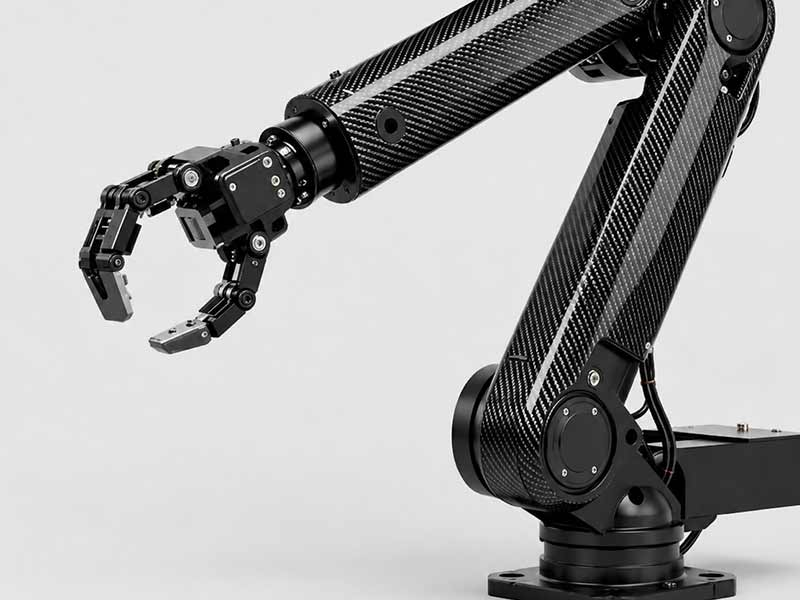
Structural links and arm segments in industrial robots are commonly built from pultruded carbon fiber tubes or square profiles. Some manufacturers now offer modular carbon fiber profiles designed as direct, lighter-weight replacements for traditional aluminum extrusions used in robot frames and gantries.
Delta (Parallel) Robots
Delta robots, widely used for high-speed pick-and-place tasks in food and electronics packaging, rely on lightweight parallel arms to achieve extreme acceleration.
These arms are typically made from high-modulus carbon fiber tubes, bonded to metal end fittings, and are capable of withstanding accelerations of around 15 G while maintaining sub-millimeter positioning accuracy.
Humanoid and Service Robots
Some humanoid and educational robots use carbon-fiber-reinforced thermoplastic for structural shells and support panels, often combined with polycarbonate-ABS plastic or polyamide components. This mix balances moldability for complex body shapes with the added stiffness carbon fiber provides.
Drones and UAVs
In drone construction, the central frame is usually built from flat carbon fiber plates (roughly 1–6 mm thick) that house the flight controller and electronics, while the motor arms use carbon fiber tubes (typically 8–25 mm in diameter) to transfer thrust loads efficiently.
Landing gear components sometimes use carbon fiber rods for added rigidity with minimal weight.
Prosthetics and Exoskeletons
High-performance prosthetic limbs, such as running blades, are built from dozens of layers of woven carbon fiber fabric — often 50 to 90 sheets — saturated with resin, pressed into a mold, and cured under heat.
This layered sheet construction allows the blade to store and release energy with each stride while remaining lightweight enough for competitive athletics.
End-of-Arm Tooling (EOAT)
Robotic end-of-arm tooling (grippers, brackets, and fixtures) benefits from pultruded carbon fiber tubes or profiles because reducing tooling weight frees up more of a robot’s rated payload capacity for the actual object being handled.
How Carbon Fiber Components Are Manufactured?
Pultrusion and Filament Winding
Pultrusion pulls continuous carbon fiber through a resin bath and heated die to create constant cross-section tubes, rods, and profiles efficiently and at scale.
Filament winding (sometimes combined with pultrusion as “pullwinding”) wraps fibers around a rotating mandrel to build strong, hollow structures such as robot arm tubes.
Prepreg Layup and Curing
For curved or custom-shaped parts, such as prosthetic blades or robot shells, manufacturers use “prepreg” carbon fiber fabric — sheets pre-impregnated with resin — layered by hand or machine into a mold, then cured with heat and pressure to fuse the layers into a single rigid structure.
3D Printing with Carbon-Fiber-Reinforced Filament
For prototyping and lightweight hobbyist or small-scale builds, carbon-fiber-reinforced thermoplastic filaments are increasingly used to 3D print drone arms, gimbal parts, and jigs, offering added stiffness over standard plastic prints without full composite lay-up.
Carbon Fiber vs. Traditional Materials in Robotics
Carbon Fiber vs. Aluminum
Carbon fiber robot arms can be significantly lighter than equivalent aluminum designs, which allows faster cycle times and lower energy consumption without reducing load capacity.
Carbon Fiber vs. Steel and Titanium
Not every advanced robot uses carbon fiber as its primary structural material. Boston Dynamics’ Atlas humanoid robot, for example, is built primarily from titanium and aluminum rather than carbon fiber composites, reflecting a design trade-off that favors impact resistance and repairability for a robot engaged in highly dynamic, high-impact movement such as running and jumping.
When Metal Still Outperforms Carbon Fiber
Metals remain preferable where parts face frequent side-impact loading, need easy field repair, or where budget constraints outweigh the benefits of weight savings.
Challenges and Limitations of Using Carbon Fiber in Robotics
- Higher material and manufacturing costs compared to aluminum or steel, especially for custom or low-volume parts.
- Weakness under lateral or bending force — carbon fiber performs best when loads are applied along the fiber direction, so poor design can lead to unexpected failure.
- Machining and repair difficulty — cutting, drilling, or repairing carbon fiber parts requires specialized tools and expertise compared to metal fabrication.
- Electrical conductivity considerations — some carbon fiber composites conduct electricity, which can offer useful electromagnetic shielding but also requires careful design near sensitive electronics to avoid interference.
The Future of Carbon Fiber in Robotics
Adoption of carbon fiber is accelerating in humanoid and service robotics, where every gram of reduced limb weight improves battery life and movement efficiency. Modular, pultruded carbon fiber profiles are increasingly marketed as drop-in replacements for aluminum framing systems in automation cells. At the same time, the composites industry continues to research more sustainable and partially recyclable resin systems to address one of carbon fiber’s long-standing environmental drawbacks: current CFRP is difficult to recycle compared to metals.
FAQ
Is carbon fiber better than aluminum for robot arms?
It depends on the application. Carbon fiber offers a better strength-to-weight ratio and higher stiffness, which benefits high-speed, high-precision tasks. Aluminum remains more cost-effective, easier to machine and repair, and often sufficient for lower-speed applications.
How much weight can carbon fiber robotic components save?
Depending on the design, carbon fiber robot arms can be substantially lighter than comparable aluminum arms, though exact savings vary by component geometry and load requirements.
What industries use carbon fiber robots the most?
Food and electronics packaging (delta robots), industrial automation, aerospace and drone manufacturing, and medical device makers producing prosthetics and exoskeletons are among the heaviest users of carbon fiber in robotics today.