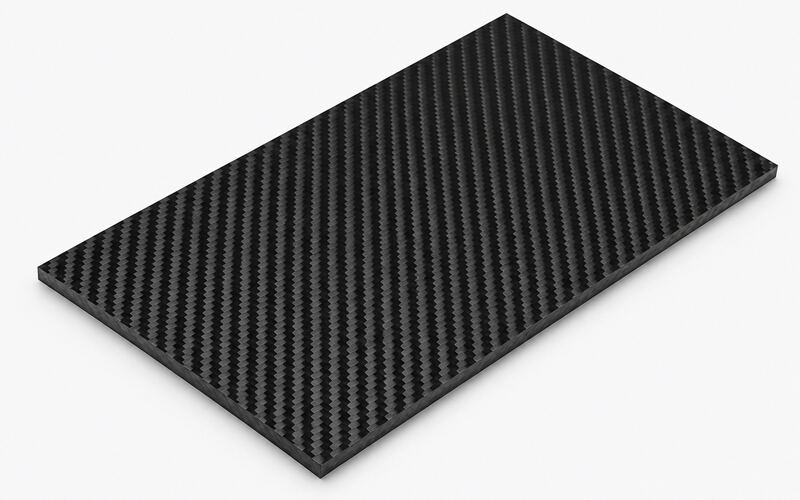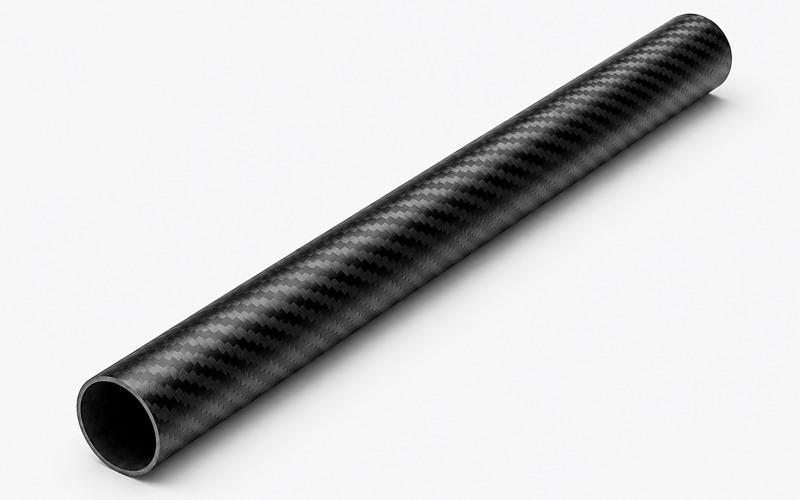
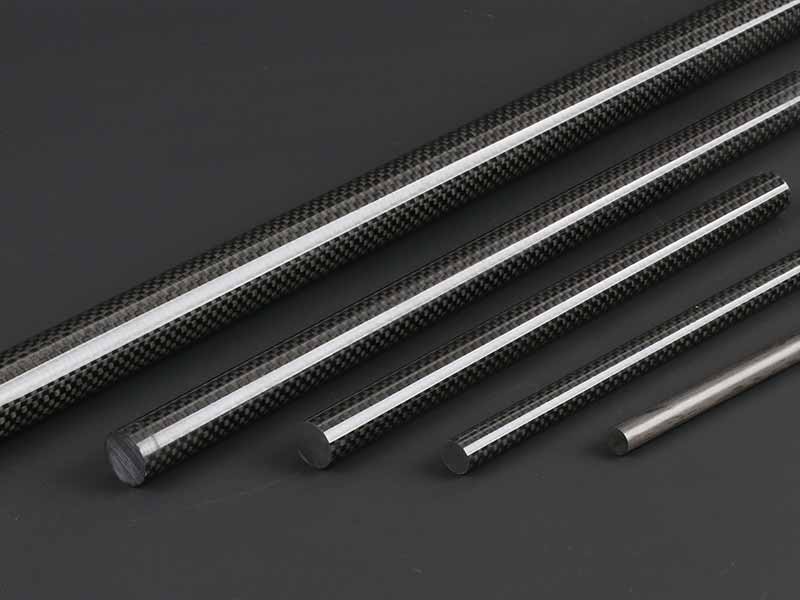
Carbon fiber rods support structural frames in robotics, drones, and precision equipment. They also reinforce sports gear and musical instruments where stiffness affects performance directly.
Construction projects use carbon fiber rods for reinforcement in structures sensitive to weight and corrosion. Each application depends on axial stiffness rather than raw material strength alone.
Types of Carbon Fiber Rods
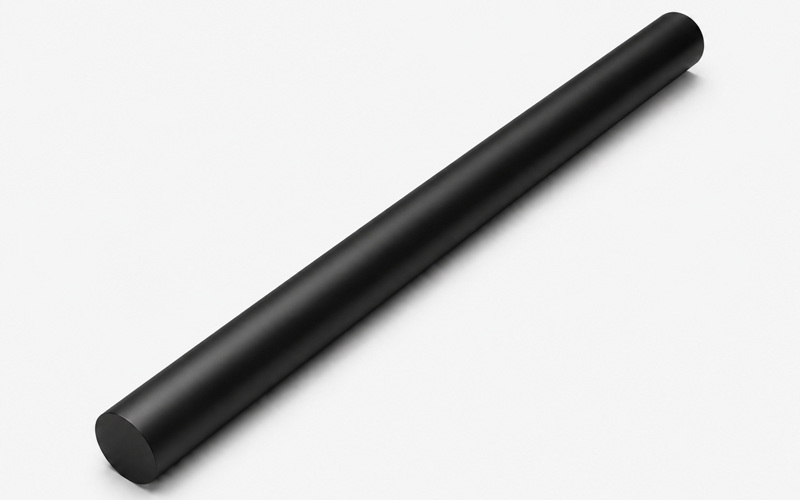
Solid Carbon Fiber Rods
Solid rods are produced through pultrusion, creating a dense cross-section with high axial stiffness. They perform well under compressive and bending loads.
These rods suit support struts, structural pins, and reinforcement inserts. Their solid core resists local crushing better than hollow alternatives.
Pultruded Carbon Fiber Rods
Pultrusion aligns fibers axially, maximizing strength along the rod length. This process suits rods needing high straight-line stiffness.
Pultruded rods work well for structural reinforcement and support elements. Their consistent cross-section simplifies integration into assemblies.
Wrapped and Filament Wound Rods
Filament winding allows angled fiber placement, improving torsional performance.
Wrapped rods handle combined bending and twisting loads better than pultruded rods.
This construction suits rods used in dynamic assemblies, including robotic linkages. Fiber angle selection directly affects torsional stiffness.
Carbon Fiber Rod Materials and Construction
Carbon Fiber Grades and Resin Systems
Different carbon fiber grades provide different balances of stiffness, strength, and cost. Standard modulus fiber suits general structural rods requiring balanced stiffness and cost. High modulus fiber increases stiffness for weight-critical applications.
Epoxy resin systems dominate rod manufacturing due to strong fiber bonding. Resin choice affects temperature resistance and fatigue behavior under cyclic loads.
Fiber Orientation and Strength
Unidirectional fiber layers maximize axial strength for straight load paths.
This orientation suits rods loaded primarily along their length.
Angled or woven layers improve resistance to torsion and side loads.
Engineers select orientation based on expected load direction during service.
Benefits of Carbon Fiber Rods
High Stiffness with Low Weight
Carbon fiber rods achieve high axial stiffness without adding significant mass. This ratio benefits moving components where inertia affects performance.
Reduced weight also lowers energy consumption in dynamic systems.
Robotics and drone frames benefit directly from this stiffness-to-weight advantage.
Fatigue and Corrosion Resistance
Carbon fiber resists fatigue cracking better than most metals under cyclic loading. This property extends service life in vibration-prone equipment.
The composite structure also resists corrosion in humid or chemical environments. Outdoor and marine-adjacent applications benefit from this stability.
Limitations Under Torsion and Impact
Solid rods with unidirectional fiber can underperform under pure torsion.
Fiber angle must be adjusted to handle twisting loads effectively.
Impact resistance also depends on layup design rather than fiber strength alone. Poorly designed rods can fail suddenly under localized impact.
Industrial Applications of Carbon Fiber Rods
Robotics and Automation Equipment
Robotic arms use carbon fiber rods to reduce moving mass. Lower mass improves acceleration and positioning accuracy in automated systems.
Rods also maintain dimensional stability under repeated motion cycles.
This stability supports precision requirements in automation equipment.
Drone and UAV Structures
UAV frames rely on carbon fiber rods for lightweight structural support. Reduced airframe weight increases flight time and payload capacity.
Rods reinforce arms and landing gear where vibration resistance matters. Fatigue resistance supports repeated takeoff and landing cycles.
Frames and Support Structures
Equipment frames use carbon fiber rods for structural support without excess weight.
This benefits portable devices and mounted machinery.
Support structures gain rigidity while reducing overall system mass. Engineers select rod diameter based on expected load paths.
Sports Equipment and Outdoor Gear
Sports equipment uses carbon fiber rods for stiffness with minimal added weight.
Poles, frames, and shafts benefit from this balance.
Outdoor gear also uses rods where corrosion resistance extends product lifespan.
Performance consistency matters across varying environmental conditions.
Musical Instruments
Instrument necks and reinforcement rods use carbon fiber for dimensional stability. Temperature and humidity changes affect wood more than composite rods.
Construction Reinforcement
Construction reinforcement rods use carbon fiber where corrosion resistance matters. Structures exposed to moisture benefit from non-corroding reinforcement.
Weight reduction also simplifies transport and installation on-site. Rod diameter and fiber content depend on required load capacity.
Carbon Fiber Rod Sizes and Specifications
Common Diameters and Lengths
Standard rods range from a few millimeters to several centimeters in diameter. Lengths vary based on application, often supplied in stock sizes.
- Small diameter rods: precision equipment and instrument reinforcement
- Medium diameter rods: robotics and frame structures
- Large diameter rods: construction and heavy support applications
Tolerances and Surface Finishes
Diameter tolerance affects fit within clamps, joints, and fittings. Tighter tolerances suit precision equipment requiring consistent assembly.
Surface finish options include matte and glossy finishes, as well as sanded textures. Finish choice depends on bonding requirements or aesthetic preference.
Custom Carbon Fiber Rods
Custom rods allow specific diameter, length, and fiber orientation combinations. This flexibility supports specialized load or geometry requirements.
Manufacturers adjust layup and process based on application-specific stiffness targets. Custom production suits low-volume, high-performance applications.
Carbon Fiber Rods vs Other Materials
Compared with Aluminum and Steel
Carbon fiber rods offer higher stiffness-to-weight ratios than aluminum or steel rods. This benefits applications where reducing mass improves performance.
For a broader comparison covering weight, stiffness, corrosion, and manufacturing, see our carbon fiber vs aluminum guide.
Compared with Fiberglass
Carbon fiber rods provide higher stiffness than fiberglass rods at similar diameters. Fiberglass remains more cost-effective for lower-load applications.
Engineers select fiberglass when budget outweighs stiffness requirements. Carbon fiber suits applications demanding minimal deflection under load.
How to Choose Carbon Fiber Rods?
Diameter and Load Requirements
Rod diameter must match expected axial and bending loads. Undersized rods risk buckling under compressive forces.
Engineers calculate required stiffness before selecting diameter and fiber content. Oversized rods add unnecessary weight and cost.
Manufacturing Process Selection
Pultrusion suits straight rods needing high axial stiffness. Filament winding suits rods requiring torsional performance.
- Pultrusion: high axial stiffness, straight rods
- Filament winding: improved torsional strength
- Roll wrapping: tube-focused, lightweight structures
Cutting and Bonding Methods
When cutting carbon fiber rods, diamond-coated blades help reduce fiber fraying and edge damage.
Proper bonding methods preserve structural integrity at joints.
Adhesive selection depends on rod surface finish and application environment. Poor bonding can create weak points under load.
FAQ
What Are Carbon Fiber Rods Used For?
Carbon fiber rods support structural frames, reinforcement members, and lightweight assemblies requiring high axial stiffness.
What Is the Difference Between Pultruded and Wrapped Rods?
Pultruded rods maximize axial stiffness, while wrapped rods improve torsional performance through angled fiber placement.